
Xcel Energy (XEL)
Regulated utility delivering electricity and natural gas across eight Western and Midwestern states.
Something off on this page? Send us feedback.
Xcel Energy is four state-regulated utilities under one roof, selling electricity and gas across the middle of the country. Its money arrives as millions of monthly bills at prices commissions set, with a return allowed on whatever it builds — so growing means building. Now AI data centers are asking for power on a scale that would reshape its sales, and Xcel is spending far faster than the business throws off cash.
Item facts: FY2025 · year ended Dec 31, 2025, from filings, earnings calls and company pages.
Judgment weights, not filed revenue
The band summarizes business focus and direction. ~ marks estimates.
7 in detail · 13 more below
Northern States Power – Minnesota
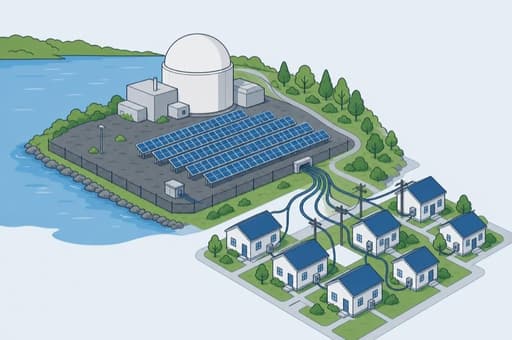
Xcel's Minnesota and Dakotas electric utility and its single biggest slice of sales — 1.6 million customers, $5.5B of electricity in 2025. It holds the data-center agreements with Google, Meta and QTS; the Google one still needs Minnesota's regulator, expected early 2027.
Competes with Electric service in northern Minnesota (Minnesota Power (ALLETE)) · Wholesale power to Minnesota co-ops (Great River Energy)
In plain English
Picture every pole, wire and power station keeping Minnesota and a stretch of the Dakotas lit. That whole machine is one company, and Xcel owns it.
It cannot pick its own prices. A state commission adds up what the utility has sunk into plants and lines, then lets it charge customers enough to cover the running costs and earn a set profit on that investment. Building more is how it earns more — and this one has roughly $19B of it working today, including two nuclear stations and a new solar farm laid out on the site of a coal plant being retired.
Large Load / Data Center Program
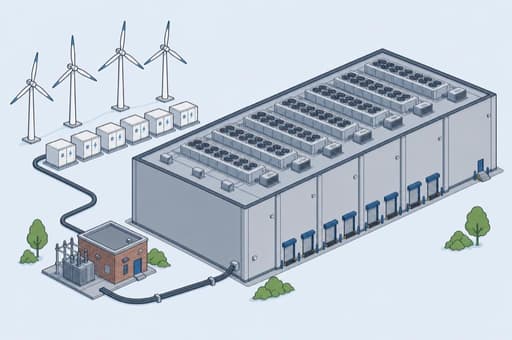
Long-term deals that sell AI data centers electricity, with a minimum bill if they use less. About 1 GW is running or under construction, and management is aiming at 6 GW by 2027 — over a third more electricity than Xcel sold all last year.
Competes with Schedule DCT data-center service (AEP Ohio) · Large-load tariff (Dominion Energy) · Large Load Power Service (Evergy Missouri) · Self-built on-site power (Fermi America)
In plain English
An AI data center is a warehouse of computers that never sleeps, drawing power on the scale of a small city. Xcel signs those buildings up for a decade or more, and Google's campus at Pine Island, Minnesota — about 750 megawatts — is the template.
The customer commits to a floor amount it pays for whether it uses the power or not, has to prove it is good for the money, and in Google's case pays for the wind, solar and storage built to serve it. That is the point of the arrangement: Minnesota's other customers are projected to save money rather than fund the newcomer.
Public Service Company of Colorado
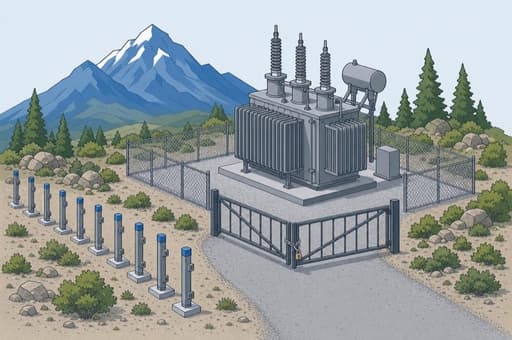
Colorado's main electricity supplier and Xcel's biggest pile of invested capital at roughly $23.8B — yet its weakest earned return: about 5.7% in 2025 after the Marshall Fire settlement charge, 7.6% before it. Growth here waits on Colorado's regulators.
Competes with Colorado Electric service (Black Hills Corporation) · Wholesale power to Colorado co-ops (Tri-State Generation & Transmission)
In plain English
Colorado's main electricity supplier, with about 1.6 million homes and businesses on its wires and more money sunk into the ground — plants, lines, substations — than any other part of Xcel.
Size has not meant good returns lately. After the Marshall Fire settlement charge, 2025 left it earning roughly 5.7 cents on each dollar of shareholder money, against 7.6 cents before that hit. Earning more means convincing Colorado's commission to allow higher prices for new investment, and there is a queue of data-center hookups waiting to be connected: Xcel told regulators in 2025 that serving that demand would run to something like $22B.
Transmission Build-Out
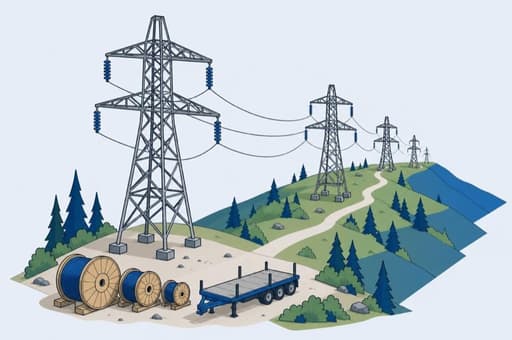
The long-distance lines: about 1,500 new miles inside a $60B five-year build that borrowing and new share sales are paying for. Colorado's Power Pathway, ~610 miles for roughly $1.7B, is furthest along; regional planners decide what comes next.
Competes with MISO transmission lines (ITC Midwest (Fortis)) · Competing project bids in SPP and MISO (Independent transmission developers) · Co-op transmission network (Great River Energy)
In plain English
Think of the interstate highways, but for electricity — heavy high-voltage lines hauling power hundreds of miles from where wind and sun are cheap to where people actually live.
Xcel builds and owns them, and the cost lands on customers' bills over decades with an allowed profit on top. Colorado's Power Pathway is the one furthest along: roughly 610 miles of new line for about $1.7B, with another stretch carrying power since mid-2026. Who builds the next lines is decided by the regional bodies that plan the grid, and Xcel was handed the first of the highest-voltage lines in the Southwest Power Pool's territory.
Southwestern Public Service Company
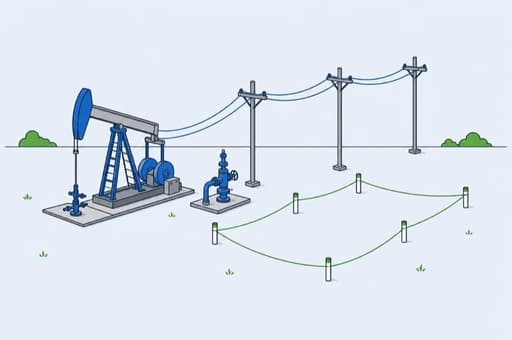
The Texas Panhandle and eastern New Mexico utility: 0.4 million customers, an economy running on oil and gas, and the place the next big build lands — selected for 2,600 MW of new generation, about $6B. It also carries the Smokehouse Creek fire liability.
Competes with Texas and New Mexico electric service (Southwestern Electric Power (AEP)) · El Paso and southern New Mexico service (El Paso Electric) · Panhandle co-op power supply (Golden Spread Electric Cooperative)
In plain English
Out where the Texas Panhandle meets eastern New Mexico, Xcel runs the grid for about 400,000 customers spread across 52,000 square miles — few people, long distances, and oil and gas fields that themselves run on electricity.
Small today, but this is where the next big build lands: SPS was selected to own 2,600 megawatts of new generation, roughly $6B worth, which once built becomes something customers pay off over decades. Nothing is automatic, though. A New Mexico request for $175M a year of extra revenue was settled at $90M, and the Smokehouse Creek fire left claims still being settled and paid down.
Regulated Natural Gas Utility
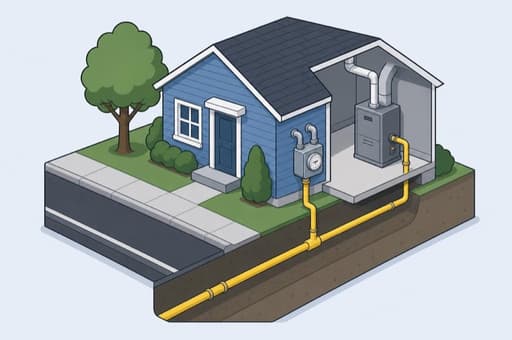
The pipes half of the company: 2.2 million furnaces, water heaters and stoves in Colorado, Minnesota and Wisconsin, and $2.45B of sales in 2025. The fuel cost passes straight to bills, so profit follows the pipes. Volumes are slowly shrinking.
Competes with Minnesota gas distribution (CenterPoint Energy) · Colorado gas distribution (Atmos Energy)
In plain English
Beneath Colorado streets, Minnesota streets and a slice of Wisconsin runs a second Xcel: pipes into 2.2 million furnaces, water heaters and stoves.
Here is the part people get wrong. Xcel does not really earn on the gas itself — whatever the fuel costs, that much goes onto the bill, no more. The earnings come from renting out the pipework: rates are set to cover its upkeep and pay a return on it. Which is why a mild winter dents sales without much touching profit, and why households slowly switching to electric heating is the longer-run worry, not the gas price.
Northern States Power – Wisconsin
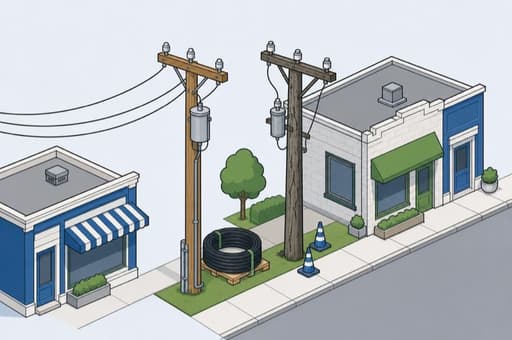
The smallest of the four utilities — 0.3 million electric customers in Wisconsin and Michigan — and the fastest riser in relative terms: 17 cents a share in the first half of 2026 against 12 a year earlier. A data-center price list is filed; nothing signed.
Competes with Wisconsin electric service (We Energies (WEC Energy Group)) · Wisconsin Power and Light service (Alliant Energy)
In plain English
The runt of the litter: 300,000 electric customers across Wisconsin and a corner of Michigan, a small fraction of Xcel's size.
It earns its keep quietly. Replace worn-out equipment, upgrade lines and pipes, get the state commission to fold the cost into rates, collect a return on it, repeat. That drumbeat lifted its contribution from 12 to 17 cents a share in the first half of 2026, the fastest relative gain of the four utilities — though off a base small enough that a good year barely moves the parent. Wisconsin has become an active data-center market, and Xcel has asked to offer them standard terms there.


 Northern States Power – MinnesotaXcel's Minnesota and Dakotas electric utility and its single biggest slice of sales — 1.6 million customers, $5.5B of electricity in 2025. It holds the data-center agreements with Google, Meta and QTS; the Google one still needs Minnesota's regulator, expected early 2027.
Xcel's Minnesota and Dakotas electric utility and its single biggest slice of sales — 1.6 million customers, $5.5B of electricity in 2025. It holds the data-center agreements with Google, Meta and QTS; the Google one still needs Minnesota's regulator, expected early 2027.
In plain English
Picture every pole, wire and power station keeping Minnesota and a stretch of the Dakotas lit. That whole machine is one company, and Xcel owns it.
It cannot pick its own prices. A state commission adds up what the utility has sunk into plants and lines, then lets it charge customers enough to cover the running costs and earn a set profit on that investment. Building more is how it earns more — and this one has roughly $19B of it working today, including two nuclear stations and a new solar farm laid out on the site of a coal plant being retired.
Competes with Electric service in northern Minnesota (Minnesota Power (ALLETE)) · Wholesale power to Minnesota co-ops (Great River Energy)
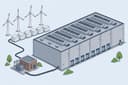 Large Load / Data Center ProgramLong-term deals that sell AI data centers electricity, with a minimum bill if they use less. About 1 GW is running or under construction, and management is aiming at 6 GW by 2027 — over a third more electricity than Xcel sold all last year.
Long-term deals that sell AI data centers electricity, with a minimum bill if they use less. About 1 GW is running or under construction, and management is aiming at 6 GW by 2027 — over a third more electricity than Xcel sold all last year.
In plain English
An AI data center is a warehouse of computers that never sleeps, drawing power on the scale of a small city. Xcel signs those buildings up for a decade or more, and Google's campus at Pine Island, Minnesota — about 750 megawatts — is the template.
The customer commits to a floor amount it pays for whether it uses the power or not, has to prove it is good for the money, and in Google's case pays for the wind, solar and storage built to serve it. That is the point of the arrangement: Minnesota's other customers are projected to save money rather than fund the newcomer.
Competes with Schedule DCT data-center service (AEP Ohio) · Large-load tariff (Dominion Energy) · Large Load Power Service (Evergy Missouri) · Self-built on-site power (Fermi America)
 Public Service Company of ColoradoColorado's main electricity supplier and Xcel's biggest pile of invested capital at roughly $23.8B — yet its weakest earned return: about 5.7% in 2025 after the Marshall Fire settlement charge, 7.6% before it. Growth here waits on Colorado's regulators.
Colorado's main electricity supplier and Xcel's biggest pile of invested capital at roughly $23.8B — yet its weakest earned return: about 5.7% in 2025 after the Marshall Fire settlement charge, 7.6% before it. Growth here waits on Colorado's regulators.
In plain English
Colorado's main electricity supplier, with about 1.6 million homes and businesses on its wires and more money sunk into the ground — plants, lines, substations — than any other part of Xcel.
Size has not meant good returns lately. After the Marshall Fire settlement charge, 2025 left it earning roughly 5.7 cents on each dollar of shareholder money, against 7.6 cents before that hit. Earning more means convincing Colorado's commission to allow higher prices for new investment, and there is a queue of data-center hookups waiting to be connected: Xcel told regulators in 2025 that serving that demand would run to something like $22B.
Competes with Colorado Electric service (Black Hills Corporation) · Wholesale power to Colorado co-ops (Tri-State Generation & Transmission)
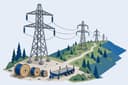 Transmission Build-OutThe long-distance lines: about 1,500 new miles inside a $60B five-year build that borrowing and new share sales are paying for. Colorado's Power Pathway, ~610 miles for roughly $1.7B, is furthest along; regional planners decide what comes next.
The long-distance lines: about 1,500 new miles inside a $60B five-year build that borrowing and new share sales are paying for. Colorado's Power Pathway, ~610 miles for roughly $1.7B, is furthest along; regional planners decide what comes next.
In plain English
Think of the interstate highways, but for electricity — heavy high-voltage lines hauling power hundreds of miles from where wind and sun are cheap to where people actually live.
Xcel builds and owns them, and the cost lands on customers' bills over decades with an allowed profit on top. Colorado's Power Pathway is the one furthest along: roughly 610 miles of new line for about $1.7B, with another stretch carrying power since mid-2026. Who builds the next lines is decided by the regional bodies that plan the grid, and Xcel was handed the first of the highest-voltage lines in the Southwest Power Pool's territory.
Competes with MISO transmission lines (ITC Midwest (Fortis)) · Competing project bids in SPP and MISO (Independent transmission developers) · Co-op transmission network (Great River Energy)
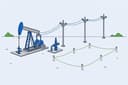 Southwestern Public Service CompanyThe Texas Panhandle and eastern New Mexico utility: 0.4 million customers, an economy running on oil and gas, and the place the next big build lands — selected for 2,600 MW of new generation, about $6B. It also carries the Smokehouse Creek fire liability.
The Texas Panhandle and eastern New Mexico utility: 0.4 million customers, an economy running on oil and gas, and the place the next big build lands — selected for 2,600 MW of new generation, about $6B. It also carries the Smokehouse Creek fire liability.
In plain English
Out where the Texas Panhandle meets eastern New Mexico, Xcel runs the grid for about 400,000 customers spread across 52,000 square miles — few people, long distances, and oil and gas fields that themselves run on electricity.
Small today, but this is where the next big build lands: SPS was selected to own 2,600 megawatts of new generation, roughly $6B worth, which once built becomes something customers pay off over decades. Nothing is automatic, though. A New Mexico request for $175M a year of extra revenue was settled at $90M, and the Smokehouse Creek fire left claims still being settled and paid down.
Competes with Texas and New Mexico electric service (Southwestern Electric Power (AEP)) · El Paso and southern New Mexico service (El Paso Electric) · Panhandle co-op power supply (Golden Spread Electric Cooperative)
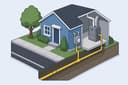 Regulated Natural Gas UtilityThe pipes half of the company: 2.2 million furnaces, water heaters and stoves in Colorado, Minnesota and Wisconsin, and $2.45B of sales in 2025. The fuel cost passes straight to bills, so profit follows the pipes. Volumes are slowly shrinking.
The pipes half of the company: 2.2 million furnaces, water heaters and stoves in Colorado, Minnesota and Wisconsin, and $2.45B of sales in 2025. The fuel cost passes straight to bills, so profit follows the pipes. Volumes are slowly shrinking.
In plain English
Beneath Colorado streets, Minnesota streets and a slice of Wisconsin runs a second Xcel: pipes into 2.2 million furnaces, water heaters and stoves.
Here is the part people get wrong. Xcel does not really earn on the gas itself — whatever the fuel costs, that much goes onto the bill, no more. The earnings come from renting out the pipework: rates are set to cover its upkeep and pay a return on it. Which is why a mild winter dents sales without much touching profit, and why households slowly switching to electric heating is the longer-run worry, not the gas price.
Competes with Minnesota gas distribution (CenterPoint Energy) · Colorado gas distribution (Atmos Energy)
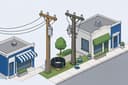 Northern States Power – WisconsinThe smallest of the four utilities — 0.3 million electric customers in Wisconsin and Michigan — and the fastest riser in relative terms: 17 cents a share in the first half of 2026 against 12 a year earlier. A data-center price list is filed; nothing signed.
The smallest of the four utilities — 0.3 million electric customers in Wisconsin and Michigan — and the fastest riser in relative terms: 17 cents a share in the first half of 2026 against 12 a year earlier. A data-center price list is filed; nothing signed.
In plain English
The runt of the litter: 300,000 electric customers across Wisconsin and a corner of Michigan, a small fraction of Xcel's size.
It earns its keep quietly. Replace worn-out equipment, upgrade lines and pipes, get the state commission to fold the cost into rates, collect a return on it, repeat. That drumbeat lifted its contribution from 12 to 17 cents a share in the first half of 2026, the fastest relative gain of the four utilities — though off a base small enough that a good year barely moves the parent. Wisconsin has become an active data-center market, and Xcel has asked to offer them standard terms there.
Competes with Wisconsin electric service (We Energies (WEC Energy Group)) · Wisconsin Power and Light service (Alliant Energy)
Named in filings, launches and programs
- Wildfire mitigation and resiliency programsServiceAbout $5B of the five-year plan to harden the grid, including a settled $1.9B Colorado plan and a settled $500M Texas one — customers fund it, Xcel earns on it.
- Monticello and Prairie Island nuclear plantsProduct lineNSP-Minnesota's two nuclear stations; a long Monticello outage from late 2023 cost $37M, or 4 cents a share.
- Sherco SolarProduct lineSolar built on a retiring coal site in Minnesota; the third phase came into service in mid-2026, bringing the project to 710 MW.
- Colorado near-term procurement portfolioProduct line · AnnouncedA 4.5 GW plan for new Colorado generation; the commission signed off on the first 800 MW in early 2026.
- Wind repowerings (Border, Pleasant Valley)Product line370 MW of older wind farms rebuilt with new equipment; the tax credits earned are expected to exceed what the work costs.
- Fermi America power agreementCustomer programSPS agreed to supply up to 200 MW to Fermi America's Project Matador campus at Amarillo, raised from 86 MW in January 2026.
- Large Load TariffsCustomer program · RampingThe standard rulebook for data-center deals: approved in Minnesota, filed in Colorado and Wisconsin, planned for Texas and New Mexico.
- Form Energy iron-air storageProduct line · Announced300 MW of long-duration batteries for the Google campus, holding 30 GWh — enough to keep discharging for days rather than hours.
- Capacity*ConnectCustomer program · AnnouncedA Minnesota program for capacity spread across many small sites, seeded with $50M under the Google agreement.
- Potter–Crossroads–Phantom 765 kV lineEcosystem · AnnouncedAmong the first 765 kV lines allocated to Xcel in the Southwest Power Pool — a heavier class of line than the 345 kV it strung across Colorado.
- NextEra Energy joint development agreementEcosystemA non-exclusive April 2026 deal to develop generation, storage and grid connections together — neither side is locked in.
- GE Vernova allianceEcosystemAn equipment and supply-chain alliance meant to secure hardware for the generation build.
- WYCO DevelopmentBrandA part-owned gas pipeline venture; its share of profit came to 3 cents a share in both 2024 and 2025.
Wildfire mitigation and resiliency programsService
About $5B of the five-year plan to harden the grid, including a settled $1.9B Colorado plan and a settled $500M Texas one — customers fund it, Xcel earns on it.
Monticello and Prairie Island nuclear plantsProduct line
NSP-Minnesota's two nuclear stations; a long Monticello outage from late 2023 cost $37M, or 4 cents a share.
Sherco SolarProduct line
Solar built on a retiring coal site in Minnesota; the third phase came into service in mid-2026, bringing the project to 710 MW.
Colorado near-term procurement portfolioProduct line · Announced
A 4.5 GW plan for new Colorado generation; the commission signed off on the first 800 MW in early 2026.
Wind repowerings (Border, Pleasant Valley)Product line
370 MW of older wind farms rebuilt with new equipment; the tax credits earned are expected to exceed what the work costs.
Fermi America power agreementCustomer program
SPS agreed to supply up to 200 MW to Fermi America's Project Matador campus at Amarillo, raised from 86 MW in January 2026.
Large Load TariffsCustomer program · Ramping
The standard rulebook for data-center deals: approved in Minnesota, filed in Colorado and Wisconsin, planned for Texas and New Mexico.
Form Energy iron-air storageProduct line · Announced
300 MW of long-duration batteries for the Google campus, holding 30 GWh — enough to keep discharging for days rather than hours.
Capacity*ConnectCustomer program · Announced
A Minnesota program for capacity spread across many small sites, seeded with $50M under the Google agreement.
Potter–Crossroads–Phantom 765 kV lineEcosystem · Announced
Among the first 765 kV lines allocated to Xcel in the Southwest Power Pool — a heavier class of line than the 345 kV it strung across Colorado.
NextEra Energy joint development agreementEcosystem
A non-exclusive April 2026 deal to develop generation, storage and grid connections together — neither side is locked in.
GE Vernova allianceEcosystem
An equipment and supply-chain alliance meant to secure hardware for the generation build.
WYCO DevelopmentBrand
A part-owned gas pipeline venture; its share of profit came to 3 cents a share in both 2024 and 2025.