
AMD (AMD)
Designs CPUs, GPUs, adaptive chips, and AI systems for data centers, PCs, gaming, and embedded markets.
Something off on this page? Send us feedback.
AMD designs the chips that power personal computers, game consoles and servers, while outside manufacturers build them. Personal-computer processors remain a large business, but data centers have become the center of gravity. The next act is selling complete racks of artificial-intelligence machinery, with software and major customer programs helping those chips compete for a place in the world's computing rooms.
Item facts: FY2025 · year ended Dec 27, 2025, from filings, earnings calls and company pages.
Judgment weights, not filed revenue
The band summarizes business focus and direction. ~ marks estimates.
7 in detail · 16 more below
AMD Ryzen and Ryzen AI processors
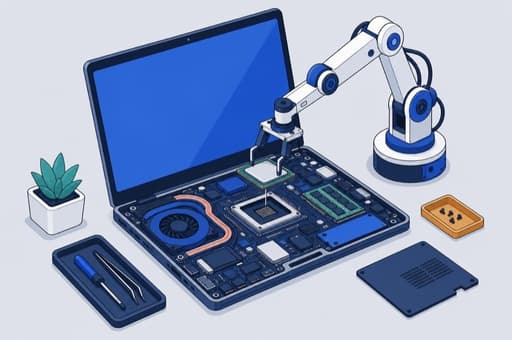
The main processor inside desktop and notebook computers. Units rose 34% in the FY2026 second quarter while average price fell 6%; watch whether more chips sold can outrun the weaker pricing and a soft PC market.
Competes with Core Ultra 200V (Intel) · Snapdragon X Elite (Qualcomm)
In plain English
Open a modern laptop and Ryzen is one of the chips that can act as its main brain, handling everyday instructions and, in newer versions, some artificial-intelligence tasks directly on the machine. AMD designs it; outside factories make it.
Computer makers buy Ryzen for new models, while distributors and stores also sell boxed chips to people building their own PCs. Revenue rises when manufacturers choose AMD for more designs and shoppers replace old machines. The catch is familiar retail arithmetic: AMD shipped more units in the latest quarter, but earned less per unit on average.
AMD Instinct accelerators and AMD Helios rack-scale solution
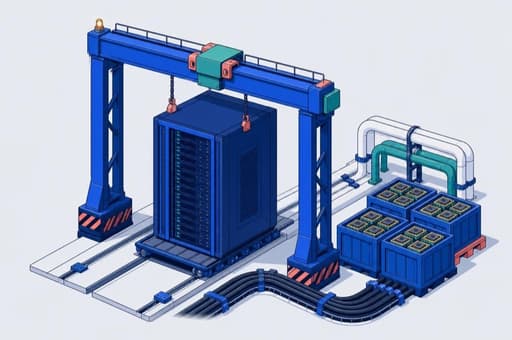
Powerful calculation chips and a complete server-rack design for artificial intelligence. OpenAI's plan reaches up to 6 gigawatts, a power measure on the scale of several large power plants, but remains conditional; watch for firm orders and shipped hardware.
Competes with GB300 NVL72 (NVIDIA) · OpenAI-designed accelerators (Broadcom/OpenAI)
In plain English
These are specialized chips and cabinet-sized systems built to teach and run artificial intelligence. Picture a restaurant kitchen where dozens of cooks work on one enormous order: Helios arranges the processors, network links and software so they can work together instead of getting in one another's way.
Cloud providers, AI labs and government-backed projects pay for chips or finished racks as equipment ships. AMD designs the system, outside factories make the parts, and Sanmina, a company that builds equipment for others, helps assemble racks. The promised demand is enormous, but sales appear only when memory, power, cooling, permits and ready buildings all line up.
AMD ROCm software
Free software that helps developers run artificial-intelligence programs on AMD chips. It supports millions of trained AI programs, but has no stand-alone sales; watch whether easier switching pulls through more hardware demand.
Competes with CUDA (NVIDIA) · oneAPI (Intel)
In plain English
ROCm is the translator between an artificial-intelligence program and AMD's Instinct chips. Like a travel adapter that lets familiar plugs work in a different wall socket, it saves developers from rebuilding everything when they try AMD hardware.
AMD gives the software away rather than charging a separate fee. The payoff comes if better compatibility persuades developers, online services that rent computing power and computer makers to buy more Instinct systems. Continued support for popular programming tools matters because NVIDIA's CUDA software already ties many developers closely to its chips.
AMD EPYC server processors
The main brains inside cloud and company servers. Sales to both cloud operators and other businesses grew more than 70% in the FY2026 second quarter; watch whether AMD keeps gaining designs as server demand expands.
Competes with Xeon 6 (Intel) · Grace CPU (NVIDIA)
In plain English
Behind websites, business software and online storage sit rooms of computers that need a main processor. EPYC is AMD's version of that processor: the foreman that assigns work, moves data and keeps each server useful.
Large companies that rent computing power online, plus businesses running their own machines, ultimately pay for these chips through server makers and other suppliers. Once approved, one design can repeat across many machines. That makes each new placement valuable, but winning it takes long testing and dependable access to advanced manufacturing capacity.
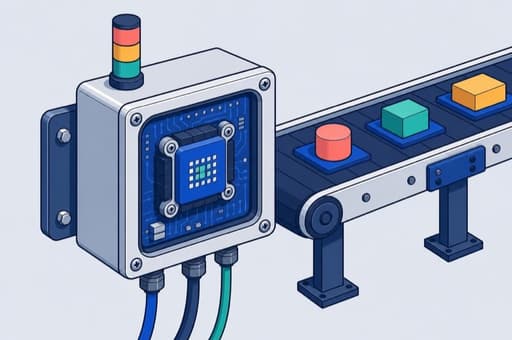
AMD Embedded products
Long-lived chips built into factory, phone-network, vehicle and aerospace equipment. Revenue rose 19% in the FY2026 second quarter, led by embedded computer processors; watch whether that recovery lasts through customers' slow design cycles.
Competes with Agilex 7 (Altera) · PolarFire SoC FPGA (Microchip)
In plain English
The unglamorous chips that quietly stay inside other machines for years. AMD sells ordinary computer processors for specialized equipment, plus chips whose internal wiring can be rearranged after manufacture to fit a customer's exact job.
A factory-equipment, phone-network, vehicle or aerospace maker chooses one during product design, tests it carefully, then may keep buying it for the life of that machine. That creates sticky, long-running sales, but the door opens slowly: approval can take years, and being chosen is only an opportunity until the customer's product reaches production.
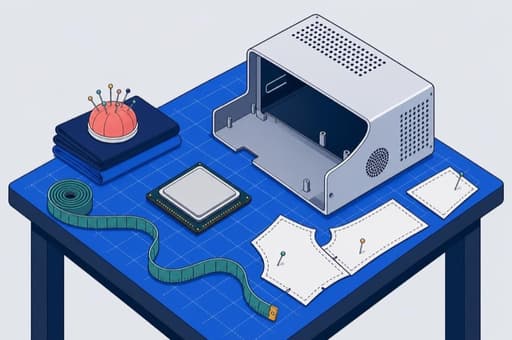
AMD semi-custom SoC products
Custom-designed chips for PlayStation, Xbox and Valve game machines. Gaming revenue fell 31% in the FY2026 second quarter mainly because these orders declined; watch the aging console cycle and the timing of new machines.
Competes with Nintendo Switch 2 custom processor (NVIDIA) · Snapdragon G3 Gen 3 (Qualcomm)
In plain English
A game-console maker cannot simply pick any chip from a shelf. AMD works with Sony, Microsoft and Valve to combine the main processor and graphics machinery into one custom package, rather like a tailor cutting one suit for a customer's exact measurements.
The customer pays AMD during development and then buys production chips for each machine it makes. That creates a burst of volume after a console launch and a fade as the generation ages. Retailers sell the finished consoles, but AMD's money depends mainly on its partners' manufacturing plans and inventory.
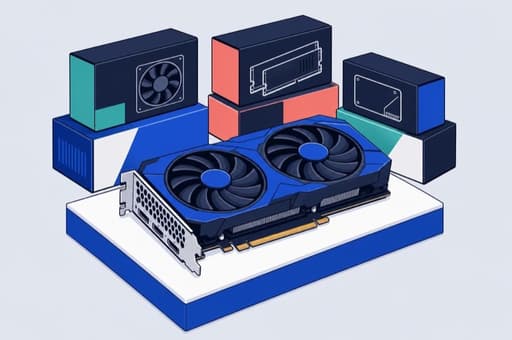
AMD Radeon graphics
Graphics chips and add-in cards for gaming PCs. Recent demand strengthened even as the console business declined, but this is a mature market where memory costs, product quality and share won from rivals decide the outcome.
Competes with GeForce RTX 50 Series (NVIDIA) · Arc B-Series (Intel)
In plain English
For a gaming computer, the graphics card is the part that draws each frame on the screen. Radeon is AMD's consumer line, sold as stand-alone cards and built into complete PCs.
Gamers and computer makers pay for faster, smoother pictures; board partners package AMD's chips with memory and cooling, and retailers put the finished cards on shelves. Upgrades create repeat business, but the overall market is mature. Radeon therefore has to win buyers from NVIDIA's GeForce and Intel's Arc while absorbing swings in memory cost and store inventory.


 AMD Ryzen and Ryzen AI processorsThe main processor inside desktop and notebook computers. Units rose 34% in the FY2026 second quarter while average price fell 6%; watch whether more chips sold can outrun the weaker pricing and a soft PC market.
The main processor inside desktop and notebook computers. Units rose 34% in the FY2026 second quarter while average price fell 6%; watch whether more chips sold can outrun the weaker pricing and a soft PC market.
In plain English
Open a modern laptop and Ryzen is one of the chips that can act as its main brain, handling everyday instructions and, in newer versions, some artificial-intelligence tasks directly on the machine. AMD designs it; outside factories make it.
Computer makers buy Ryzen for new models, while distributors and stores also sell boxed chips to people building their own PCs. Revenue rises when manufacturers choose AMD for more designs and shoppers replace old machines. The catch is familiar retail arithmetic: AMD shipped more units in the latest quarter, but earned less per unit on average.
Competes with Core Ultra 200V (Intel) · Snapdragon X Elite (Qualcomm)
 AMD Instinct accelerators and AMD Helios rack-scale solutionPowerful calculation chips and a complete server-rack design for artificial intelligence. OpenAI's plan reaches up to 6 gigawatts, a power measure on the scale of several large power plants, but remains conditional; watch for firm orders and shipped hardware.
Powerful calculation chips and a complete server-rack design for artificial intelligence. OpenAI's plan reaches up to 6 gigawatts, a power measure on the scale of several large power plants, but remains conditional; watch for firm orders and shipped hardware.
In plain English
These are specialized chips and cabinet-sized systems built to teach and run artificial intelligence. Picture a restaurant kitchen where dozens of cooks work on one enormous order: Helios arranges the processors, network links and software so they can work together instead of getting in one another's way.
Cloud providers, AI labs and government-backed projects pay for chips or finished racks as equipment ships. AMD designs the system, outside factories make the parts, and Sanmina, a company that builds equipment for others, helps assemble racks. The promised demand is enormous, but sales appear only when memory, power, cooling, permits and ready buildings all line up.
Competes with GB300 NVL72 (NVIDIA) · OpenAI-designed accelerators (Broadcom/OpenAI)
 AMD ROCm softwareFree software that helps developers run artificial-intelligence programs on AMD chips. It supports millions of trained AI programs, but has no stand-alone sales; watch whether easier switching pulls through more hardware demand.
Free software that helps developers run artificial-intelligence programs on AMD chips. It supports millions of trained AI programs, but has no stand-alone sales; watch whether easier switching pulls through more hardware demand.
In plain English
ROCm is the translator between an artificial-intelligence program and AMD's Instinct chips. Like a travel adapter that lets familiar plugs work in a different wall socket, it saves developers from rebuilding everything when they try AMD hardware.
AMD gives the software away rather than charging a separate fee. The payoff comes if better compatibility persuades developers, online services that rent computing power and computer makers to buy more Instinct systems. Continued support for popular programming tools matters because NVIDIA's CUDA software already ties many developers closely to its chips.
Competes with CUDA (NVIDIA) · oneAPI (Intel)
 AMD EPYC server processorsThe main brains inside cloud and company servers. Sales to both cloud operators and other businesses grew more than 70% in the FY2026 second quarter; watch whether AMD keeps gaining designs as server demand expands.
The main brains inside cloud and company servers. Sales to both cloud operators and other businesses grew more than 70% in the FY2026 second quarter; watch whether AMD keeps gaining designs as server demand expands.
In plain English
Behind websites, business software and online storage sit rooms of computers that need a main processor. EPYC is AMD's version of that processor: the foreman that assigns work, moves data and keeps each server useful.
Large companies that rent computing power online, plus businesses running their own machines, ultimately pay for these chips through server makers and other suppliers. Once approved, one design can repeat across many machines. That makes each new placement valuable, but winning it takes long testing and dependable access to advanced manufacturing capacity.
Competes with Xeon 6 (Intel) · Grace CPU (NVIDIA)
 AMD Embedded productsLong-lived chips built into factory, phone-network, vehicle and aerospace equipment. Revenue rose 19% in the FY2026 second quarter, led by embedded computer processors; watch whether that recovery lasts through customers' slow design cycles.
Long-lived chips built into factory, phone-network, vehicle and aerospace equipment. Revenue rose 19% in the FY2026 second quarter, led by embedded computer processors; watch whether that recovery lasts through customers' slow design cycles.
In plain English
The unglamorous chips that quietly stay inside other machines for years. AMD sells ordinary computer processors for specialized equipment, plus chips whose internal wiring can be rearranged after manufacture to fit a customer's exact job.
A factory-equipment, phone-network, vehicle or aerospace maker chooses one during product design, tests it carefully, then may keep buying it for the life of that machine. That creates sticky, long-running sales, but the door opens slowly: approval can take years, and being chosen is only an opportunity until the customer's product reaches production.
Competes with Agilex 7 (Altera) · PolarFire SoC FPGA (Microchip)
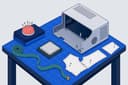 AMD semi-custom SoC productsCustom-designed chips for PlayStation, Xbox and Valve game machines. Gaming revenue fell 31% in the FY2026 second quarter mainly because these orders declined; watch the aging console cycle and the timing of new machines.
Custom-designed chips for PlayStation, Xbox and Valve game machines. Gaming revenue fell 31% in the FY2026 second quarter mainly because these orders declined; watch the aging console cycle and the timing of new machines.
In plain English
A game-console maker cannot simply pick any chip from a shelf. AMD works with Sony, Microsoft and Valve to combine the main processor and graphics machinery into one custom package, rather like a tailor cutting one suit for a customer's exact measurements.
The customer pays AMD during development and then buys production chips for each machine it makes. That creates a burst of volume after a console launch and a fade as the generation ages. Retailers sell the finished consoles, but AMD's money depends mainly on its partners' manufacturing plans and inventory.
Competes with Nintendo Switch 2 custom processor (NVIDIA) · Snapdragon G3 Gen 3 (Qualcomm)
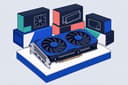 AMD Radeon graphicsGraphics chips and add-in cards for gaming PCs. Recent demand strengthened even as the console business declined, but this is a mature market where memory costs, product quality and share won from rivals decide the outcome.
Graphics chips and add-in cards for gaming PCs. Recent demand strengthened even as the console business declined, but this is a mature market where memory costs, product quality and share won from rivals decide the outcome.
In plain English
For a gaming computer, the graphics card is the part that draws each frame on the screen. Radeon is AMD's consumer line, sold as stand-alone cards and built into complete PCs.
Gamers and computer makers pay for faster, smoother pictures; board partners package AMD's chips with memory and cooling, and retailers put the finished cards on shelves. Upgrades create repeat business, but the overall market is mature. Radeon therefore has to win buyers from NVIDIA's GeForce and Intel's Arc while absorbing swings in memory cost and store inventory.
Competes with GeForce RTX 50 Series (NVIDIA) · Arc B-Series (Intel)
Named in filings, launches and programs
- OpenAI product purchase agreementCustomer program · RampingPlanned buyer of MI450 systems beginning in late 2026; purchases still depend on deployment, commercial and performance conditions.
- AMD Pensando networking productsProduct line · RampingNetworking chips and cards that move data between machines inside AMD's growing data-center systems.
- AMD Alveo accelerator cardsProductReconfigurable data-center cards built for specialized calculation and networking jobs.
- AMD Radeon PRO and Radeon PRO VProduct lineProfessional graphics chips for workstations and visual-design work, separate from consumer Radeon cards.
- AMD Solarflare adapters and OnloadProduct lineWired-network cards and software that speed data traffic inside computing centers.
- AMD Vitis, Vitis AI and VivadoPlatformDesign tools customers use to set up AMD's adaptable and embedded chips.
- ZT Design BusinessBrandRetained rack-design people and know-how from ZT Systems; continuing revenue was not yet meaningful.
- Silo AIBrandAI software and trained-program development team acquired in 2024; its reported results were not yet meaningful.
- TaalasBrand · AnnouncedPlanned acquisition focused on specialized chips that run trained AI programs; the deal had not closed.
- Meta multi-year agreementCustomer program · RampingAnother large MI450 deployment plan, with first shipments targeted for late 2026.
- Anthropic strategic partnershipCustomer program · AnnouncedThe artificial-intelligence developer plans to begin deployment in early 2027, alongside up to $5 billion of AMD investment commitments.
- OCI MI450 superclusterCustomer program · RampingOracle plans an initial cluster of roughly 50,000 AMD AI chips, beginning in the second half of 2026.
- Microsoft long-term strategic partnershipCustomer program · RampingMicrosoft plans Helios racks, EPYC processors and Pensando networking for Azure, its online computing service.
- AMD-Cisco-HUMAIN joint ventureCustomer program · RampingSaudi AI-infrastructure venture targeting one gigawatt by 2030; its first systems were already operating.
- Rackspace 30 MW deploymentCustomer program · AnnouncedA staged MI450 and Helios installation sized around thirty megawatts of electric power, planned from late 2026 through 2028.
- Core Scientific infrastructure partnershipCustomer program · AnnouncedComputing sites intended to host up to 2.5 gigawatts of electrical capacity for AMD customers.
OpenAI product purchase agreementCustomer program · Ramping
Planned buyer of MI450 systems beginning in late 2026; purchases still depend on deployment, commercial and performance conditions.
AMD Pensando networking productsProduct line · Ramping
Networking chips and cards that move data between machines inside AMD's growing data-center systems.
AMD Alveo accelerator cardsProduct
Reconfigurable data-center cards built for specialized calculation and networking jobs.
AMD Radeon PRO and Radeon PRO VProduct line
Professional graphics chips for workstations and visual-design work, separate from consumer Radeon cards.
AMD Solarflare adapters and OnloadProduct line
Wired-network cards and software that speed data traffic inside computing centers.
AMD Vitis, Vitis AI and VivadoPlatform
Design tools customers use to set up AMD's adaptable and embedded chips.
ZT Design BusinessBrand
Retained rack-design people and know-how from ZT Systems; continuing revenue was not yet meaningful.
Silo AIBrand
AI software and trained-program development team acquired in 2024; its reported results were not yet meaningful.
TaalasBrand · Announced
Planned acquisition focused on specialized chips that run trained AI programs; the deal had not closed.
Meta multi-year agreementCustomer program · Ramping
Another large MI450 deployment plan, with first shipments targeted for late 2026.
Anthropic strategic partnershipCustomer program · Announced
The artificial-intelligence developer plans to begin deployment in early 2027, alongside up to $5 billion of AMD investment commitments.
OCI MI450 superclusterCustomer program · Ramping
Oracle plans an initial cluster of roughly 50,000 AMD AI chips, beginning in the second half of 2026.
Microsoft long-term strategic partnershipCustomer program · Ramping
Microsoft plans Helios racks, EPYC processors and Pensando networking for Azure, its online computing service.
AMD-Cisco-HUMAIN joint ventureCustomer program · Ramping
Saudi AI-infrastructure venture targeting one gigawatt by 2030; its first systems were already operating.
Rackspace 30 MW deploymentCustomer program · Announced
A staged MI450 and Helios installation sized around thirty megawatts of electric power, planned from late 2026 through 2028.
Core Scientific infrastructure partnershipCustomer program · Announced
Computing sites intended to host up to 2.5 gigawatts of electrical capacity for AMD customers.