
Amazon (AMZN)
Runs global online stores, seller services, advertising, Prime, and the AWS cloud platform.
Something off on this page? Send us feedback.
Amazon is still chiefly a shopping machine: it sells goods itself, charges outside merchants to use its storefront and delivery network, and wraps shoppers in paid memberships. Its cloud arm is smaller in sales but supplies most operating profit and is pulling the company toward artificial-intelligence infrastructure, while advertising turns shopping attention into a fast-growing second payoff. The whole system depends on delivery trust, plentiful computing capacity, and the cash to build both.
Item facts: FY2025 · year ended Dec 31, 2025, from filings, earnings calls and company pages.
Judgment weights, not filed revenue
The band summarizes business focus and direction. ~ marks estimates.
7 in detail · 15 more below
Online Stores
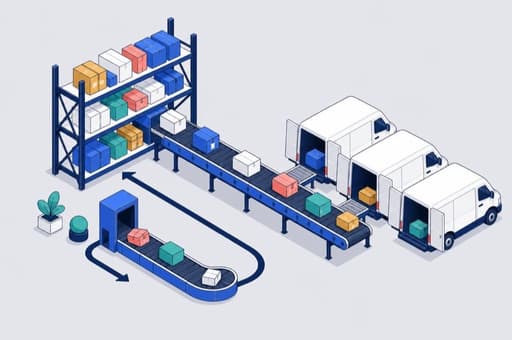
Amazon's own online merchandise sales brought in $269.29B in FY2025. They are still the largest line, but their share keeps easing as cloud and ads grow faster.
Competes with Walmart.com (Walmart) · eBay fixed-price listings (eBay)
In plain English
This is the familiar shop where Amazon itself buys goods, sets the selling price, and sends the order to your door. It includes online grocery delivery and pickup, but not goods chosen inside a physical store.
Amazon pays manufacturers and other suppliers for inventory, then keeps what remains after selling, storing, packing, delivering, discounting, and handling returns. That gives it control over price and availability, but also leaves it holding unsold goods and the bill for getting every parcel home.
Third-Party Seller Services
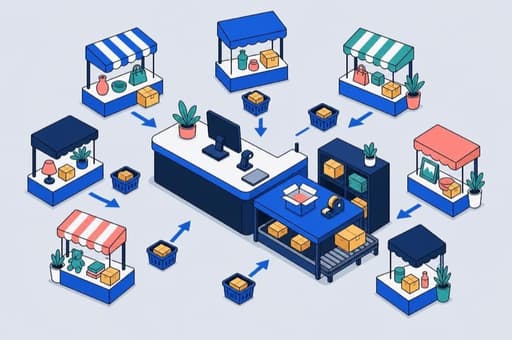
Fees from outside merchants reached $172.16B in FY2025. Those merchants supplied most paid items late in the year; seller trust, genuine goods, and delivery quality keep the flywheel turning.
Competes with Walmart Marketplace and Walmart Fulfillment Services (Walmart) · eBay Marketplace (eBay)
In plain English
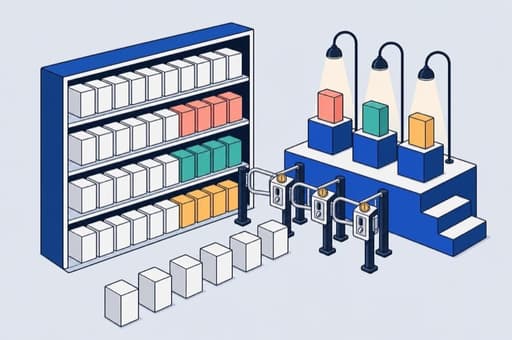
Picture a huge market hall: independent merchants bring the merchandise, while Amazon supplies the crowded entrance, checkout counter, and—if a seller chooses—the warehouse and delivery crew. Shoppers see one storefront even though many businesses stock it.
The merchant receives the sale proceeds. Amazon keeps a commission and may also charge for storage, packing, shipping, and promotion. Because Amazon counts only its fees here rather than the whole price of each merchant's goods, the amount shoppers spend through this marketplace is much larger than this revenue line.
Physical Stores (Whole Foods Market)
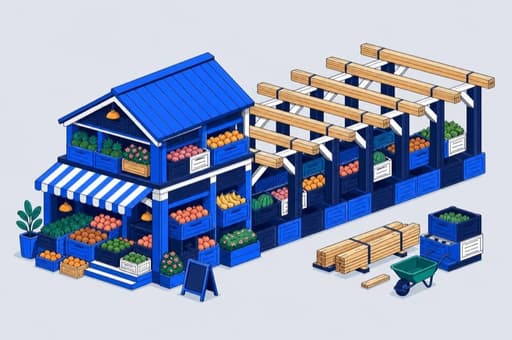
Whole Foods anchors the physical-store business, while delivered and curbside groceries count elsewhere. Amazon plans more than one hundred new locations; watch whether frequent grocery trips justify slow growth and store costs.
Competes with Walmart Grocery (Walmart) · Sprouts stores (Sprouts Farmers Market)
In plain English
Here the checkout happens in a real store, mainly a grocery store. A delivered or curbside grocery order belongs to Online Stores instead, so this line is narrower than Amazon's whole food business.
Households pay for produce, pantry goods, and other items selected on site. Amazon buys those goods, runs the stores, and keeps the retail margin left after suppliers, workers, spoilage, and other store costs. Frequent grocery trips can also deepen the wider relationship with shoppers, even though the physical-store line grows far more slowly than cloud or advertising.
Amazon Web Services (AWS)
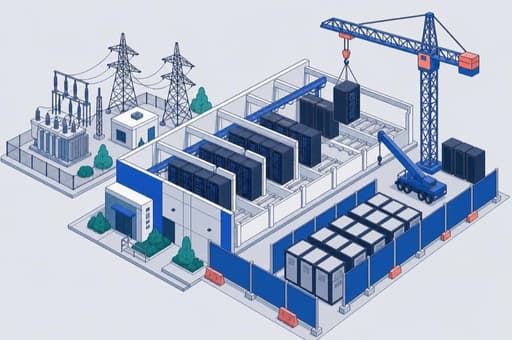
AWS rents computing power and supplies most of Amazon's operating profit. At June 2026, customer promises totaled a $496B order book spread over years; scarce capacity is the immediate brake.
Competes with Microsoft Azure (Microsoft) · Google Cloud (Alphabet) · CoreWeave Cloud (CoreWeave)
In plain English
Instead of buying and maintaining rooms full of computers, a business can rent what it needs from AWS: computing power, data storage, organized data systems, and tools for building artificial intelligence. Customers range from young companies to large organizations.
They pay as they use the service, agree to fixed fees, or promise spending over several years. That recurring use produces much richer profit than retail, but Amazon must build data centers and secure chips and electricity before customers can use them. Demand has been outrunning available capacity, so construction speed and power supply matter as much as winning contracts.
Advertising Services (Amazon Ads)
Sellers and brands pay to appear where shoppers and viewers are looking. Sales grew 26.2% in Q2 FY2026; watch whether measurement stays useful without making search feel bought.
Competes with Google Shopping and Performance Max (Alphabet) · Walmart Connect Sponsored Search (Walmart)
In plain English
A shopper searches for coffee makers, and some brands pay for a better chance to be seen. Amazon also places ads across display pages and video. The largest format is Sponsored Products, which puts promoted goods into shopping results.
Sellers, brands, and their advertising agencies pay for each click or each time an ad appears. Amazon can connect that attention to later purchases on its own store, which helps advertisers judge whether the spending worked. The bargain lasts only while shoppers trust the results and advertisers trust the measurement; privacy rules and a government lawsuit alleging an undisclosed search-ad surcharge put both under scrutiny.
Subscription Services (Amazon Prime)
Prime and Amazon's other paid media subscriptions generated $49.62B in FY2025. The job is steady renewal revenue—and giving households more reasons to shop—so benefit value and delivery costs decide retention.
Competes with Walmart+ (Walmart) · Instacart+ (Instacart)
In plain English
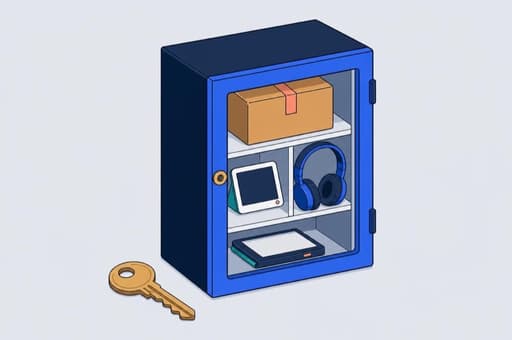
The membership card at the center is Prime, paid monthly or yearly for delivery and entertainment benefits. This line is broader, also collecting Amazon's other video, audio, music, and electronic-book subscriptions.
Households keep paying when the bundle saves enough time or offers enough entertainment to feel indispensable. Amazon receives the fee throughout the membership period, then spends to deliver parcels and license or make content. The direct subscription money matters, but the deeper payoff is habit: members with useful benefits have more reasons to begin each shopping trip inside Amazon.
Amazon Leo
Amazon is assembling a low-orbit internet network and targeted initial service capacity during 2026. Launches, customer dishes, government approvals, and the pending Globalstar purchase all gate the first revenue.
Competes with Starlink (SpaceX) · OneWeb (Eutelsat)
In plain English
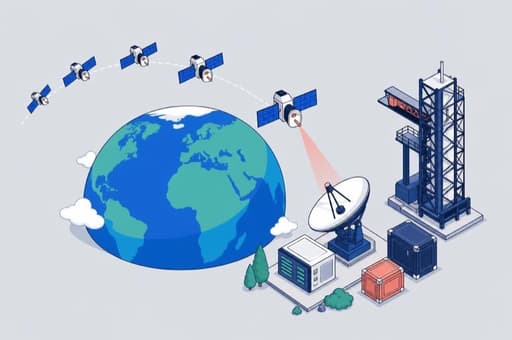
Far above the delivery network, Amazon is building another way to reach customers: thousands of small satellites meant to carry internet service to ground dishes. Nearly four hundred were in orbit by July 2026, but the network had not yet produced disclosed revenue.
The eventual customers are expected to include businesses, governments, airlines, and phone companies, reached partly through more than twenty distribution partners. They would pay for access to the network. Before that can happen at scale, Amazon needs enough successful launches, working customer equipment, radio rights, and approvals; its planned purchase of Globalstar would add more satellite and radio assets if it closes.


 Online StoresAmazon's own online merchandise sales brought in $269.29B in FY2025. They are still the largest line, but their share keeps easing as cloud and ads grow faster.
Amazon's own online merchandise sales brought in $269.29B in FY2025. They are still the largest line, but their share keeps easing as cloud and ads grow faster.
In plain English
This is the familiar shop where Amazon itself buys goods, sets the selling price, and sends the order to your door. It includes online grocery delivery and pickup, but not goods chosen inside a physical store.
Amazon pays manufacturers and other suppliers for inventory, then keeps what remains after selling, storing, packing, delivering, discounting, and handling returns. That gives it control over price and availability, but also leaves it holding unsold goods and the bill for getting every parcel home.
Competes with Walmart.com (Walmart) · eBay fixed-price listings (eBay)
 Third-Party Seller ServicesFees from outside merchants reached $172.16B in FY2025. Those merchants supplied most paid items late in the year; seller trust, genuine goods, and delivery quality keep the flywheel turning.
Fees from outside merchants reached $172.16B in FY2025. Those merchants supplied most paid items late in the year; seller trust, genuine goods, and delivery quality keep the flywheel turning.
In plain English
Picture a huge market hall: independent merchants bring the merchandise, while Amazon supplies the crowded entrance, checkout counter, and—if a seller chooses—the warehouse and delivery crew. Shoppers see one storefront even though many businesses stock it.
The merchant receives the sale proceeds. Amazon keeps a commission and may also charge for storage, packing, shipping, and promotion. Because Amazon counts only its fees here rather than the whole price of each merchant's goods, the amount shoppers spend through this marketplace is much larger than this revenue line.
Competes with Walmart Marketplace and Walmart Fulfillment Services (Walmart) · eBay Marketplace (eBay)
 Physical Stores (Whole Foods Market)Whole Foods anchors the physical-store business, while delivered and curbside groceries count elsewhere. Amazon plans more than one hundred new locations; watch whether frequent grocery trips justify slow growth and store costs.
Whole Foods anchors the physical-store business, while delivered and curbside groceries count elsewhere. Amazon plans more than one hundred new locations; watch whether frequent grocery trips justify slow growth and store costs.
In plain English
Here the checkout happens in a real store, mainly a grocery store. A delivered or curbside grocery order belongs to Online Stores instead, so this line is narrower than Amazon's whole food business.
Households pay for produce, pantry goods, and other items selected on site. Amazon buys those goods, runs the stores, and keeps the retail margin left after suppliers, workers, spoilage, and other store costs. Frequent grocery trips can also deepen the wider relationship with shoppers, even though the physical-store line grows far more slowly than cloud or advertising.
Competes with Walmart Grocery (Walmart) · Sprouts stores (Sprouts Farmers Market)
 Amazon Web Services (AWS)AWS rents computing power and supplies most of Amazon's operating profit. At June 2026, customer promises totaled a $496B order book spread over years; scarce capacity is the immediate brake.
AWS rents computing power and supplies most of Amazon's operating profit. At June 2026, customer promises totaled a $496B order book spread over years; scarce capacity is the immediate brake.
In plain English
Instead of buying and maintaining rooms full of computers, a business can rent what it needs from AWS: computing power, data storage, organized data systems, and tools for building artificial intelligence. Customers range from young companies to large organizations.
They pay as they use the service, agree to fixed fees, or promise spending over several years. That recurring use produces much richer profit than retail, but Amazon must build data centers and secure chips and electricity before customers can use them. Demand has been outrunning available capacity, so construction speed and power supply matter as much as winning contracts.
Competes with Microsoft Azure (Microsoft) · Google Cloud (Alphabet) · CoreWeave Cloud (CoreWeave)
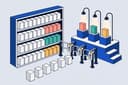 Advertising Services (Amazon Ads)Sellers and brands pay to appear where shoppers and viewers are looking. Sales grew 26.2% in Q2 FY2026; watch whether measurement stays useful without making search feel bought.
Sellers and brands pay to appear where shoppers and viewers are looking. Sales grew 26.2% in Q2 FY2026; watch whether measurement stays useful without making search feel bought.
In plain English
A shopper searches for coffee makers, and some brands pay for a better chance to be seen. Amazon also places ads across display pages and video. The largest format is Sponsored Products, which puts promoted goods into shopping results.
Sellers, brands, and their advertising agencies pay for each click or each time an ad appears. Amazon can connect that attention to later purchases on its own store, which helps advertisers judge whether the spending worked. The bargain lasts only while shoppers trust the results and advertisers trust the measurement; privacy rules and a government lawsuit alleging an undisclosed search-ad surcharge put both under scrutiny.
Competes with Google Shopping and Performance Max (Alphabet) · Walmart Connect Sponsored Search (Walmart)
 Subscription Services (Amazon Prime)Prime and Amazon's other paid media subscriptions generated $49.62B in FY2025. The job is steady renewal revenue—and giving households more reasons to shop—so benefit value and delivery costs decide retention.
Prime and Amazon's other paid media subscriptions generated $49.62B in FY2025. The job is steady renewal revenue—and giving households more reasons to shop—so benefit value and delivery costs decide retention.
In plain English
The membership card at the center is Prime, paid monthly or yearly for delivery and entertainment benefits. This line is broader, also collecting Amazon's other video, audio, music, and electronic-book subscriptions.
Households keep paying when the bundle saves enough time or offers enough entertainment to feel indispensable. Amazon receives the fee throughout the membership period, then spends to deliver parcels and license or make content. The direct subscription money matters, but the deeper payoff is habit: members with useful benefits have more reasons to begin each shopping trip inside Amazon.
Competes with Walmart+ (Walmart) · Instacart+ (Instacart)
 Amazon LeoAmazon is assembling a low-orbit internet network and targeted initial service capacity during 2026. Launches, customer dishes, government approvals, and the pending Globalstar purchase all gate the first revenue.
Amazon is assembling a low-orbit internet network and targeted initial service capacity during 2026. Launches, customer dishes, government approvals, and the pending Globalstar purchase all gate the first revenue.
In plain English
Far above the delivery network, Amazon is building another way to reach customers: thousands of small satellites meant to carry internet service to ground dishes. Nearly four hundred were in orbit by July 2026, but the network had not yet produced disclosed revenue.
The eventual customers are expected to include businesses, governments, airlines, and phone companies, reached partly through more than twenty distribution partners. They would pay for access to the network. Before that can happen at scale, Amazon needs enough successful launches, working customer equipment, radio rights, and approvals; its planned purchase of Globalstar would add more satellite and radio assets if it closes.
Competes with Starlink (SpaceX) · OneWeb (Eutelsat)
Named in filings, launches and programs
- Amazon BusinessCustomer programA company-purchasing storefront serving more than ten million organizations, with over $60B in yearly gross sales flowing through Online Stores and Seller Services.
- Amazon BedrockPlatform · RampingAn AWS service that lets companies choose and run ready-made artificial-intelligence models; its money stays inside AWS.
- Trainium and GravitonProduct line · RampingAmazon-designed chips for artificial intelligence and general computing inside AWS; their combined sales pace exceeded $25B a year in Q2 FY2026.
- OpenAI AWS capacity programCustomer programA seven-year, $38B agreement for OpenAI to use AWS computing capacity, with additional Amazon-designed chip capacity due to ramp in 2027.
- Anthropic AWS and Trainium programCustomer programThe AI developer committed more than $100B over ten years for AWS capacity using Amazon-designed chips, alongside Amazon's investments in Anthropic.
- Snowflake strategic collaborationCustomer programThe business-data software company announced a $6B multi-year AWS commitment in May 2026.
- Amazon MGM Studios and Prime VideoBrandFilm, television, sports, and licensing supply subscriptions and advertising space; a venture is developing the next generation of James Bond films.
- Alexa+Service · RampingA newer voice assistant offered through existing Alexa devices and included with Prime; Amazon does not disclose its money separately.
- Amazon DevicesProduct lineKindle, Fire, Echo, Ring, Blink, and eero hardware connect households to Amazon shopping, media, and smart-home services; sales are undisclosed.
- Amazon PharmacyService · RampingPrescription ordering and delivery using Amazon's commerce network, with customers and same-day reach expanding but no separate sales figure.
- One MedicalBrandMembership and employer-paid primary care; its money appears within Amazon's small collection of other services.
- ZooxBrand · RampingAmazon's self-driving vehicle and taxi service expanded coverage in 2026, without separately disclosed sales.
- Amazon Supply Chain ServicesService · RampingMoves, stores, and delivers goods for outside businesses; named customers include Procter & Gamble, 3M, Lands' End, and American Eagle Outfitters.
- Amazon co-branded credit-card agreementsCustomer programCard-partner payments add to Amazon's other services rather than standing as a separate business line.
- Globalstar acquisitionBrand · AnnouncedA pending roughly $10.9B purchase of satellite and radio assets, announced in August 2026 and expected to close in 2027.
Amazon BusinessCustomer program
A company-purchasing storefront serving more than ten million organizations, with over $60B in yearly gross sales flowing through Online Stores and Seller Services.
Amazon BedrockPlatform · Ramping
An AWS service that lets companies choose and run ready-made artificial-intelligence models; its money stays inside AWS.
Trainium and GravitonProduct line · Ramping
Amazon-designed chips for artificial intelligence and general computing inside AWS; their combined sales pace exceeded $25B a year in Q2 FY2026.
OpenAI AWS capacity programCustomer program
A seven-year, $38B agreement for OpenAI to use AWS computing capacity, with additional Amazon-designed chip capacity due to ramp in 2027.
Anthropic AWS and Trainium programCustomer program
The AI developer committed more than $100B over ten years for AWS capacity using Amazon-designed chips, alongside Amazon's investments in Anthropic.
Snowflake strategic collaborationCustomer program
The business-data software company announced a $6B multi-year AWS commitment in May 2026.
Amazon MGM Studios and Prime VideoBrand
Film, television, sports, and licensing supply subscriptions and advertising space; a venture is developing the next generation of James Bond films.
Alexa+Service · Ramping
A newer voice assistant offered through existing Alexa devices and included with Prime; Amazon does not disclose its money separately.
Amazon DevicesProduct line
Kindle, Fire, Echo, Ring, Blink, and eero hardware connect households to Amazon shopping, media, and smart-home services; sales are undisclosed.
Amazon PharmacyService · Ramping
Prescription ordering and delivery using Amazon's commerce network, with customers and same-day reach expanding but no separate sales figure.
One MedicalBrand
Membership and employer-paid primary care; its money appears within Amazon's small collection of other services.
ZooxBrand · Ramping
Amazon's self-driving vehicle and taxi service expanded coverage in 2026, without separately disclosed sales.
Amazon Supply Chain ServicesService · Ramping
Moves, stores, and delivers goods for outside businesses; named customers include Procter & Gamble, 3M, Lands' End, and American Eagle Outfitters.
Amazon co-branded credit-card agreementsCustomer program
Card-partner payments add to Amazon's other services rather than standing as a separate business line.
Globalstar acquisitionBrand · Announced
A pending roughly $10.9B purchase of satellite and radio assets, announced in August 2026 and expected to close in 2027.