
AngloGold Ashanti (AU)
Operates and redevelops gold mines across Africa, Australia and the Americas.
Something off on this page? Send us feedback.
AngloGold Ashanti digs gold out of the ground in Africa, Australia and South America and sells it at whatever the world is paying that day. It sets no price and competes on nothing but cost — the business is the gap between what an ounce costs to dig up and what an ounce fetches. That gap is unusually wide now, and the cash is going to shareholders and into a new mine in Nevada.
Item facts: FY2025 · year ended Dec 31, 2025, from filings, earnings calls and company pages.
Judgment weights, not filed revenue
The band summarizes business focus and direction. ~ marks estimates.
8 in detail · 10 more below
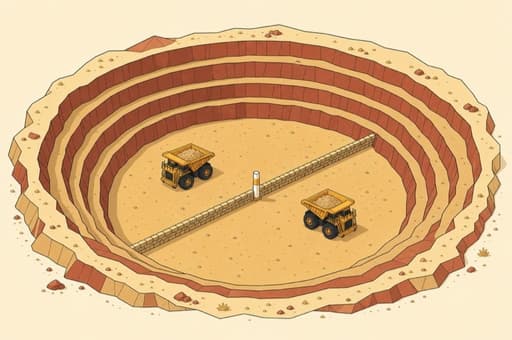
Sukari
Egypt's Eastern Desert mine, bought with Centamin in late 2024 and now the cheapest ounce AngloGold has — 500,000 ounces in 2025 at $783 an ounce in cash costs. The Egyptian state owns half of it, and output eased slightly in early 2026.
Competes with North Mara (Barrick) · Ahafo (Newmont)
In plain English
A wide pit in Egypt's Eastern Desert with tunnels running underneath it, where rock is hauled up, crushed, and the gold washed out. An ounce costs less to win here than anywhere else the company works — about $783 against a group average near $1,242.
Selling it is simple: every gram of Sukari's gold and silver goes to MKS PAMP, a Swiss refiner, and cash comes back at the day's price. The complication is ownership. Egypt's state mineral authority holds half the mine, so half the profit walks out the door to the partner.
Geita
The wholly-owned Tanzanian flagship: 492,000 ounces in 2025 at $1,038 an ounce in cash costs. Since June 2025 a fifth of its gold goes to Tanzania's central bank. Plant capacity is on management's named bottleneck list.
Competes with North Mara (Barrick) · Bulyanhulu (Barrick)
In plain English
Everything here belongs to AngloGold — the open pits, the underground workings and every ounce that comes out of them, spread across the old Lake Victoria goldfields in north-western Tanzania. No partner takes a cut.
Most of that gold leaves as bars for bullion traders at whatever gold costs that day — an average of $3,468 an ounce across 2025, and higher since. Since mid-2025 a fifth of the output goes somewhere unusual: Tanzania's central bank buys it, refined at a local refinery, to build up the country's reserves. Buyers with names and standing commitments are unusual in this trade — and this one ties the mine to the rules the government writes.
Siguiri
Guinea's open pits, and the group's most expensive ounce — 289,000 ounces in 2025 at $1,783 in cash costs, roughly double Sukari's. A plant rebuilt for harder rock is the cheap route to more ounces.
Competes with Lefa (Nordgold) · Bankan (Predictive Discovery)
In plain English
This is where an ounce costs the most. Several open pits in Guinea feed one mill, 85% owned by AngloGold with the government of Guinea holding the rest, and each ounce costs about twice what the group's cheapest mine spends — so Siguiri makes real money while gold is dear and very little when it is not.
All of its gold is bought by Rand Refinery. The improvement management points to is plumbing rather than prospecting — rebuilding the plant to run entirely on fresh hard rock so it can push more tonnes through. The chief executive says that would take the mine from about 300,000 ounces a year to 350,000 or more without much spending.
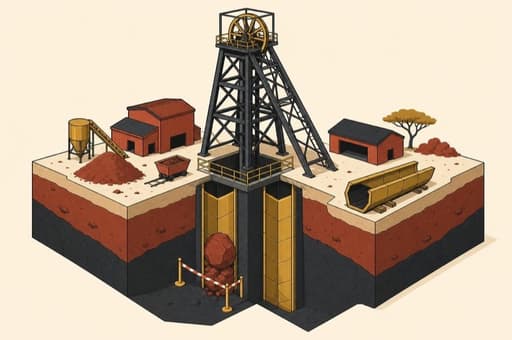
Obuasi
Ghana's deep underground mine, worked to about 1,500 metres — 266,000 ounces in 2025, up 20%. A contractor death in April 2026 stopped it for two weeks and left ore chutes out of service; management still guides 150,000 ounces for the second half.
Competes with Tarkwa (Gold Fields) · Ahafo North (Newmont)
In plain English
A kilometre and a half straight down. That is how deep the workings of this Ghanaian mine run, and moving rock up from there needs shafts, hoists and vertical chutes called ore passes — when any of that breaks, the whole mine slows.
Its gold goes to Ghana's central bank under a national reserve arrangement and to bullion banks. Nobody needs persuading to buy it, so growth here is an engineering question, not a selling one. In April 2026 a contractor was killed by a release of rock inside an ore pass; the mine stood still for roughly two weeks, and a replacement chute is due late in 2026.
AngloGold Ashanti Mineração (Cuiabá)
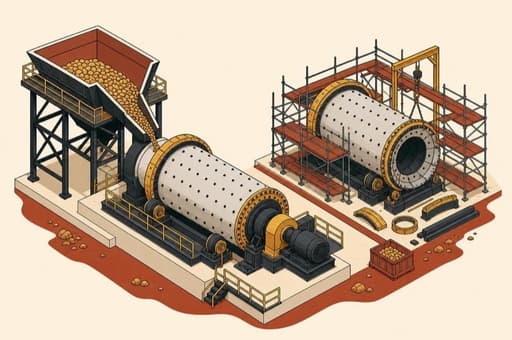
The Brazilian underground complex in Minas Gerais, cheap to run at $976 an ounce in cash costs. Output rose in the first half of 2026, and management wants about 75,000 ounces more within three years by feeding the existing plant harder.
Competes with Turmalina / MTL Complex (Jaguar Mining) · Serra Grande (Aura Minerals)
In plain English
The growth here comes from the plant, not from new ground. Underground workings in Brazil's Iron Quadrangle — an old mining district in the state of Minas Gerais — feed a processing plant called Queiroz that AngloGold already owns.
That plant can take more rock than the mines currently send it, so extra ounces come from filling space already paid for: the same oven, more bread. The target is roughly 75,000 added ounces a year within three years, from refurbishing a second processing line and opening an orebody called Viana. Gold leaves through banks, and Queiroz also turns out sulphuric acid, sold on the side.
Tropicana
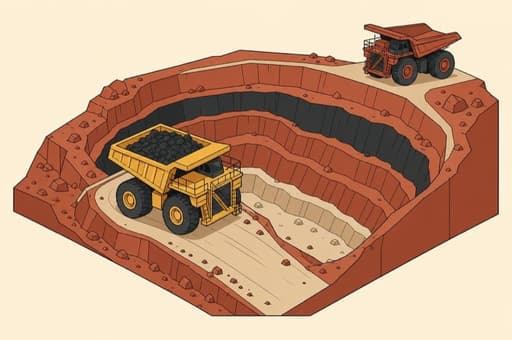
Western Australian pit and underground, 70% AngloGold and 30% Regis Resources. The clear improver — AngloGold's share of output rose to 169,000 ounces in the first half of 2026 from 139,000 ounces — but the next pit holds less gold per tonne, so the second half is guided lower.
Competes with KCGM (Northern Star) · Duketon (Regis Resources)
In plain English
Shared property. AngloGold owns seventy percent of this open pit and its underground extension in Western Australia and runs it day to day; Regis Resources owns the other thirty and books its own share of the gold.
The selling is ordinary — dig, crush, ship at the market price — but the direction is not. Tropicana was the standout of early 2026, the one mine whose output clearly stepped up. The next stretch is harder. Mining is moving into an area called Havana 6, where the rock carries less gold per tonne, so every truckload yields less and the mine has been guided to produce less in the second half of 2026.
Sunrise Dam
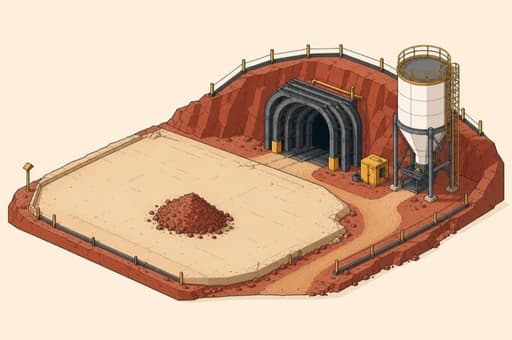
Wholly-owned Western Australian mine and the portfolio's clearest decline: first-half 2026 output fell 18% to 100,000 ounces, at some of the group's highest costs. Australia holds the thinnest reserves of the three regions.
Competes with Granny Smith (Gold Fields) · Duketon (Regis Resources)
In plain English
Honest trouble. An underground mine and open pit near Laverton in the Western Australian goldfields, owned outright, where output fell about eighteen percent in the first half of 2026, costs sit near the top of the group's range, and executives barely mentioned the place on the last two earnings calls.
It still sells every ounce at the market price, and at today's gold price that is good money — cash of exactly the kind that pays for the building going on in Nevada. But a mine is a stock of rock that runs down, and Australia carries the smallest slice of the group's remaining reserves against what it digs each year.
Arthur Gold Project
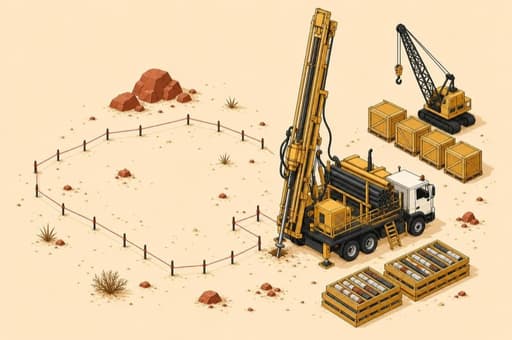
The Nevada development near Beatty, made of the Silicon and Merlin deposits. A first reserve of 4.9m ounces was declared in February 2026; the study points to about 500,000 ounces a year at roughly $778 an ounce in cash costs, for about $3.6bn to build.
Competes with Cortez / Goldrush (Nevada Gold Mines) · Nevada district projects (i-80 Gold)
In plain English
Nothing has been dug here yet. Arthur is a stretch of Nevada desert near the town of Beatty, assembled out of three separate company purchases, where drilling has proved up about 4.9 million ounces of gold to be taken out by ordinary open-pit mining.
If it gets built — a full feasibility study comes first, and the bill is around $3.6 billion — it would yield roughly 500,000 ounces a year for about nine years, at a cost per ounce beaten only by Sukari, adding close to a sixth to what the company digs today. That is where the windfall is pointed: the group's mines hold roughly a dozen years of reserves, and Nevada is the answer to what comes after.


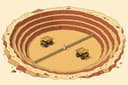 SukariEgypt's Eastern Desert mine, bought with Centamin in late 2024 and now the cheapest ounce AngloGold has — 500,000 ounces in 2025 at $783 an ounce in cash costs. The Egyptian state owns half of it, and output eased slightly in early 2026.
Egypt's Eastern Desert mine, bought with Centamin in late 2024 and now the cheapest ounce AngloGold has — 500,000 ounces in 2025 at $783 an ounce in cash costs. The Egyptian state owns half of it, and output eased slightly in early 2026.
In plain English
A wide pit in Egypt's Eastern Desert with tunnels running underneath it, where rock is hauled up, crushed, and the gold washed out. An ounce costs less to win here than anywhere else the company works — about $783 against a group average near $1,242.
Selling it is simple: every gram of Sukari's gold and silver goes to MKS PAMP, a Swiss refiner, and cash comes back at the day's price. The complication is ownership. Egypt's state mineral authority holds half the mine, so half the profit walks out the door to the partner.
Competes with North Mara (Barrick) · Ahafo (Newmont)
 GeitaThe wholly-owned Tanzanian flagship: 492,000 ounces in 2025 at $1,038 an ounce in cash costs. Since June 2025 a fifth of its gold goes to Tanzania's central bank. Plant capacity is on management's named bottleneck list.
The wholly-owned Tanzanian flagship: 492,000 ounces in 2025 at $1,038 an ounce in cash costs. Since June 2025 a fifth of its gold goes to Tanzania's central bank. Plant capacity is on management's named bottleneck list.
In plain English
Everything here belongs to AngloGold — the open pits, the underground workings and every ounce that comes out of them, spread across the old Lake Victoria goldfields in north-western Tanzania. No partner takes a cut.
Most of that gold leaves as bars for bullion traders at whatever gold costs that day — an average of $3,468 an ounce across 2025, and higher since. Since mid-2025 a fifth of the output goes somewhere unusual: Tanzania's central bank buys it, refined at a local refinery, to build up the country's reserves. Buyers with names and standing commitments are unusual in this trade — and this one ties the mine to the rules the government writes.
Competes with North Mara (Barrick) · Bulyanhulu (Barrick)
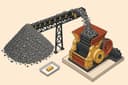 SiguiriGuinea's open pits, and the group's most expensive ounce — 289,000 ounces in 2025 at $1,783 in cash costs, roughly double Sukari's. A plant rebuilt for harder rock is the cheap route to more ounces.
Guinea's open pits, and the group's most expensive ounce — 289,000 ounces in 2025 at $1,783 in cash costs, roughly double Sukari's. A plant rebuilt for harder rock is the cheap route to more ounces.
In plain English
This is where an ounce costs the most. Several open pits in Guinea feed one mill, 85% owned by AngloGold with the government of Guinea holding the rest, and each ounce costs about twice what the group's cheapest mine spends — so Siguiri makes real money while gold is dear and very little when it is not.
All of its gold is bought by Rand Refinery. The improvement management points to is plumbing rather than prospecting — rebuilding the plant to run entirely on fresh hard rock so it can push more tonnes through. The chief executive says that would take the mine from about 300,000 ounces a year to 350,000 or more without much spending.
Competes with Lefa (Nordgold) · Bankan (Predictive Discovery)
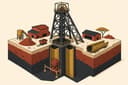 ObuasiGhana's deep underground mine, worked to about 1,500 metres — 266,000 ounces in 2025, up 20%. A contractor death in April 2026 stopped it for two weeks and left ore chutes out of service; management still guides 150,000 ounces for the second half.
Ghana's deep underground mine, worked to about 1,500 metres — 266,000 ounces in 2025, up 20%. A contractor death in April 2026 stopped it for two weeks and left ore chutes out of service; management still guides 150,000 ounces for the second half.
In plain English
A kilometre and a half straight down. That is how deep the workings of this Ghanaian mine run, and moving rock up from there needs shafts, hoists and vertical chutes called ore passes — when any of that breaks, the whole mine slows.
Its gold goes to Ghana's central bank under a national reserve arrangement and to bullion banks. Nobody needs persuading to buy it, so growth here is an engineering question, not a selling one. In April 2026 a contractor was killed by a release of rock inside an ore pass; the mine stood still for roughly two weeks, and a replacement chute is due late in 2026.
Competes with Tarkwa (Gold Fields) · Ahafo North (Newmont)
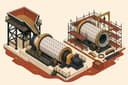 AngloGold Ashanti Mineração (Cuiabá)The Brazilian underground complex in Minas Gerais, cheap to run at $976 an ounce in cash costs. Output rose in the first half of 2026, and management wants about 75,000 ounces more within three years by feeding the existing plant harder.
The Brazilian underground complex in Minas Gerais, cheap to run at $976 an ounce in cash costs. Output rose in the first half of 2026, and management wants about 75,000 ounces more within three years by feeding the existing plant harder.
In plain English
The growth here comes from the plant, not from new ground. Underground workings in Brazil's Iron Quadrangle — an old mining district in the state of Minas Gerais — feed a processing plant called Queiroz that AngloGold already owns.
That plant can take more rock than the mines currently send it, so extra ounces come from filling space already paid for: the same oven, more bread. The target is roughly 75,000 added ounces a year within three years, from refurbishing a second processing line and opening an orebody called Viana. Gold leaves through banks, and Queiroz also turns out sulphuric acid, sold on the side.
Competes with Turmalina / MTL Complex (Jaguar Mining) · Serra Grande (Aura Minerals)
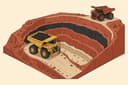 TropicanaWestern Australian pit and underground, 70% AngloGold and 30% Regis Resources. The clear improver — AngloGold's share of output rose to 169,000 ounces in the first half of 2026 from 139,000 ounces — but the next pit holds less gold per tonne, so the second half is guided lower.
Western Australian pit and underground, 70% AngloGold and 30% Regis Resources. The clear improver — AngloGold's share of output rose to 169,000 ounces in the first half of 2026 from 139,000 ounces — but the next pit holds less gold per tonne, so the second half is guided lower.
In plain English
Shared property. AngloGold owns seventy percent of this open pit and its underground extension in Western Australia and runs it day to day; Regis Resources owns the other thirty and books its own share of the gold.
The selling is ordinary — dig, crush, ship at the market price — but the direction is not. Tropicana was the standout of early 2026, the one mine whose output clearly stepped up. The next stretch is harder. Mining is moving into an area called Havana 6, where the rock carries less gold per tonne, so every truckload yields less and the mine has been guided to produce less in the second half of 2026.
Competes with KCGM (Northern Star) · Duketon (Regis Resources)
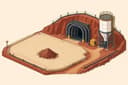 Sunrise DamWholly-owned Western Australian mine and the portfolio's clearest decline: first-half 2026 output fell 18% to 100,000 ounces, at some of the group's highest costs. Australia holds the thinnest reserves of the three regions.
Wholly-owned Western Australian mine and the portfolio's clearest decline: first-half 2026 output fell 18% to 100,000 ounces, at some of the group's highest costs. Australia holds the thinnest reserves of the three regions.
In plain English
Honest trouble. An underground mine and open pit near Laverton in the Western Australian goldfields, owned outright, where output fell about eighteen percent in the first half of 2026, costs sit near the top of the group's range, and executives barely mentioned the place on the last two earnings calls.
It still sells every ounce at the market price, and at today's gold price that is good money — cash of exactly the kind that pays for the building going on in Nevada. But a mine is a stock of rock that runs down, and Australia carries the smallest slice of the group's remaining reserves against what it digs each year.
Competes with Granny Smith (Gold Fields) · Duketon (Regis Resources)
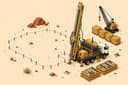 Arthur Gold ProjectThe Nevada development near Beatty, made of the Silicon and Merlin deposits. A first reserve of 4.9m ounces was declared in February 2026; the study points to about 500,000 ounces a year at roughly $778 an ounce in cash costs, for about $3.6bn to build.
The Nevada development near Beatty, made of the Silicon and Merlin deposits. A first reserve of 4.9m ounces was declared in February 2026; the study points to about 500,000 ounces a year at roughly $778 an ounce in cash costs, for about $3.6bn to build.
In plain English
Nothing has been dug here yet. Arthur is a stretch of Nevada desert near the town of Beatty, assembled out of three separate company purchases, where drilling has proved up about 4.9 million ounces of gold to be taken out by ordinary open-pit mining.
If it gets built — a full feasibility study comes first, and the bill is around $3.6 billion — it would yield roughly 500,000 ounces a year for about nine years, at a cost per ounce beaten only by Sukari, adding close to a sixth to what the company digs today. That is where the windfall is pointed: the group's mines hold roughly a dozen years of reserves, and Nevada is the answer to what comes after.
Competes with Cortez / Goldrush (Nevada Gold Mines) · Nevada district projects (i-80 Gold)
Named in filings, launches and programs
- Kibali (45%)BrandA 45% slice of a large DRC mine that Barrick runs; about $1.0bn of gold in 2025 reached AngloGold as its share of the profits, not as sales.
- IduapriemBrandWholly-owned Ghanaian open pit, 7.1% of 2025 revenue on 199,000 ounces; first-half 2026 output suffered when high-grade areas flooded.
- Cerro VanguardiaBrandArgentine open pit and narrow-vein underground, 92.5% held: 6.2% of 2025 revenue, plus most of the group's silver — 3.7 million ounces of it.
- Silver and sulphuric acid by-productsProduct lineEverything sold that is not gold: about $165m of 2025 revenue, roughly four-fifths of it silver from Cerro Vanguardia.
- Bullion-bank sales channelCustomer programAbout 62% of gold produced went to four buyers: ANZ, MKS Finance, Standard Chartered and JP Morgan Chase. Gold resells anywhere, so no single buyer holds power.
- Central-bank gold sale programmesCustomer programTanzania's central bank has taken a fifth of Geita's output since June 2025; Ghana's buys from Obuasi under a national gold-reserve arrangement.
- North Bullfrog ProjectProduct · AnnouncedThe nearer-term Nevada build: engineering about 70% done at end-2025, a go-ahead decision due in the second half of 2026, around 105,000 ounces a year for five years.
- Nevada district tail — Mother Lode, Sterling/Crown, Reward, BullfrogProduct · AnnouncedBeatty-district deposits picked up in the Corvus, Coeur and Augusta purchases, not yet developed.
- Egypt greenfield — Najd and Nugrus blocksProduct · AnnouncedExploration ground in Egypt; work was suspended in March 2026, with a plan to resume.
- Full Asset Potential programmePlatformThe in-house productivity push behind Cuiabá's plant-feed expansion — pushing more ore through equipment the company already owns.
Kibali (45%)Brand
A 45% slice of a large DRC mine that Barrick runs; about $1.0bn of gold in 2025 reached AngloGold as its share of the profits, not as sales.
IduapriemBrand
Wholly-owned Ghanaian open pit, 7.1% of 2025 revenue on 199,000 ounces; first-half 2026 output suffered when high-grade areas flooded.
Cerro VanguardiaBrand
Argentine open pit and narrow-vein underground, 92.5% held: 6.2% of 2025 revenue, plus most of the group's silver — 3.7 million ounces of it.
Silver and sulphuric acid by-productsProduct line
Everything sold that is not gold: about $165m of 2025 revenue, roughly four-fifths of it silver from Cerro Vanguardia.
Bullion-bank sales channelCustomer program
About 62% of gold produced went to four buyers: ANZ, MKS Finance, Standard Chartered and JP Morgan Chase. Gold resells anywhere, so no single buyer holds power.
Central-bank gold sale programmesCustomer program
Tanzania's central bank has taken a fifth of Geita's output since June 2025; Ghana's buys from Obuasi under a national gold-reserve arrangement.
North Bullfrog ProjectProduct · Announced
The nearer-term Nevada build: engineering about 70% done at end-2025, a go-ahead decision due in the second half of 2026, around 105,000 ounces a year for five years.
Nevada district tail — Mother Lode, Sterling/Crown, Reward, BullfrogProduct · Announced
Beatty-district deposits picked up in the Corvus, Coeur and Augusta purchases, not yet developed.
Egypt greenfield — Najd and Nugrus blocksProduct · Announced
Exploration ground in Egypt; work was suspended in March 2026, with a plan to resume.
Full Asset Potential programmePlatform
The in-house productivity push behind Cuiabá's plant-feed expansion — pushing more ore through equipment the company already owns.