
American Water Works (AWK)
Operates regulated water and wastewater utilities across 14 U.S. states.
Something off on this page? Send us feedback.
American Water owns the pipes, pumps and treatment plants that bring drinking water to homes in fourteen states, and carry the waste water away. Nobody shops for a water supplier: states grant it a territory, then decide what it may charge. So it grows by spending — burying new pipe, and buying up small town-owned systems. A merger with its closest rival, if approved, would make it far bigger.
Item facts: FY2025 · year ended December 31, 2025, from filings, earnings calls and company pages.
Judgment weights, not filed revenue
The band summarizes business focus and direction. ~ marks estimates.
8 in detail · 15 more below
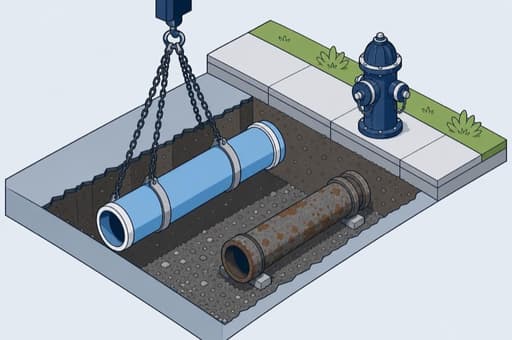
Pennsylvania American Water
The largest state business — roughly 800,000 customer hookups, and the biggest of the five states that together are about four-fifths of the water revenue. The August 2026 ruling granted $75M of the $160M asked for.
Competes with Aqua Pennsylvania (Essential Utilities) · Town-run water systems (Pennsylvania municipal authorities)
In plain English
Turn on a tap in a Pennsylvania town this company serves and the water arrives through pipes it owns. Nobody chooses a water supplier the way they choose a phone plan — the state grants one company the right to serve a town, and a state commission decides what the bill says.
Which makes spending the engine. Replace a mile of pipe, build a treatment plant, and the commission lets those dollars into customers' bills plus a set profit — about nine and a half cents a year on every dollar of shareholder money at work, in the August 2026 ruling. It granted $75M of the $160M asked for; the full ask rarely survives.
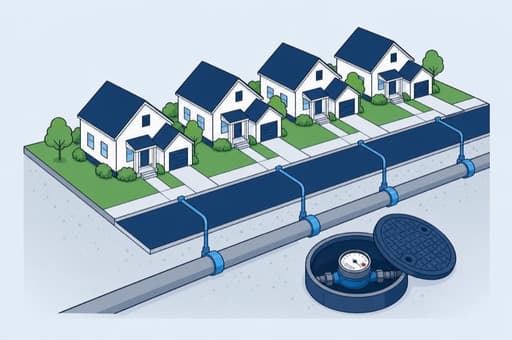
New Jersey American Water
Number two by revenue and home to the Camden head office, with about 740,000 hookups. A state law letting towns sell their systems keeps feeding it; new rates and a bill credit arrived in September 2026.
Competes with Veolia Water New Jersey (Veolia) · Regulated water service (Middlesex Water) · Aqua New Jersey (Essential Utilities)
In plain English
A dense suburban base. Roughly 740,000 homes and businesses packed into New Jersey, billed for water and, for many of them, for the waste water carried away afterwards.
The state also wrote a law that lets a town sell its water system to a company like this one, which is how New Jersey keeps adding customers — Gordon's Corner came over in July 2026. Meanwhile the utility asked its regulator for $146M more a year to cover $1.4B of pipe and plant work; the talks went confidential, and new rates plus a credit on bills landed in September 2026.

California American Water
The smallest of the five big states, roughly 190,000 connected homes and businesses, but the best paid: a 10.2% allowed return running through 2027. It has asked to be paid on its costs instead of on gallons sold.
Competes with Cal Water regulated utility (California Water Service Group) · Golden State Water (American States Water)
In plain English
California pays the richest return of any state here — regulators allow 10.2 cents of profit a year on each dollar of shareholder money, locked in through 2027 — and it is also the state where selling less water is the official goal.
Conservation rules push households to use less, which would normally shrink the bill and the earnings with it. So the utility has asked to be paid on what it costs to run the system rather than on how many gallons flow: $63M more in 2027, $111M across 2027 to 2029. A partial deal with the regulator landed in June 2026.
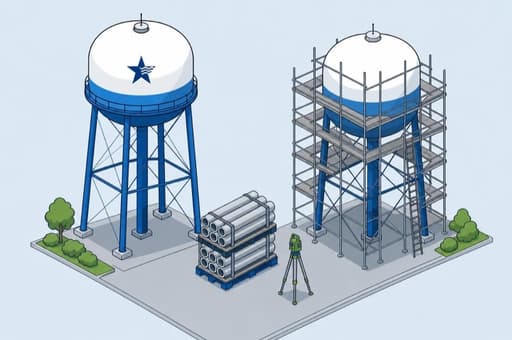
Missouri American Water
Third-biggest state, roughly 500,000 hookups around St. Louis and Joplin. Its July 2026 request — $179M a year against $1.6B of work — is the largest the company has pending anywhere.
Competes with City-run water and sewer systems (Missouri municipalities) · Regulated water utilities (American States Water) · Regulated water utilities (California Water Service)
In plain English
Missouri is where the rules moved in the company's favour. A utility normally spends the money first and waits for a price review to catch up, and the waiting eats into what it earns. A 2025 state law lets the regulator set rates on a forecast of what will be spent, not only on what already has been.
So the filing made on 1 July 2026 asks for $179M more a year against $1.6B of work running to May 2028 — the biggest request the company has in front of any regulator. Around half a million homes here pay the bills that follow.
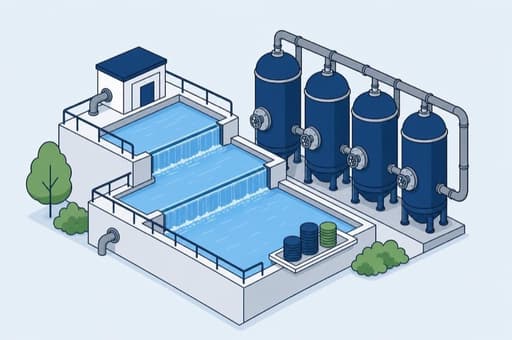
Illinois American Water
Roughly 380,000 customers and a price increase asked for in two steps totalling $134M, the first aimed at January 2027. A proposed ruling was due in October 2026.
Competes with Aqua Illinois (Essential Utilities) · City-run sewer systems (Illinois municipalities)
In plain English
Here the bill is being raised in two steps rather than one. Illinois asked for $134M more a year, split in two, the first step aimed at January 2027, to pay for $577M of pipe and treatment work running through that year.
The treatment half is the interesting part. Water in some places carries PFAS — man-made chemicals that barely break down — and stripping them out costs real money. Chemical makers have paid settlements over them, and in August 2026 that money reached Illinois customers as credits on their bills.
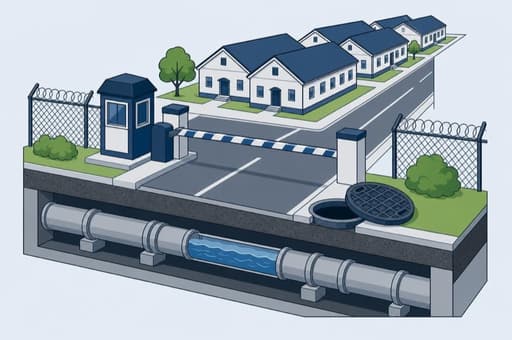
Military Services Group
Runs the water and sewer systems on 18 U.S. military bases under contracts with decades left — roughly $7.4B of work still booked. Revenue slipped about 4% in the first half of 2026 while the water utilities grew.
Competes with ASUS base utility contracts (American States Water) · Federal water operations (Veolia North America)
In plain English
Military bases have their own water and sewer systems behind the fence, and the Defense Department would rather not run them. So it signs a contract that lasts decades, handing the pipes to a company that runs them for a fee that arrives year after year.
American Water holds eighteen of these, the one part of the group no state commission prices. Roughly $7.4B of contracted work is still to come, averaging about 37 years out. The standing fee is the floor; rebuilding projects on the bases are what lift the yearly total above it.
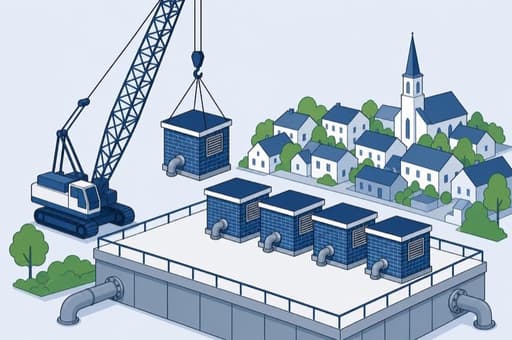
Municipal & Regulated Acquisition Program
Buying water and sewer systems from towns, one at a time: $236M committed for about 57,000 more customers at mid-2026, after Nexus brought roughly 47,000 in June. The target is 2% customer growth a year.
Competes with Municipal system purchases (Essential Utilities) · Utility buyouts (Algonquin Power and Utilities) · Keeping the system town-owned (Municipal owners)
In plain English
Most American water systems belong to towns, and plenty of towns cannot carry theirs any more — pipes need replacing, rules keep tightening, and paying for it means raising local bills. Selling hands the problem to a utility and puts cash in the town treasury. There are roughly 50,000 community water systems in the country, overwhelmingly municipal.
The shopping list at mid-2026: about 57,000 customers under signed agreements for $236M, after the Nexus purchase in June brought roughly 47,000. Each system joins a state utility, and the money spent fixing it joins the pile regulators let the company earn on.
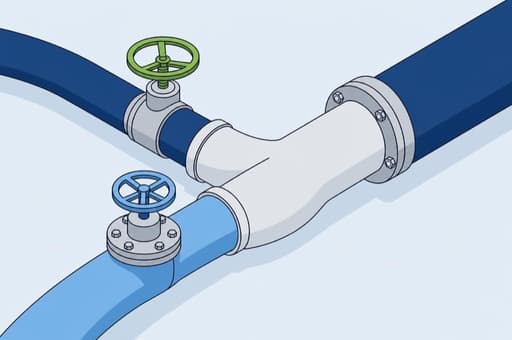
Essential Utilities merger
An all-share combination with Essential Utilities, targeted to close by the end of the first quarter of 2027: about 4.7 million customers in 17 states, with American Water holders keeping roughly 69%. Pennsylvania's approval is the live one.
Competes with Aqua water utilities (Essential Utilities) · Water system bids (Infrastructure funds)
In plain English
One water company buying another and paying in its own shares rather than cash: Essential holders would get 0.305 of an American Water share for each of theirs, leaving them with about 31% of the combined company.
What that buys is size — roughly 4.7 million customers across 17 states instead of 3.6 million across 14 — and it takes the other big buyer off the table whenever a town puts its water system up for sale. It also brings something unfamiliar: Essential owns a gas utility, and management has said it will not decide what to do with it until after the deal closes. Pennsylvania's regulator is still weighing the merger.


 Pennsylvania American WaterThe largest state business — roughly 800,000 customer hookups, and the biggest of the five states that together are about four-fifths of the water revenue. The August 2026 ruling granted $75M of the $160M asked for.
The largest state business — roughly 800,000 customer hookups, and the biggest of the five states that together are about four-fifths of the water revenue. The August 2026 ruling granted $75M of the $160M asked for.
In plain English
Turn on a tap in a Pennsylvania town this company serves and the water arrives through pipes it owns. Nobody chooses a water supplier the way they choose a phone plan — the state grants one company the right to serve a town, and a state commission decides what the bill says.
Which makes spending the engine. Replace a mile of pipe, build a treatment plant, and the commission lets those dollars into customers' bills plus a set profit — about nine and a half cents a year on every dollar of shareholder money at work, in the August 2026 ruling. It granted $75M of the $160M asked for; the full ask rarely survives.
Competes with Aqua Pennsylvania (Essential Utilities) · Town-run water systems (Pennsylvania municipal authorities)
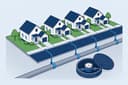 New Jersey American WaterNumber two by revenue and home to the Camden head office, with about 740,000 hookups. A state law letting towns sell their systems keeps feeding it; new rates and a bill credit arrived in September 2026.
Number two by revenue and home to the Camden head office, with about 740,000 hookups. A state law letting towns sell their systems keeps feeding it; new rates and a bill credit arrived in September 2026.
In plain English
A dense suburban base. Roughly 740,000 homes and businesses packed into New Jersey, billed for water and, for many of them, for the waste water carried away afterwards.
The state also wrote a law that lets a town sell its water system to a company like this one, which is how New Jersey keeps adding customers — Gordon's Corner came over in July 2026. Meanwhile the utility asked its regulator for $146M more a year to cover $1.4B of pipe and plant work; the talks went confidential, and new rates plus a credit on bills landed in September 2026.
Competes with Veolia Water New Jersey (Veolia) · Regulated water service (Middlesex Water) · Aqua New Jersey (Essential Utilities)
 California American WaterThe smallest of the five big states, roughly 190,000 connected homes and businesses, but the best paid: a 10.2% allowed return running through 2027. It has asked to be paid on its costs instead of on gallons sold.
The smallest of the five big states, roughly 190,000 connected homes and businesses, but the best paid: a 10.2% allowed return running through 2027. It has asked to be paid on its costs instead of on gallons sold.
In plain English
California pays the richest return of any state here — regulators allow 10.2 cents of profit a year on each dollar of shareholder money, locked in through 2027 — and it is also the state where selling less water is the official goal.
Conservation rules push households to use less, which would normally shrink the bill and the earnings with it. So the utility has asked to be paid on what it costs to run the system rather than on how many gallons flow: $63M more in 2027, $111M across 2027 to 2029. A partial deal with the regulator landed in June 2026.
Competes with Cal Water regulated utility (California Water Service Group) · Golden State Water (American States Water)
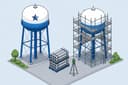 Missouri American WaterThird-biggest state, roughly 500,000 hookups around St. Louis and Joplin. Its July 2026 request — $179M a year against $1.6B of work — is the largest the company has pending anywhere.
Third-biggest state, roughly 500,000 hookups around St. Louis and Joplin. Its July 2026 request — $179M a year against $1.6B of work — is the largest the company has pending anywhere.
In plain English
Missouri is where the rules moved in the company's favour. A utility normally spends the money first and waits for a price review to catch up, and the waiting eats into what it earns. A 2025 state law lets the regulator set rates on a forecast of what will be spent, not only on what already has been.
So the filing made on 1 July 2026 asks for $179M more a year against $1.6B of work running to May 2028 — the biggest request the company has in front of any regulator. Around half a million homes here pay the bills that follow.
Competes with City-run water and sewer systems (Missouri municipalities) · Regulated water utilities (American States Water) · Regulated water utilities (California Water Service)
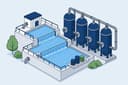 Illinois American WaterRoughly 380,000 customers and a price increase asked for in two steps totalling $134M, the first aimed at January 2027. A proposed ruling was due in October 2026.
Roughly 380,000 customers and a price increase asked for in two steps totalling $134M, the first aimed at January 2027. A proposed ruling was due in October 2026.
In plain English
Here the bill is being raised in two steps rather than one. Illinois asked for $134M more a year, split in two, the first step aimed at January 2027, to pay for $577M of pipe and treatment work running through that year.
The treatment half is the interesting part. Water in some places carries PFAS — man-made chemicals that barely break down — and stripping them out costs real money. Chemical makers have paid settlements over them, and in August 2026 that money reached Illinois customers as credits on their bills.
Competes with Aqua Illinois (Essential Utilities) · City-run sewer systems (Illinois municipalities)
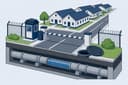 Military Services GroupRuns the water and sewer systems on 18 U.S. military bases under contracts with decades left — roughly $7.4B of work still booked. Revenue slipped about 4% in the first half of 2026 while the water utilities grew.
Runs the water and sewer systems on 18 U.S. military bases under contracts with decades left — roughly $7.4B of work still booked. Revenue slipped about 4% in the first half of 2026 while the water utilities grew.
In plain English
Military bases have their own water and sewer systems behind the fence, and the Defense Department would rather not run them. So it signs a contract that lasts decades, handing the pipes to a company that runs them for a fee that arrives year after year.
American Water holds eighteen of these, the one part of the group no state commission prices. Roughly $7.4B of contracted work is still to come, averaging about 37 years out. The standing fee is the floor; rebuilding projects on the bases are what lift the yearly total above it.
Competes with ASUS base utility contracts (American States Water) · Federal water operations (Veolia North America)
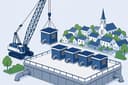 Municipal & Regulated Acquisition ProgramBuying water and sewer systems from towns, one at a time: $236M committed for about 57,000 more customers at mid-2026, after Nexus brought roughly 47,000 in June. The target is 2% customer growth a year.
Buying water and sewer systems from towns, one at a time: $236M committed for about 57,000 more customers at mid-2026, after Nexus brought roughly 47,000 in June. The target is 2% customer growth a year.
In plain English
Most American water systems belong to towns, and plenty of towns cannot carry theirs any more — pipes need replacing, rules keep tightening, and paying for it means raising local bills. Selling hands the problem to a utility and puts cash in the town treasury. There are roughly 50,000 community water systems in the country, overwhelmingly municipal.
The shopping list at mid-2026: about 57,000 customers under signed agreements for $236M, after the Nexus purchase in June brought roughly 47,000. Each system joins a state utility, and the money spent fixing it joins the pile regulators let the company earn on.
Competes with Municipal system purchases (Essential Utilities) · Utility buyouts (Algonquin Power and Utilities) · Keeping the system town-owned (Municipal owners)
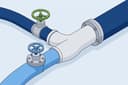 Essential Utilities mergerAn all-share combination with Essential Utilities, targeted to close by the end of the first quarter of 2027: about 4.7 million customers in 17 states, with American Water holders keeping roughly 69%. Pennsylvania's approval is the live one.
An all-share combination with Essential Utilities, targeted to close by the end of the first quarter of 2027: about 4.7 million customers in 17 states, with American Water holders keeping roughly 69%. Pennsylvania's approval is the live one.
In plain English
One water company buying another and paying in its own shares rather than cash: Essential holders would get 0.305 of an American Water share for each of theirs, leaving them with about 31% of the combined company.
What that buys is size — roughly 4.7 million customers across 17 states instead of 3.6 million across 14 — and it takes the other big buyer off the table whenever a town puts its water system up for sale. It also brings something unfamiliar: Essential owns a gas utility, and management has said it will not decide what to do with it until after the deal closes. Pennsylvania's regulator is still weighing the merger.
Competes with Aqua water utilities (Essential Utilities) · Water system bids (Infrastructure funds)
Named in filings, launches and programs
- West Virginia American WaterBrandA smaller state operation whose rate review was among the first three American Water completed in 2026.
- Indiana American WaterBrandOpened a training center in September 2026 and launched Flow Forward, a program aimed at bringing in future workers.
- Kentucky American WaterBrandA December 2025 order added $18M a year at a 9.7% allowed return; a May 2026 filing asks $18M more on $108M spent.
- Virginia American WaterBrandSettled its 2026 rate review with regulator staff and objectors without the underlying numbers being spelled out.
- Maryland American WaterBrandFinished its rate review in the first half of 2026 — one of the quieter state operations.
- Tennessee American WaterBrandHanded money from the PFAS chemical settlements back as bill credits in August 2026; now checking pipe materials in its Citico district.
- Iowa American WaterBrandAmong the smaller state operations — roughly $13M of revenue showed against Iowa in the 2025 state-level figures.
- Hawaii American WaterBrandThe smallest piece disclosed — about $1M of revenue in the 2025 state-level figures.
- American Water Capital CorpBrandThe group's borrowing arm: raised $500M of notes due 2033 in September 2026 and lends it on to state utilities that spend more than they earn.
- Nexus Water Group systemsProduct lineRoughly 47,000 customer hookups across eight states, bought for about $315M on 1 June 2026 and folded into the state utilities.
- PFAS cleanup and settlement creditsServiceAbout $1B of planned spending to strip long-lasting chemicals from the water; ~$185M recovered from manufacturers has gone back as bill credits.
- Lead service line replacementServiceAbout $1B over five years, roughly double the old pace, to pull lead pipes out before the federal deadline in late 2037.
- Wastewater serviceServiceCollecting and treating sewage for many of the same towns the water side serves — $113M in the June 2026 quarter.
- Fire serviceServiceHydrants and sprinkler connections billed to towns and businesses — $49M in the June 2026 quarter.
- VXconnect digital customer platformPlatform · AnnouncedA self-service app and website for bills and water-use tracking, picked from supplier VertexOne in September 2026.
West Virginia American WaterBrand
A smaller state operation whose rate review was among the first three American Water completed in 2026.
Indiana American WaterBrand
Opened a training center in September 2026 and launched Flow Forward, a program aimed at bringing in future workers.
Kentucky American WaterBrand
A December 2025 order added $18M a year at a 9.7% allowed return; a May 2026 filing asks $18M more on $108M spent.
Virginia American WaterBrand
Settled its 2026 rate review with regulator staff and objectors without the underlying numbers being spelled out.
Maryland American WaterBrand
Finished its rate review in the first half of 2026 — one of the quieter state operations.
Tennessee American WaterBrand
Handed money from the PFAS chemical settlements back as bill credits in August 2026; now checking pipe materials in its Citico district.
Iowa American WaterBrand
Among the smaller state operations — roughly $13M of revenue showed against Iowa in the 2025 state-level figures.
Hawaii American WaterBrand
The smallest piece disclosed — about $1M of revenue in the 2025 state-level figures.
American Water Capital CorpBrand
The group's borrowing arm: raised $500M of notes due 2033 in September 2026 and lends it on to state utilities that spend more than they earn.
Nexus Water Group systemsProduct line
Roughly 47,000 customer hookups across eight states, bought for about $315M on 1 June 2026 and folded into the state utilities.
PFAS cleanup and settlement creditsService
About $1B of planned spending to strip long-lasting chemicals from the water; ~$185M recovered from manufacturers has gone back as bill credits.
Lead service line replacementService
About $1B over five years, roughly double the old pace, to pull lead pipes out before the federal deadline in late 2037.
Wastewater serviceService
Collecting and treating sewage for many of the same towns the water side serves — $113M in the June 2026 quarter.
Fire serviceService
Hydrants and sprinkler connections billed to towns and businesses — $49M in the June 2026 quarter.
VXconnect digital customer platformPlatform · Announced
A self-service app and website for bills and water-use tracking, picked from supplier VertexOne in September 2026.