
Boeing (BA)
Builds commercial jetliners, defense and space systems, and supports aircraft fleets worldwide.
Something off on this page? Send us feedback.
Boeing is still, above all, a builder of passenger and cargo jets, with defense work and fleet support making up the rest. Commercial production is climbing back, but safe, on-time delivery is what turns its enormous order book into cash. Services is the steadier earner while factories and several defense contracts absorb the risk. Boeing is also pulling a key fuselage supplier back inside to gain more control over production.
Item facts: FY2025 · year ended Dec 31, 2025, from filings, earnings calls and company pages.
Judgment weights, not filed revenue
The band summarizes business focus and direction. ~ marks estimates.
9 in detail · 9 more below
Commercial Airplanes
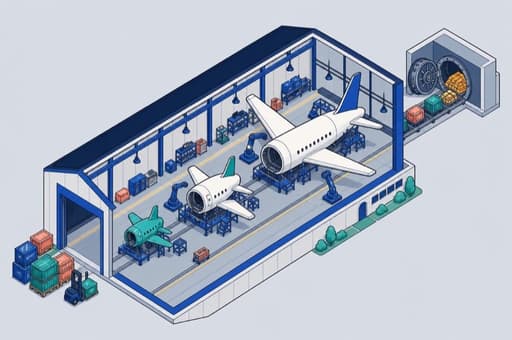
Passenger and cargo jets brought in $41.5B in FY2025. At June 2026, this business held $596.7B of Boeing's $715.3B total order book; production, regulatory approval and supplier flow decide how quickly those promises become deliveries.
Competes with A320neo family (Airbus) · A350-900 (Airbus) · A350F (Airbus)
In plain English
Think of this as a factory business with a very long waiting list. Airlines and aircraft-leasing companies choose a jet family, reserve delivery slots years ahead and pay deposits while Boeing gathers thousands of parts and assembles each plane.
Most of the remaining money arrives when a finished aircraft is accepted. That makes the factory rhythm crucial: a completed jet frees up cash, while a delayed or reworked one leaves money and parts stuck on the floor. Boeing is raising output again, but regulators, workers, engines, seats and other suppliers all have to move together.
737 Program
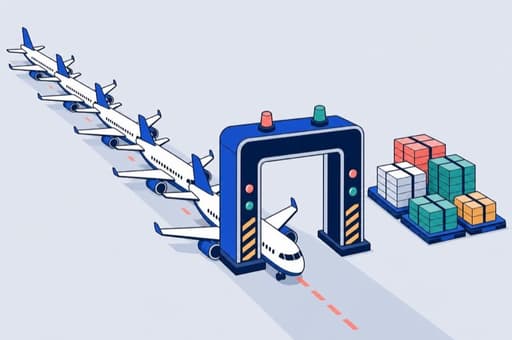
Boeing's busiest jet family delivered 447 aircraft in FY2025 and had roughly 4,400 firm orders still waiting in June 2026. The watchpoint is whether a production push can become safe, steady handovers rather than more delay and rework.
Competes with A320neo family (Airbus) · C919 (COMAC)
In plain English
Most airline trips do not need a giant plane. The 737 is Boeing's smaller passenger jet for those everyday routes, sold both to airlines and to leasing companies that place aircraft with many carriers.
Buyers put money down to hold a place in line, then pay the balance when they accept the finished jet. With thousands waiting, demand is not the immediate problem; the gate is how many sound aircraft Boeing and its suppliers can finish. Regulators must also approve each new version before it can join the delivery stream.
787 Program
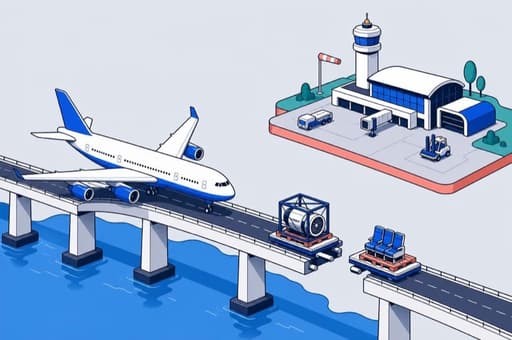
The long-range 787 delivered 88 aircraft in FY2025 and had roughly 1,100 firm orders waiting by June 2026. Output reached eight per month in July; engines, premium seats and factory flow must hold that pace.
Competes with A350-900 (Airbus) · A330-900neo (Airbus)
In plain English
A long-haul airline buys the 787 to carry passengers between far-apart cities without stopping. It is a wide-body aircraft—wide enough for two aisles—and lessors also buy it so they can rent the jets to carriers.
Every handover brings in the large final payment, so moving from four aircraft a month to a stable eight changes the cash coming through the door. The backlog covers many years, but a missing engine, cabin seat or unfinished factory task can keep an otherwise complete plane from leaving.
777 and 777X Programs
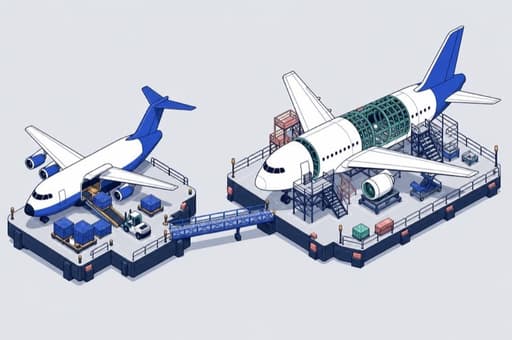
Today's 777 freighter bridges Boeing toward the delayed 777X. The family delivered 35 aircraft in FY2025; the first 777-9 is now expected in 2027, with the 777-8 Freighter following about two years later.
Competes with A350-1000 (Airbus) · A350F (Airbus)
In plain English
Here, today's cargo plane is paying while tomorrow's largest passenger jet is still being finished. Boeing sells the current 777 for freight work and is developing the newer 777X for both passenger and cargo operators.
Customers reserve scarce delivery places and pay when aircraft are accepted. The handoff is awkward because the first 777-9 is arriving later than planned, with its freighter sister farther behind. Each regulatory delay adds factory work and customer concessions before the newer family can earn delivery money.
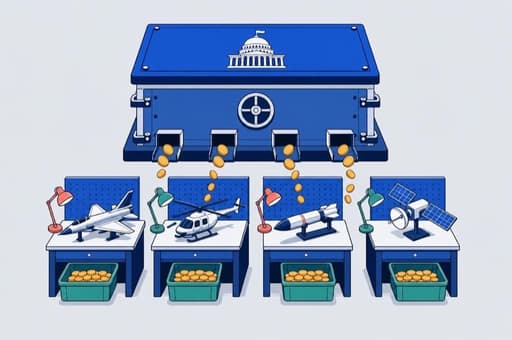
Defense, Space & Security
Military aircraft, weapons and space work had an $85.3B backlog in June 2026. The U.S. government supplied 35% of all Boeing revenue in FY2025—the only named customer above 10%—while contracts where Boeing absorbs overruns remained the main drag.
Competes with F-35 Lightning II (Lockheed Martin) · Crew Dragon (SpaceX) · A330 MRTT / MRTT+ (Airbus) · CH-53K King Stallion (Sikorsky/Lockheed)
In plain English
This is Boeing's collection of military aircraft, missiles, satellites and space vehicles. Government agencies choose a system, fund it through yearly budgets and pay Boeing as teams design, build, test or support it.
Some deals repay Boeing's costs plus an agreed profit. Others lock the price years before the hardest engineering is done—like promising to remodel a house for one set amount before opening the walls. If labor, parts or redesigns cost more than planned, Boeing eats the overrun. That is why rising sales can sit beside weak or negative profit.
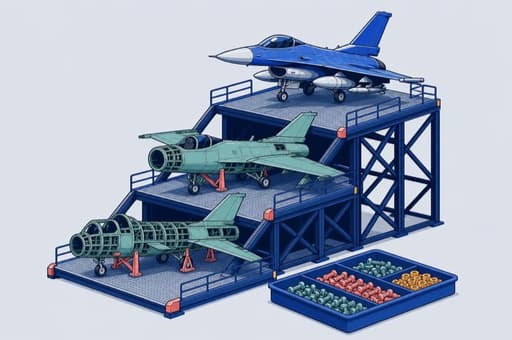
Fighters, Trainers and Autonomous Aircraft
Boeing delivered nine F-15s in FY2025, while T-7A trainers and MQ-25 uncrewed refueling aircraft entered early production steps in FY2026. Funding is substantial, but Boeing must absorb overruns on key development contracts.
Competes with F-35 Lightning II (Lockheed Martin) · Gripen E-series (Saab) · M-346 (Leonardo)
In plain English
Fast jets come in several jobs here: F-15s fight, T-7As train pilots, and MQ-25 aircraft fly without a pilot aboard to refuel Navy planes. The newer programs are beginning to move from testing into small production runs, with the F-47 still in development.
The U.S. military and allied buyers pay through government orders. Boeing earns as engineering and factory work advances, not only when an aircraft leaves. The catch is simple: on a set-price deal, extra redesign and testing come out of Boeing's pocket.
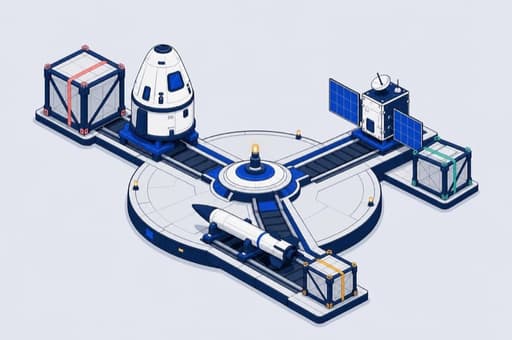
Space, Missile and Satellite Systems
Launch rockets, crew capsules, satellites, missile defenses and guided weapons make this the broadest collection. Money arrives as funded work advances; mission failure, schedule slips and underpriced development can push profit backward.
Competes with Crew Dragon (SpaceX) · SM-3 (Raytheon (RTX))
In plain English
Beyond airplanes, Boeing helps launch rockets, carry crews, build satellites and make weapons that guide themselves or stop incoming missiles. NASA and military agencies pay for each program through public budgets.
Picture several workshops sharing one loading yard: one produces a crew capsule, another a satellite, another a missile part. Payments follow completed stages, but the contracts differ. When the government reimburses approved costs, Boeing has protection; when Boeing promised a set total price, failed tests or late redesigns can make the workshop lose money even while it stays busy.
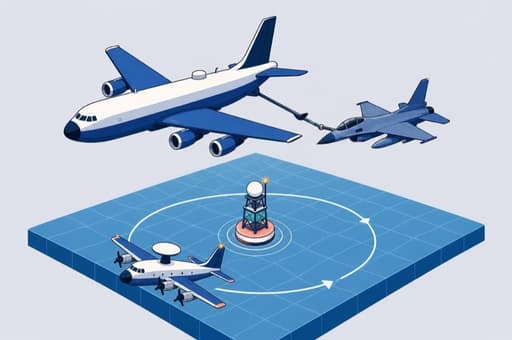
KC-46A Tanker and P-8 Models
Boeing delivered 14 KC-46 tankers and six P-8 patrol aircraft in FY2025. The tanker alone lost $714M that year, showing how adapting commercial jets for military missions can generate sales without dependable profit.
Competes with A330 MRTT / MRTT+ (Airbus) · P-1 (Kawasaki)
In plain English
One pair starts with familiar airliner bodies but does military jobs. The KC-46 carries fuel and transfers it to other aircraft in flight; the P-8 watches wide stretches of ocean for navies.
The U.S. Air Force, Navy and allied governments buy them in batches, often through the U.S. purchasing system. Boeing receives money as work progresses and aircraft are delivered. Yet adding military equipment is not a simple conversion. On the KC-46's set-price agreement, factory changes and mission-system problems have repeatedly cost Boeing more without raising the customer's bill.
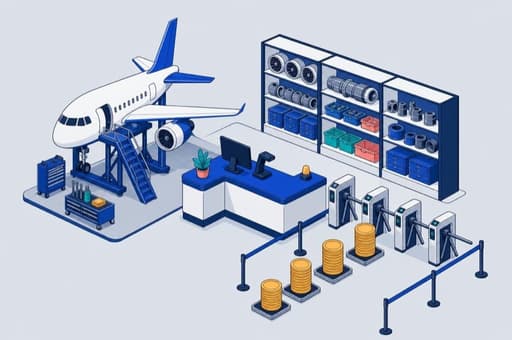
Global Services
Parts, repairs, training and fleet support brought in $20.9B in FY2025. In FY2026's second quarter, the business kept 18.1 cents of operating profit per revenue dollar—its role is dependable profit while factories recover.
Competes with Flight Hour Services / Satair (Airbus) · Total Component / Technical Support (Lufthansa Technik)
In plain English
Once an aircraft leaves the factory, it needs parts, repairs, upgrades, training and help keeping the right equipment in the right place. Boeing sells that continuing support to airlines and military customers across the life of their fleets.
It works like the service counter for thousands of aircraft already flying, not another aircraft sale. Customers pay for replacement parts as they arrive and for longer support agreements as Boeing performs the work. More flying and older fleets create more wear, while grounded aircraft mean less activity. This recurring need makes services Boeing's most reliable profit maker today.


 Commercial AirplanesPassenger and cargo jets brought in $41.5B in FY2025. At June 2026, this business held $596.7B of Boeing's $715.3B total order book; production, regulatory approval and supplier flow decide how quickly those promises become deliveries.
Passenger and cargo jets brought in $41.5B in FY2025. At June 2026, this business held $596.7B of Boeing's $715.3B total order book; production, regulatory approval and supplier flow decide how quickly those promises become deliveries.
In plain English
Think of this as a factory business with a very long waiting list. Airlines and aircraft-leasing companies choose a jet family, reserve delivery slots years ahead and pay deposits while Boeing gathers thousands of parts and assembles each plane.
Most of the remaining money arrives when a finished aircraft is accepted. That makes the factory rhythm crucial: a completed jet frees up cash, while a delayed or reworked one leaves money and parts stuck on the floor. Boeing is raising output again, but regulators, workers, engines, seats and other suppliers all have to move together.
Competes with A320neo family (Airbus) · A350-900 (Airbus) · A350F (Airbus)
 737 ProgramBoeing's busiest jet family delivered 447 aircraft in FY2025 and had roughly 4,400 firm orders still waiting in June 2026. The watchpoint is whether a production push can become safe, steady handovers rather than more delay and rework.
Boeing's busiest jet family delivered 447 aircraft in FY2025 and had roughly 4,400 firm orders still waiting in June 2026. The watchpoint is whether a production push can become safe, steady handovers rather than more delay and rework.
In plain English
Most airline trips do not need a giant plane. The 737 is Boeing's smaller passenger jet for those everyday routes, sold both to airlines and to leasing companies that place aircraft with many carriers.
Buyers put money down to hold a place in line, then pay the balance when they accept the finished jet. With thousands waiting, demand is not the immediate problem; the gate is how many sound aircraft Boeing and its suppliers can finish. Regulators must also approve each new version before it can join the delivery stream.
Competes with A320neo family (Airbus) · C919 (COMAC)
 787 ProgramThe long-range 787 delivered 88 aircraft in FY2025 and had roughly 1,100 firm orders waiting by June 2026. Output reached eight per month in July; engines, premium seats and factory flow must hold that pace.
The long-range 787 delivered 88 aircraft in FY2025 and had roughly 1,100 firm orders waiting by June 2026. Output reached eight per month in July; engines, premium seats and factory flow must hold that pace.
In plain English
A long-haul airline buys the 787 to carry passengers between far-apart cities without stopping. It is a wide-body aircraft—wide enough for two aisles—and lessors also buy it so they can rent the jets to carriers.
Every handover brings in the large final payment, so moving from four aircraft a month to a stable eight changes the cash coming through the door. The backlog covers many years, but a missing engine, cabin seat or unfinished factory task can keep an otherwise complete plane from leaving.
Competes with A350-900 (Airbus) · A330-900neo (Airbus)
 777 and 777X ProgramsToday's 777 freighter bridges Boeing toward the delayed 777X. The family delivered 35 aircraft in FY2025; the first 777-9 is now expected in 2027, with the 777-8 Freighter following about two years later.
Today's 777 freighter bridges Boeing toward the delayed 777X. The family delivered 35 aircraft in FY2025; the first 777-9 is now expected in 2027, with the 777-8 Freighter following about two years later.
In plain English
Here, today's cargo plane is paying while tomorrow's largest passenger jet is still being finished. Boeing sells the current 777 for freight work and is developing the newer 777X for both passenger and cargo operators.
Customers reserve scarce delivery places and pay when aircraft are accepted. The handoff is awkward because the first 777-9 is arriving later than planned, with its freighter sister farther behind. Each regulatory delay adds factory work and customer concessions before the newer family can earn delivery money.
Competes with A350-1000 (Airbus) · A350F (Airbus)
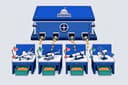 Defense, Space & SecurityMilitary aircraft, weapons and space work had an $85.3B backlog in June 2026. The U.S. government supplied 35% of all Boeing revenue in FY2025—the only named customer above 10%—while contracts where Boeing absorbs overruns remained the main drag.
Military aircraft, weapons and space work had an $85.3B backlog in June 2026. The U.S. government supplied 35% of all Boeing revenue in FY2025—the only named customer above 10%—while contracts where Boeing absorbs overruns remained the main drag.
In plain English
This is Boeing's collection of military aircraft, missiles, satellites and space vehicles. Government agencies choose a system, fund it through yearly budgets and pay Boeing as teams design, build, test or support it.
Some deals repay Boeing's costs plus an agreed profit. Others lock the price years before the hardest engineering is done—like promising to remodel a house for one set amount before opening the walls. If labor, parts or redesigns cost more than planned, Boeing eats the overrun. That is why rising sales can sit beside weak or negative profit.
Competes with F-35 Lightning II (Lockheed Martin) · Crew Dragon (SpaceX) · A330 MRTT / MRTT+ (Airbus) · CH-53K King Stallion (Sikorsky/Lockheed)
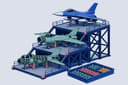 Fighters, Trainers and Autonomous AircraftBoeing delivered nine F-15s in FY2025, while T-7A trainers and MQ-25 uncrewed refueling aircraft entered early production steps in FY2026. Funding is substantial, but Boeing must absorb overruns on key development contracts.
Boeing delivered nine F-15s in FY2025, while T-7A trainers and MQ-25 uncrewed refueling aircraft entered early production steps in FY2026. Funding is substantial, but Boeing must absorb overruns on key development contracts.
In plain English
Fast jets come in several jobs here: F-15s fight, T-7As train pilots, and MQ-25 aircraft fly without a pilot aboard to refuel Navy planes. The newer programs are beginning to move from testing into small production runs, with the F-47 still in development.
The U.S. military and allied buyers pay through government orders. Boeing earns as engineering and factory work advances, not only when an aircraft leaves. The catch is simple: on a set-price deal, extra redesign and testing come out of Boeing's pocket.
Competes with F-35 Lightning II (Lockheed Martin) · Gripen E-series (Saab) · M-346 (Leonardo)
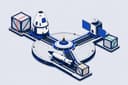 Space, Missile and Satellite SystemsLaunch rockets, crew capsules, satellites, missile defenses and guided weapons make this the broadest collection. Money arrives as funded work advances; mission failure, schedule slips and underpriced development can push profit backward.
Launch rockets, crew capsules, satellites, missile defenses and guided weapons make this the broadest collection. Money arrives as funded work advances; mission failure, schedule slips and underpriced development can push profit backward.
In plain English
Beyond airplanes, Boeing helps launch rockets, carry crews, build satellites and make weapons that guide themselves or stop incoming missiles. NASA and military agencies pay for each program through public budgets.
Picture several workshops sharing one loading yard: one produces a crew capsule, another a satellite, another a missile part. Payments follow completed stages, but the contracts differ. When the government reimburses approved costs, Boeing has protection; when Boeing promised a set total price, failed tests or late redesigns can make the workshop lose money even while it stays busy.
Competes with Crew Dragon (SpaceX) · SM-3 (Raytheon (RTX))
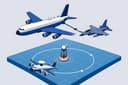 KC-46A Tanker and P-8 ModelsBoeing delivered 14 KC-46 tankers and six P-8 patrol aircraft in FY2025. The tanker alone lost $714M that year, showing how adapting commercial jets for military missions can generate sales without dependable profit.
Boeing delivered 14 KC-46 tankers and six P-8 patrol aircraft in FY2025. The tanker alone lost $714M that year, showing how adapting commercial jets for military missions can generate sales without dependable profit.
In plain English
One pair starts with familiar airliner bodies but does military jobs. The KC-46 carries fuel and transfers it to other aircraft in flight; the P-8 watches wide stretches of ocean for navies.
The U.S. Air Force, Navy and allied governments buy them in batches, often through the U.S. purchasing system. Boeing receives money as work progresses and aircraft are delivered. Yet adding military equipment is not a simple conversion. On the KC-46's set-price agreement, factory changes and mission-system problems have repeatedly cost Boeing more without raising the customer's bill.
Competes with A330 MRTT / MRTT+ (Airbus) · P-1 (Kawasaki)
 Global ServicesParts, repairs, training and fleet support brought in $20.9B in FY2025. In FY2026's second quarter, the business kept 18.1 cents of operating profit per revenue dollar—its role is dependable profit while factories recover.
Parts, repairs, training and fleet support brought in $20.9B in FY2025. In FY2026's second quarter, the business kept 18.1 cents of operating profit per revenue dollar—its role is dependable profit while factories recover.
In plain English
Once an aircraft leaves the factory, it needs parts, repairs, upgrades, training and help keeping the right equipment in the right place. Boeing sells that continuing support to airlines and military customers across the life of their fleets.
It works like the service counter for thousands of aircraft already flying, not another aircraft sale. Customers pay for replacement parts as they arrive and for longer support agreements as Boeing performs the work. More flying and older fleets create more wear, while grounded aircraft mean less activity. This recurring need makes services Boeing's most reliable profit maker today.
Competes with Flight Hour Services / Satair (Airbus) · Total Component / Technical Support (Lufthansa Technik)
Named in filings, launches and programs
- Military RotorcraftProduct lineApache, Chinook, V-22 and Grey Wolf aircraft add deliveries, upgrades and long-running support work for U.S. and allied military fleets.
- Spirit AeroSystemsBrandAcquired in December 2025 to bring major fuselage and aircraft-structure work back inside Boeing; its contribution that year was immaterial.
- VC-25B Presidential AircraftCustomer programA $4B set-price effort to modify two 747-8 aircraft added another $280M expected loss in FY2026's second quarter.
- United Launch AllianceEcosystemA half-owned launch partnership inside the defense and space business; Boeing's share of income from this and other partnerships was $21M in FY2025.
- Qatar Airways widebody fleet programCustomer programA named anchor for future widebody deliveries: 130 firm 787s, 30 firm 777-9s and 50 additional choices.
- Alaska Airlines fleet programCustomer programAn order for 105 737-10s and five 787-9s, tying a major customer to the still-certifying 737-10.
- Emirates 777-9 programCustomer programSixty-five additional 777-9s make Emirates a named anchor for the delayed passenger program.
- SMBC Aviation Capital 737 MAX programCustomer programA July 2026 order for 100 jets gives the 737 family another large aircraft-leasing customer.
- F-15 Eagle Crest IDIQCustomer programAn agreement that permits up to $131.23B of future F-15 orders; it is potential demand, not money already booked.
Military RotorcraftProduct line
Apache, Chinook, V-22 and Grey Wolf aircraft add deliveries, upgrades and long-running support work for U.S. and allied military fleets.
Spirit AeroSystemsBrand
Acquired in December 2025 to bring major fuselage and aircraft-structure work back inside Boeing; its contribution that year was immaterial.
VC-25B Presidential AircraftCustomer program
A $4B set-price effort to modify two 747-8 aircraft added another $280M expected loss in FY2026's second quarter.
United Launch AllianceEcosystem
A half-owned launch partnership inside the defense and space business; Boeing's share of income from this and other partnerships was $21M in FY2025.
Qatar Airways widebody fleet programCustomer program
A named anchor for future widebody deliveries: 130 firm 787s, 30 firm 777-9s and 50 additional choices.
Alaska Airlines fleet programCustomer program
An order for 105 737-10s and five 787-9s, tying a major customer to the still-certifying 737-10.
Emirates 777-9 programCustomer program
Sixty-five additional 777-9s make Emirates a named anchor for the delayed passenger program.
SMBC Aviation Capital 737 MAX programCustomer program
A July 2026 order for 100 jets gives the 737 family another large aircraft-leasing customer.
F-15 Eagle Crest IDIQCustomer program
An agreement that permits up to $131.23B of future F-15 orders; it is potential demand, not money already booked.