
Bunge (BG)
Processes and merchandises oilseeds, grains, edible oils, and specialty plant ingredients.
Something off on this page? Send us feedback.
Bunge buys crops from farmers, ships them around the world, and presses oilseeds into animal feed and cooking oil. Soybeans do about half the work, and the money is made on thin margins rather than big markups. Buying its rival Viterra made the network far larger and grain trading a much bigger piece of it. What it is becoming: a supplier to the fuel industry as well as the food one.
Item facts: FY2025 · year ended Dec 31, 2025, from filings, earnings calls and company pages.
Judgment weights, not filed revenue
The band summarizes business focus and direction. ~ marks estimates.
7 in detail · 13 more below
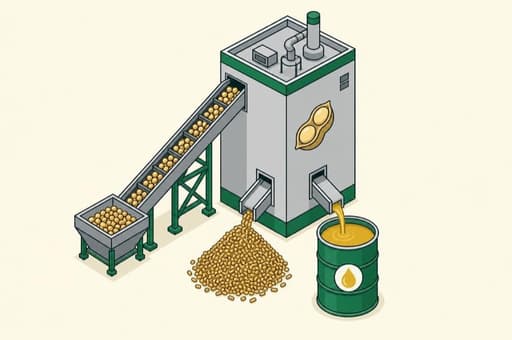
Soybean Processing and Refining
Soybeans split into protein meal for farm animals and oil for food makers and fuel refiners. Just over half of sales and a similar slice of profit. The number that decides the year is the gap between bean cost and what the two halves fetch.
Competes with Crushing and Refined Products (ADM) · Oilseeds platform (Louis Dreyfus)
In plain English
A soybean is really two products in one: a protein part and an oily part. Bunge's plants separate them — the protein goes out as feed for farm animals, the oil to food manufacturers and, more and more, to refiners making diesel and jet fuel from crops.
The money is the gap between what the beans cost and what the two halves sell for, a few dollars on every tonne, repeated across tens of millions of tonnes. So a good year depends less on selling more than on that gap widening — which is why rules about how much crop oil must go into fuel matter so much here. No single customer is big enough for Bunge to have to name one.
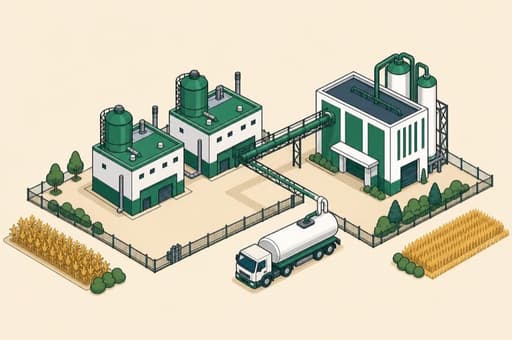
Bunge Chevron Ag Renewables
A plant partnership half-owned by Chevron, feeding lower-carbon soybean oil into renewable diesel and jet fuel. A new unit next to Destrehan, Louisiana was due to start up around the end of September 2026.
Competes with Green Bison Soy Processing (ADM & Marathon Petroleum) · Crushing (ADM)
In plain English
Half-owned by Chevron, the oil company. Bunge put two of its soybean plants into the partnership, Chevron put in money, and together they built a third beside one of them in Louisiana, sized to take up to about seven thousand tonnes of seed a day.
The deal splits the work along what each side already does: Bunge buys beans from farmers and presses them, Chevron takes the oil away to turn into fuel. Because the partner is also the customer, the oil is spoken for before it is made. What the whole thing leans on is US rules that keep fuel made from crops worth refining.
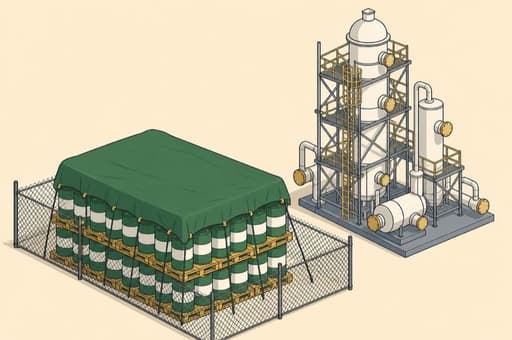
Acelen Renewables supply agreement
A signed promise rather than a business: 300,000 tonnes a year of certified soybean oil to Acelen's planned refinery in Bahia, Brazil, from its expected 2029 start. Watch whether that refinery actually gets built on time.
Competes with Feedstock supply agreements (ADM) · Feedstock supply agreements (Louis Dreyfus)
In plain English
Sometimes a deal is really a bet on a building that does not exist yet. Acelen Renewables, Mubadala's renewable energy company, is planning a refinery in Bahia, Brazil, that will turn plant oil into jet fuel and diesel. Bunge has agreed to supply the soybean oil, certified so the buyer can prove where the crop came from and how it was grown.
Nothing ships until the refinery starts, expected in 2029, and more than a million tonnes are promised over the life of the contract. The point is less the volume — a couple of percent of what Bunge presses in a year — than the kind of sale it is: years of contracted deliveries instead of whatever the market pays that morning.
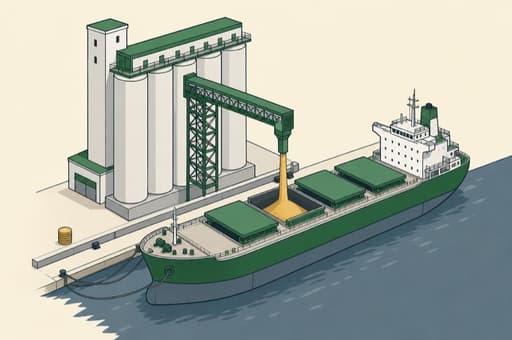
Grain Merchandising
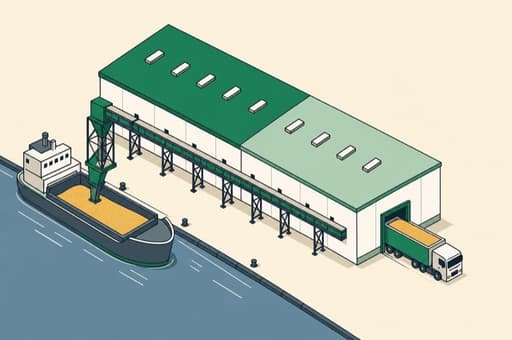
Wheat, corn, barley and cotton bought from farmers and sold on to importers, with ships and storage in between. Enormous volume, slim margins: in the first half of 2026 it carried about 30% of sales but under 8% of profits.
Competes with Ag Services (ADM) · Grain origination and export (COFCO International)
In plain English
Picture a wholesaler that owns the warehouses and hires the ships. Bunge buys grain where it is plentiful — Australia, Canada, Argentina, Brazil, the Black Sea — stores it, books the freight, and sells it to flour millers, feed makers and state buyers across Asia and the Middle East.
It keeps a few dollars a tonne for doing this, so the earnings come from moving enormous quantities and from having grain on hand where a harvest failed. The good years come out of disruption — a drought, a closed border, a jump in freight rates — rather than from the world eating steadily more, which it does only slowly. It is the one part of Bunge that management expects to earn less in 2026.
Viterra
The July 2025 purchase that remade the company: $10.6B for a rival trader, bringing Argentine and Canadian plants plus Australian and Black Sea grain. Sales jumped 32% and profit fell. Watch the cost savings, about $190M planned for 2026.
Competes with Ag Services & Oilseeds (ADM) · Grain origination and crushing (Cargill) · Grain origination and crushing (Louis Dreyfus)
In plain English
Two of the handful of companies that move the world's crops decided to become one. Bunge paid about ten and a half billion dollars for Viterra in July 2025 — mostly in its own shares, the rest in cash and by clearing Viterra's debts — and Glencore, the biggest of Viterra's former owners, ended up holding roughly a sixth of the enlarged Bunge.
Viterra has no sales line of its own; it was folded straight into the four businesses, and the staff count went from twenty-three thousand to thirty-four thousand. The payoff is supposed to come from running one network instead of two, with about $190 million of savings budgeted for 2026 and management pointing at 2027 for the big step.
Softseed Processing and Refining
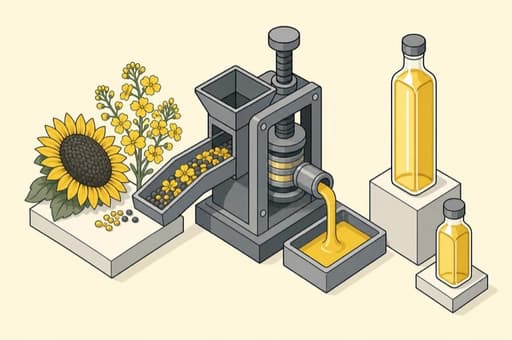
Canola and sunflower seed pressed into oil and meal — the softer seeds, hence the in-house name. A sixth of sales but a larger share of profit, and the sharpest swing in the company: first-half 2026 profit of $450M against $96M a year earlier.
Competes with Canola and sunflower crushing (ADM) · Softseed crush (Louis Dreyfus)
In plain English
Not every oilseed is a soybean. Canola grows across Canada and Australia, sunflowers across Argentina, Europe and the Black Sea, and the oil pressed from them sells at a premium to soybean oil.
Same kind of machinery, better economics: Bunge presses the seed, sells the oil to European biodiesel makers and to food refiners, and the leftover meal as feed. Because Europe requires fuel to contain a share of crop oil, demand there is set by law as much as by appetite. The line had shrunk three years running; capacity added in Argentina, Canada and Europe turned it around in the first half of 2026.
Tropical Oils and Specialty Ingredients
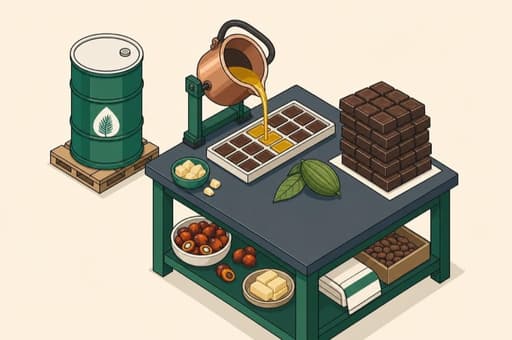
Palm and coconut oil tailored into the fats inside chocolate and baked goods, sold as Bunge Loders Croklaan. The smallest business by sales, the highest value per tonne, and home to most of the big plants now being built.
Competes with Specialty fats and cocoa butter equivalents (AAK) · Tropical oils and specialty fats (Wilmar International)
In plain English
The specialist corner. Chocolate needs a fat that stays hard in the wrapper and softens in the mouth; pastry needs one that flakes; dairy and plant-based foods need one that behaves like butter. Bunge takes palm and coconut oil and tailors it to each of those jobs, then sells it to the companies that make the chocolate bar — its own name never reaches the shelf.
Because the customer is buying a recipe rather than a commodity, the price per tonne is the highest of anything Bunge sells. When cocoa butter runs expensive, food makers lean harder on the substitutes Bunge builds for it. It earns the least of the four businesses and absorbs the second-largest share of spending on new plant.


 Soybean Processing and RefiningSoybeans split into protein meal for farm animals and oil for food makers and fuel refiners. Just over half of sales and a similar slice of profit. The number that decides the year is the gap between bean cost and what the two halves fetch.
Soybeans split into protein meal for farm animals and oil for food makers and fuel refiners. Just over half of sales and a similar slice of profit. The number that decides the year is the gap between bean cost and what the two halves fetch.
In plain English
A soybean is really two products in one: a protein part and an oily part. Bunge's plants separate them — the protein goes out as feed for farm animals, the oil to food manufacturers and, more and more, to refiners making diesel and jet fuel from crops.
The money is the gap between what the beans cost and what the two halves sell for, a few dollars on every tonne, repeated across tens of millions of tonnes. So a good year depends less on selling more than on that gap widening — which is why rules about how much crop oil must go into fuel matter so much here. No single customer is big enough for Bunge to have to name one.
Competes with Crushing and Refined Products (ADM) · Oilseeds platform (Louis Dreyfus)
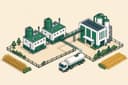 Bunge Chevron Ag RenewablesA plant partnership half-owned by Chevron, feeding lower-carbon soybean oil into renewable diesel and jet fuel. A new unit next to Destrehan, Louisiana was due to start up around the end of September 2026.
A plant partnership half-owned by Chevron, feeding lower-carbon soybean oil into renewable diesel and jet fuel. A new unit next to Destrehan, Louisiana was due to start up around the end of September 2026.
In plain English
Half-owned by Chevron, the oil company. Bunge put two of its soybean plants into the partnership, Chevron put in money, and together they built a third beside one of them in Louisiana, sized to take up to about seven thousand tonnes of seed a day.
The deal splits the work along what each side already does: Bunge buys beans from farmers and presses them, Chevron takes the oil away to turn into fuel. Because the partner is also the customer, the oil is spoken for before it is made. What the whole thing leans on is US rules that keep fuel made from crops worth refining.
Competes with Green Bison Soy Processing (ADM & Marathon Petroleum) · Crushing (ADM)
 Acelen Renewables supply agreementA signed promise rather than a business: 300,000 tonnes a year of certified soybean oil to Acelen's planned refinery in Bahia, Brazil, from its expected 2029 start. Watch whether that refinery actually gets built on time.
A signed promise rather than a business: 300,000 tonnes a year of certified soybean oil to Acelen's planned refinery in Bahia, Brazil, from its expected 2029 start. Watch whether that refinery actually gets built on time.
In plain English
Sometimes a deal is really a bet on a building that does not exist yet. Acelen Renewables, Mubadala's renewable energy company, is planning a refinery in Bahia, Brazil, that will turn plant oil into jet fuel and diesel. Bunge has agreed to supply the soybean oil, certified so the buyer can prove where the crop came from and how it was grown.
Nothing ships until the refinery starts, expected in 2029, and more than a million tonnes are promised over the life of the contract. The point is less the volume — a couple of percent of what Bunge presses in a year — than the kind of sale it is: years of contracted deliveries instead of whatever the market pays that morning.
Competes with Feedstock supply agreements (ADM) · Feedstock supply agreements (Louis Dreyfus)
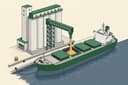 Grain MerchandisingWheat, corn, barley and cotton bought from farmers and sold on to importers, with ships and storage in between. Enormous volume, slim margins: in the first half of 2026 it carried about 30% of sales but under 8% of profits.
Wheat, corn, barley and cotton bought from farmers and sold on to importers, with ships and storage in between. Enormous volume, slim margins: in the first half of 2026 it carried about 30% of sales but under 8% of profits.
In plain English
Picture a wholesaler that owns the warehouses and hires the ships. Bunge buys grain where it is plentiful — Australia, Canada, Argentina, Brazil, the Black Sea — stores it, books the freight, and sells it to flour millers, feed makers and state buyers across Asia and the Middle East.
It keeps a few dollars a tonne for doing this, so the earnings come from moving enormous quantities and from having grain on hand where a harvest failed. The good years come out of disruption — a drought, a closed border, a jump in freight rates — rather than from the world eating steadily more, which it does only slowly. It is the one part of Bunge that management expects to earn less in 2026.
Competes with Ag Services (ADM) · Grain origination and export (COFCO International)
 ViterraThe July 2025 purchase that remade the company: $10.6B for a rival trader, bringing Argentine and Canadian plants plus Australian and Black Sea grain. Sales jumped 32% and profit fell. Watch the cost savings, about $190M planned for 2026.
The July 2025 purchase that remade the company: $10.6B for a rival trader, bringing Argentine and Canadian plants plus Australian and Black Sea grain. Sales jumped 32% and profit fell. Watch the cost savings, about $190M planned for 2026.
In plain English
Two of the handful of companies that move the world's crops decided to become one. Bunge paid about ten and a half billion dollars for Viterra in July 2025 — mostly in its own shares, the rest in cash and by clearing Viterra's debts — and Glencore, the biggest of Viterra's former owners, ended up holding roughly a sixth of the enlarged Bunge.
Viterra has no sales line of its own; it was folded straight into the four businesses, and the staff count went from twenty-three thousand to thirty-four thousand. The payoff is supposed to come from running one network instead of two, with about $190 million of savings budgeted for 2026 and management pointing at 2027 for the big step.
Competes with Ag Services & Oilseeds (ADM) · Grain origination and crushing (Cargill) · Grain origination and crushing (Louis Dreyfus)
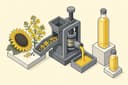 Softseed Processing and RefiningCanola and sunflower seed pressed into oil and meal — the softer seeds, hence the in-house name. A sixth of sales but a larger share of profit, and the sharpest swing in the company: first-half 2026 profit of $450M against $96M a year earlier.
Canola and sunflower seed pressed into oil and meal — the softer seeds, hence the in-house name. A sixth of sales but a larger share of profit, and the sharpest swing in the company: first-half 2026 profit of $450M against $96M a year earlier.
In plain English
Not every oilseed is a soybean. Canola grows across Canada and Australia, sunflowers across Argentina, Europe and the Black Sea, and the oil pressed from them sells at a premium to soybean oil.
Same kind of machinery, better economics: Bunge presses the seed, sells the oil to European biodiesel makers and to food refiners, and the leftover meal as feed. Because Europe requires fuel to contain a share of crop oil, demand there is set by law as much as by appetite. The line had shrunk three years running; capacity added in Argentina, Canada and Europe turned it around in the first half of 2026.
Competes with Canola and sunflower crushing (ADM) · Softseed crush (Louis Dreyfus)
 Tropical Oils and Specialty IngredientsPalm and coconut oil tailored into the fats inside chocolate and baked goods, sold as Bunge Loders Croklaan. The smallest business by sales, the highest value per tonne, and home to most of the big plants now being built.
Palm and coconut oil tailored into the fats inside chocolate and baked goods, sold as Bunge Loders Croklaan. The smallest business by sales, the highest value per tonne, and home to most of the big plants now being built.
In plain English
The specialist corner. Chocolate needs a fat that stays hard in the wrapper and softens in the mouth; pastry needs one that flakes; dairy and plant-based foods need one that behaves like butter. Bunge takes palm and coconut oil and tailors it to each of those jobs, then sells it to the companies that make the chocolate bar — its own name never reaches the shelf.
Because the customer is buying a recipe rather than a commodity, the price per tonne is the highest of anything Bunge sells. When cocoa butter runs expensive, food makers lean harder on the substitutes Bunge builds for it. It earns the least of the four businesses and absorbs the second-largest share of spending on new plant.
Competes with Specialty fats and cocoa butter equivalents (AAK) · Tropical oils and specialty fats (Wilmar International)
Named in filings, launches and programs
- Milling (wheat flour)Product lineAbout $1.5B of flour a year — the steady remainder of the milling business after the North American corn mills were sold in 2025.
- Bunge Loders CroklaanBrandThe specialty fats name behind the tropical oils business; it launched Karibon, a cocoa butter substitute made from shea alone.
- Merchandising and freight servicesServiceChartering ocean vessels and selling trading and shipping services to others, run inside the grain business.
- Global cottonProduct lineCotton trading that arrived with Viterra; management only began naming it on the 2026 earnings calls.
- Bunge IbericaBrandSpanish soybean plant. Repsol bought 40% in 2025 and the two work together on crop oil for fuel; Bunge still controls it.
- Morristown soy protein concentrate plantProduct · RampingIndiana plant making concentrated soy protein — producing, but still below full speed as of late July 2026.
- Avondale tropical oils expansionProduct · RampingLouisiana expansion that management expected to come online within a month of its late-July 2026 update.
- Westhaven specialty and refined plantProduct · AnnouncedA Dutch specialty and refining plant slated to start at the end of the first quarter of 2027.
- IFF soy protein concentrate businessBrandBought for $105M in early 2026, adding soy protein and related ingredients after Bunge walked away from buying CJ Selecta.
- Petrobras and Vibra aviation-fuel partnershipCustomer program · AnnouncedA planned tie-up to supply certified Brazilian crop oil for aviation fuel, with the crop's land-use record documented.
- Winter canola and novel crops programmeProduct · Pre-revenueGrower programmes in winter canola, camelina and safflower — crops management argues should score better under fuel carbon rules.
- Bunge VenturesProduct · Pre-revenueThe company's venture investing arm, small enough that it sits in the head-office numbers rather than any business.
- FertilizerProduct lineA small fertilizer line produced inside the soybean business; sales ran to roughly $50M in 2024.
Milling (wheat flour)Product line
About $1.5B of flour a year — the steady remainder of the milling business after the North American corn mills were sold in 2025.
Bunge Loders CroklaanBrand
The specialty fats name behind the tropical oils business; it launched Karibon, a cocoa butter substitute made from shea alone.
Merchandising and freight servicesService
Chartering ocean vessels and selling trading and shipping services to others, run inside the grain business.
Global cottonProduct line
Cotton trading that arrived with Viterra; management only began naming it on the 2026 earnings calls.
Bunge IbericaBrand
Spanish soybean plant. Repsol bought 40% in 2025 and the two work together on crop oil for fuel; Bunge still controls it.
Morristown soy protein concentrate plantProduct · Ramping
Indiana plant making concentrated soy protein — producing, but still below full speed as of late July 2026.
Avondale tropical oils expansionProduct · Ramping
Louisiana expansion that management expected to come online within a month of its late-July 2026 update.
Westhaven specialty and refined plantProduct · Announced
A Dutch specialty and refining plant slated to start at the end of the first quarter of 2027.
IFF soy protein concentrate businessBrand
Bought for $105M in early 2026, adding soy protein and related ingredients after Bunge walked away from buying CJ Selecta.
Petrobras and Vibra aviation-fuel partnershipCustomer program · Announced
A planned tie-up to supply certified Brazilian crop oil for aviation fuel, with the crop's land-use record documented.
Winter canola and novel crops programmeProduct · Pre-revenue
Grower programmes in winter canola, camelina and safflower — crops management argues should score better under fuel carbon rules.
Bunge VenturesProduct · Pre-revenue
The company's venture investing arm, small enough that it sits in the head-office numbers rather than any business.
FertilizerProduct line
A small fertilizer line produced inside the soybean business; sales ran to roughly $50M in 2024.