
Citi (C)
Runs a cross-border institutional bank alongside U.S. consumer cards and wealth management.
Something off on this page? Send us feedback.
Citigroup is a sprawling bank whose biggest engines help institutions trade and move money, while credit cards, wealth management, and company lending fill out the rest. No single line dominates, but most earnings still ride on interest rates, market activity, deposits, and borrowers paying back. Citi is becoming leaner as it exits old consumer businesses and pushes harder into wealth and everyday corporate money movement.
Item facts: FY2025 · year ended Dec 31, 2025, from filings, earnings calls and company pages.
Judgment weights, not filed revenue
The band summarizes business focus and direction. ~ marks estimates.
9 in detail · 13 more below
Fixed Income Markets
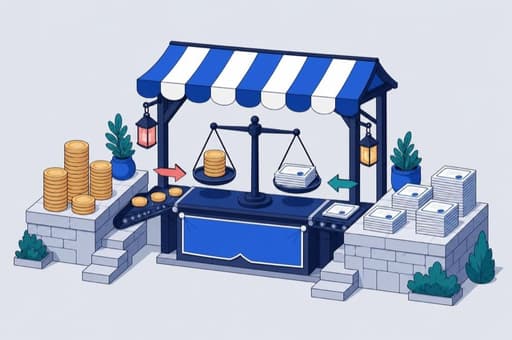
Citi helps large clients trade currencies, government and company debt, and contracts that protect against price changes. It brought in $16.2 billion in FY2025; quieter markets and the usual second-half slowdown are the watchpoints.
Competes with FICC (Goldman Sachs) · Fixed Income Sales and Trading (Morgan Stanley)
In plain English
Picture a wholesaler standing between institutions that want to buy and sell money-related products. Citi quotes prices for currencies, government and company debt, and contracts that soften the blow when rates or prices move. It can also lend against those positions.
The bank keeps the small gap between its buying and selling prices, collects financing income, and sometimes gains or loses while holding inventory. Customers return because they need quick access across many markets. The engine runs hardest when prices move and clients trade, but it also needs plentiful funding and room to take risk.

Equity Markets
The stock-trading arm executes orders and lends to large investors, including funds that borrow to enlarge their bets. FY2025 revenue was $5.7 billion; growth depends on winning more client balances without taking reckless lending risk.
Competes with Prime Services and Equities (Goldman Sachs) · Institutional Equities / Prime Brokerage (Morgan Stanley)
In plain English
Behind a large investor's stock trade sits a lot of machinery. Citi finds the other side of trades, handles contracts tied to share prices, holds assets, and lends money or stock so funds can take larger or negative positions.
Think of it as the backstage crew for an investment fund: mostly invisible, but paid whenever the show gets complicated. Citi earns trading gaps, service charges, and interest on financing. Funds keep using the service because moving their positions is cumbersome. Busy markets and growing fund balances help; falling values for assets securing the loans or clients rapidly cutting debt can hurt.

Treasury and Trade Solutions
This is the daily money-moving system for companies and financial institutions: payments, cash storage, trade paperwork, and short-term funding. It produced $15.4 billion in FY2025; payment volume helps, while falling rates can squeeze deposit income.
Competes with Treasury Services (J.P. Morgan Payments) · Global Payments Solutions (Bank of America)
In plain English
A multinational company may collect money in dozens of countries and owe suppliers in dozens more. Citi gives its finance team one place to send payments, see cash, fund trade, and move spare money where it is needed—like a control room for the company's bank accounts.
Clients pay service charges for those jobs and leave large working balances with Citi. The bank can earn a spread by putting that cash to work at a higher rate than it pays the client. These routines are woven into payroll, supplier, and finance systems, so switching is painful. Reliability, cross-border rules, deposit retention, and interest rates decide the outcome.
Securities Services
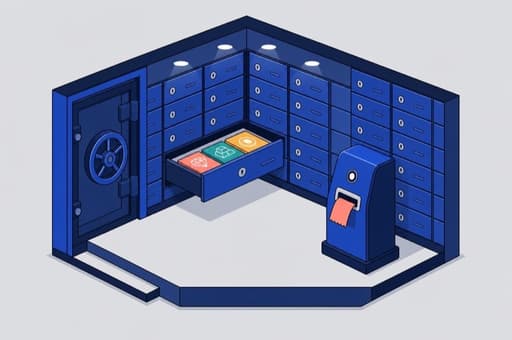
Citi safeguards investments, keeps ownership records, and completes trades for funds and institutions. FY2025 revenue reached $5.9 billion; asset growth helps, but falling markets shrink the base that generates some fees.
Competes with Asset Servicing (BNY) · Investment Services / Global Custody (State Street)
In plain English
This is a coat check for enormous investment portfolios. Asset managers, pension funds, insurers, and government funds hand Citi the job of safeguarding securities, recording who owns what, completing trades, and keeping investment funds' books straight. The assets belong to the clients; Citi maintains the dependable machinery around them.
Fees rise with the amount held, the number of transactions, and how complicated the work becomes. Client cash can add interest income too. Customers stay because mistakes in ownership records or trade completion are costly, and rebuilding the setup elsewhere is difficult. Market declines, money leaving funds, or operational failures are the clear weak spots.

Branded Cards
Citi's own rewards and partner credit cards earn from purchases and unpaid balances. FY2025 revenue was $11.6 billion; the newly enlarged American Airlines relationship adds accounts, while rewards costs and missed payments can eat into the gain.
Competes with Chase Sapphire Reserve (JPMorgan Chase) · Venture X Rewards (Capital One)
In plain English
When someone pays with a Citi rewards card, the bank advances the money to the shop and later collects from the cardholder. A customer who carries an unpaid balance pays interest; the shop passes along a small slice of each sale, and some cards add fees.
Rewards make the card attractive but cost Citi money, as do payments to partners such as American Airlines and Costco. Those partners bring loyal shoppers and travelers into the system, while Citi supplies the lending and billing. The business improves when people spend and repay. It weakens when funding gets expensive, rewards become richer, or more borrowers fall behind.
Retail Services
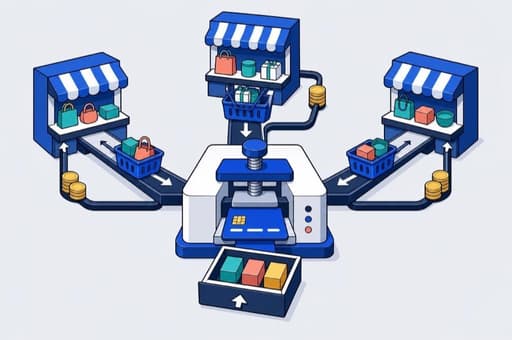
Citi runs store-linked credit programs for retailers including Home Depot, Best Buy, and Macy's. The line made $6.6 billion in FY2025; its durability rests on renewing merchant relationships and on shoppers repaying their balances.
Competes with Private-label/co-brand programs (Synchrony) · Private-label/co-brand cards (Bread Financial)
In plain English
The card offered at a store checkout may carry the retailer's name, but Citi can be the lender behind it. The bank approves the shopper, pays the merchant, sends the bill, and collects interest when the purchase is paid over time.
For the retailer, easy financing can lift sales and loyalty without building a bank. In return, Citi gains customers exactly where they are ready to spend, though the merchant often receives part of the economics and may share some losses. It is a shop-within-a-shop arrangement: valuable while the partnership lasts, exposed if a retailer struggles, leaves, or sends Citi weaker borrowers.

Wealth
Advisers, investments, deposits, and loans serve affluent households, very rich families, and professionals through several Citi channels. FY2025 revenue was $11.3 billion; this is the fastest-growth target, but markets and adviser productivity must cooperate.
Competes with Global Wealth Management (UBS) · Merrill Wealth Management (Bank of America)
In plain English
A wealthy family rarely needs just one account. It may want investments, cash management, loans, estate planning, and help coordinating all of them. Citi puts those jobs behind one relationship through Citigold, its private bank, workplace service, and retail banking.
Some income is a fee tied to how much money Citi advises on or places into investments. Deposits and loans add the familiar bank spread: Citi earns more on the money than it pays for it. The relationship can last for generations because moving everything is burdensome. Rising markets and new client money help; weak markets, expensive deposits, or advisers handling too few relationships slow it down.

Investment Banking
Bankers advise on company sales and mergers, then help clients raise money by selling debt or ownership stakes. FY2025 revenue was $4.4 billion; much of the fee arrives only when a deal crosses the finish line.
Competes with Investment Banking (J.P. Morgan) · Investment Banking (Goldman Sachs)
In plain English
Buying another company or raising a large sum is too complicated for most management teams to do alone. Citi helps choose the structure, find buyers or investors, negotiate, and coordinate the sale of company debt or new ownership stakes.
It resembles an estate agent for corporations, except the transaction may involve an entire business or years of borrowing. Citi collects advice and placement fees, often when the deal closes. Existing lending and payment relationships can introduce clients, but they do not guarantee completion. Confidence in company values, willing debt markets, and regulatory approval determine whether a promising assignment actually turns into money.

Corporate Lending
Citi provides ready credit and longer loans to companies, sometimes sharing the funding with outside investment managers. Depending on the current layout, FY2025 revenue was roughly $2–4 billion; watch how much credit Citi keeps and how borrowers fare.
Competes with Global Corporate Banking (J.P. Morgan) · Global Corporate and Investment Banking (Bank of America)
In plain English
Companies need money before customers pay, when they buy another business, or simply as insurance against a cash squeeze. Citi supplies loans and credit lines—money promised in advance that a borrower can draw when needed. The company pays interest on borrowed funds and fees for keeping credit available.
This is relationship glue: lending can open the door to Citi's payment, trading, and deal services. Apollo, an investment manager, and HPS, a private lender, can provide outside money for eligible loans, letting Citi arrange more financing without funding every dollar itself. Borrower health, Citi's own funding cost, and demand from other lenders set the limits.


 Fixed Income MarketsCiti helps large clients trade currencies, government and company debt, and contracts that protect against price changes. It brought in $16.2 billion in FY2025; quieter markets and the usual second-half slowdown are the watchpoints.
Citi helps large clients trade currencies, government and company debt, and contracts that protect against price changes. It brought in $16.2 billion in FY2025; quieter markets and the usual second-half slowdown are the watchpoints.
In plain English
Picture a wholesaler standing between institutions that want to buy and sell money-related products. Citi quotes prices for currencies, government and company debt, and contracts that soften the blow when rates or prices move. It can also lend against those positions.
The bank keeps the small gap between its buying and selling prices, collects financing income, and sometimes gains or loses while holding inventory. Customers return because they need quick access across many markets. The engine runs hardest when prices move and clients trade, but it also needs plentiful funding and room to take risk.
Competes with FICC (Goldman Sachs) · Fixed Income Sales and Trading (Morgan Stanley)
 Equity MarketsThe stock-trading arm executes orders and lends to large investors, including funds that borrow to enlarge their bets. FY2025 revenue was $5.7 billion; growth depends on winning more client balances without taking reckless lending risk.
The stock-trading arm executes orders and lends to large investors, including funds that borrow to enlarge their bets. FY2025 revenue was $5.7 billion; growth depends on winning more client balances without taking reckless lending risk.
In plain English
Behind a large investor's stock trade sits a lot of machinery. Citi finds the other side of trades, handles contracts tied to share prices, holds assets, and lends money or stock so funds can take larger or negative positions.
Think of it as the backstage crew for an investment fund: mostly invisible, but paid whenever the show gets complicated. Citi earns trading gaps, service charges, and interest on financing. Funds keep using the service because moving their positions is cumbersome. Busy markets and growing fund balances help; falling values for assets securing the loans or clients rapidly cutting debt can hurt.
Competes with Prime Services and Equities (Goldman Sachs) · Institutional Equities / Prime Brokerage (Morgan Stanley)
 Treasury and Trade SolutionsThis is the daily money-moving system for companies and financial institutions: payments, cash storage, trade paperwork, and short-term funding. It produced $15.4 billion in FY2025; payment volume helps, while falling rates can squeeze deposit income.
This is the daily money-moving system for companies and financial institutions: payments, cash storage, trade paperwork, and short-term funding. It produced $15.4 billion in FY2025; payment volume helps, while falling rates can squeeze deposit income.
In plain English
A multinational company may collect money in dozens of countries and owe suppliers in dozens more. Citi gives its finance team one place to send payments, see cash, fund trade, and move spare money where it is needed—like a control room for the company's bank accounts.
Clients pay service charges for those jobs and leave large working balances with Citi. The bank can earn a spread by putting that cash to work at a higher rate than it pays the client. These routines are woven into payroll, supplier, and finance systems, so switching is painful. Reliability, cross-border rules, deposit retention, and interest rates decide the outcome.
Competes with Treasury Services (J.P. Morgan Payments) · Global Payments Solutions (Bank of America)
 Securities ServicesCiti safeguards investments, keeps ownership records, and completes trades for funds and institutions. FY2025 revenue reached $5.9 billion; asset growth helps, but falling markets shrink the base that generates some fees.
Citi safeguards investments, keeps ownership records, and completes trades for funds and institutions. FY2025 revenue reached $5.9 billion; asset growth helps, but falling markets shrink the base that generates some fees.
In plain English
This is a coat check for enormous investment portfolios. Asset managers, pension funds, insurers, and government funds hand Citi the job of safeguarding securities, recording who owns what, completing trades, and keeping investment funds' books straight. The assets belong to the clients; Citi maintains the dependable machinery around them.
Fees rise with the amount held, the number of transactions, and how complicated the work becomes. Client cash can add interest income too. Customers stay because mistakes in ownership records or trade completion are costly, and rebuilding the setup elsewhere is difficult. Market declines, money leaving funds, or operational failures are the clear weak spots.
Competes with Asset Servicing (BNY) · Investment Services / Global Custody (State Street)
 Branded CardsCiti's own rewards and partner credit cards earn from purchases and unpaid balances. FY2025 revenue was $11.6 billion; the newly enlarged American Airlines relationship adds accounts, while rewards costs and missed payments can eat into the gain.
Citi's own rewards and partner credit cards earn from purchases and unpaid balances. FY2025 revenue was $11.6 billion; the newly enlarged American Airlines relationship adds accounts, while rewards costs and missed payments can eat into the gain.
In plain English
When someone pays with a Citi rewards card, the bank advances the money to the shop and later collects from the cardholder. A customer who carries an unpaid balance pays interest; the shop passes along a small slice of each sale, and some cards add fees.
Rewards make the card attractive but cost Citi money, as do payments to partners such as American Airlines and Costco. Those partners bring loyal shoppers and travelers into the system, while Citi supplies the lending and billing. The business improves when people spend and repay. It weakens when funding gets expensive, rewards become richer, or more borrowers fall behind.
Competes with Chase Sapphire Reserve (JPMorgan Chase) · Venture X Rewards (Capital One)
 Retail ServicesCiti runs store-linked credit programs for retailers including Home Depot, Best Buy, and Macy's. The line made $6.6 billion in FY2025; its durability rests on renewing merchant relationships and on shoppers repaying their balances.
Citi runs store-linked credit programs for retailers including Home Depot, Best Buy, and Macy's. The line made $6.6 billion in FY2025; its durability rests on renewing merchant relationships and on shoppers repaying their balances.
In plain English
The card offered at a store checkout may carry the retailer's name, but Citi can be the lender behind it. The bank approves the shopper, pays the merchant, sends the bill, and collects interest when the purchase is paid over time.
For the retailer, easy financing can lift sales and loyalty without building a bank. In return, Citi gains customers exactly where they are ready to spend, though the merchant often receives part of the economics and may share some losses. It is a shop-within-a-shop arrangement: valuable while the partnership lasts, exposed if a retailer struggles, leaves, or sends Citi weaker borrowers.
Competes with Private-label/co-brand programs (Synchrony) · Private-label/co-brand cards (Bread Financial)
 WealthAdvisers, investments, deposits, and loans serve affluent households, very rich families, and professionals through several Citi channels. FY2025 revenue was $11.3 billion; this is the fastest-growth target, but markets and adviser productivity must cooperate.
Advisers, investments, deposits, and loans serve affluent households, very rich families, and professionals through several Citi channels. FY2025 revenue was $11.3 billion; this is the fastest-growth target, but markets and adviser productivity must cooperate.
In plain English
A wealthy family rarely needs just one account. It may want investments, cash management, loans, estate planning, and help coordinating all of them. Citi puts those jobs behind one relationship through Citigold, its private bank, workplace service, and retail banking.
Some income is a fee tied to how much money Citi advises on or places into investments. Deposits and loans add the familiar bank spread: Citi earns more on the money than it pays for it. The relationship can last for generations because moving everything is burdensome. Rising markets and new client money help; weak markets, expensive deposits, or advisers handling too few relationships slow it down.
Competes with Global Wealth Management (UBS) · Merrill Wealth Management (Bank of America)
 Investment BankingBankers advise on company sales and mergers, then help clients raise money by selling debt or ownership stakes. FY2025 revenue was $4.4 billion; much of the fee arrives only when a deal crosses the finish line.
Bankers advise on company sales and mergers, then help clients raise money by selling debt or ownership stakes. FY2025 revenue was $4.4 billion; much of the fee arrives only when a deal crosses the finish line.
In plain English
Buying another company or raising a large sum is too complicated for most management teams to do alone. Citi helps choose the structure, find buyers or investors, negotiate, and coordinate the sale of company debt or new ownership stakes.
It resembles an estate agent for corporations, except the transaction may involve an entire business or years of borrowing. Citi collects advice and placement fees, often when the deal closes. Existing lending and payment relationships can introduce clients, but they do not guarantee completion. Confidence in company values, willing debt markets, and regulatory approval determine whether a promising assignment actually turns into money.
Competes with Investment Banking (J.P. Morgan) · Investment Banking (Goldman Sachs)
 Corporate LendingCiti provides ready credit and longer loans to companies, sometimes sharing the funding with outside investment managers. Depending on the current layout, FY2025 revenue was roughly $2–4 billion; watch how much credit Citi keeps and how borrowers fare.
Citi provides ready credit and longer loans to companies, sometimes sharing the funding with outside investment managers. Depending on the current layout, FY2025 revenue was roughly $2–4 billion; watch how much credit Citi keeps and how borrowers fare.
In plain English
Companies need money before customers pay, when they buy another business, or simply as insurance against a cash squeeze. Citi supplies loans and credit lines—money promised in advance that a borrower can draw when needed. The company pays interest on borrowed funds and fees for keeping credit available.
This is relationship glue: lending can open the door to Citi's payment, trading, and deal services. Apollo, an investment manager, and HPS, a private lender, can provide outside money for eligible loans, letting Citi arrange more financing without funding every dollar itself. Borrower health, Citi's own funding cost, and demand from other lenders set the limits.
Competes with Global Corporate Banking (J.P. Morgan) · Global Corporate and Investment Banking (Bank of America)
Named in filings, launches and programs
- CitiDirectPlatformThe online doorway where institutional clients manage payments, cash, trade services, market access, and reporting.
- Citi Token ServicesPlatform · RampingA system for institutions to move bank-backed digital claims around the clock; live tests connected Citi with FAB, OCBC, and Swift.
- Citi Payments ExpressPlatform · RampingA simpler business-payment service operating across twenty-two markets and handling about ten million transactions a day in FY2025.
- Citi Private BankServiceThe Wealth channel for extremely rich families and family offices, combining advice, investments, deposits, and lending.
- Citigold and Retail BankingServiceCiti's affluent and branch-led banking channel, moved into Wealth in 2026 alongside its deposit and investment relationships.
- Wealth at WorkServiceA Wealth channel aimed at professionals and people reached through their workplaces.
- Citi Strata card familyProduct lineCiti's own rewards-card range, including Elite and Premier, nested inside Branded Cards.
- Citi/AAdvantageCustomer program · RampingThe ten-year American Airlines card partnership; Citi became the airline's exclusive U.S. card provider and absorbed more than two million accounts in 2026.
- Costco Anywhere VisaCustomer programThe Costco-linked card program that brings member spending and lending balances into Branded Cards.
- Retail partner programsCustomer programStore-card and co-branded programs for Home Depot, Best Buy, Macy's, and other merchants, all inside Retail Services.
- Apollo private-credit direct-lending programCustomer program · RampingA multi-year North American program in which Apollo-group money funds eligible company loans that Citi finds and arranges, targeting $25 billion of activity.
- Citi/HPS Private Capital ProgramCustomer program · AnnouncedA five-year European program for company loans that Citi finds and arranges, backed by HPS money and carrying a €15 billion target.
- KardBrand · AnnouncedA personalized rewards and merchant-offer platform Citi agreed to acquire; purchase terms remain undisclosed.
CitiDirectPlatform
The online doorway where institutional clients manage payments, cash, trade services, market access, and reporting.
Citi Token ServicesPlatform · Ramping
A system for institutions to move bank-backed digital claims around the clock; live tests connected Citi with FAB, OCBC, and Swift.
Citi Payments ExpressPlatform · Ramping
A simpler business-payment service operating across twenty-two markets and handling about ten million transactions a day in FY2025.
Citi Private BankService
The Wealth channel for extremely rich families and family offices, combining advice, investments, deposits, and lending.
Citigold and Retail BankingService
Citi's affluent and branch-led banking channel, moved into Wealth in 2026 alongside its deposit and investment relationships.
Wealth at WorkService
A Wealth channel aimed at professionals and people reached through their workplaces.
Citi Strata card familyProduct line
Citi's own rewards-card range, including Elite and Premier, nested inside Branded Cards.
Citi/AAdvantageCustomer program · Ramping
The ten-year American Airlines card partnership; Citi became the airline's exclusive U.S. card provider and absorbed more than two million accounts in 2026.
Costco Anywhere VisaCustomer program
The Costco-linked card program that brings member spending and lending balances into Branded Cards.
Retail partner programsCustomer program
Store-card and co-branded programs for Home Depot, Best Buy, Macy's, and other merchants, all inside Retail Services.
Apollo private-credit direct-lending programCustomer program · Ramping
A multi-year North American program in which Apollo-group money funds eligible company loans that Citi finds and arranges, targeting $25 billion of activity.
Citi/HPS Private Capital ProgramCustomer program · Announced
A five-year European program for company loans that Citi finds and arranges, backed by HPS money and carrying a €15 billion target.
KardBrand · Announced
A personalized rewards and merchant-offer platform Citi agreed to acquire; purchase terms remain undisclosed.