
Coupang (CPNG)
Runs Korea-centered commerce and delivery infrastructure alongside newer digital and international services.
Something off on this page? Send us feedback.
Coupang is the online store much of South Korea shops at — it buys the goods itself, keeps them in its own warehouses and delivers them with its own drivers, often before dawn. Reselling those goods brings in almost all the revenue; the fees it charges other sellers and advertisers bring in the profit. A data breach and record fines knocked the machine off its stride, and Taiwan is funded to lose money for now.
Item facts: FY2025 · year ended Dec 31, 2025, from filings, earnings calls and company pages.
Judgment weights, not filed revenue
The band summarizes business focus and direction. ~ marks estimates.
7 in detail · 7 more below
Rocket Delivery
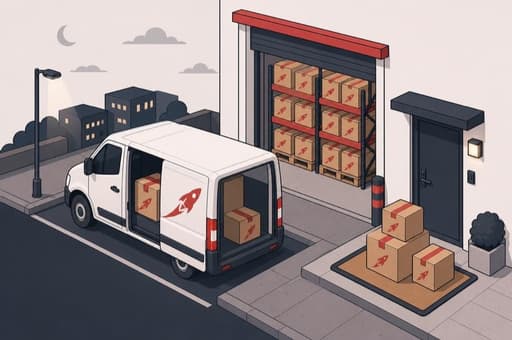
Coupang's own goods, in Coupang's warehouses, on Coupang's vans — 99% of orders arrive inside a day. Goods it owns and resells came to $26.3B in 2025, 76.2% of all revenue with Taiwan's shelves included; Korea alone is about 70%.
Competes with Naver Shopping (Naver) · Gmarket (Alibaba/Shinsegae JV) · 11st (SK Square)
In plain English
Picture a shop that refuses to wait for a courier. It buys the toothpaste and the televisions itself, stacks them in warehouses across the country, and sends its own drivers out overnight so the box is on the doorstep before breakfast.
The money arrives the oldest way there is: sell the thing for more than you paid for it. That leaves only pennies on the dollar, so everything rests on volume and on how much choice sits on the shelves — management says its own selection is still far below where it could be. Demand is about 25 million Korean shoppers, and no single one of them matters much.
Marketplace and Fulfillment and Logistics by Coupang (FLC)
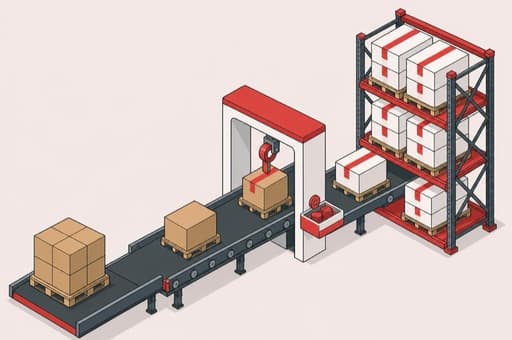
Other people's goods, carried on Coupang's shelves and vans for a fee. Fees of every kind reached $7.1B in 2025 — 20.6% of revenue, up from about a tenth two years earlier — and this is where the profit lives. They have stopped growing quarter to quarter since.
Competes with Naver Smart Store (Naver) · Fulfillment by Amazon (Amazon)
In plain English
Not everything on Coupang belongs to Coupang. A small clothing seller can list its own stock and, for a fee, park it in a Coupang warehouse so the order still goes out overnight — storage, packing, shipping and even returns handled for them.
Coupang never buys those clothes, so it keeps only the fee, and a fee dollar is worth far more to it than a dollar of merchandise it had to purchase first. That is why profit per dollar of sales kept climbing in late 2025 while sales growth slowed. Tens of thousands of Korean small merchants supply the goods; the warehouse space they rent is the same space Coupang's own stock needs.
Coupang Ads
Sellers pay to sit at the top of the search results. Coupang has never published a figure for it; Korea's whole store-advertising market was put at roughly $2B a year as of 2023, which brackets this at around a billion. The antitrust appeal is the thing to watch.
Competes with Naver search and shopping ads (Naver) · Amazon Ads (Amazon)
In plain English
When you search for socks, some of the socks you see first paid to be there. Coupang charges the seller only when the shopper clicks — the same trick a supermarket plays when a brand pays for the shelf at eye level, except the shelf is a phone screen.
The money is pure margin: the goods are already on the platform and the shoppers are already looking. It is also the least visible part of the company — no revenue line, no growth rate, not even a settled name on the calls. And the regulator has already fined Coupang for ranking its own goods and house labels too kindly, which is exactly the lever this business pulls.

Rocket WOW membership
A monthly membership that makes delivery free and folds in fresh groceries, streaming and food-delivery perks — roughly $1B of dues. Its real job is order frequency: cancellations spiked in December 2025, and management said in August 2026 that membership now exceeds where it stood before the breach.
Competes with Naver Plus Membership (Naver) · Amazon Prime (Amazon)
In plain English
Roughly six dollars a month — ₩7,890, raised by well over half in 2024 — buys free delivery with no minimum order, dawn and same-day drops, free returns, fresh groceries, discounts on food delivery and a streaming service thrown in.
The dues themselves are a rounding error next to the retail business. What Coupang is really buying is habit: a member who paid already has a reason to order the shampoo here rather than walk to a shop. Which is why the membership is the number that leads all the others — and why it only works as long as tomorrow-morning delivery actually holds.

Coupang Taiwan
The Korean playbook replanted: own stock, own warehouses and now own drivers rather than hired couriers. Revenue grew triple digits in 2025 off a base Coupang still will not disclose, and Taiwan is the largest single drain on the developing arm's profit.
Competes with Shopee Taiwan (Sea Limited) · momo (momo.com / Fubon)
In plain English
Same idea, different island. Coupang buys the goods, builds the warehouses, hires the drivers, and swallows the losses until enough Taiwanese households order often enough to cover the fixed costs. It reached dawn delivery one year into the build, against four years in Korea, and covered close to 70% of the island's geography by the end of 2025.
The bill is explicit: the developing side of the company is budgeted to lose $950M to $1B in 2026, with Taiwan named the biggest piece of that. Shopee and momo were already there, and Taiwan's online shopping market is roughly a quarter the size of Korea's.
Farfetch
The luxury clothing marketplace Coupang picked up out of distress in early 2024: boutiques across 190 markets list their stock, Farfetch takes a commission. Revenue was around $1.7B in 2024 with losses trimmed to roughly $34M. Brands selling direct cap the recovery.
Competes with Mytheresa (LuxExperience B.V.) · Brand-direct websites (LVMH and Kering brands)
In plain English
A shop window for other people's shops. Designer boutiques and fashion houses put their own dresses and handbags on Farfetch, keep ownership of them, and hand over a slice of the price whenever something sells to one of its shoppers around the world.
Coupang bought it cheaply while it was failing and spent two years stopping the bleeding — by late 2025 it was finally growing again with its overall economics positive. The structural problem is not competitors so much as the labels themselves: every time a fashion house decides to sell from its own website, the middleman has less to sell.
Coupang Eats and Rocket Now
Restaurant delivery in Korea, plus fast delivery of everyday items in Korea and Japan. Roughly 8.5 million people a week order on Eats against the leader's 15 million. Management says the two services together now cover their own costs.
Competes with Baemin (Woowa Brothers) · Uber Eats Japan (Uber) · Demae-can (Demae-can)
In plain English
Dinner instead of detergent. A restaurant cooks, a rider carries, and Coupang keeps a cut of the bill rather than the whole thing — the riders are paid per trip, so the cost rises and falls with the orders.
Baemin, the Korean leader, still has nearly twice as many weekly users, and between them the two apps hold close to nine-tenths of the market, so share has to be taken from a rival rather than won from growth. Coupang's way in was the membership: Eats discounts come free with it, which means part of this business exists to keep shoppers loyal to the retail side. Japan is the same bet, much earlier.


 Rocket DeliveryCoupang's own goods, in Coupang's warehouses, on Coupang's vans — 99% of orders arrive inside a day. Goods it owns and resells came to $26.3B in 2025, 76.2% of all revenue with Taiwan's shelves included; Korea alone is about 70%.
Coupang's own goods, in Coupang's warehouses, on Coupang's vans — 99% of orders arrive inside a day. Goods it owns and resells came to $26.3B in 2025, 76.2% of all revenue with Taiwan's shelves included; Korea alone is about 70%.
In plain English
Picture a shop that refuses to wait for a courier. It buys the toothpaste and the televisions itself, stacks them in warehouses across the country, and sends its own drivers out overnight so the box is on the doorstep before breakfast.
The money arrives the oldest way there is: sell the thing for more than you paid for it. That leaves only pennies on the dollar, so everything rests on volume and on how much choice sits on the shelves — management says its own selection is still far below where it could be. Demand is about 25 million Korean shoppers, and no single one of them matters much.
Competes with Naver Shopping (Naver) · Gmarket (Alibaba/Shinsegae JV) · 11st (SK Square)
 Marketplace and Fulfillment and Logistics by Coupang (FLC)Other people's goods, carried on Coupang's shelves and vans for a fee. Fees of every kind reached $7.1B in 2025 — 20.6% of revenue, up from about a tenth two years earlier — and this is where the profit lives. They have stopped growing quarter to quarter since.
Other people's goods, carried on Coupang's shelves and vans for a fee. Fees of every kind reached $7.1B in 2025 — 20.6% of revenue, up from about a tenth two years earlier — and this is where the profit lives. They have stopped growing quarter to quarter since.
In plain English
Not everything on Coupang belongs to Coupang. A small clothing seller can list its own stock and, for a fee, park it in a Coupang warehouse so the order still goes out overnight — storage, packing, shipping and even returns handled for them.
Coupang never buys those clothes, so it keeps only the fee, and a fee dollar is worth far more to it than a dollar of merchandise it had to purchase first. That is why profit per dollar of sales kept climbing in late 2025 while sales growth slowed. Tens of thousands of Korean small merchants supply the goods; the warehouse space they rent is the same space Coupang's own stock needs.
Competes with Naver Smart Store (Naver) · Fulfillment by Amazon (Amazon)
 Coupang AdsSellers pay to sit at the top of the search results. Coupang has never published a figure for it; Korea's whole store-advertising market was put at roughly $2B a year as of 2023, which brackets this at around a billion. The antitrust appeal is the thing to watch.
Sellers pay to sit at the top of the search results. Coupang has never published a figure for it; Korea's whole store-advertising market was put at roughly $2B a year as of 2023, which brackets this at around a billion. The antitrust appeal is the thing to watch.
In plain English
When you search for socks, some of the socks you see first paid to be there. Coupang charges the seller only when the shopper clicks — the same trick a supermarket plays when a brand pays for the shelf at eye level, except the shelf is a phone screen.
The money is pure margin: the goods are already on the platform and the shoppers are already looking. It is also the least visible part of the company — no revenue line, no growth rate, not even a settled name on the calls. And the regulator has already fined Coupang for ranking its own goods and house labels too kindly, which is exactly the lever this business pulls.
Competes with Naver search and shopping ads (Naver) · Amazon Ads (Amazon)
 Rocket WOW membershipA monthly membership that makes delivery free and folds in fresh groceries, streaming and food-delivery perks — roughly $1B of dues. Its real job is order frequency: cancellations spiked in December 2025, and management said in August 2026 that membership now exceeds where it stood before the breach.
A monthly membership that makes delivery free and folds in fresh groceries, streaming and food-delivery perks — roughly $1B of dues. Its real job is order frequency: cancellations spiked in December 2025, and management said in August 2026 that membership now exceeds where it stood before the breach.
In plain English
Roughly six dollars a month — ₩7,890, raised by well over half in 2024 — buys free delivery with no minimum order, dawn and same-day drops, free returns, fresh groceries, discounts on food delivery and a streaming service thrown in.
The dues themselves are a rounding error next to the retail business. What Coupang is really buying is habit: a member who paid already has a reason to order the shampoo here rather than walk to a shop. Which is why the membership is the number that leads all the others — and why it only works as long as tomorrow-morning delivery actually holds.
Competes with Naver Plus Membership (Naver) · Amazon Prime (Amazon)
 Coupang TaiwanThe Korean playbook replanted: own stock, own warehouses and now own drivers rather than hired couriers. Revenue grew triple digits in 2025 off a base Coupang still will not disclose, and Taiwan is the largest single drain on the developing arm's profit.
The Korean playbook replanted: own stock, own warehouses and now own drivers rather than hired couriers. Revenue grew triple digits in 2025 off a base Coupang still will not disclose, and Taiwan is the largest single drain on the developing arm's profit.
In plain English
Same idea, different island. Coupang buys the goods, builds the warehouses, hires the drivers, and swallows the losses until enough Taiwanese households order often enough to cover the fixed costs. It reached dawn delivery one year into the build, against four years in Korea, and covered close to 70% of the island's geography by the end of 2025.
The bill is explicit: the developing side of the company is budgeted to lose $950M to $1B in 2026, with Taiwan named the biggest piece of that. Shopee and momo were already there, and Taiwan's online shopping market is roughly a quarter the size of Korea's.
Competes with Shopee Taiwan (Sea Limited) · momo (momo.com / Fubon)
 FarfetchThe luxury clothing marketplace Coupang picked up out of distress in early 2024: boutiques across 190 markets list their stock, Farfetch takes a commission. Revenue was around $1.7B in 2024 with losses trimmed to roughly $34M. Brands selling direct cap the recovery.
The luxury clothing marketplace Coupang picked up out of distress in early 2024: boutiques across 190 markets list their stock, Farfetch takes a commission. Revenue was around $1.7B in 2024 with losses trimmed to roughly $34M. Brands selling direct cap the recovery.
In plain English
A shop window for other people's shops. Designer boutiques and fashion houses put their own dresses and handbags on Farfetch, keep ownership of them, and hand over a slice of the price whenever something sells to one of its shoppers around the world.
Coupang bought it cheaply while it was failing and spent two years stopping the bleeding — by late 2025 it was finally growing again with its overall economics positive. The structural problem is not competitors so much as the labels themselves: every time a fashion house decides to sell from its own website, the middleman has less to sell.
Competes with Mytheresa (LuxExperience B.V.) · Brand-direct websites (LVMH and Kering brands)
 Coupang Eats and Rocket NowRestaurant delivery in Korea, plus fast delivery of everyday items in Korea and Japan. Roughly 8.5 million people a week order on Eats against the leader's 15 million. Management says the two services together now cover their own costs.
Restaurant delivery in Korea, plus fast delivery of everyday items in Korea and Japan. Roughly 8.5 million people a week order on Eats against the leader's 15 million. Management says the two services together now cover their own costs.
In plain English
Dinner instead of detergent. A restaurant cooks, a rider carries, and Coupang keeps a cut of the bill rather than the whole thing — the riders are paid per trip, so the cost rises and falls with the orders.
Baemin, the Korean leader, still has nearly twice as many weekly users, and between them the two apps hold close to nine-tenths of the market, so share has to be taken from a rival rather than won from growth. Coupang's way in was the membership: Eats discounts come free with it, which means part of this business exists to keep shoppers loyal to the retail side. Japan is the same bet, much earlier.
Competes with Baemin (Woowa Brothers) · Uber Eats Japan (Uber) · Demae-can (Demae-can)
Named in filings, launches and programs
- Rocket FreshProduct lineDawn-delivered fresh groceries in Korea, counted inside the goods Coupang owns and a membership perk; a target of the Naver–Kurly partnership.
- Coupang Private Label Brands (CPLB)BrandCoupang's own labels — Gomgom, Tamsaa, Vitahalo, Comet — and a co-respondent in the 2024 search-ranking case the competition regulator fined.
- Rocket OverseasServiceGoods brought in from abroad for Korean and Taiwanese shoppers, shipping free for members.
- Coupang PlayServiceKorean streaming folded into the membership; ad-supported for everyone, with an ad-free upgrade at ₩3,900 a month announced in July 2026. Barely mentioned on recent calls.
- Coupang Pay (Coupay)ServiceA payment wallet plus a co-branded credit card for members — the money-handling layer inside the developing side of the company.
- Rocket Now JapanService · RampingQuick and restaurant delivery in Japan, still in its early investment stage against entrenched local apps.
- Coupang Corp.BrandThe South Korean operating company, where essentially all Korean revenue sits — and the named target of the record ₩624.7B privacy fine, about $410M, booked in mid-2026.
Rocket FreshProduct line
Dawn-delivered fresh groceries in Korea, counted inside the goods Coupang owns and a membership perk; a target of the Naver–Kurly partnership.
Coupang Private Label Brands (CPLB)Brand
Coupang's own labels — Gomgom, Tamsaa, Vitahalo, Comet — and a co-respondent in the 2024 search-ranking case the competition regulator fined.
Rocket OverseasService
Goods brought in from abroad for Korean and Taiwanese shoppers, shipping free for members.
Coupang PlayService
Korean streaming folded into the membership; ad-supported for everyone, with an ad-free upgrade at ₩3,900 a month announced in July 2026. Barely mentioned on recent calls.
Coupang Pay (Coupay)Service
A payment wallet plus a co-branded credit card for members — the money-handling layer inside the developing side of the company.
Rocket Now JapanService · Ramping
Quick and restaurant delivery in Japan, still in its early investment stage against entrenched local apps.
Coupang Corp.Brand
The South Korean operating company, where essentially all Korean revenue sits — and the named target of the record ₩624.7B privacy fine, about $410M, booked in mid-2026.