
Cheniere Energy Partners (CQP)
Liquefies and exports natural gas through Sabine Pass and Creole Trail.
Something off on this page? Send us feedback.
Cheniere Energy Partners owns one thing: a plant on the Louisiana coast that chills natural gas into a liquid and loads it onto ships bound overseas. It has no employees — its parent runs everything — and a handful of large energy buyers take most of what it makes, on contracts that run for years. After a decade of collecting those fees, it is preparing to build another train.
Item facts: FY2025 · year ended Dec 31, 2025, from filings, earnings calls and company pages.
Judgment weights, not filed revenue
The band summarizes business focus and direction. ~ marks estimates.
7 in detail · 9 more below
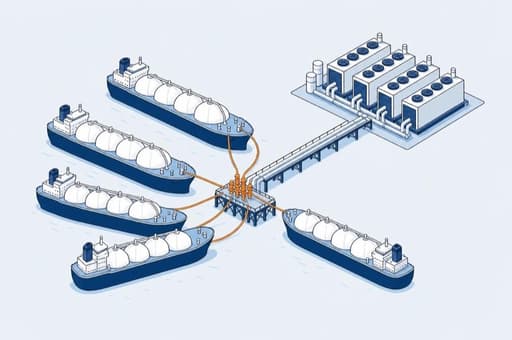
Long-term LNG sales contracts
About ten outside buyers — utilities and energy majors — take Sabine Pass cargoes on deals of ten years and up. Five of them — BG Gulf Coast, Korea Gas, GAIL of India, Naturgy and TotalEnergies — were 76% of FY2025's $10.8B of revenue, with $112.7B of contracted revenue still to come.
Competes with Plaquemines LNG sales contracts (Venture Global) · Corpus Christi Liquefaction (Cheniere Energy)
In plain English
Chill natural gas far enough and it turns into a liquid that takes up a small fraction of the space, which is the only practical way to send it across an ocean. That is the whole job here: buy gas off the American pipeline grid, chill it, hand it over at the dock.
Every buyer pays twice. A fixed fee per unit is owed whether or not a ship ever shows up — rent for reserving the machine — and a variable fee set at 115% of the American gas price covers the gas and the fuel burned chilling it. So the headline revenue swells when gas prices rise, while the slice kept barely moves.
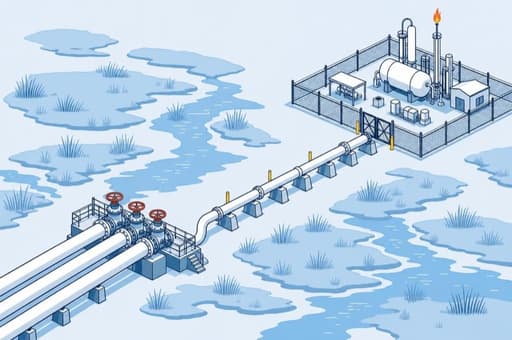
Creole Trail Pipeline
The 94-mile pipe that carries gas from the big interstate lines into the plant. Almost all of it serves Sabine Pass itself, so barely any of it shows up as revenue; it only gets busier if a seventh train gets built.
Competes with Transco pipeline (Williams) · NGPL pipeline (Kinder Morgan)
In plain English
Ninety-four miles of steel pipe, and every mile exists for one customer: the plant at the end of it. It taps into the large interstate and intrastate lines — the country's gas highways — and delivers their gas to the terminal's front gate.
Pipe and plant have the same owner, so most of what the pipe charges is money moving from one pocket to another and cancels out in the accounts. Outside shippers pay a little, and that sits in a small leftover revenue line worth $64M in 2025. How much flows through tracks how much the trains are making.
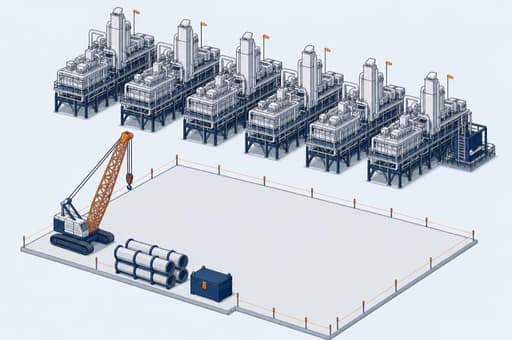
SPL Expansion Phase 1 (Train 7)
A seventh chilling line next door to the six that run today, plus equipment that recaptures vapour, sized at more than 6 million tonnes a year. Bechtel holds a fixed-price contract and early go-ahead; the real commitment is targeted for early 2027.
Competes with Plaquemines LNG expansion (Venture Global) · Corpus Christi Midscale Trains 8 & 9 (Cheniere Energy)
In plain English
A "train" here has nothing to do with railways — it is one complete chilling line: compressors, heat exchangers and piping that take in gas at one end and pour out liquid at the other. Sabine Pass has six. Phase 1 adds a large seventh, plus a unit that catches the vapour boiling off in the storage tanks and chills it back down.
None of this earns anything yet. Bechtel, the engineering firm building it, signed a fixed-price contract in May 2026 and was told to start limited work; some federal clearances were still outstanding at the last annual report. Meanwhile the partnership has begun holding back some of the cash it normally pays out, to help fund the build.
Expansion sales contracts (ENN, CPC, Galp, Foran)
ENN, CPC Corporation of Taiwan, Galp and Foran Energy have signed deals of twenty years and up for LNG from capacity nobody has built — roughly 3.5 million tonnes a year of it. The catch: the partnership is not the one that signed them.
Competes with Plaquemines expansion sales book (Venture Global) · Golden Pass North Field volumes (QatarEnergy)
In plain English
Selling before you build is normal in this trade, because a plant this size does not get started without buyers lined up first. Four energy companies have put their names down for long stretches: ENN for 1.8 million tonnes a year, CPC Corporation of Taiwan for about 1.2 million running to 2050, Galp for about half a million, and Foran Energy Group on a twenty-year deal.
The part worth holding onto: those signatures belong to Cheniere Marketing, the parent's trading desk, and to the separate company set up for the expansion — not to Cheniere Partners, though the filings say the deals may be handed over later. They make the new train worth building rather than money already pointed at unitholders.
Sales to Cheniere Marketing
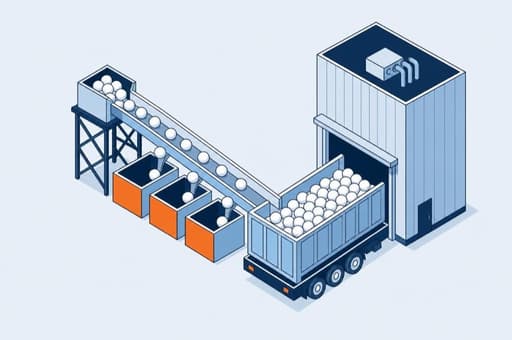
Capacity not promised to outside buyers is sold to the parent's trading arm on the same terms everyone else pays: $2,358M in FY2025, after $1,954M the year before and $2,475M the year before that. A swing line, not a growth line.
Competes with Portfolio marketing of spare cargoes (Venture Global) · Gas and LNG trading desk (Shell) · LNG trading desk (TotalEnergies)
In plain English
The plant works best running full. Whatever cargo the outside customers have not claimed is bought by Cheniere Marketing — the trading desk of the parent company that also runs Sabine Pass — and sold on into the world market.
For the partnership the arrangement is deliberately dull. It charges its affiliate the same fixed fee plus 115% of the American gas price it charges strangers — one contract aside, which is priced off overseas markets — so a cargo is worth much the same whoever takes it, and anything the parent earns above that stays with the parent. The size of this line simply reflects how much capacity outsiders have locked up, which is why it fell one year and rose the next.
Integrated Production Marketing gas deals
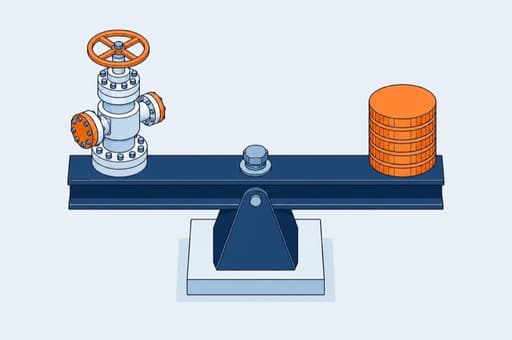
A different way to buy the gas that feeds the plant: the producer is paid off an overseas gas price, less shipping and a fixed chilling fee, which pins the partnership's margin. Of FY2025's $477M rise in profit, $344M was simply these deals being revalued.
Competes with Gas supply deals for Plaquemines (Venture Global) · Gas supply deals for Rio Grande LNG (NextDecade)
In plain English
Usually a plant buys gas at the American price and hopes the gap to overseas prices holds. These agreements turn that around — the producer selling the gas gets paid off the price overseas, minus shipping, minus a fixed fee for the chilling. ARC Resources, a Canadian producer, signed one covering the expansion.
Paired with a matching sale to the parent's trading desk, the structure fixes what the partnership keeps whatever prices do. The awkward part is the bookkeeping: the deals have to be restated at current prices every quarter, which throws reported profit around hard in both directions. Management expects those paper swings to reverse over time.
Sabine Pass import terminal
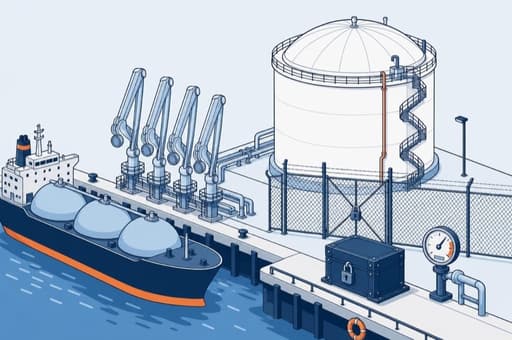
The leftover of the original import business: TotalEnergies reserves about a quarter of the old import capacity for roughly $125M a year, used or not. It brought in $136M in FY2025, and the twenty-year deal began in 2009.
Competes with Cove Point terminal services (Berkshire Hathaway Energy) · Elba Island terminal services (Kinder Morgan) · Corpus Christi terminal services (Cheniere Energy)
In plain English
Before America exported gas it imported it, and this dock was built to receive it — tanks, berths and equipment that warm the liquid back into gas for the pipelines. The import trade never came back.
TotalEnergies still holds a reservation on part of that capacity and pays for it whether or not a ship arrives, the way rent arrives on a garage nobody parks in. Since 2012 the export side has been allowed to use most of that space, and it hands back roughly what comes in — $134M of running costs in 2025 against $136M of revenue. Steady rather than lucrative, and the contract dates from 2009.


 Long-term LNG sales contractsAbout ten outside buyers — utilities and energy majors — take Sabine Pass cargoes on deals of ten years and up. Five of them — BG Gulf Coast, Korea Gas, GAIL of India, Naturgy and TotalEnergies — were 76% of FY2025's $10.8B of revenue, with $112.7B of contracted revenue still to come.
About ten outside buyers — utilities and energy majors — take Sabine Pass cargoes on deals of ten years and up. Five of them — BG Gulf Coast, Korea Gas, GAIL of India, Naturgy and TotalEnergies — were 76% of FY2025's $10.8B of revenue, with $112.7B of contracted revenue still to come.
In plain English
Chill natural gas far enough and it turns into a liquid that takes up a small fraction of the space, which is the only practical way to send it across an ocean. That is the whole job here: buy gas off the American pipeline grid, chill it, hand it over at the dock.
Every buyer pays twice. A fixed fee per unit is owed whether or not a ship ever shows up — rent for reserving the machine — and a variable fee set at 115% of the American gas price covers the gas and the fuel burned chilling it. So the headline revenue swells when gas prices rise, while the slice kept barely moves.
Competes with Plaquemines LNG sales contracts (Venture Global) · Corpus Christi Liquefaction (Cheniere Energy)
 Creole Trail PipelineThe 94-mile pipe that carries gas from the big interstate lines into the plant. Almost all of it serves Sabine Pass itself, so barely any of it shows up as revenue; it only gets busier if a seventh train gets built.
The 94-mile pipe that carries gas from the big interstate lines into the plant. Almost all of it serves Sabine Pass itself, so barely any of it shows up as revenue; it only gets busier if a seventh train gets built.
In plain English
Ninety-four miles of steel pipe, and every mile exists for one customer: the plant at the end of it. It taps into the large interstate and intrastate lines — the country's gas highways — and delivers their gas to the terminal's front gate.
Pipe and plant have the same owner, so most of what the pipe charges is money moving from one pocket to another and cancels out in the accounts. Outside shippers pay a little, and that sits in a small leftover revenue line worth $64M in 2025. How much flows through tracks how much the trains are making.
Competes with Transco pipeline (Williams) · NGPL pipeline (Kinder Morgan)
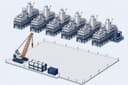 SPL Expansion Phase 1 (Train 7)A seventh chilling line next door to the six that run today, plus equipment that recaptures vapour, sized at more than 6 million tonnes a year. Bechtel holds a fixed-price contract and early go-ahead; the real commitment is targeted for early 2027.
A seventh chilling line next door to the six that run today, plus equipment that recaptures vapour, sized at more than 6 million tonnes a year. Bechtel holds a fixed-price contract and early go-ahead; the real commitment is targeted for early 2027.
In plain English
A "train" here has nothing to do with railways — it is one complete chilling line: compressors, heat exchangers and piping that take in gas at one end and pour out liquid at the other. Sabine Pass has six. Phase 1 adds a large seventh, plus a unit that catches the vapour boiling off in the storage tanks and chills it back down.
None of this earns anything yet. Bechtel, the engineering firm building it, signed a fixed-price contract in May 2026 and was told to start limited work; some federal clearances were still outstanding at the last annual report. Meanwhile the partnership has begun holding back some of the cash it normally pays out, to help fund the build.
Competes with Plaquemines LNG expansion (Venture Global) · Corpus Christi Midscale Trains 8 & 9 (Cheniere Energy)
 Expansion sales contracts (ENN, CPC, Galp, Foran)ENN, CPC Corporation of Taiwan, Galp and Foran Energy have signed deals of twenty years and up for LNG from capacity nobody has built — roughly 3.5 million tonnes a year of it. The catch: the partnership is not the one that signed them.
ENN, CPC Corporation of Taiwan, Galp and Foran Energy have signed deals of twenty years and up for LNG from capacity nobody has built — roughly 3.5 million tonnes a year of it. The catch: the partnership is not the one that signed them.
In plain English
Selling before you build is normal in this trade, because a plant this size does not get started without buyers lined up first. Four energy companies have put their names down for long stretches: ENN for 1.8 million tonnes a year, CPC Corporation of Taiwan for about 1.2 million running to 2050, Galp for about half a million, and Foran Energy Group on a twenty-year deal.
The part worth holding onto: those signatures belong to Cheniere Marketing, the parent's trading desk, and to the separate company set up for the expansion — not to Cheniere Partners, though the filings say the deals may be handed over later. They make the new train worth building rather than money already pointed at unitholders.
Competes with Plaquemines expansion sales book (Venture Global) · Golden Pass North Field volumes (QatarEnergy)
 Sales to Cheniere MarketingCapacity not promised to outside buyers is sold to the parent's trading arm on the same terms everyone else pays: $2,358M in FY2025, after $1,954M the year before and $2,475M the year before that. A swing line, not a growth line.
Capacity not promised to outside buyers is sold to the parent's trading arm on the same terms everyone else pays: $2,358M in FY2025, after $1,954M the year before and $2,475M the year before that. A swing line, not a growth line.
In plain English
The plant works best running full. Whatever cargo the outside customers have not claimed is bought by Cheniere Marketing — the trading desk of the parent company that also runs Sabine Pass — and sold on into the world market.
For the partnership the arrangement is deliberately dull. It charges its affiliate the same fixed fee plus 115% of the American gas price it charges strangers — one contract aside, which is priced off overseas markets — so a cargo is worth much the same whoever takes it, and anything the parent earns above that stays with the parent. The size of this line simply reflects how much capacity outsiders have locked up, which is why it fell one year and rose the next.
Competes with Portfolio marketing of spare cargoes (Venture Global) · Gas and LNG trading desk (Shell) · LNG trading desk (TotalEnergies)
 Integrated Production Marketing gas dealsA different way to buy the gas that feeds the plant: the producer is paid off an overseas gas price, less shipping and a fixed chilling fee, which pins the partnership's margin. Of FY2025's $477M rise in profit, $344M was simply these deals being revalued.
A different way to buy the gas that feeds the plant: the producer is paid off an overseas gas price, less shipping and a fixed chilling fee, which pins the partnership's margin. Of FY2025's $477M rise in profit, $344M was simply these deals being revalued.
In plain English
Usually a plant buys gas at the American price and hopes the gap to overseas prices holds. These agreements turn that around — the producer selling the gas gets paid off the price overseas, minus shipping, minus a fixed fee for the chilling. ARC Resources, a Canadian producer, signed one covering the expansion.
Paired with a matching sale to the parent's trading desk, the structure fixes what the partnership keeps whatever prices do. The awkward part is the bookkeeping: the deals have to be restated at current prices every quarter, which throws reported profit around hard in both directions. Management expects those paper swings to reverse over time.
Competes with Gas supply deals for Plaquemines (Venture Global) · Gas supply deals for Rio Grande LNG (NextDecade)
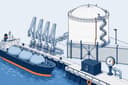 Sabine Pass import terminalThe leftover of the original import business: TotalEnergies reserves about a quarter of the old import capacity for roughly $125M a year, used or not. It brought in $136M in FY2025, and the twenty-year deal began in 2009.
The leftover of the original import business: TotalEnergies reserves about a quarter of the old import capacity for roughly $125M a year, used or not. It brought in $136M in FY2025, and the twenty-year deal began in 2009.
In plain English
Before America exported gas it imported it, and this dock was built to receive it — tanks, berths and equipment that warm the liquid back into gas for the pipelines. The import trade never came back.
TotalEnergies still holds a reservation on part of that capacity and pays for it whether or not a ship arrives, the way rent arrives on a garage nobody parks in. Since 2012 the export side has been allowed to use most of that space, and it hands back roughly what comes in — $134M of running costs in 2025 against $136M of revenue. Steady rather than lucrative, and the contract dates from 2009.
Competes with Cove Point terminal services (Berkshire Hathaway Energy) · Elba Island terminal services (Kinder Morgan) · Corpus Christi terminal services (Cheniere Energy)
Named in filings, launches and programs
- Sabine Pass Liquefaction (SPL)BrandThe operating company holding the six chilling trains and $6,780M of secured notes, part of $14,580M of debt at the end of 2025.
- Sabine Pass LNG, L.P. (SPLNG)BrandOwns the land side — the terminal, five storage tanks and three ship berths — and collects the TotalEnergies reservation fee.
- SPL Stage VBrand · Pre-revenueThe expansion company: signed Bechtel's construction contract and the ARC Resources gas deal. Nothing it holds earns anything yet.
- Long-term gas supply and transportServiceGas bought ahead: about 73% of what the plant needs in 2026 is already locked up, inside $17.3B of purchase commitments running up to six years.
- Debottlenecking and optimizationProductQuiet tinkering that has already squeezed more chilling capacity out of the existing trains; it counts inside the up-to-20-million-tonne expansion figure.
- Boil-off gas re-liquefaction unitProduct · AnnouncedPart of Bechtel's Phase 1 scope: catches the vapour that evaporates inside the storage tanks and chills it back into liquid instead of losing it.
- Shared use of the import dockServiceSince 2012 the export business has borrowed most of the import dock's berthing and storage, carrying $134M of running costs in 2025.
- Management by Cheniere EnergyServiceNobody works here: the parent supplies every manager under service agreements and takes about a fifth of the cash payouts through its incentive rights.
- Federal export authorisationsServiceThe right to ship abroad is licensed. Existing permits run to 2050; the expansion won one clearance in November 2025, with others still pending.
Sabine Pass Liquefaction (SPL)Brand
The operating company holding the six chilling trains and $6,780M of secured notes, part of $14,580M of debt at the end of 2025.
Sabine Pass LNG, L.P. (SPLNG)Brand
Owns the land side — the terminal, five storage tanks and three ship berths — and collects the TotalEnergies reservation fee.
SPL Stage VBrand · Pre-revenue
The expansion company: signed Bechtel's construction contract and the ARC Resources gas deal. Nothing it holds earns anything yet.
Long-term gas supply and transportService
Gas bought ahead: about 73% of what the plant needs in 2026 is already locked up, inside $17.3B of purchase commitments running up to six years.
Debottlenecking and optimizationProduct
Quiet tinkering that has already squeezed more chilling capacity out of the existing trains; it counts inside the up-to-20-million-tonne expansion figure.
Boil-off gas re-liquefaction unitProduct · Announced
Part of Bechtel's Phase 1 scope: catches the vapour that evaporates inside the storage tanks and chills it back into liquid instead of losing it.
Shared use of the import dockService
Since 2012 the export business has borrowed most of the import dock's berthing and storage, carrying $134M of running costs in 2025.
Management by Cheniere EnergyService
Nobody works here: the parent supplies every manager under service agreements and takes about a fifth of the cash payouts through its incentive rights.
Federal export authorisationsService
The right to ship abroad is licensed. Existing permits run to 2050; the expansion won one clearance in November 2025, with others still pending.