
Dollar Tree (DLTR)
Operates multi-price variety stores selling everyday essentials, discretionary goods, and seasonal merchandise.
Something off on this page? Send us feedback.
Dollar Tree used to be two chains; today it is one. It sells a storeful of small everyday things — food, soap and paper goods down one side, toys, gifts and party supplies down the other — most of it priced under a couple of dollars. Growth comes from opening more stores and from letting a slowly widening slice of the shelves ring up above the base price that made its name.
Item facts: FY2025 · 52 weeks ended Jan 31, 2026, from filings, earnings calls and company pages.
Judgment weights, not filed revenue
The band summarizes business focus and direction. ~ marks estimates.
6 in detail · 11 more below
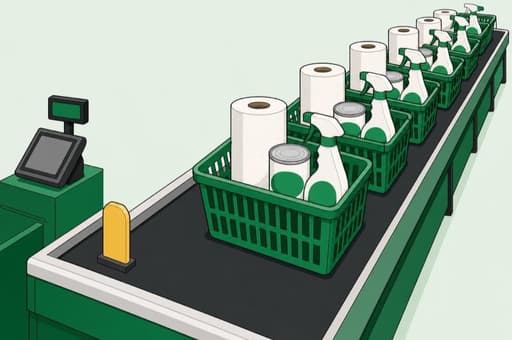
Consumable merchandise
Food, cleaning supplies, paper goods, candy, health and beauty — the reason a household comes back weekly. Just under half of sales and still taking more of the basket; it grew almost six percent last quarter against under two for the discretionary half, which helps traffic and squeezes margin.
Competes with Consumables aisles (Dollar General) · Family Dollar consumables (1959 Holdings)
In plain English
The stuff that runs out. Toilet paper, dish soap, cereal, shampoo, and in most stores a freezer and cooler case as well. It is why a household turns up this week rather than once a season.
The money arrives a few cents at a time. Dollar Tree buys in bulk, sells each item at a price it has promised to hold, and needs the shelf to empty fast for that to work. When a supplier's cost climbs, the shelf price can barely move — so buyers renegotiate, change the size or the recipe, move production to another country, or drop the item altogether. Raising the price is the last resort.
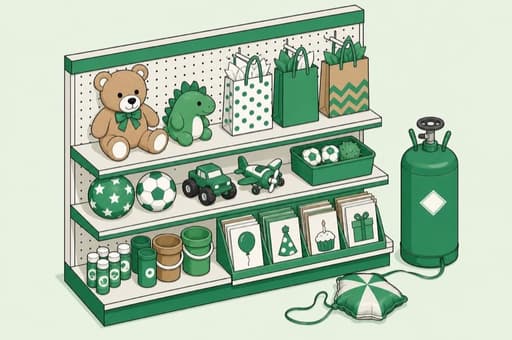
Variety merchandise
The higher-margin half: toys, housewares, gifts, cards, stationery, party goods. It was nearly half of sales a few years back and has slipped every year since, growing under two percent last quarter. Watch whether higher price points and Party City's exit revive it.
Competes with $1–$5 and up assortment (Five Below) · pOpshelf discretionary stores (Dollar General)
In plain English
The fun half of the store — toys, mugs and kitchen odds and ends, gift bags, stationery, greeting cards, craft supplies, balloons. Nobody strictly needs any of it, which is why each item leaves more profit behind than a bottle of dish soap does.
Shoppers come in for basics and walk out with a birthday's worth of extras, and Dollar Tree keeps a fatter slice of those. Two things make it awkward. Much of this half is imported, so import taxes bite here and buyers have been shifting orders toward India and Vietnam. And small supply gaps hurt: a shortage of the gas that fills balloons cost this half about $15M of sales in one quarter.
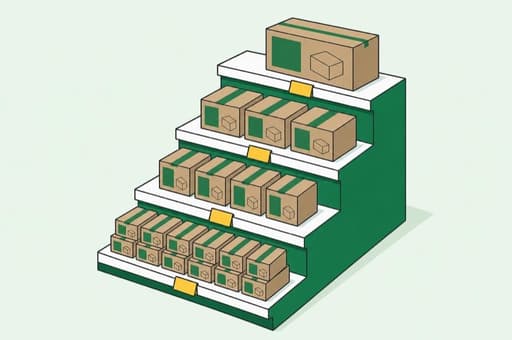
Multi-price assortment
Items ringing above $1.25 — a dollar fifty, three, five and up — sold inside the same stores. Roughly seventeen percent of sales in the latest quarter, up about four points in a year. It fattens the basket; push too far and the cheap-and-easy promise cracks.
Competes with The $1–$5+ price ladder (Five Below) · pOpshelf (Dollar General)
In plain English
Same shop, a second price ladder. Most of what you pick up still rings at a dollar twenty-five, but some items now sit at a dollar fifty, three dollars, five dollars and above — a larger pack, a sturdier version — on the same shelves as everything else.
It earns because the shopper is already through the door: one pricier item turns the same trip into a bigger bill, and buyers now choose goods to hit a profit target rather than a single price. The discipline is knowing where to stop. About eighty-five percent of what Dollar Tree sells still rings at two dollars or less, because cheap-whatever-you-grab is the reason people walk in.
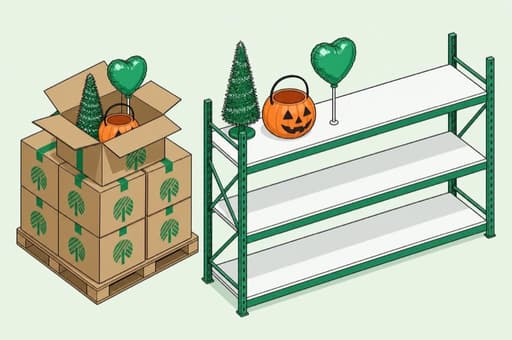
Seasonal merchandise
Halloween, Christmas, Easter and Valentine's goods — under six percent of sales, nearly all of it in the back half of the year, and shrinking. First-half sales fell about seven percent while the company's total rose.
Competes with Seasonal category (Dollar General) · Halloween pop-up shops (Spirit Halloween) · Seasonal and craft sets (Michaels)
In plain English
Four costume changes a year. The aisle fills with jack-o'-lantern pails, then tinsel, then Easter baskets, then hearts, and in between it is barely there — in the most recent quarter it was a rounding error.
Buying is the whole game. Orders go in months ahead, before anyone knows what the goods will cost to bring into the country, and whatever has not sold by the holiday gets marked down until it clears. The odd part: Party City, the largest US party-goods chain, shut roughly seven hundred stores, leaving its shoppers looking for somewhere to go — and this aisle still shrank in dollars.
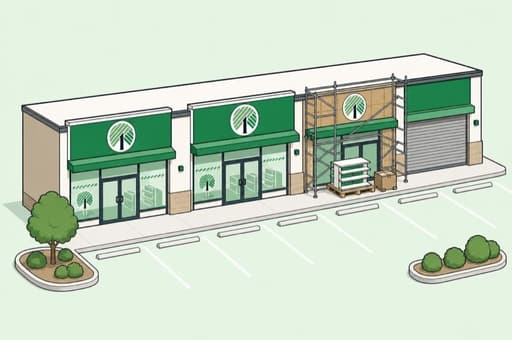
New store openings
Roughly four hundred new stores a year against about seventy-five closings, on a fleet of about 9,150 US stores. Stores under a year old rang up around $1.4B last year. Watch the build spend, guided at $1.1–1.2B, and warehouse capacity.
Competes with Small-format store expansion (Dollar General) · Strip-center store expansion (Five Below)
In plain English
A chain this size grows two ways: sell more through the shops it already has, or add shops. This is the second one — a few hundred new addresses a year, minus a smaller number of closures.
Each opening is a lease in a strip mall, a fit-out, shelves and a first load of goods, paid for out of the cash the existing stores throw off rather than borrowed. For its first year everything a new store rings is extra on top of last year's sales; after that it blends into the base. A good slice of recent openings came from leases left behind when the 99 Cents Only chain liquidated — management reckons two of those are worth about three ordinary Dollar Trees.
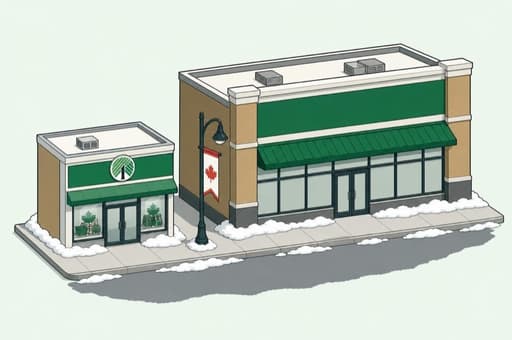
Dollar Tree Canada
Roughly 285 stores across seven provinces, more than half of them in Ontario — perhaps three percent of sales, and the company never puts a number on it. Dollarama dominates the Canadian aisle, and Dollar Tree says almost nothing about this business.
Competes with Dollarama stores (Dollarama) · Great Canadian Dollar Store shops (Great Canadian Dollar Store)
In plain English
The same green store, north of the border: a few hundred shops spread over seven provinces, more than half of them in Ontario.
It runs on the American engine — the same imported goods, the same buying scale, the same low prices — and it is small enough that Dollar Tree gives it no sales line of its own and barely mentions it when management talks. The chain that got big up there is Dollarama, which pulled ahead years ago, back when Dollar Tree had fewer than a hundred Canadian stores. So this reads less like an expansion push than a quiet corner of the company.


 Consumable merchandiseFood, cleaning supplies, paper goods, candy, health and beauty — the reason a household comes back weekly. Just under half of sales and still taking more of the basket; it grew almost six percent last quarter against under two for the discretionary half, which helps traffic and squeezes margin.
Food, cleaning supplies, paper goods, candy, health and beauty — the reason a household comes back weekly. Just under half of sales and still taking more of the basket; it grew almost six percent last quarter against under two for the discretionary half, which helps traffic and squeezes margin.
In plain English
The stuff that runs out. Toilet paper, dish soap, cereal, shampoo, and in most stores a freezer and cooler case as well. It is why a household turns up this week rather than once a season.
The money arrives a few cents at a time. Dollar Tree buys in bulk, sells each item at a price it has promised to hold, and needs the shelf to empty fast for that to work. When a supplier's cost climbs, the shelf price can barely move — so buyers renegotiate, change the size or the recipe, move production to another country, or drop the item altogether. Raising the price is the last resort.
Competes with Consumables aisles (Dollar General) · Family Dollar consumables (1959 Holdings)
 Variety merchandiseThe higher-margin half: toys, housewares, gifts, cards, stationery, party goods. It was nearly half of sales a few years back and has slipped every year since, growing under two percent last quarter. Watch whether higher price points and Party City's exit revive it.
The higher-margin half: toys, housewares, gifts, cards, stationery, party goods. It was nearly half of sales a few years back and has slipped every year since, growing under two percent last quarter. Watch whether higher price points and Party City's exit revive it.
In plain English
The fun half of the store — toys, mugs and kitchen odds and ends, gift bags, stationery, greeting cards, craft supplies, balloons. Nobody strictly needs any of it, which is why each item leaves more profit behind than a bottle of dish soap does.
Shoppers come in for basics and walk out with a birthday's worth of extras, and Dollar Tree keeps a fatter slice of those. Two things make it awkward. Much of this half is imported, so import taxes bite here and buyers have been shifting orders toward India and Vietnam. And small supply gaps hurt: a shortage of the gas that fills balloons cost this half about $15M of sales in one quarter.
Competes with $1–$5 and up assortment (Five Below) · pOpshelf discretionary stores (Dollar General)
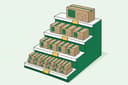 Multi-price assortmentItems ringing above $1.25 — a dollar fifty, three, five and up — sold inside the same stores. Roughly seventeen percent of sales in the latest quarter, up about four points in a year. It fattens the basket; push too far and the cheap-and-easy promise cracks.
Items ringing above $1.25 — a dollar fifty, three, five and up — sold inside the same stores. Roughly seventeen percent of sales in the latest quarter, up about four points in a year. It fattens the basket; push too far and the cheap-and-easy promise cracks.
In plain English
Same shop, a second price ladder. Most of what you pick up still rings at a dollar twenty-five, but some items now sit at a dollar fifty, three dollars, five dollars and above — a larger pack, a sturdier version — on the same shelves as everything else.
It earns because the shopper is already through the door: one pricier item turns the same trip into a bigger bill, and buyers now choose goods to hit a profit target rather than a single price. The discipline is knowing where to stop. About eighty-five percent of what Dollar Tree sells still rings at two dollars or less, because cheap-whatever-you-grab is the reason people walk in.
Competes with The $1–$5+ price ladder (Five Below) · pOpshelf (Dollar General)
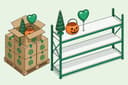 Seasonal merchandiseHalloween, Christmas, Easter and Valentine's goods — under six percent of sales, nearly all of it in the back half of the year, and shrinking. First-half sales fell about seven percent while the company's total rose.
Halloween, Christmas, Easter and Valentine's goods — under six percent of sales, nearly all of it in the back half of the year, and shrinking. First-half sales fell about seven percent while the company's total rose.
In plain English
Four costume changes a year. The aisle fills with jack-o'-lantern pails, then tinsel, then Easter baskets, then hearts, and in between it is barely there — in the most recent quarter it was a rounding error.
Buying is the whole game. Orders go in months ahead, before anyone knows what the goods will cost to bring into the country, and whatever has not sold by the holiday gets marked down until it clears. The odd part: Party City, the largest US party-goods chain, shut roughly seven hundred stores, leaving its shoppers looking for somewhere to go — and this aisle still shrank in dollars.
Competes with Seasonal category (Dollar General) · Halloween pop-up shops (Spirit Halloween) · Seasonal and craft sets (Michaels)
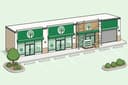 New store openingsRoughly four hundred new stores a year against about seventy-five closings, on a fleet of about 9,150 US stores. Stores under a year old rang up around $1.4B last year. Watch the build spend, guided at $1.1–1.2B, and warehouse capacity.
Roughly four hundred new stores a year against about seventy-five closings, on a fleet of about 9,150 US stores. Stores under a year old rang up around $1.4B last year. Watch the build spend, guided at $1.1–1.2B, and warehouse capacity.
In plain English
A chain this size grows two ways: sell more through the shops it already has, or add shops. This is the second one — a few hundred new addresses a year, minus a smaller number of closures.
Each opening is a lease in a strip mall, a fit-out, shelves and a first load of goods, paid for out of the cash the existing stores throw off rather than borrowed. For its first year everything a new store rings is extra on top of last year's sales; after that it blends into the base. A good slice of recent openings came from leases left behind when the 99 Cents Only chain liquidated — management reckons two of those are worth about three ordinary Dollar Trees.
Competes with Small-format store expansion (Dollar General) · Strip-center store expansion (Five Below)
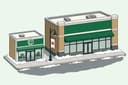 Dollar Tree CanadaRoughly 285 stores across seven provinces, more than half of them in Ontario — perhaps three percent of sales, and the company never puts a number on it. Dollarama dominates the Canadian aisle, and Dollar Tree says almost nothing about this business.
Roughly 285 stores across seven provinces, more than half of them in Ontario — perhaps three percent of sales, and the company never puts a number on it. Dollarama dominates the Canadian aisle, and Dollar Tree says almost nothing about this business.
In plain English
The same green store, north of the border: a few hundred shops spread over seven provinces, more than half of them in Ontario.
It runs on the American engine — the same imported goods, the same buying scale, the same low prices — and it is small enough that Dollar Tree gives it no sales line of its own and barely mentions it when management talks. The chain that got big up there is Dollarama, which pulled ahead years ago, back when Dollar Tree had fewer than a hundred Canadian stores. So this reads less like an expansion push than a quiet corner of the company.
Competes with Dollarama stores (Dollarama) · Great Canadian Dollar Store shops (Great Canadian Dollar Store)
Named in filings, launches and programs
- Frozen and refrigerated foodProduct lineFreezer and cooler cases in most stores — the part of the basics aisle that turns a dollar-store stop into a weekly one.
- Crafter's SquareBrandDollar Tree's own arts-and-crafts label, carried in all US stores — one of the few names on the shelves it owns rather than buys.
- Snack ZoneBrandAn in-store snack destination, listed as a feature of the stores that have it.
- Expressions from HallmarkCustomer programThe in-store greeting-card program, with the cards supplied by Hallmark and sold under the Hallmark name.
- Private-label programBrandOwn-label goods spanning both halves of the store; the company says it is expanding them without putting a sales figure on it.
- Same-Day Delivery with InstacartServiceOne-hour delivery from stores through Instacart, the grocery-delivery app — a side door onto the same shelves, never sized on the calls.
- 40th-anniversary $1 price pointsProduct lineA handful of rotating items and end-of-aisle displays pulled back to a dollar, paid for out of refunded import taxes — a gesture, not a reversal.
- US distribution networkEcosystemSixteen US warehouses feed the stores, plus a site bought near Phoenix; how much each one can push out limits how fast new stores open.
- Marietta, Oklahoma warehouseEcosystem · AnnouncedA new distribution center announced for spring 2027 — the next slice of warehouse capacity behind the store-opening plan.
- EBT/SNAP acceptanceCustomer programStores take food benefits, which ties part of the basics business to when those payments land.
- Former 99 Cents Only locationsEcosystem · RampingLeases picked up from that chain's liquidation and reopened as Dollar Trees — the biggest contributor among stores too new to count in comparisons.
Frozen and refrigerated foodProduct line
Freezer and cooler cases in most stores — the part of the basics aisle that turns a dollar-store stop into a weekly one.
Crafter's SquareBrand
Dollar Tree's own arts-and-crafts label, carried in all US stores — one of the few names on the shelves it owns rather than buys.
Snack ZoneBrand
An in-store snack destination, listed as a feature of the stores that have it.
Expressions from HallmarkCustomer program
The in-store greeting-card program, with the cards supplied by Hallmark and sold under the Hallmark name.
Private-label programBrand
Own-label goods spanning both halves of the store; the company says it is expanding them without putting a sales figure on it.
Same-Day Delivery with InstacartService
One-hour delivery from stores through Instacart, the grocery-delivery app — a side door onto the same shelves, never sized on the calls.
40th-anniversary $1 price pointsProduct line
A handful of rotating items and end-of-aisle displays pulled back to a dollar, paid for out of refunded import taxes — a gesture, not a reversal.
US distribution networkEcosystem
Sixteen US warehouses feed the stores, plus a site bought near Phoenix; how much each one can push out limits how fast new stores open.
Marietta, Oklahoma warehouseEcosystem · Announced
A new distribution center announced for spring 2027 — the next slice of warehouse capacity behind the store-opening plan.
EBT/SNAP acceptanceCustomer program
Stores take food benefits, which ties part of the basics business to when those payments land.
Former 99 Cents Only locationsEcosystem · Ramping
Leases picked up from that chain's liquidation and reopened as Dollar Trees — the biggest contributor among stores too new to count in comparisons.