
Edison International (EIX)
Parent of Southern California Edison and the smaller Trio energy-advisory business.
Something off on this page? Send us feedback.
Edison International is a holding company with one thing inside it: Southern California Edison, the utility that owns the poles, wires and towers carrying electricity across central, coastal and southern California. It does not win customers — it builds grid, and the state decides what it may earn on what it built. The largest part of the bill is electricity bought and passed through at cost. What the whole thing hangs on is wildfire.
Item facts: FY2025 · year ended Dec 31, 2025, from filings, earnings calls and company pages.
Judgment weights, not filed revenue
The band summarizes business focus and direction. ~ marks estimates.
8 in detail · 8 more below
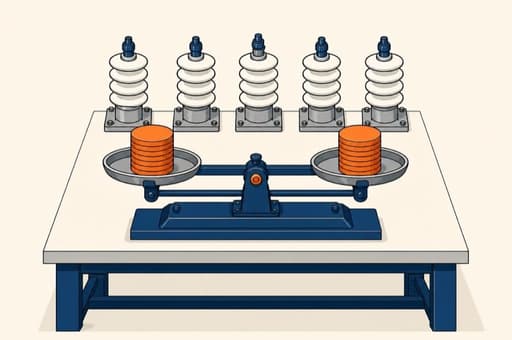
Power Procurement and Fuel Cost Recovery
The electricity itself: SCE buys most of what it delivers and bills customers exactly what it paid. Largest slice of revenue, and it earns nothing. It swings hard — power costs ran $970M in one quarter and $5.6B in another.
Competes with Community power supply (Clean Power Alliance) · Direct-access electricity supply (Independent retail suppliers)
In plain English
Think of the part of your bill that pays for the electricity itself, not the wires. SCE mostly does not make that electricity — it buys it from companies that own power plants and batteries, hands it on, and charges exactly what it paid. No markup at all.
Why bother? Because it is the job: keep the lights on for every customer who has not gone shopping elsewhere. The state approves what SCE may buy in advance and lets it collect the cost back through rates. When the timing of that collection lags, revenue lurches — but profit does not move, because there was never any profit in this line.
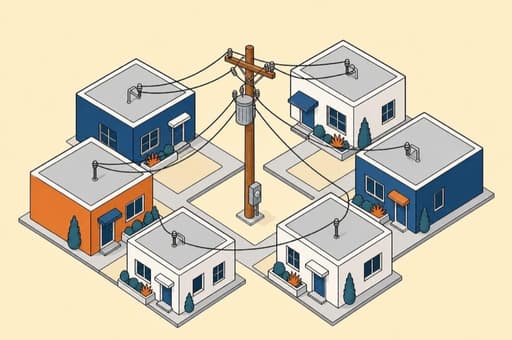
SCE Distribution Grid
Poles, wires and substations reaching more than 5 million accounts, in a territory nobody else is allowed to serve. Over 85% of SCE's capital goes here, out of a $38–41B plan for 2026–2030, and earnings come from a state-approved return on it.
Competes with Electric distribution grid (PG&E) · Electric distribution grid (SDG&E (Sempra))
In plain English
The unglamorous half of the electricity business: everything between the tall towers and the box on the side of your house. Transformers on poles, cable down the street, the wire into the building.
Here is the odd part — SCE does not earn by selling more electricity. It earns by owning equipment. The regulator adds up what SCE has built, $47.6B worth at the end of 2025 and planned to reach $67.9B by 2030, decides a fair yearly return on it, and lets SCE collect that from every customer in the territory, including the ones who buy their electricity from somebody else. So the way to grow is to build more, and get the regulator to agree it was worth building.
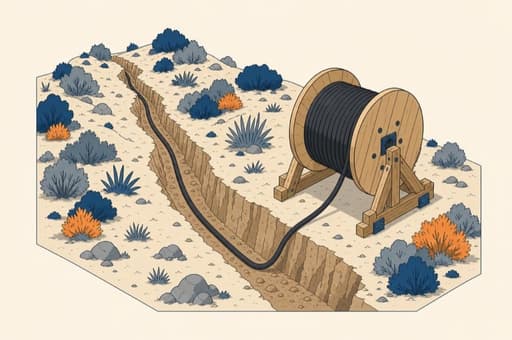
Wildfire Mitigation Program
Wrapping bare power lines in tough insulation and burying some of them, so the grid is less likely to start a fire: more than 7,000 miles done, over 90% of the hardening planned. A 2025 state law blocks profit on roughly $2B of it, the part approved from 2026 onward.
Competes with Undergrounding program (PG&E) · Grid hardening program (SDG&E)
In plain English
In high fire-risk country the power lines themselves are the hazard, so SCE is rebuilding them: wrapping bare wire in a tough insulating skin, burying the worst stretches, and setting protective switches to cut power faster when conditions turn dangerous. More than 7,000 miles of covered wire are already up.
None of it appears as its own charge on a bill. It is new equipment added to the grid, which SCE would normally earn a return on. The twist is that California's 2025 law removed the profit on the newest batch — roughly two billion dollars of hardening that SCE pays for and does not earn on.
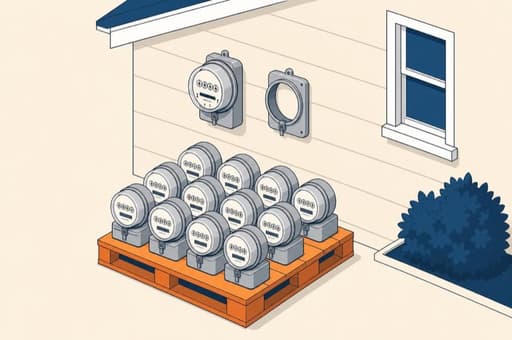
AMI 2.0 Smart Meters
A plan to swap out SCE's smart meters, installed nearly twenty years ago, for a new fleet — about $3B asked for in March 2026, roughly $1.5B of it spent by 2030. The regulator had not ruled as of September 2026.
Competes with Smart meters (Itron) · Smart meters (Landis+Gyr)
In plain English
Every house has a meter. SCE's went up nearly twenty years ago, which for this kind of equipment is old — and a meter now means a small computer that reports readings back on its own instead of waiting for somebody to walk up and read it.
Replacing the whole fleet costs about three billion dollars, and SCE asked California's regulator for permission in March 2026. Granted, the meters join the equipment base SCE earns a return on. Refused, nothing happens: this is a proposal, not a business yet. The meters themselves come from specialists — Itron and Landis+Gyr between them hold roughly two-thirds of the North American market.
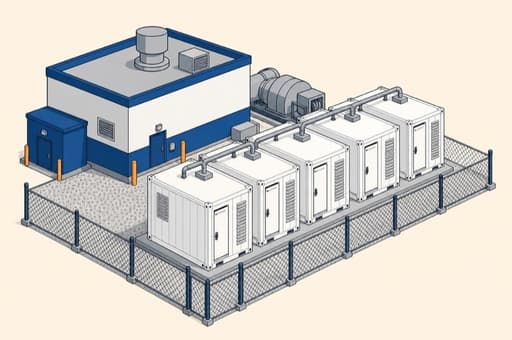
Owned Generation and Energy Storage
The plants and batteries SCE owns itself, deliberately kept small: under a fifth of the electricity it delivers comes from its own generation, and generation is only 3% of the five-year build plan. Batteries are where it grows.
Competes with Contracted renewables and storage fleet (NextEra Energy) · California battery fleet (Vistra)
In plain English
Most utilities you can picture own big power stations. SCE mostly does not, and by design — under a fifth of the electricity it delivers comes from its own generation.
What remains is a modest fleet, plus peakers (plants kept idle for the hours demand spikes), plus a growing bank of batteries. Batteries are the part that is moving: California's rules oblige utilities to keep enough resources standing by, and SCE contracted about 900 megawatts of storage in the year, reaching roughly 9,200 megawatts owned or under contract. It earns on what it owns the same way it earns on wires — the regulator approves the asset, and a return comes back through rates.
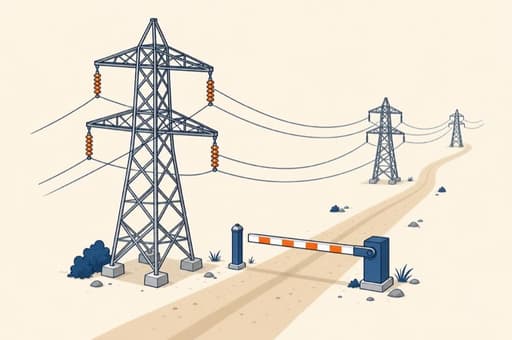
High-Voltage Transmission
The steel towers and long-distance lines that move power across the state — priced by federal regulators on a formula refreshed every year, not by California's commission. The 2026 allowance is $1.5B, up about 12%, and transmission is 11% of the five-year build plan.
Competes with Transmission business (PG&E) · CAISO-bid transmission projects (Independent developers)
In plain English
Two different regulators, two different rulebooks. The wires down your street answer to California's utilities commission; the tall steel towers marching across open country answer to a federal one, and they follow a formula that resets each year instead of waiting for a case to be argued.
That makes this the tidier business. SCE adds a line, the formula picks it up, and money comes back through charges paid by electricity users right across the state grid, not just SCE's own customers. The work itself comes out of a statewide planning process, and SCE has to win those projects — independent developers bid for the same ones.
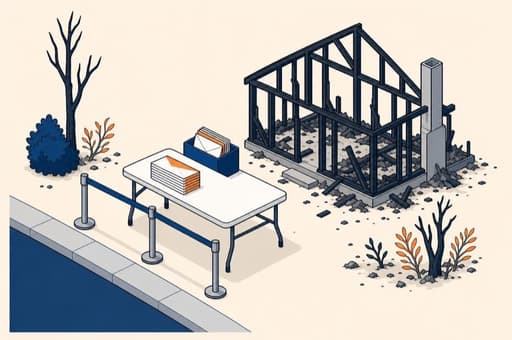
Wildfire Recovery Compensation Program
SCE's offer to pay Eaton Fire victims directly instead of fighting them in court. $1.6B of settlement losses recorded through June 2026, almost entirely offset by insurance and the state fund — a $9M after-tax hit. Claims close 30 November 2026.
Competes with Eaton Fire lawsuits (Plaintiff law firms) · Subrogation claims against SCE (Property insurers)
In plain English
January 2025: the Eaton Fire. SCE has said a viable explanation involves one of its own idle transmission facilities near where the fire began. Rather than wait for thousands of lawsuits, it opened a desk — bring a claim, take an offer, skip the courtroom.
More than 12,000 people had come forward by late July 2026, against roughly 18,000 eligible properties, and over $750M had been offered. The money mostly does not come out of shareholders' pockets: insurance SCE had set aside itself, the state's wildfire fund and federal transmission charges covered nearly all of the $1.6B booked so far. The window shuts on 30 November 2026.
AB 1054 Wildfire Fund
The state-built pool that decides whether a big fire is a bad year or the end of the company. SCE absorbs the first $1.0B of eligible Eaton losses; the administrator reports roughly $21B of capacity available. A bill to cap liability died in September 2026.
Competes with Claims on the same wildfire fund (PG&E) · Claims on the same wildfire fund (SDG&E (Sempra)) · Wildfire insurance cover (Commercial insurers)
In plain English
There is a shared pot for this, built by the state. Utilities pay into it; when one of them causes a catastrophic fire, the pot pays out above a set excess. For SCE and the Eaton Fire, the first billion dollars of eligible losses is its own problem, and the fund covers above that.
Roughly twenty-one billion dollars of paying capacity is reported as available for that fire. But the pot is shared with PG&E and San Diego's utility, so a disaster at one drains it for the others — and it rests on a law, not a contract. A 2025 law added a second pot of up to eighteen billion for future fires; a 2026 bill to cap what utilities owe died without a vote.


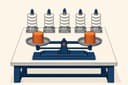 Power Procurement and Fuel Cost RecoveryThe electricity itself: SCE buys most of what it delivers and bills customers exactly what it paid. Largest slice of revenue, and it earns nothing. It swings hard — power costs ran $970M in one quarter and $5.6B in another.
The electricity itself: SCE buys most of what it delivers and bills customers exactly what it paid. Largest slice of revenue, and it earns nothing. It swings hard — power costs ran $970M in one quarter and $5.6B in another.
In plain English
Think of the part of your bill that pays for the electricity itself, not the wires. SCE mostly does not make that electricity — it buys it from companies that own power plants and batteries, hands it on, and charges exactly what it paid. No markup at all.
Why bother? Because it is the job: keep the lights on for every customer who has not gone shopping elsewhere. The state approves what SCE may buy in advance and lets it collect the cost back through rates. When the timing of that collection lags, revenue lurches — but profit does not move, because there was never any profit in this line.
Competes with Community power supply (Clean Power Alliance) · Direct-access electricity supply (Independent retail suppliers)
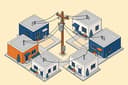 SCE Distribution GridPoles, wires and substations reaching more than 5 million accounts, in a territory nobody else is allowed to serve. Over 85% of SCE's capital goes here, out of a $38–41B plan for 2026–2030, and earnings come from a state-approved return on it.
Poles, wires and substations reaching more than 5 million accounts, in a territory nobody else is allowed to serve. Over 85% of SCE's capital goes here, out of a $38–41B plan for 2026–2030, and earnings come from a state-approved return on it.
In plain English
The unglamorous half of the electricity business: everything between the tall towers and the box on the side of your house. Transformers on poles, cable down the street, the wire into the building.
Here is the odd part — SCE does not earn by selling more electricity. It earns by owning equipment. The regulator adds up what SCE has built, $47.6B worth at the end of 2025 and planned to reach $67.9B by 2030, decides a fair yearly return on it, and lets SCE collect that from every customer in the territory, including the ones who buy their electricity from somebody else. So the way to grow is to build more, and get the regulator to agree it was worth building.
Competes with Electric distribution grid (PG&E) · Electric distribution grid (SDG&E (Sempra))
 Wildfire Mitigation ProgramWrapping bare power lines in tough insulation and burying some of them, so the grid is less likely to start a fire: more than 7,000 miles done, over 90% of the hardening planned. A 2025 state law blocks profit on roughly $2B of it, the part approved from 2026 onward.
Wrapping bare power lines in tough insulation and burying some of them, so the grid is less likely to start a fire: more than 7,000 miles done, over 90% of the hardening planned. A 2025 state law blocks profit on roughly $2B of it, the part approved from 2026 onward.
In plain English
In high fire-risk country the power lines themselves are the hazard, so SCE is rebuilding them: wrapping bare wire in a tough insulating skin, burying the worst stretches, and setting protective switches to cut power faster when conditions turn dangerous. More than 7,000 miles of covered wire are already up.
None of it appears as its own charge on a bill. It is new equipment added to the grid, which SCE would normally earn a return on. The twist is that California's 2025 law removed the profit on the newest batch — roughly two billion dollars of hardening that SCE pays for and does not earn on.
Competes with Undergrounding program (PG&E) · Grid hardening program (SDG&E)
 AMI 2.0 Smart MetersA plan to swap out SCE's smart meters, installed nearly twenty years ago, for a new fleet — about $3B asked for in March 2026, roughly $1.5B of it spent by 2030. The regulator had not ruled as of September 2026.
A plan to swap out SCE's smart meters, installed nearly twenty years ago, for a new fleet — about $3B asked for in March 2026, roughly $1.5B of it spent by 2030. The regulator had not ruled as of September 2026.
In plain English
Every house has a meter. SCE's went up nearly twenty years ago, which for this kind of equipment is old — and a meter now means a small computer that reports readings back on its own instead of waiting for somebody to walk up and read it.
Replacing the whole fleet costs about three billion dollars, and SCE asked California's regulator for permission in March 2026. Granted, the meters join the equipment base SCE earns a return on. Refused, nothing happens: this is a proposal, not a business yet. The meters themselves come from specialists — Itron and Landis+Gyr between them hold roughly two-thirds of the North American market.
Competes with Smart meters (Itron) · Smart meters (Landis+Gyr)
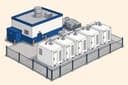 Owned Generation and Energy StorageThe plants and batteries SCE owns itself, deliberately kept small: under a fifth of the electricity it delivers comes from its own generation, and generation is only 3% of the five-year build plan. Batteries are where it grows.
The plants and batteries SCE owns itself, deliberately kept small: under a fifth of the electricity it delivers comes from its own generation, and generation is only 3% of the five-year build plan. Batteries are where it grows.
In plain English
Most utilities you can picture own big power stations. SCE mostly does not, and by design — under a fifth of the electricity it delivers comes from its own generation.
What remains is a modest fleet, plus peakers (plants kept idle for the hours demand spikes), plus a growing bank of batteries. Batteries are the part that is moving: California's rules oblige utilities to keep enough resources standing by, and SCE contracted about 900 megawatts of storage in the year, reaching roughly 9,200 megawatts owned or under contract. It earns on what it owns the same way it earns on wires — the regulator approves the asset, and a return comes back through rates.
Competes with Contracted renewables and storage fleet (NextEra Energy) · California battery fleet (Vistra)
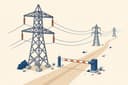 High-Voltage TransmissionThe steel towers and long-distance lines that move power across the state — priced by federal regulators on a formula refreshed every year, not by California's commission. The 2026 allowance is $1.5B, up about 12%, and transmission is 11% of the five-year build plan.
The steel towers and long-distance lines that move power across the state — priced by federal regulators on a formula refreshed every year, not by California's commission. The 2026 allowance is $1.5B, up about 12%, and transmission is 11% of the five-year build plan.
In plain English
Two different regulators, two different rulebooks. The wires down your street answer to California's utilities commission; the tall steel towers marching across open country answer to a federal one, and they follow a formula that resets each year instead of waiting for a case to be argued.
That makes this the tidier business. SCE adds a line, the formula picks it up, and money comes back through charges paid by electricity users right across the state grid, not just SCE's own customers. The work itself comes out of a statewide planning process, and SCE has to win those projects — independent developers bid for the same ones.
Competes with Transmission business (PG&E) · CAISO-bid transmission projects (Independent developers)
 Wildfire Recovery Compensation ProgramSCE's offer to pay Eaton Fire victims directly instead of fighting them in court. $1.6B of settlement losses recorded through June 2026, almost entirely offset by insurance and the state fund — a $9M after-tax hit. Claims close 30 November 2026.
SCE's offer to pay Eaton Fire victims directly instead of fighting them in court. $1.6B of settlement losses recorded through June 2026, almost entirely offset by insurance and the state fund — a $9M after-tax hit. Claims close 30 November 2026.
In plain English
January 2025: the Eaton Fire. SCE has said a viable explanation involves one of its own idle transmission facilities near where the fire began. Rather than wait for thousands of lawsuits, it opened a desk — bring a claim, take an offer, skip the courtroom.
More than 12,000 people had come forward by late July 2026, against roughly 18,000 eligible properties, and over $750M had been offered. The money mostly does not come out of shareholders' pockets: insurance SCE had set aside itself, the state's wildfire fund and federal transmission charges covered nearly all of the $1.6B booked so far. The window shuts on 30 November 2026.
Competes with Eaton Fire lawsuits (Plaintiff law firms) · Subrogation claims against SCE (Property insurers)
 AB 1054 Wildfire FundThe state-built pool that decides whether a big fire is a bad year or the end of the company. SCE absorbs the first $1.0B of eligible Eaton losses; the administrator reports roughly $21B of capacity available. A bill to cap liability died in September 2026.
The state-built pool that decides whether a big fire is a bad year or the end of the company. SCE absorbs the first $1.0B of eligible Eaton losses; the administrator reports roughly $21B of capacity available. A bill to cap liability died in September 2026.
In plain English
There is a shared pot for this, built by the state. Utilities pay into it; when one of them causes a catastrophic fire, the pot pays out above a set excess. For SCE and the Eaton Fire, the first billion dollars of eligible losses is its own problem, and the fund covers above that.
Roughly twenty-one billion dollars of paying capacity is reported as available for that fire. But the pot is shared with PG&E and San Diego's utility, so a disaster at one drains it for the others — and it rests on a law, not a contract. A 2025 law added a second pot of up to eighteen billion for future fires; a 2026 bill to cap what utilities owe died without a vote.
Competes with Claims on the same wildfire fund (PG&E) · Claims on the same wildfire fund (SDG&E (Sempra)) · Wildfire insurance cover (Commercial insurers)
Named in filings, launches and programs
- Load Growth and Electrification Capital ProgramPlatform · RampingBigger wires and substations for electric cars, electric heating and new housing — 22% of the 2026–2030 build plan, the largest single category.
- Infrastructure replacement programPlatformReplacing grid equipment that has simply worn out; another 22% of the 2026–2030 build plan, level with load growth as the biggest category.
- Inspections and maintenance programServiceChecking equipment across the territory and repairing what the checks turn up — 14% of the 2026–2030 build plan.
- Public Safety Power ShutoffServiceSwitching the power off on dangerous days. SCE has re-tuned the thresholds and triggers using its own network of weather stations.
- TKM and Woolsey cost-recovery securitizationsEcosystemBonds that turn past wildfire costs into cash now, repaid through rates: about $1.6B for TKM, roughly $2B planned for Woolsey once approved.
- RAMP filing and 2029 General Rate CaseProduct · AnnouncedA May 2026 filing setting out wildfire, reliability, cybersecurity and climate risks — the opening move toward the case that sets rates from 2029.
- California Climate Credit and rate reliefCustomer programA combined $72 credit applied to summer bills in 2026, alongside a 2.3% residential and 5.3% small-business rate decrease.
- Edison International Parent and OtherSegmentThe holding company itself: about 0.2% of revenue, carries the group's own debt, and lost more in 2025 on interest and a preferred-stock redemption.
Load Growth and Electrification Capital ProgramPlatform · Ramping
Bigger wires and substations for electric cars, electric heating and new housing — 22% of the 2026–2030 build plan, the largest single category.
Infrastructure replacement programPlatform
Replacing grid equipment that has simply worn out; another 22% of the 2026–2030 build plan, level with load growth as the biggest category.
Inspections and maintenance programService
Checking equipment across the territory and repairing what the checks turn up — 14% of the 2026–2030 build plan.
Public Safety Power ShutoffService
Switching the power off on dangerous days. SCE has re-tuned the thresholds and triggers using its own network of weather stations.
TKM and Woolsey cost-recovery securitizationsEcosystem
Bonds that turn past wildfire costs into cash now, repaid through rates: about $1.6B for TKM, roughly $2B planned for Woolsey once approved.
RAMP filing and 2029 General Rate CaseProduct · Announced
A May 2026 filing setting out wildfire, reliability, cybersecurity and climate risks — the opening move toward the case that sets rates from 2029.
California Climate Credit and rate reliefCustomer program
A combined $72 credit applied to summer bills in 2026, alongside a 2.3% residential and 5.3% small-business rate decrease.
Edison International Parent and OtherSegment
The holding company itself: about 0.2% of revenue, carries the group's own debt, and lost more in 2025 on interest and a preferred-stock redemption.