
Essex Property Trust (ESS)
Owns and operates apartment communities across California and metropolitan Seattle.
Something off on this page? Send us feedback.
Essex owns apartment buildings in three West Coast markets — the San Francisco Bay Area, Southern California and Seattle — and rents them one household at a time. There is little else, and management says it intends to keep it that way. What is shifting is the centre of gravity: money has been moving north into the Bay Area, Seattle has stalled, and a small side business lending to other developers is being wound back.
Item facts: FY2025 · year ended Dec 31, 2025, from filings, earnings calls and company pages.
Judgment weights, not filed revenue
The band summarizes business focus and direction. ~ marks estimates.
7 in detail · 9 more below

Northern California
San Francisco, the Peninsula, Silicon Valley and the East Bay — $760.8M of rent in 2025, up 14.6%, and the largest of the three regions since spring 2026. Watch whether Bay Area hiring keeps new leases rising.
Competes with San Francisco / Silicon Valley portfolio (Vivmark Residential) · Bay Area portfolio (UDR)
In plain English
Apartments up and down the San Francisco Bay — the city itself, the Peninsula, Silicon Valley, the East Bay. Nearly twenty thousand households pay Essex rent here each month on year-long leases, and the price resets when a lease is renewed or the apartment changes hands.
What makes this stretch unusual is how little new gets built. With few new buildings opening, extra people hired in the area have to fit into the ones that already exist. Lease prices here moved about six and a half percent in spring 2026, the fastest of Essex's three markets, which is why most new money has been going north.

Acquisition and Capital-Recycling Program
Essex trades whole communities to reshape where it owns: $829.5M bought and $563.8M sold in 2025, nearly all the buying in Northern California. Buying slowed once its own shares looked like the better deal.
Competes with Trading and recycling programs (Vivmark Residential) · Fund and joint-venture acquisitions (Greystar)
In plain English
Essex is constantly trading buildings, not only holding them. In 2025 it bought seven Bay Area communities — about 1,500 apartments — for roughly $830 million and sold five older ones for about $564 million, shifting the portfolio north. Over 60% of those deals were done quietly, off the open market.
The choice is a price comparison: management weighs what an apartment building costs against what the stock market is charging for the buildings Essex already owns, and puts money wherever it gets more for less. In spring 2026 that meant buying back about $62 million of its own shares instead. Communities bought recently added about $169 million of rent last year, and that rent lands in the regional lines.
Development and Redevelopment Pipeline
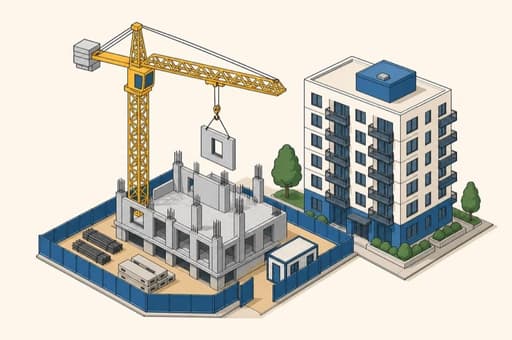
A ground-up project in South San Francisco with about $358M of expected cost and no rent until it opens — Essex's first start in over five years. Watch whether building keeps clearing the extra return management demands.
Competes with Development pipeline (Vivmark Residential) · Apartment development (Greystar)
In plain English
Building from scratch, which Essex had barely done for five years. One project is underway in South San Francisco, near the biotech labs at Oyster Point, carrying about $358 million of expected cost and producing nothing until residents move in.
Why start now? Because putting up a building only pays if the rent it eventually earns beats what buying a finished one would have cost — management wants roughly a percentage point of extra yield for taking on the mud and the delays. A smaller version of the same idea: adding extra homes on land Essex already owns at communities it runs.
Southern California
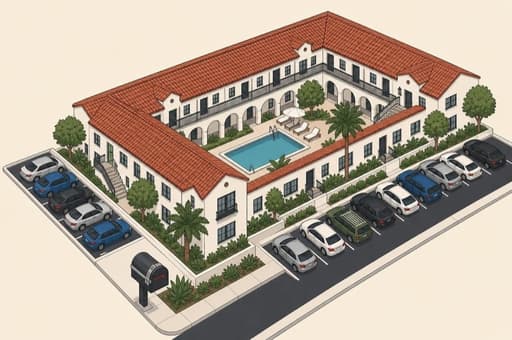
Los Angeles, Orange County, San Diego and Ventura — $763.1M of rent in 2025 and the slowest grower, at 1.4% on new leases in spring 2026. Los Angeles opened its largest-ever crop of apartments and vacancy still held near 4.5%.
Competes with Southern California portfolio (Vivmark Residential) · West Coast portfolio (UDR)
In plain English
Los Angeles, Orange County, San Diego and Ventura — the larger, older half of the portfolio, with roughly twenty-three thousand households paying rent each month.
This is the steady part, and lately the slow part. Lease prices moved about one and a half percent in spring 2026 against six and a half up north, because hiring here tracks the country as a whole rather than a tech boom. Two things hold it back beyond jobs: California cities cap how far rent can rise, and removing a tenant who stops paying still takes long enough in Los Angeles that a sliver of the rent never arrives.

Seattle Metro
Puget Sound, weighted to the suburbs east of Lake Washington — $313.4M of rent in 2025, and the one region where profit went backwards in spring 2026, down 2.7% as costs outran a 1.7% rent gain.
Competes with Seattle portfolio (Vivmark Residential) · Pacific Northwest portfolio (UDR)
In plain English
The Puget Sound portfolio, tilted toward the suburbs east of Lake Washington rather than the downtown core — about twelve thousand households, at the cheapest average rents of Essex's three markets.
Its job is to pay its own way, and lately it has struggled to: rent collected in spring 2026 was 1.7% higher than a year earlier, but the cost of running the buildings rose faster, so what was left over shrank. Leasing has turned back up on the Eastside while the urban core sits near flat, and management now puts the full recovery at late 2027 into 2028, once companies that signed office leases actually fill them.

Preferred Equity and Structured Finance Book
Cash placed in other developers' apartment projects for a fixed return, cut from roughly $700M in 2021 to a couple of hundred million, with about $100M meant to stay. Early repayments dent per-share earnings; management says the drag ends with 2026.
Competes with Buying buildings outright instead (Essex itself) · Gap financing for apartment sponsors (Private debt and mezzanine funds)
In plain English
Sometimes another developer runs short of money to finish or refinance an apartment project, and Essex puts cash in on terms that earn a set return and get paid back before the owner sees anything. Think of the neighbour who fronts part of a renovation and is first in line to be repaid, with interest.
Essex has been pulling this money back deliberately: roughly $700 million committed in 2021, a couple of hundred million on the books at midyear 2026, and management describing the book as right-sized near $100 million. The returns are decent, but every early repayment leaves a hole in that year's per-share earnings — a couple of percent of growth this year.

Co-Investment Platform (Wesco and BEX)
Partnerships that let Essex own slices of communities it also runs — $504.6M of stakes at midyear 2026 and $9.4M of management fees in 2025, a fee line that shrinks each time Essex buys a partner out.
Competes with Fee-management platform (Greystar) · Joint-venture programs (Vivmark Residential)
In plain English
Some communities Essex does not own outright. It teams up with large institutional investors, putting in part of the money while the partner supplies most of it, then runs the buildings day to day and charges a fee for the work.
The fee is small and getting smaller: $9.4 million in 2025, down from $11.1 million two years earlier, mostly because Essex keeps buying out partners and moving those buildings onto its own books. Management is plain about the purpose — the partnerships stretch Essex's own capital across more apartments than it could buy alone. This is not a fee business.


 Northern CaliforniaSan Francisco, the Peninsula, Silicon Valley and the East Bay — $760.8M of rent in 2025, up 14.6%, and the largest of the three regions since spring 2026. Watch whether Bay Area hiring keeps new leases rising.
San Francisco, the Peninsula, Silicon Valley and the East Bay — $760.8M of rent in 2025, up 14.6%, and the largest of the three regions since spring 2026. Watch whether Bay Area hiring keeps new leases rising.
In plain English
Apartments up and down the San Francisco Bay — the city itself, the Peninsula, Silicon Valley, the East Bay. Nearly twenty thousand households pay Essex rent here each month on year-long leases, and the price resets when a lease is renewed or the apartment changes hands.
What makes this stretch unusual is how little new gets built. With few new buildings opening, extra people hired in the area have to fit into the ones that already exist. Lease prices here moved about six and a half percent in spring 2026, the fastest of Essex's three markets, which is why most new money has been going north.
Competes with San Francisco / Silicon Valley portfolio (Vivmark Residential) · Bay Area portfolio (UDR)
 Acquisition and Capital-Recycling ProgramEssex trades whole communities to reshape where it owns: $829.5M bought and $563.8M sold in 2025, nearly all the buying in Northern California. Buying slowed once its own shares looked like the better deal.
Essex trades whole communities to reshape where it owns: $829.5M bought and $563.8M sold in 2025, nearly all the buying in Northern California. Buying slowed once its own shares looked like the better deal.
In plain English
Essex is constantly trading buildings, not only holding them. In 2025 it bought seven Bay Area communities — about 1,500 apartments — for roughly $830 million and sold five older ones for about $564 million, shifting the portfolio north. Over 60% of those deals were done quietly, off the open market.
The choice is a price comparison: management weighs what an apartment building costs against what the stock market is charging for the buildings Essex already owns, and puts money wherever it gets more for less. In spring 2026 that meant buying back about $62 million of its own shares instead. Communities bought recently added about $169 million of rent last year, and that rent lands in the regional lines.
Competes with Trading and recycling programs (Vivmark Residential) · Fund and joint-venture acquisitions (Greystar)
 Development and Redevelopment PipelineA ground-up project in South San Francisco with about $358M of expected cost and no rent until it opens — Essex's first start in over five years. Watch whether building keeps clearing the extra return management demands.
A ground-up project in South San Francisco with about $358M of expected cost and no rent until it opens — Essex's first start in over five years. Watch whether building keeps clearing the extra return management demands.
In plain English
Building from scratch, which Essex had barely done for five years. One project is underway in South San Francisco, near the biotech labs at Oyster Point, carrying about $358 million of expected cost and producing nothing until residents move in.
Why start now? Because putting up a building only pays if the rent it eventually earns beats what buying a finished one would have cost — management wants roughly a percentage point of extra yield for taking on the mud and the delays. A smaller version of the same idea: adding extra homes on land Essex already owns at communities it runs.
Competes with Development pipeline (Vivmark Residential) · Apartment development (Greystar)
 Southern CaliforniaLos Angeles, Orange County, San Diego and Ventura — $763.1M of rent in 2025 and the slowest grower, at 1.4% on new leases in spring 2026. Los Angeles opened its largest-ever crop of apartments and vacancy still held near 4.5%.
Los Angeles, Orange County, San Diego and Ventura — $763.1M of rent in 2025 and the slowest grower, at 1.4% on new leases in spring 2026. Los Angeles opened its largest-ever crop of apartments and vacancy still held near 4.5%.
In plain English
Los Angeles, Orange County, San Diego and Ventura — the larger, older half of the portfolio, with roughly twenty-three thousand households paying rent each month.
This is the steady part, and lately the slow part. Lease prices moved about one and a half percent in spring 2026 against six and a half up north, because hiring here tracks the country as a whole rather than a tech boom. Two things hold it back beyond jobs: California cities cap how far rent can rise, and removing a tenant who stops paying still takes long enough in Los Angeles that a sliver of the rent never arrives.
Competes with Southern California portfolio (Vivmark Residential) · West Coast portfolio (UDR)
 Seattle MetroPuget Sound, weighted to the suburbs east of Lake Washington — $313.4M of rent in 2025, and the one region where profit went backwards in spring 2026, down 2.7% as costs outran a 1.7% rent gain.
Puget Sound, weighted to the suburbs east of Lake Washington — $313.4M of rent in 2025, and the one region where profit went backwards in spring 2026, down 2.7% as costs outran a 1.7% rent gain.
In plain English
The Puget Sound portfolio, tilted toward the suburbs east of Lake Washington rather than the downtown core — about twelve thousand households, at the cheapest average rents of Essex's three markets.
Its job is to pay its own way, and lately it has struggled to: rent collected in spring 2026 was 1.7% higher than a year earlier, but the cost of running the buildings rose faster, so what was left over shrank. Leasing has turned back up on the Eastside while the urban core sits near flat, and management now puts the full recovery at late 2027 into 2028, once companies that signed office leases actually fill them.
Competes with Seattle portfolio (Vivmark Residential) · Pacific Northwest portfolio (UDR)
 Preferred Equity and Structured Finance BookCash placed in other developers' apartment projects for a fixed return, cut from roughly $700M in 2021 to a couple of hundred million, with about $100M meant to stay. Early repayments dent per-share earnings; management says the drag ends with 2026.
Cash placed in other developers' apartment projects for a fixed return, cut from roughly $700M in 2021 to a couple of hundred million, with about $100M meant to stay. Early repayments dent per-share earnings; management says the drag ends with 2026.
In plain English
Sometimes another developer runs short of money to finish or refinance an apartment project, and Essex puts cash in on terms that earn a set return and get paid back before the owner sees anything. Think of the neighbour who fronts part of a renovation and is first in line to be repaid, with interest.
Essex has been pulling this money back deliberately: roughly $700 million committed in 2021, a couple of hundred million on the books at midyear 2026, and management describing the book as right-sized near $100 million. The returns are decent, but every early repayment leaves a hole in that year's per-share earnings — a couple of percent of growth this year.
Competes with Buying buildings outright instead (Essex itself) · Gap financing for apartment sponsors (Private debt and mezzanine funds)
 Co-Investment Platform (Wesco and BEX)Partnerships that let Essex own slices of communities it also runs — $504.6M of stakes at midyear 2026 and $9.4M of management fees in 2025, a fee line that shrinks each time Essex buys a partner out.
Partnerships that let Essex own slices of communities it also runs — $504.6M of stakes at midyear 2026 and $9.4M of management fees in 2025, a fee line that shrinks each time Essex buys a partner out.
In plain English
Some communities Essex does not own outright. It teams up with large institutional investors, putting in part of the money while the partner supplies most of it, then runs the buildings day to day and charges a fee for the work.
The fee is small and getting smaller: $9.4 million in 2025, down from $11.1 million two years earlier, mostly because Essex keeps buying out partners and moving those buildings onto its own books. Management is plain about the purpose — the partnerships stretch Essex's own capital across more apartments than it could buy alone. This is not a fee business.
Competes with Fee-management platform (Greystar) · Joint-venture programs (Vivmark Residential)
Named in filings, launches and programs
- Ancillary and other property incomeProduct lineParking, an EV-charger rollout and lease-break fees — $27.4M in 2025, guided to add about a third of a point to same-property rent growth.
- Other Real Estate AssetsSegmentScattered holdings outside the three West Coast regions — $40.6M of rent in 2025, down from $90.4M the year before, and still shrinking.
- Essex property-management and operating platformPlatformIn-house leasing and maintenance: 1,689 staff at end-2025 against 1,799 in 2020, running the three regions that make up about 97% of rent.
- ADU redevelopment programProduct line · RampingExtra homes added on land Essex already owns at existing communities, at a stated ~10% return on what they cost to build.
- Essex Portfolio, L.P.BrandThe partnership that actually holds the buildings; Essex is its general partner at 96.7%, the rest held as partnership units.
- Wesco I / III / IV / V / VIBrandThe long-running series of joint ventures with institutional partners — $311.8M of Essex's co-investment stakes at midyear 2026.
- BEX IV and 500 FolsomBrandTwo development-minded joint ventures, carrying $69.0M of Essex stakes at midyear 2026.
- BEXAEW portfolioBrandFour communities, 1,480 homes — Essex bought its partner's 49.9% in March 2024 for $505.0M and now owns them outright.
- Two commercial buildingsProduct lineThe only non-apartment properties Essex owns, and small enough that they barely register in the rent.
Ancillary and other property incomeProduct line
Parking, an EV-charger rollout and lease-break fees — $27.4M in 2025, guided to add about a third of a point to same-property rent growth.
Other Real Estate AssetsSegment
Scattered holdings outside the three West Coast regions — $40.6M of rent in 2025, down from $90.4M the year before, and still shrinking.
Essex property-management and operating platformPlatform
In-house leasing and maintenance: 1,689 staff at end-2025 against 1,799 in 2020, running the three regions that make up about 97% of rent.
ADU redevelopment programProduct line · Ramping
Extra homes added on land Essex already owns at existing communities, at a stated ~10% return on what they cost to build.
Essex Portfolio, L.P.Brand
The partnership that actually holds the buildings; Essex is its general partner at 96.7%, the rest held as partnership units.
Wesco I / III / IV / V / VIBrand
The long-running series of joint ventures with institutional partners — $311.8M of Essex's co-investment stakes at midyear 2026.
BEX IV and 500 FolsomBrand
Two development-minded joint ventures, carrying $69.0M of Essex stakes at midyear 2026.
BEXAEW portfolioBrand
Four communities, 1,480 homes — Essex bought its partner's 49.9% in March 2024 for $505.0M and now owns them outright.
Two commercial buildingsProduct line
The only non-apartment properties Essex owns, and small enough that they barely register in the rent.