
Evergy (EVRG)
Integrated regulated electric utility serving homes and businesses across Kansas and Missouri.
Something off on this page? Send us feedback.
Evergy keeps the lights on across Kansas and western Missouri, selling power to homes, shops and factories through three separate utilities, each with its own regulator setting its prices. Ordinary demand has been flat and weather-driven for years. What changed is data centers: Evergy has signed long contracts to power them, and is now borrowing and building at a pace it has never attempted before.
Item facts: FY2025 · year ended Dec 31, 2025, from filings, earnings calls and company pages.
Judgment weights, not filed revenue
The band summarizes business focus and direction. ~ marks estimates.
8 in detail · 11 more below
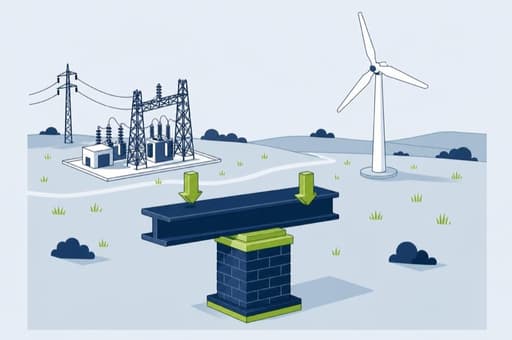
Evergy Kansas Central
The biggest of the three utilities, about half of all sales: Kansas outside the Kansas City area. Its regulator allows a 9.7% return and hands half of anything above that back to customers, so most of the growth has to come from new investment.
Competes with PSO retail electric service (AEP) · Cooperative and city-owned power supply (KEPCo) · Evergy Metro's Kansas service area (Evergy)
In plain English
Start with the big one. This utility makes electricity, carries it, and bills roughly half of Evergy's sales, and it holds most of the group's wind capacity.
It cannot set its own prices. Every few years it asks the Kansas Corporation Commission, the state's utility referee, for permission to charge more, usually after spending on wires and plants. In September 2025 it asked for $196.4M and was allowed $128M, at an agreed 9.7% profit rate, with a rule returning half of any earnings above that line to customers. Spend approved money, earn on it: that is the whole engine.
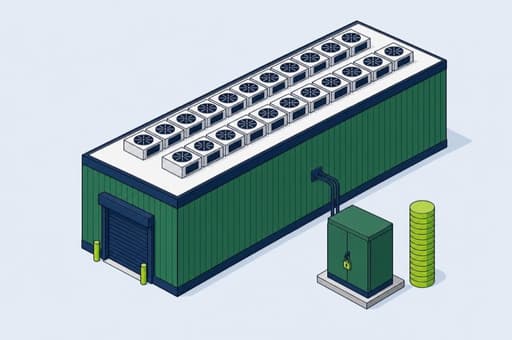
Large Load Power Service contracts
Five signed contracts covering about 2.5 GW of data center demand — Google twice, Meta, Beale Infrastructure and Digital Realty — on 16 to 17 year terms with a minimum bill every month. Watch how fast the sites actually switch on.
Competes with Ameren Missouri's large-load tariff (Ameren) · OG&E power deals with Google (OGE Energy) · PSO's proposed large-load rules (AEP)
In plain English
A data center is a warehouse full of computers, and it eats electricity like a small city — steadily, day and night. Evergy wrote a special price list for customers that big: premium rates, terms of sixteen or seventeen years, and a floor under the monthly bill whether the computers are running or not.
Five contracts are signed: two with Google, one with Meta, one with Digital Realty and one with Beale Infrastructure, a Blue Owl company. Counting other large customers the signed book is about 3 GW, of which roughly 1.3 GW is already ramping up and the rest still being built. Existing customers get something back — the Missouri rate request was trimmed by about $25M because this load is coming.
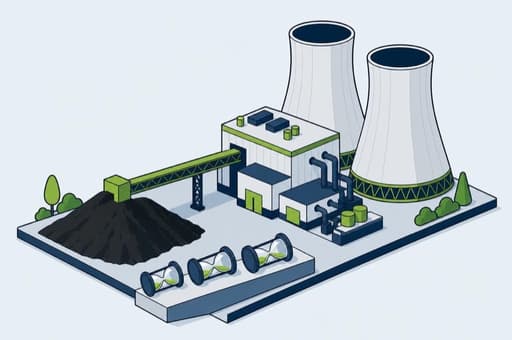
The coal fleet
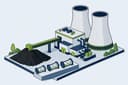
The oldest part of the machine and, for now, the bridge to the new demand: 6,235 MW of coal. Evergy is seeking to delay about 2.8 GW of planned closures by five years, taking La Cygne 2, Iatan 1 and Jeffrey 1 off the retirement schedule.
Competes with Power bought from independent generators (Independent power producers) · Ameren Missouri's generation build (Ameren)
In plain English
Coal is the old workhorse here — heaps of it beside the plants, burned to raise steam that spins a generator. Alongside wind, it is one of the two largest blocks of capacity Evergy has.
No bill carries a line for it. Coal plants earn because they are part of the investment base regulators let Evergy charge for, and their fuel cost is passed straight through to customers. What makes them interesting now is timing: three units were headed for retirement, and Evergy wants five more years out of them while new demand arrives ahead of the new plants meant to serve it.
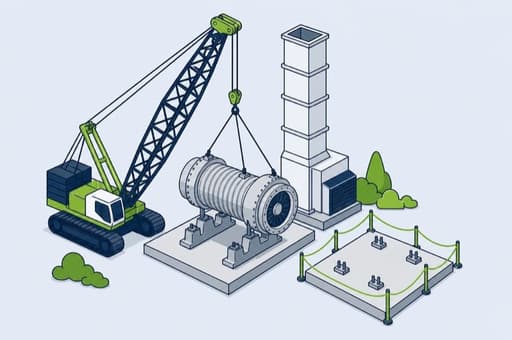
New natural gas plants
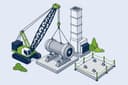
Roughly 1.9 GW of new gas is already approved at about $4B, and the 2026 resource plans call for about 3.9 GW by 2032 — the largest single purchase inside Evergy's $21.6B five-year spending program. Approvals, not concrete, set the pace.
Competes with Ameren Missouri's generation build (Ameren) · On-site generation built at data centers (Data center developers)
In plain English
Gas plants are the straightforward answer to a demand problem: burn natural gas, spin a turbine, make power when it is wanted rather than when the wind blows.
Evergy is building them because the new contracted load needs supply around the clock. Chisholm Trail, 710 MW in Sumner County, Kansas, has been under construction since May 2026 and is due in 2029; a 705 MW sister plant in Reno County follows in 2030; a 440 MW plant in Nodaway County, Missouri is still waiting for its permit. None of it earns a cent until regulators let the cost into customer rates, so the approval calendar matters more than the building schedule.
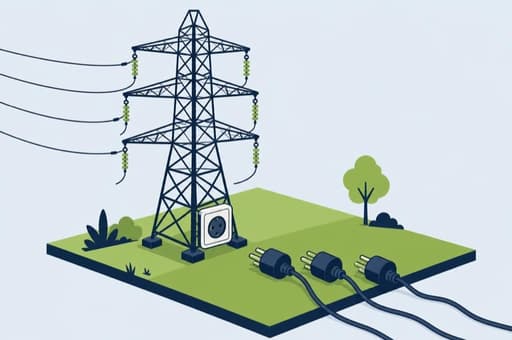
Transmission lines and grid service
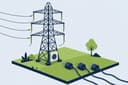
The high-voltage lines that carry power across the region and connect new sites. They brought in $520.6M last year, up 7.9% — the one revenue line that grew while electricity sales slipped. Connecting the new load is a wires problem before it is a generation one.
Competes with Transource competitive transmission projects (AEP) · ITC Great Plains transmission projects (ITC Holdings / Fortis)
In plain English
Before power comes anywhere near a street, it travels on tall steel towers at voltages high enough to cross a state. Evergy owns a lot of those lines, and the money they bring in belongs to the three utilities rather than to a separate business.
It is collected differently, though. Federal rules let transmission spending come back through a formula that updates as Evergy invests, instead of waiting for a rate case every few years — which is why this line kept climbing while electricity sales fell. Southwest Power Pool, the organisation that keeps the regional grid balanced, also charges the utilities for use of that network.
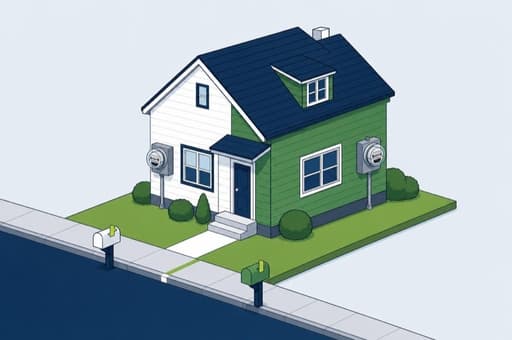
Evergy Metro
The old Kansas City Power & Light business, about $1.9B of sales, serving both sides of the state line — two regulators, two rate cases, two price lists. Its Missouri request for about $140M is the company's only pending rate case; hearings begin October 2026.
Competes with Ameren Missouri retail electric service (Ameren) · Evergy Kansas Central service area (Evergy)
In plain English
Metro is the Kansas City utility, and it has an awkward shape. The metro area straddles a state border, so one company answers to Missouri's commission on one side of the line and Kansas's on the other: two sets of paperwork, two sets of prices, one grid.
It earns the way its sisters do — an approved return on approved investment, collected through monthly bills. In February 2026 it asked Missouri for about $140M more at a requested 10.5% return, with hearings from October 2026 and new prices expected in January 2027. The ask would have been roughly $25M larger, but a data center ramping up on its system absorbs part of the cost.
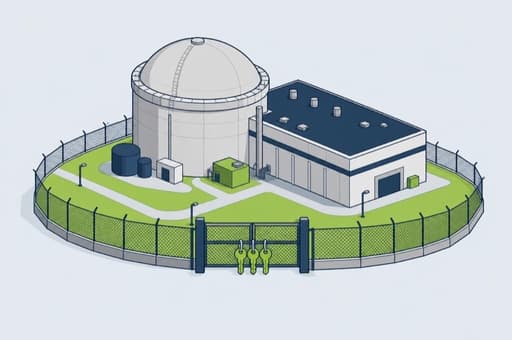
Wolf Creek Nuclear Generating Station
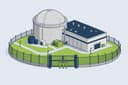
Evergy's nuclear station: 1,219 MW, shared with Evergy Kansas South and KEPCo, and run day to day by a separate operating company set up for the owners. Steady output that does not rise and fall with the weather.
Competes with Power bought from independent generators (Independent power producers) · On-site generation built at data centers (Data center developers)
In plain English
One nuclear station, three owners. Wolf Creek's reactor makes 1,219 MW of electricity without burning anything, and it is built to run steadily rather than to switch on for hot afternoons.
The ownership is the unusual part. Evergy Metro holds a slice, Evergy Kansas South holds a slice, and so does KEPCo, a power supplier serving systems inside Evergy's own territory. None of the three runs the place; a separate operating company staffed for the job does that on behalf of all of them, and the three split what comes out.
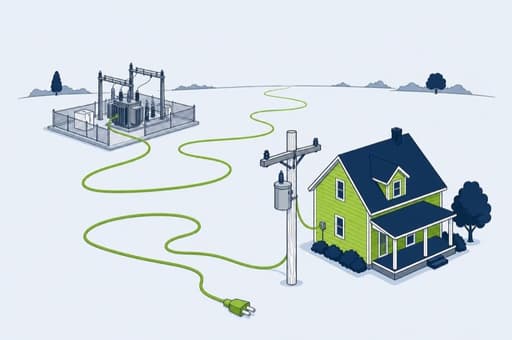
Evergy Missouri West
The smallest utility, in western Missouri: $1,000.3M of sales and $135.1M of profit last year, up from $88.4M. It has the cheapest prices in the system and the least generation of its own, so bills here are expected to rise faster than inflation.
Competes with Ameren Missouri retail electric service (Ameren) · Power bought from the regional market (Southwest Power Pool) · Evergy Metro's Missouri service area (Evergy)
In plain English
The runt of the three, in western Missouri, and once known as KCP&L Greater Missouri Operations. Its customers pay the lowest prices Evergy charges, but that is not generosity: management says the utility needs infrastructure, and in particular plants that can run around the clock, so it leans more on buying power from the regional market and wears the price swings that come with it.
The plan is to fix that by building — which means asking Missouri's commission first, spending second, and charging for it third. Over the next five years, household prices here are expected to climb faster than inflation.


 Evergy Kansas CentralThe biggest of the three utilities, about half of all sales: Kansas outside the Kansas City area. Its regulator allows a 9.7% return and hands half of anything above that back to customers, so most of the growth has to come from new investment.
The biggest of the three utilities, about half of all sales: Kansas outside the Kansas City area. Its regulator allows a 9.7% return and hands half of anything above that back to customers, so most of the growth has to come from new investment.
In plain English
Start with the big one. This utility makes electricity, carries it, and bills roughly half of Evergy's sales, and it holds most of the group's wind capacity.
It cannot set its own prices. Every few years it asks the Kansas Corporation Commission, the state's utility referee, for permission to charge more, usually after spending on wires and plants. In September 2025 it asked for $196.4M and was allowed $128M, at an agreed 9.7% profit rate, with a rule returning half of any earnings above that line to customers. Spend approved money, earn on it: that is the whole engine.
Competes with PSO retail electric service (AEP) · Cooperative and city-owned power supply (KEPCo) · Evergy Metro's Kansas service area (Evergy)
 Large Load Power Service contractsFive signed contracts covering about 2.5 GW of data center demand — Google twice, Meta, Beale Infrastructure and Digital Realty — on 16 to 17 year terms with a minimum bill every month. Watch how fast the sites actually switch on.
Five signed contracts covering about 2.5 GW of data center demand — Google twice, Meta, Beale Infrastructure and Digital Realty — on 16 to 17 year terms with a minimum bill every month. Watch how fast the sites actually switch on.
In plain English
A data center is a warehouse full of computers, and it eats electricity like a small city — steadily, day and night. Evergy wrote a special price list for customers that big: premium rates, terms of sixteen or seventeen years, and a floor under the monthly bill whether the computers are running or not.
Five contracts are signed: two with Google, one with Meta, one with Digital Realty and one with Beale Infrastructure, a Blue Owl company. Counting other large customers the signed book is about 3 GW, of which roughly 1.3 GW is already ramping up and the rest still being built. Existing customers get something back — the Missouri rate request was trimmed by about $25M because this load is coming.
Competes with Ameren Missouri's large-load tariff (Ameren) · OG&E power deals with Google (OGE Energy) · PSO's proposed large-load rules (AEP)
 The coal fleetThe oldest part of the machine and, for now, the bridge to the new demand: 6,235 MW of coal. Evergy is seeking to delay about 2.8 GW of planned closures by five years, taking La Cygne 2, Iatan 1 and Jeffrey 1 off the retirement schedule.
The oldest part of the machine and, for now, the bridge to the new demand: 6,235 MW of coal. Evergy is seeking to delay about 2.8 GW of planned closures by five years, taking La Cygne 2, Iatan 1 and Jeffrey 1 off the retirement schedule.
In plain English
Coal is the old workhorse here — heaps of it beside the plants, burned to raise steam that spins a generator. Alongside wind, it is one of the two largest blocks of capacity Evergy has.
No bill carries a line for it. Coal plants earn because they are part of the investment base regulators let Evergy charge for, and their fuel cost is passed straight through to customers. What makes them interesting now is timing: three units were headed for retirement, and Evergy wants five more years out of them while new demand arrives ahead of the new plants meant to serve it.
Competes with Power bought from independent generators (Independent power producers) · Ameren Missouri's generation build (Ameren)
 New natural gas plantsRoughly 1.9 GW of new gas is already approved at about $4B, and the 2026 resource plans call for about 3.9 GW by 2032 — the largest single purchase inside Evergy's $21.6B five-year spending program. Approvals, not concrete, set the pace.
Roughly 1.9 GW of new gas is already approved at about $4B, and the 2026 resource plans call for about 3.9 GW by 2032 — the largest single purchase inside Evergy's $21.6B five-year spending program. Approvals, not concrete, set the pace.
In plain English
Gas plants are the straightforward answer to a demand problem: burn natural gas, spin a turbine, make power when it is wanted rather than when the wind blows.
Evergy is building them because the new contracted load needs supply around the clock. Chisholm Trail, 710 MW in Sumner County, Kansas, has been under construction since May 2026 and is due in 2029; a 705 MW sister plant in Reno County follows in 2030; a 440 MW plant in Nodaway County, Missouri is still waiting for its permit. None of it earns a cent until regulators let the cost into customer rates, so the approval calendar matters more than the building schedule.
Competes with Ameren Missouri's generation build (Ameren) · On-site generation built at data centers (Data center developers)
 Transmission lines and grid serviceThe high-voltage lines that carry power across the region and connect new sites. They brought in $520.6M last year, up 7.9% — the one revenue line that grew while electricity sales slipped. Connecting the new load is a wires problem before it is a generation one.
The high-voltage lines that carry power across the region and connect new sites. They brought in $520.6M last year, up 7.9% — the one revenue line that grew while electricity sales slipped. Connecting the new load is a wires problem before it is a generation one.
In plain English
Before power comes anywhere near a street, it travels on tall steel towers at voltages high enough to cross a state. Evergy owns a lot of those lines, and the money they bring in belongs to the three utilities rather than to a separate business.
It is collected differently, though. Federal rules let transmission spending come back through a formula that updates as Evergy invests, instead of waiting for a rate case every few years — which is why this line kept climbing while electricity sales fell. Southwest Power Pool, the organisation that keeps the regional grid balanced, also charges the utilities for use of that network.
Competes with Transource competitive transmission projects (AEP) · ITC Great Plains transmission projects (ITC Holdings / Fortis)
 Evergy MetroThe old Kansas City Power & Light business, about $1.9B of sales, serving both sides of the state line — two regulators, two rate cases, two price lists. Its Missouri request for about $140M is the company's only pending rate case; hearings begin October 2026.
The old Kansas City Power & Light business, about $1.9B of sales, serving both sides of the state line — two regulators, two rate cases, two price lists. Its Missouri request for about $140M is the company's only pending rate case; hearings begin October 2026.
In plain English
Metro is the Kansas City utility, and it has an awkward shape. The metro area straddles a state border, so one company answers to Missouri's commission on one side of the line and Kansas's on the other: two sets of paperwork, two sets of prices, one grid.
It earns the way its sisters do — an approved return on approved investment, collected through monthly bills. In February 2026 it asked Missouri for about $140M more at a requested 10.5% return, with hearings from October 2026 and new prices expected in January 2027. The ask would have been roughly $25M larger, but a data center ramping up on its system absorbs part of the cost.
Competes with Ameren Missouri retail electric service (Ameren) · Evergy Kansas Central service area (Evergy)
 Wolf Creek Nuclear Generating StationEvergy's nuclear station: 1,219 MW, shared with Evergy Kansas South and KEPCo, and run day to day by a separate operating company set up for the owners. Steady output that does not rise and fall with the weather.
Evergy's nuclear station: 1,219 MW, shared with Evergy Kansas South and KEPCo, and run day to day by a separate operating company set up for the owners. Steady output that does not rise and fall with the weather.
In plain English
One nuclear station, three owners. Wolf Creek's reactor makes 1,219 MW of electricity without burning anything, and it is built to run steadily rather than to switch on for hot afternoons.
The ownership is the unusual part. Evergy Metro holds a slice, Evergy Kansas South holds a slice, and so does KEPCo, a power supplier serving systems inside Evergy's own territory. None of the three runs the place; a separate operating company staffed for the job does that on behalf of all of them, and the three split what comes out.
Competes with Power bought from independent generators (Independent power producers) · On-site generation built at data centers (Data center developers)
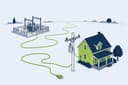 Evergy Missouri WestThe smallest utility, in western Missouri: $1,000.3M of sales and $135.1M of profit last year, up from $88.4M. It has the cheapest prices in the system and the least generation of its own, so bills here are expected to rise faster than inflation.
The smallest utility, in western Missouri: $1,000.3M of sales and $135.1M of profit last year, up from $88.4M. It has the cheapest prices in the system and the least generation of its own, so bills here are expected to rise faster than inflation.
In plain English
The runt of the three, in western Missouri, and once known as KCP&L Greater Missouri Operations. Its customers pay the lowest prices Evergy charges, but that is not generosity: management says the utility needs infrastructure, and in particular plants that can run around the clock, so it leans more on buying power from the regional market and wears the price swings that come with it.
The plan is to fix that by building — which means asking Missouri's commission first, spending second, and charging for it third. Over the next five years, household prices here are expected to climb faster than inflation.
Competes with Ameren Missouri retail electric service (Ameren) · Power bought from the regional market (Southwest Power Pool) · Evergy Metro's Missouri service area (Evergy)
Named in filings, launches and programs
- Panasonic De Soto electric serviceCustomer program · RampingThe anchor large customer that is not a data center — open since July 2025, on Kansas Central lines, and priced outside the large-load tariff.
- Wholesale and market energy salesServiceSpare power sold into the regional market: $312.8M last year, slightly below the $320.5M of the year before.
- Wind portfolioService4,525 MW of wind capacity available to the fleet, largely bought under contract rather than owned outright.
- Solar and battery additionsService · Announced325 MW of solar already approved at about $570M, with roughly 800 MW more solar and 450 MW of batteries in the 2026 resource plans.
- Mullin Creek #2Service · Announced440 MW gas plant proposed for Nodaway County, Missouri; permit hearings begin 2026-10-19.
- Large-load pipeline behind the signed bookCustomer program · AnnouncedExpansions at existing sites plus a second tier of projects, none of it counted in the capital plan; management expects at least one more signed contract in 2026.
- Evergy Kansas SouthBrandKansas Central's one active operating subsidiary, and one of the three owners of Wolf Creek.
- Evergy Transmission CompanyBrandHolds 13.5% of Transource Energy against AEP's 86.5% — a junior seat in competitively bid transmission projects.
- Prairie Wind TransmissionBrandA half share in a 108-mile line, held jointly with AEP and Berkshire Hathaway Energy subsidiaries.
- Industrial steam and otherService$27.0M last year, the smallest named line on the bill — steam sold to industrial neighbours.
- Other retailService$45.7M of retail billing that sits outside the residential, commercial and industrial customer groups.
Panasonic De Soto electric serviceCustomer program · Ramping
The anchor large customer that is not a data center — open since July 2025, on Kansas Central lines, and priced outside the large-load tariff.
Wholesale and market energy salesService
Spare power sold into the regional market: $312.8M last year, slightly below the $320.5M of the year before.
Wind portfolioService
4,525 MW of wind capacity available to the fleet, largely bought under contract rather than owned outright.
Solar and battery additionsService · Announced
325 MW of solar already approved at about $570M, with roughly 800 MW more solar and 450 MW of batteries in the 2026 resource plans.
Mullin Creek #2Service · Announced
440 MW gas plant proposed for Nodaway County, Missouri; permit hearings begin 2026-10-19.
Large-load pipeline behind the signed bookCustomer program · Announced
Expansions at existing sites plus a second tier of projects, none of it counted in the capital plan; management expects at least one more signed contract in 2026.
Evergy Kansas SouthBrand
Kansas Central's one active operating subsidiary, and one of the three owners of Wolf Creek.
Evergy Transmission CompanyBrand
Holds 13.5% of Transource Energy against AEP's 86.5% — a junior seat in competitively bid transmission projects.
Prairie Wind TransmissionBrand
A half share in a 108-mile line, held jointly with AEP and Berkshire Hathaway Energy subsidiaries.
Industrial steam and otherService
$27.0M last year, the smallest named line on the bill — steam sold to industrial neighbours.
Other retailService
$45.7M of retail billing that sits outside the residential, commercial and industrial customer groups.