
First Citizens BancShares (FCNCA)
Combines relationship banking, national commercial finance, innovation banking and rail leasing.
Something off on this page? Send us feedback.
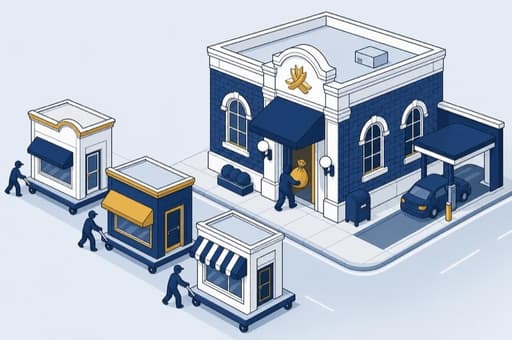
First Citizens is a Raleigh, North Carolina bank that grew huge by buying: the CIT lending and leasing business, then Silicon Valley Bank out of its failure. The old branch network across the Carolinas still earns the most. What is new is everything bolted on — banking for venture funds and startups, an online savings arm gathering deposits nationwide, and a fleet of railcars out on lease.
Item facts: H1 2026 · six months ended June 30, 2026, from filings, earnings calls and company pages.
Judgment weights, not filed revenue
The band summarizes business focus and direction. ~ marks estimates.
8 in detail · 14 more below
General Bank
The branch business: everyday accounts, small-business and home loans, plus a channel for homeowners' associations. The bank's biggest earner. Loans have been roughly flat, so the growth is bought — 138 branches from BMO, closed in September 2026.
Competes with Branch banking (Truist) · Regional consumer bank (Regions Financial) · Alliance Association Bank (Western Alliance)
In plain English
Walk into a First Citizens branch in a Carolinas town and this is the business you are standing in. Households park their checking and savings there; small companies, homebuyers and homeowners' associations borrow from it.
The earnings are a spread: savers are paid a little, borrowers pay more, and the bank keeps the gap. Account and debit-card fees top it up. About a quarter of the whole bank's deposits sit in North Carolina, so more growth has to come from new ground — which is what those 138 BMO branches, carrying roughly five billion dollars of deposits, are for.

Direct Bank
Online savings with no branches, gathering money from savers nationwide. Its own revenue line looks small because the spread is counted in the lending businesses; its real job is to fund the rest of the bank and pay off what it owes the government's deposit insurer.
Competes with Marcus high-yield savings (Goldman Sachs) · Ally Bank Savings (Ally) · High Yield Savings (American Express)
In plain English
No branches, no tellers — a savings account you open on your phone from anywhere in the country, at a rate good enough to make people move their money.
Why bother? Because the bank needs deposits, and management wants many small insured ones from households rather than a few enormous institutional balances. They also pay for something specific: First Citizens still owes the government's deposit insurer about thirty-six billion dollars from the Silicon Valley Bank purchase, due March 2028, and is handing back five hundred million to a billion every month. This arm is the tap that keeps it filling.

Global Fund Banking
Credit lines to private-equity and venture funds, secured by money those funds' investors have promised but not yet paid in. Loans jumped $2.6B in the spring quarter against an $11B pipeline, though management expects the pace to cool.
Competes with Innovation Economy fund finance (JPMorgan) · Innovation Banking (HSBC) · Venture Banking (Stifel)
In plain English
Private-equity and venture funds run on promises: their investors pledge money up front and hand it over only when a deal is ready. Waiting weeks for that cash is awkward, so the fund borrows against the pledges and repays when the money lands.
That is the whole business — short loans, rarely written off, backed by the pledges of large investors. First Citizens earns interest on the borrowing and holds the funds' cash while they wait. Those private-equity and venture accounts, inherited from Silicon Valley Bank, are about a quarter of every deposit dollar in the bank. It takes the new name First Citizens Fund Banking in late 2026.

Tech & Healthcare Banking
The startups themselves: accounts, currencies and cash management more than lending, and the source of most client investment and international fees. Renamed First Citizens Innovation Banking in late 2026 — a name change only. JPMorgan and HSBC are chasing the same clients.
Competes with Startup banking (JPMorgan Chase) · Innovation Banking (HSBC) · Startup business accounts (Mercury)
In plain English
The other half of what used to be Silicon Valley Bank: the operating accounts of technology, life-science and healthcare companies, plus loans to firms whose real backing is their investors.
Money here comes less from lending than from holding and moving cash. A company that has just raised a round parks the proceeds, spends them slowly, and pays for the plumbing — the accounts, moving money in other currencies, and a fee when idle balances are steered into money-market funds held outside the bank. So the business swells when venture money is flowing and thins as clients burn through it. JPMorgan's innovation-economy arm has quadrupled its client count to nearly twelve thousand.

Commercial Finance and Equipment Finance
Secured lending and equipment leasing to mid-sized companies in energy, healthcare, media, shipping, aerospace and defense — the old CIT franchise, and the anchor of 2026 loan growth. Credit costs are the thing to watch.
Competes with Capital Finance (Wells Fargo) · Business Credit (PNC) · White Oak ABL (White Oak)
In plain English
This is the CIT business First Citizens bought in 2022, still doing what it always did: lending to mid-sized companies that own things. An energy producer, a hospital group, a shipping operator, a media firm — each borrows against what it can pledge, from unpaid invoices and inventory to machinery, and some rent their equipment from the bank instead of buying it.
Secured lending pays well and is dull until the economy turns. It turned briefly in 2025: a single quarter of loan-loss charges knocked the whole commercial lending segment's profit down to eighteen million dollars, from a hundred and twenty-four a year earlier.

Working Capital Finance Group
The bank buys unpaid invoices from apparel, furniture and electronics suppliers and collects from the retailers, carrying the risk that a store fails to pay. Commissions have edged down. Merged with asset-based lending into one group in August 2026.
Competes with Commercial Services factoring (Wells Fargo) · Factoring and ABL (Rosenthal & Rosenthal) · Independent factoring (Republic Business Credit)
In plain English
A clothing importer ships a container of shirts to a big retailer, then waits months to be paid. First Citizens buys that unpaid bill now, takes a commission for the service, and — this is the unusual part — accepts the risk that the retailer never pays at all.
So the customers are makers and importers of apparel, textiles, furniture and consumer electronics, while the people who actually owe the money are the stores those customers sell to. Trouble comes from the retailers, not from the client. In August 2026 the bank folded this desk together with its other invoice-and-inventory lending.

Rail
Roughly 127,600 railcars and locomotives leased to railroads and shippers, with First Citizens paying the upkeep. Lease rates have risen for years, but revenue slipped in the first half of 2026 and rival GATX has just doubled its fleet.
Competes with Lease fleet (GATX) · Railcar leasing (Trinity Industries) · Tank car leasing (Union Tank Car)
In plain English
Tank cars, grain hoppers and locomotives — about 127,600 of them — owned by the bank and rented to railroads and to the companies whose freight rides inside them. Most leases are full-service, meaning First Citizens also pays to keep the cars running.
Rent arrives monthly, so it looks like a landlord business, and mostly it is. But wear-and-tear charges and repairs eat a lot of it, and the fleet is paid for with the bank's own money, which is charged back against the segment: in the first nine months of 2025, $651M of gross rent became $498M of segment revenue and $58M of profit.

First Citizens Wealth
Private banking, investing and trust services, sold mostly to people the bank already knows. Small — but fees rose 12% year over year in the spring quarter, and the plan is to keep hiring advisor teams away from rivals region by region.
Competes with Truist Wealth (Truist) · Private bank (Fifth Third) · Private bank (Huntington)
In plain English
Advice and account-minding for people with real money: the business owner, the private-equity partner, the executive at a venture-backed company, the vineyard owner.
Clients pay a slice of the assets each year, so the revenue recurs — and sinks when markets do. Most of them arrive from inside the building: a branch manager or a commercial banker makes the introduction. Growth is also being bought outright, by recruiting advisor teams away from other banks and independent firms, one region at a time. It is the smallest business here, and one management is deliberately building.


 General BankThe branch business: everyday accounts, small-business and home loans, plus a channel for homeowners' associations. The bank's biggest earner. Loans have been roughly flat, so the growth is bought — 138 branches from BMO, closed in September 2026.
The branch business: everyday accounts, small-business and home loans, plus a channel for homeowners' associations. The bank's biggest earner. Loans have been roughly flat, so the growth is bought — 138 branches from BMO, closed in September 2026.
In plain English
Walk into a First Citizens branch in a Carolinas town and this is the business you are standing in. Households park their checking and savings there; small companies, homebuyers and homeowners' associations borrow from it.
The earnings are a spread: savers are paid a little, borrowers pay more, and the bank keeps the gap. Account and debit-card fees top it up. About a quarter of the whole bank's deposits sit in North Carolina, so more growth has to come from new ground — which is what those 138 BMO branches, carrying roughly five billion dollars of deposits, are for.
Competes with Branch banking (Truist) · Regional consumer bank (Regions Financial) · Alliance Association Bank (Western Alliance)
 Direct BankOnline savings with no branches, gathering money from savers nationwide. Its own revenue line looks small because the spread is counted in the lending businesses; its real job is to fund the rest of the bank and pay off what it owes the government's deposit insurer.
Online savings with no branches, gathering money from savers nationwide. Its own revenue line looks small because the spread is counted in the lending businesses; its real job is to fund the rest of the bank and pay off what it owes the government's deposit insurer.
In plain English
No branches, no tellers — a savings account you open on your phone from anywhere in the country, at a rate good enough to make people move their money.
Why bother? Because the bank needs deposits, and management wants many small insured ones from households rather than a few enormous institutional balances. They also pay for something specific: First Citizens still owes the government's deposit insurer about thirty-six billion dollars from the Silicon Valley Bank purchase, due March 2028, and is handing back five hundred million to a billion every month. This arm is the tap that keeps it filling.
Competes with Marcus high-yield savings (Goldman Sachs) · Ally Bank Savings (Ally) · High Yield Savings (American Express)
 Global Fund BankingCredit lines to private-equity and venture funds, secured by money those funds' investors have promised but not yet paid in. Loans jumped $2.6B in the spring quarter against an $11B pipeline, though management expects the pace to cool.
Credit lines to private-equity and venture funds, secured by money those funds' investors have promised but not yet paid in. Loans jumped $2.6B in the spring quarter against an $11B pipeline, though management expects the pace to cool.
In plain English
Private-equity and venture funds run on promises: their investors pledge money up front and hand it over only when a deal is ready. Waiting weeks for that cash is awkward, so the fund borrows against the pledges and repays when the money lands.
That is the whole business — short loans, rarely written off, backed by the pledges of large investors. First Citizens earns interest on the borrowing and holds the funds' cash while they wait. Those private-equity and venture accounts, inherited from Silicon Valley Bank, are about a quarter of every deposit dollar in the bank. It takes the new name First Citizens Fund Banking in late 2026.
Competes with Innovation Economy fund finance (JPMorgan) · Innovation Banking (HSBC) · Venture Banking (Stifel)
 Tech & Healthcare BankingThe startups themselves: accounts, currencies and cash management more than lending, and the source of most client investment and international fees. Renamed First Citizens Innovation Banking in late 2026 — a name change only. JPMorgan and HSBC are chasing the same clients.
The startups themselves: accounts, currencies and cash management more than lending, and the source of most client investment and international fees. Renamed First Citizens Innovation Banking in late 2026 — a name change only. JPMorgan and HSBC are chasing the same clients.
In plain English
The other half of what used to be Silicon Valley Bank: the operating accounts of technology, life-science and healthcare companies, plus loans to firms whose real backing is their investors.
Money here comes less from lending than from holding and moving cash. A company that has just raised a round parks the proceeds, spends them slowly, and pays for the plumbing — the accounts, moving money in other currencies, and a fee when idle balances are steered into money-market funds held outside the bank. So the business swells when venture money is flowing and thins as clients burn through it. JPMorgan's innovation-economy arm has quadrupled its client count to nearly twelve thousand.
Competes with Startup banking (JPMorgan Chase) · Innovation Banking (HSBC) · Startup business accounts (Mercury)
 Commercial Finance and Equipment FinanceSecured lending and equipment leasing to mid-sized companies in energy, healthcare, media, shipping, aerospace and defense — the old CIT franchise, and the anchor of 2026 loan growth. Credit costs are the thing to watch.
Secured lending and equipment leasing to mid-sized companies in energy, healthcare, media, shipping, aerospace and defense — the old CIT franchise, and the anchor of 2026 loan growth. Credit costs are the thing to watch.
In plain English
This is the CIT business First Citizens bought in 2022, still doing what it always did: lending to mid-sized companies that own things. An energy producer, a hospital group, a shipping operator, a media firm — each borrows against what it can pledge, from unpaid invoices and inventory to machinery, and some rent their equipment from the bank instead of buying it.
Secured lending pays well and is dull until the economy turns. It turned briefly in 2025: a single quarter of loan-loss charges knocked the whole commercial lending segment's profit down to eighteen million dollars, from a hundred and twenty-four a year earlier.
Competes with Capital Finance (Wells Fargo) · Business Credit (PNC) · White Oak ABL (White Oak)
 Working Capital Finance GroupThe bank buys unpaid invoices from apparel, furniture and electronics suppliers and collects from the retailers, carrying the risk that a store fails to pay. Commissions have edged down. Merged with asset-based lending into one group in August 2026.
The bank buys unpaid invoices from apparel, furniture and electronics suppliers and collects from the retailers, carrying the risk that a store fails to pay. Commissions have edged down. Merged with asset-based lending into one group in August 2026.
In plain English
A clothing importer ships a container of shirts to a big retailer, then waits months to be paid. First Citizens buys that unpaid bill now, takes a commission for the service, and — this is the unusual part — accepts the risk that the retailer never pays at all.
So the customers are makers and importers of apparel, textiles, furniture and consumer electronics, while the people who actually owe the money are the stores those customers sell to. Trouble comes from the retailers, not from the client. In August 2026 the bank folded this desk together with its other invoice-and-inventory lending.
Competes with Commercial Services factoring (Wells Fargo) · Factoring and ABL (Rosenthal & Rosenthal) · Independent factoring (Republic Business Credit)
 RailRoughly 127,600 railcars and locomotives leased to railroads and shippers, with First Citizens paying the upkeep. Lease rates have risen for years, but revenue slipped in the first half of 2026 and rival GATX has just doubled its fleet.
Roughly 127,600 railcars and locomotives leased to railroads and shippers, with First Citizens paying the upkeep. Lease rates have risen for years, but revenue slipped in the first half of 2026 and rival GATX has just doubled its fleet.
In plain English
Tank cars, grain hoppers and locomotives — about 127,600 of them — owned by the bank and rented to railroads and to the companies whose freight rides inside them. Most leases are full-service, meaning First Citizens also pays to keep the cars running.
Rent arrives monthly, so it looks like a landlord business, and mostly it is. But wear-and-tear charges and repairs eat a lot of it, and the fleet is paid for with the bank's own money, which is charged back against the segment: in the first nine months of 2025, $651M of gross rent became $498M of segment revenue and $58M of profit.
Competes with Lease fleet (GATX) · Railcar leasing (Trinity Industries) · Tank car leasing (Union Tank Car)
 First Citizens WealthPrivate banking, investing and trust services, sold mostly to people the bank already knows. Small — but fees rose 12% year over year in the spring quarter, and the plan is to keep hiring advisor teams away from rivals region by region.
Private banking, investing and trust services, sold mostly to people the bank already knows. Small — but fees rose 12% year over year in the spring quarter, and the plan is to keep hiring advisor teams away from rivals region by region.
In plain English
Advice and account-minding for people with real money: the business owner, the private-equity partner, the executive at a venture-backed company, the vineyard owner.
Clients pay a slice of the assets each year, so the revenue recurs — and sinks when markets do. Most of them arrive from inside the building: a branch manager or a commercial banker makes the introduction. Growth is also being bought outright, by recruiting advisor teams away from other banks and independent firms, one region at a time. It is the smallest business here, and one management is deliberately building.
Competes with Truist Wealth (Truist) · Private bank (Fifth Third) · Private bank (Huntington)
Named in filings, launches and programs
- Community Association BankingProduct lineDeposit accounts and lending for homeowners' associations — a niche channel run through the branch business.
- Residential mortgageProduct lineHome loans, both standard and jumbo, written in branches and bought from other lenders who originate them.
- SBA lendingProduct lineSmall-business lending run through the branch network under federal Small Business Administration programs.
- Cardholder and merchant servicesServiceCard income from the bank's own customers plus payment processing for shops — $121M and $39M of fees over nine months of 2025.
- Client investment feesServiceEarned for steering startup clients' spare cash into money-market and similar funds held outside the bank — $163M over nine months of 2025.
- Insurance commissionsServiceCommissions on insurance sold to bank customers — $41M over the first nine months of 2025.
- Equity warrant portfolioProductRights to buy shares in startups, taken alongside loans in the Silicon Valley Bank era; gains are lumpy, $27M in the spring 2026 quarter.
- SVB Wine divisionProduct lineBanking and vineyard lending for wineries, inherited from Silicon Valley Bank; moves to the First Citizens name in late 2026.
- First Citizens Investor ServicesBrandThe in-house brokerage behind the wealth business, distributing other firms' mutual funds and annuities to bank customers.
- First Citizens Asset ManagementBrandRegistered advisory arms, including an institutional one, that manage portfolios for wealth and institutional clients.
- First Citizens Capital SecuritiesBrandA small broker-dealer that underwrites securities and places them privately for commercial clients.
- SVB Asset Management and SVB WealthBrandAdvisers for innovation-economy clients, minding cash and portfolios kept outside the bank's own accounts; balances rose $6.1B on average in spring 2026.
- SVB Partner NetworkEcosystemA referral network of firms serving startup clients; the research provider CB Insights joined in September 2026.
- BMO branch purchaseCustomer program138 branches bought from BMO, closed September 2026, bringing roughly $5B of deposits and $650M of loans into the branch business.
Community Association BankingProduct line
Deposit accounts and lending for homeowners' associations — a niche channel run through the branch business.
Residential mortgageProduct line
Home loans, both standard and jumbo, written in branches and bought from other lenders who originate them.
SBA lendingProduct line
Small-business lending run through the branch network under federal Small Business Administration programs.
Cardholder and merchant servicesService
Card income from the bank's own customers plus payment processing for shops — $121M and $39M of fees over nine months of 2025.
Client investment feesService
Earned for steering startup clients' spare cash into money-market and similar funds held outside the bank — $163M over nine months of 2025.
Insurance commissionsService
Commissions on insurance sold to bank customers — $41M over the first nine months of 2025.
Equity warrant portfolioProduct
Rights to buy shares in startups, taken alongside loans in the Silicon Valley Bank era; gains are lumpy, $27M in the spring 2026 quarter.
SVB Wine divisionProduct line
Banking and vineyard lending for wineries, inherited from Silicon Valley Bank; moves to the First Citizens name in late 2026.
First Citizens Investor ServicesBrand
The in-house brokerage behind the wealth business, distributing other firms' mutual funds and annuities to bank customers.
First Citizens Asset ManagementBrand
Registered advisory arms, including an institutional one, that manage portfolios for wealth and institutional clients.
First Citizens Capital SecuritiesBrand
A small broker-dealer that underwrites securities and places them privately for commercial clients.
SVB Asset Management and SVB WealthBrand
Advisers for innovation-economy clients, minding cash and portfolios kept outside the bank's own accounts; balances rose $6.1B on average in spring 2026.
SVB Partner NetworkEcosystem
A referral network of firms serving startup clients; the research provider CB Insights joined in September 2026.
BMO branch purchaseCustomer program
138 branches bought from BMO, closed September 2026, bringing roughly $5B of deposits and $650M of loans into the branch business.