
F5 (FFIV)
Secures and delivers applications and APIs across on-premises, cloud, and edge infrastructure.
Something off on this page? Send us feedback.
The company makes the equipment and software that stands in front of a business's websites and apps, steering their traffic and blocking attacks. Most of the money is not the sale — it is the yearly contract to keep all that installed gear patched and supported. The twist: the hardware it expected to fade is now the fastest-growing part, while the software meant to replace it plods. The newest bet is guarding company AI.
Item facts: FY2025 · year ended September 30, 2025, from filings, earnings calls and company pages.
Judgment weights, not filed revenue
The band summarizes business focus and direction. ~ marks estimates.
7 in detail · 13 more below
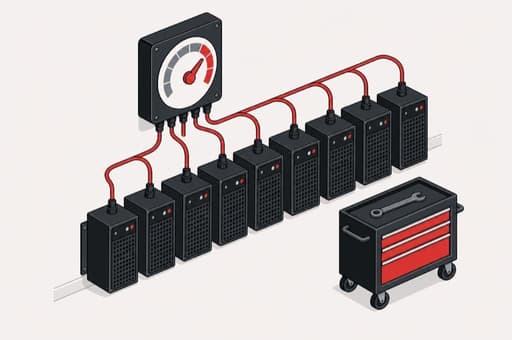
F5 Global Services
Maintenance and support on gear customers already own — $1.58B in FY2025, the largest line F5 has. Customers had already paid $2.19B for support not yet delivered as of June 2026, up 12%, so the recent hardware wave hasn't landed here yet.
Competes with NetScaler support subscriptions (Cloud Software Group) · Thunder support subscriptions (A10 Networks) · Elastic Load Balancing (AWS)
In plain English
Start with the half nobody demos. When a bank buys one of F5's traffic boxes, it also buys the upkeep: software updates, fresh attack signatures, and an engineer to call when something breaks.
Those contracts run for years and renew near-automatically, because pulling the box out means redesigning how every application is reached. Each box sold drags a new support contract along about a year behind it. Growth is slow by design — low single digits — and this is the money that makes the rest of F5 affordable.
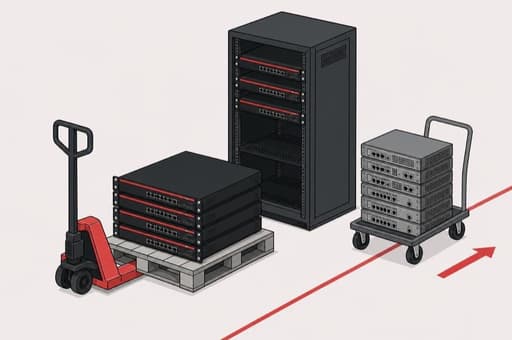
BIG-IP Systems
The physical appliances: $706M in FY2025, then up 32% across the first nine months of FY2026. F5 had long guided this line to shrink and reset it to growth at its 2026 investor day — while warning the refresh will not run forever.
Competes with Thunder ADC appliances (A10 Networks) · NetScaler MPX appliances (Cloud Software Group) · Application Gateway (Microsoft Azure)
In plain English
Picture a traffic officer standing at the entrance to a company's applications: it decides which server each request goes to, unscrambles the encryption, checks the request is not an attack, and keeps the site up when one machine dies. F5 sells that officer as a steel box that bolts into a rack — the rSeries and VELOS lines, replacing older iSeries units.
Buyers are banks, utilities, service providers and governments, and they swap the boxes out every few years. Two distributors, Ingram Micro and Synnex, carry about a third of everything F5 sells. When a nation-state intruder stole BIG-IP source code in 2025, the expected buying freeze never showed up.
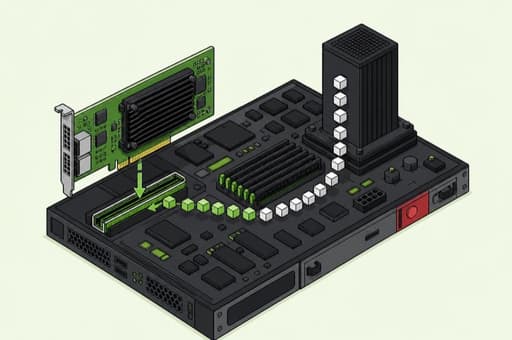
BIG-IP Next for Kubernetes on NVIDIA BlueField DPUs
Traffic control for AI datacenters: F5's software runs on NVIDIA network cards instead of eating the servers' own processing. A European operator measured roughly a fifth more use out of its AI chips. Sales are still folded into the appliance business.
Competes with DOCA BlueField networking software (NVIDIA) · Gateway API inference routers (Envoy (open source)) · Cloud-native inference load balancing (AWS)
In plain English
An AI datacenter is a warehouse of very expensive chips, and every second one of them spends shuffling network traffic instead of answering questions is money burned. F5 moved its traffic-handling software off those main processors and onto NVIDIA's specialised network cards, which do the shuffling for a fraction of the effort.
Who pays: companies renting out AI capacity — including operators building sites meant to stay inside one country's borders — and enterprises putting AI into production. Independent testing reported faster answers and more work per machine. It is early, and NVIDIA sells its own networking software for the same cards, which limits what F5 can ask for.
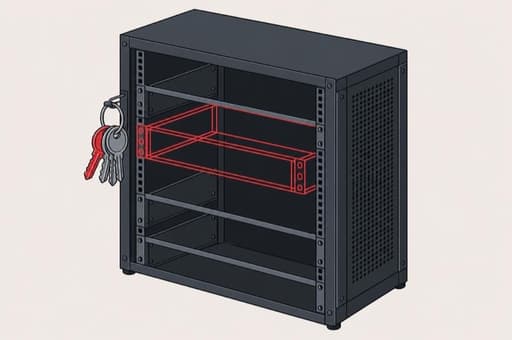
BIG-IP Software
The same traffic control sold as software instead of a box — roughly half a billion dollars a year, growing mid single digits. Growth swings with which year's contracts come up for renewal, and F5 says the group falling due in FY2027 is a much bigger one.
Competes with NetScaler VPX/CPX virtual appliances (Cloud Software Group) · Avi Load Balancer (Broadcom) · HAProxy Enterprise (HAProxy)
In plain English
Same job, no metal. A company that wants F5's traffic handling inside its own virtual servers or in a public cloud buys a licence instead of a chassis, and BIG-IP Next is the rebuilt version of that software.
Most of it is sold as multi-year subscriptions, so any year's sales are largely old customers coming back plus whatever was signed three years earlier falling due. That makes it lumpy in a way hardware is not: a thin signing year in 2023 held this year down. Customers buy a pool of capacity, and F5 can see how much of it they are actually using — which is how it sells them more.
F5 NGINX
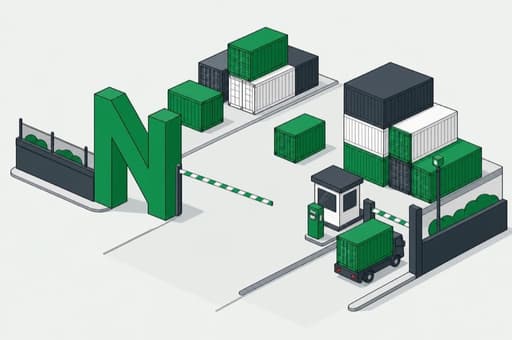
The web software developers reach for, and F5's way into modern cloud plumbing. F5 never reports its revenue separately, so this weight is a rough read. Nearly every installation is the free version, and open-source rivals are taking the default spot.
Competes with Kong Gateway (Kong) · Traefik ingress controller (Traefik (open source)) · HAProxy Enterprise (HAProxy)
In plain English
Every website needs a program that receives incoming requests and passes them to the software that answers them. For a large share of the internet that program is NGINX — free, open-source, downloadable by anyone — and F5 owns the company that makes it.
The money is in the paid edition: businesses running serious traffic buy NGINX Plus for support, a security filter and a console that manages all their copies from one place. It sells to the developers building applications rather than the network teams who buy F5's boxes. The catch is visible from outside: free rivals like Traefik and Envoy are steadily taking NGINX's place in newer setups.

F5 AI Security Platform
F5's bet on guarding company AI, built by buying two small firms for about $195M and launched as one platform in mid-2026. There is no revenue line yet — the count of AI customers grew 50% in the June-2026 quarter, from a base of a few dozen.
Competes with Prisma AIRS AI Gateway (Palo Alto Networks) · Kong AI Gateway (Kong) · AI Gateway (Cloudflare)
In plain English
Companies are handing chatbots and AI agents access to their own data, and nobody quite knows what those agents will say or leak. F5 sells the checkpoint: a gate between employees or applications and the AI models that watches what goes in and what comes back, blocks the dangerous parts, and flags the AI tools staff signed up for without telling anyone.
Most of it was bought rather than built — CalypsoAI, which attacks AI systems to find their weak spots, and SurePath AI, which spots unapproved AI use. Pricing is not disclosed, and every gateway vendor is chasing the same opening: Palo Alto Networks bought its way in too.
F5 Distributed Cloud Services
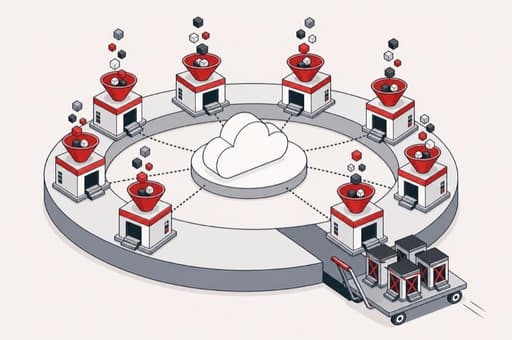
F5's protection rented as a service from its own sites, no hardware involved: $176M in FY2025, down 9% as an older managed service was retired. Subscriptions were running at about $185M a year, and roughly a quarter of F5's 1,000 biggest customers use it.
Competes with WAF and Bot Management (Cloudflare) · App & API Protector (Akamai) · Imperva Cloud WAF (Thales)
In plain English
Renting the protection instead of installing it. A retailer points its web traffic at F5's own network of sites; F5 filters out attacks, turns away bots trying to break into customer accounts, absorbs floods meant to knock the site over, and passes the clean traffic through.
Customers pay a subscription, usually alongside boxes they already own. The line shrank last year for a plain reason: F5 retired an older managed service, and those departures swamped strong growth in the newer one. This is also where the competition is sharpest — Cloudflare, which sells only this way, was rated a leader in a 2025 industry review that put F5 a rung below.


 F5 Global ServicesMaintenance and support on gear customers already own — $1.58B in FY2025, the largest line F5 has. Customers had already paid $2.19B for support not yet delivered as of June 2026, up 12%, so the recent hardware wave hasn't landed here yet.
Maintenance and support on gear customers already own — $1.58B in FY2025, the largest line F5 has. Customers had already paid $2.19B for support not yet delivered as of June 2026, up 12%, so the recent hardware wave hasn't landed here yet.
In plain English
Start with the half nobody demos. When a bank buys one of F5's traffic boxes, it also buys the upkeep: software updates, fresh attack signatures, and an engineer to call when something breaks.
Those contracts run for years and renew near-automatically, because pulling the box out means redesigning how every application is reached. Each box sold drags a new support contract along about a year behind it. Growth is slow by design — low single digits — and this is the money that makes the rest of F5 affordable.
Competes with NetScaler support subscriptions (Cloud Software Group) · Thunder support subscriptions (A10 Networks) · Elastic Load Balancing (AWS)
 BIG-IP SystemsThe physical appliances: $706M in FY2025, then up 32% across the first nine months of FY2026. F5 had long guided this line to shrink and reset it to growth at its 2026 investor day — while warning the refresh will not run forever.
The physical appliances: $706M in FY2025, then up 32% across the first nine months of FY2026. F5 had long guided this line to shrink and reset it to growth at its 2026 investor day — while warning the refresh will not run forever.
In plain English
Picture a traffic officer standing at the entrance to a company's applications: it decides which server each request goes to, unscrambles the encryption, checks the request is not an attack, and keeps the site up when one machine dies. F5 sells that officer as a steel box that bolts into a rack — the rSeries and VELOS lines, replacing older iSeries units.
Buyers are banks, utilities, service providers and governments, and they swap the boxes out every few years. Two distributors, Ingram Micro and Synnex, carry about a third of everything F5 sells. When a nation-state intruder stole BIG-IP source code in 2025, the expected buying freeze never showed up.
Competes with Thunder ADC appliances (A10 Networks) · NetScaler MPX appliances (Cloud Software Group) · Application Gateway (Microsoft Azure)
 BIG-IP Next for Kubernetes on NVIDIA BlueField DPUsTraffic control for AI datacenters: F5's software runs on NVIDIA network cards instead of eating the servers' own processing. A European operator measured roughly a fifth more use out of its AI chips. Sales are still folded into the appliance business.
Traffic control for AI datacenters: F5's software runs on NVIDIA network cards instead of eating the servers' own processing. A European operator measured roughly a fifth more use out of its AI chips. Sales are still folded into the appliance business.
In plain English
An AI datacenter is a warehouse of very expensive chips, and every second one of them spends shuffling network traffic instead of answering questions is money burned. F5 moved its traffic-handling software off those main processors and onto NVIDIA's specialised network cards, which do the shuffling for a fraction of the effort.
Who pays: companies renting out AI capacity — including operators building sites meant to stay inside one country's borders — and enterprises putting AI into production. Independent testing reported faster answers and more work per machine. It is early, and NVIDIA sells its own networking software for the same cards, which limits what F5 can ask for.
Competes with DOCA BlueField networking software (NVIDIA) · Gateway API inference routers (Envoy (open source)) · Cloud-native inference load balancing (AWS)
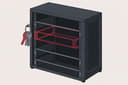 BIG-IP SoftwareThe same traffic control sold as software instead of a box — roughly half a billion dollars a year, growing mid single digits. Growth swings with which year's contracts come up for renewal, and F5 says the group falling due in FY2027 is a much bigger one.
The same traffic control sold as software instead of a box — roughly half a billion dollars a year, growing mid single digits. Growth swings with which year's contracts come up for renewal, and F5 says the group falling due in FY2027 is a much bigger one.
In plain English
Same job, no metal. A company that wants F5's traffic handling inside its own virtual servers or in a public cloud buys a licence instead of a chassis, and BIG-IP Next is the rebuilt version of that software.
Most of it is sold as multi-year subscriptions, so any year's sales are largely old customers coming back plus whatever was signed three years earlier falling due. That makes it lumpy in a way hardware is not: a thin signing year in 2023 held this year down. Customers buy a pool of capacity, and F5 can see how much of it they are actually using — which is how it sells them more.
Competes with NetScaler VPX/CPX virtual appliances (Cloud Software Group) · Avi Load Balancer (Broadcom) · HAProxy Enterprise (HAProxy)
 F5 NGINXThe web software developers reach for, and F5's way into modern cloud plumbing. F5 never reports its revenue separately, so this weight is a rough read. Nearly every installation is the free version, and open-source rivals are taking the default spot.
The web software developers reach for, and F5's way into modern cloud plumbing. F5 never reports its revenue separately, so this weight is a rough read. Nearly every installation is the free version, and open-source rivals are taking the default spot.
In plain English
Every website needs a program that receives incoming requests and passes them to the software that answers them. For a large share of the internet that program is NGINX — free, open-source, downloadable by anyone — and F5 owns the company that makes it.
The money is in the paid edition: businesses running serious traffic buy NGINX Plus for support, a security filter and a console that manages all their copies from one place. It sells to the developers building applications rather than the network teams who buy F5's boxes. The catch is visible from outside: free rivals like Traefik and Envoy are steadily taking NGINX's place in newer setups.
Competes with Kong Gateway (Kong) · Traefik ingress controller (Traefik (open source)) · HAProxy Enterprise (HAProxy)
 F5 AI Security PlatformF5's bet on guarding company AI, built by buying two small firms for about $195M and launched as one platform in mid-2026. There is no revenue line yet — the count of AI customers grew 50% in the June-2026 quarter, from a base of a few dozen.
F5's bet on guarding company AI, built by buying two small firms for about $195M and launched as one platform in mid-2026. There is no revenue line yet — the count of AI customers grew 50% in the June-2026 quarter, from a base of a few dozen.
In plain English
Companies are handing chatbots and AI agents access to their own data, and nobody quite knows what those agents will say or leak. F5 sells the checkpoint: a gate between employees or applications and the AI models that watches what goes in and what comes back, blocks the dangerous parts, and flags the AI tools staff signed up for without telling anyone.
Most of it was bought rather than built — CalypsoAI, which attacks AI systems to find their weak spots, and SurePath AI, which spots unapproved AI use. Pricing is not disclosed, and every gateway vendor is chasing the same opening: Palo Alto Networks bought its way in too.
Competes with Prisma AIRS AI Gateway (Palo Alto Networks) · Kong AI Gateway (Kong) · AI Gateway (Cloudflare)
 F5 Distributed Cloud ServicesF5's protection rented as a service from its own sites, no hardware involved: $176M in FY2025, down 9% as an older managed service was retired. Subscriptions were running at about $185M a year, and roughly a quarter of F5's 1,000 biggest customers use it.
F5's protection rented as a service from its own sites, no hardware involved: $176M in FY2025, down 9% as an older managed service was retired. Subscriptions were running at about $185M a year, and roughly a quarter of F5's 1,000 biggest customers use it.
In plain English
Renting the protection instead of installing it. A retailer points its web traffic at F5's own network of sites; F5 filters out attacks, turns away bots trying to break into customer accounts, absorbs floods meant to knock the site over, and passes the clean traffic through.
Customers pay a subscription, usually alongside boxes they already own. The line shrank last year for a plain reason: F5 retired an older managed service, and those departures swamped strong growth in the newer one. This is also where the competition is sharpest — Cloudflare, which sells only this way, was rated a leader in a 2025 industry review that put F5 a rung below.
Competes with WAF and Bot Management (Cloudflare) · App & API Protector (Akamai) · Imperva Cloud WAF (Thales)
Named in filings, launches and programs
- F5 Application Delivery and Security PlatformPlatformF5's name for selling the boxes, NGINX and the cloud service as one system; security work of every kind was roughly two-fifths of FY2025 sales.
- BIG-IP NextProductThe rebuilt generation of the BIG-IP software, sold as subscriptions alongside the older virtual editions of the same product.
- F5 Distributed Cloud Bot DefenseProductShape Security's technology, now sold inside the cloud service — it blocks automated attacks on customer accounts; device intelligence and AI-agent detection added September 2026.
- NGINX OneProductPackaged NGINX: the paid server, the Kubernetes entry controller, a security filter and one console to run them all together.
- F5 WAF for BIG-IP / WAF for NGINXProductThe filter that blocks malicious web requests, sold on both the boxes and NGINX; AI-assisted and faster stop-gap patching added September 2026.
- F5 XOpsPlatformAssistant tools that help customers see and manage what they have deployed — roughly 900 customers by the end of FY2025, up from about 20.
- F5 AI GatewayProductThe traffic cop between applications and AI models; rebuilt in August 2026 to handle AI agents and to keep a lid on what enterprise AI costs.
- F5 AI GuardrailsProductLive checks on what AI systems say and do, wired into NVIDIA's own guardrail software in July 2026.
- F5 Workforce AI SecurityProductAnnounced September 2026: protection aimed at employees using AI tools at work, the newest piece of the AI Security Platform.
- CalypsoAIBrandBought for $145.2M in cash, closed September 2025: software that attacks a company's AI to find the holes before someone else does.
- SurePath AIBrandBought for $50.1M, closed June 2026: finds the AI tools employees use without approval and works out what they are asking for.
- MantisNetBrandAcquired August 2025 — close-up visibility into what is actually moving across a customer's network.
- FletchBrandAcquired June 2025: software that triages security alerts on its own, sorting the noise from the few that matter.
F5 Application Delivery and Security PlatformPlatform
F5's name for selling the boxes, NGINX and the cloud service as one system; security work of every kind was roughly two-fifths of FY2025 sales.
BIG-IP NextProduct
The rebuilt generation of the BIG-IP software, sold as subscriptions alongside the older virtual editions of the same product.
F5 Distributed Cloud Bot DefenseProduct
Shape Security's technology, now sold inside the cloud service — it blocks automated attacks on customer accounts; device intelligence and AI-agent detection added September 2026.
NGINX OneProduct
Packaged NGINX: the paid server, the Kubernetes entry controller, a security filter and one console to run them all together.
F5 WAF for BIG-IP / WAF for NGINXProduct
The filter that blocks malicious web requests, sold on both the boxes and NGINX; AI-assisted and faster stop-gap patching added September 2026.
F5 XOpsPlatform
Assistant tools that help customers see and manage what they have deployed — roughly 900 customers by the end of FY2025, up from about 20.
F5 AI GatewayProduct
The traffic cop between applications and AI models; rebuilt in August 2026 to handle AI agents and to keep a lid on what enterprise AI costs.
F5 AI GuardrailsProduct
Live checks on what AI systems say and do, wired into NVIDIA's own guardrail software in July 2026.
F5 Workforce AI SecurityProduct
Announced September 2026: protection aimed at employees using AI tools at work, the newest piece of the AI Security Platform.
CalypsoAIBrand
Bought for $145.2M in cash, closed September 2025: software that attacks a company's AI to find the holes before someone else does.
SurePath AIBrand
Bought for $50.1M, closed June 2026: finds the AI tools employees use without approval and works out what they are asking for.
MantisNetBrand
Acquired August 2025 — close-up visibility into what is actually moving across a customer's network.
FletchBrand
Acquired June 2025: software that triages security alerts on its own, sorting the noise from the few that matter.