
Corning (GLW)
Maker of optical connectivity, display glass, automotive ceramics, and solar silicon products.
Something off on this page? Send us feedback.
Corning turns glass, ceramics, and light-guiding know-how into the hidden parts inside networks, screens, cars, solar panels, and laboratories. Display glass and vehicle ceramics remain sizable, but fiber for data centers has become the main engine. The next bet is pushing those light paths all the way to computer chips while expanding factories around large customer commitments.
Item facts: FY2025 · year ended Dec 31, 2025, from filings, earnings calls and company pages.
Judgment weights, not filed revenue
The band summarizes business focus and direction. ~ marks estimates.
7 in detail · 13 more below
Optical Communications
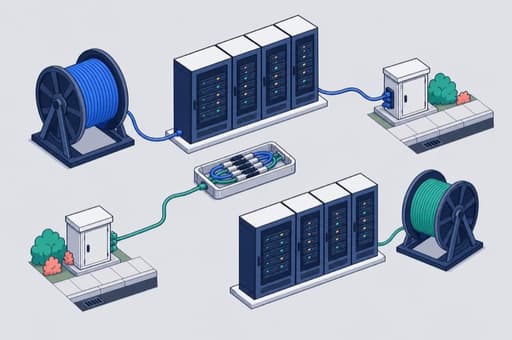
Fiber and connection hardware for data centers and telecom networks supplied $6.27B, or 40.1% of FY2025 revenue. Artificial-intelligence sites are accelerating demand; watch whether large customer programs become steady shipments.
Competes with Sirocco HD/XT cable (Prysmian) · WTC/Spider Web Ribbon cable (Fujikura)
In plain English
Most people never see Corning's biggest business. It makes the strands of glass that carry data, wraps them into dense cables, and adds the plugs, boxes, and cabinets needed to connect buildings and machines. One branch serves data centers and campuses; another serves phone and internet networks.
Cloud operators such as Meta, Amazon, and NVIDIA pay for more connections as they build sites packed with computers that train and run artificial intelligence. Carriers such as AT&T and Lumen buy fiber and connection gear for long-distance and neighborhood routes. Corning gets paid when the equipment ships, so signed programs matter only as factories fill and customers keep building.
Photonics
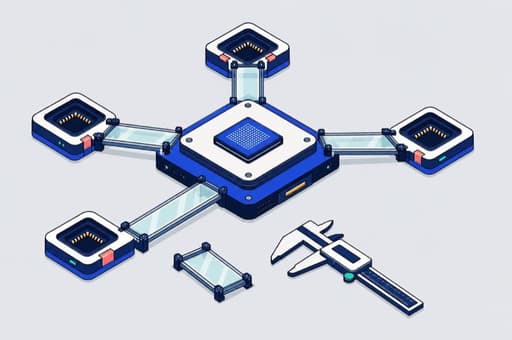
Light-based connections placed beside computer chips are not yet contributing sales. Corning wants Photonics to reach $10B of revenue in 2030; customer approval and reliable mass production stand between the demonstration and that goal.
Competes with FlexBeamGuidE-UM fiber array (Sumitomo Electric) · Socketed light links beside chips (Coherent)
In plain English
Here the fiber keeps moving inward. Photonics means carrying information as flashes of light right up to the computer chip, replacing some short copper paths that use more power as machines get faster. Corning is developing the tiny fiber arrays, bendable strands, and trays that make those close connections possible.
The likely buyers are the companies that assemble switches and computing systems for enormous artificial-intelligence sites. Corning would make money by supplying more glass connections around each chip, but customers still must approve the designs and factories must learn to make them reliably at scale. For now this is a promised next act, not current sales.
Display
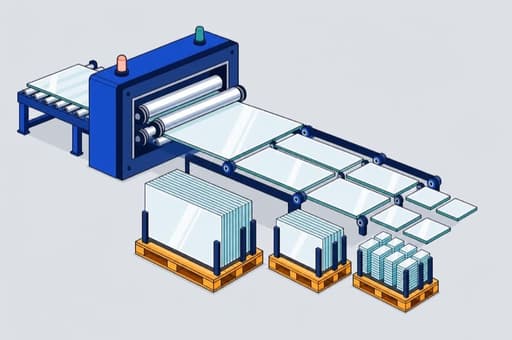
Ultra-thin glass bases for televisions, monitors, laptops, tablets, and phones supplied $2.96B, or 19.0% of FY2025 revenue. Screen area, factory activity, and price determine whether this mature business grows.
Competes with Alkali-free display glass (AGC) · OA-11 display glass (Nippon Electric Glass)
In plain English
A television screen begins with a nearly invisible sheet of glass. Corning makes that thin, flat base for factories that build screens, from giant televisions down to phones and tablets. The glass must stay smooth and stable while many layers are added.
Asian screen makers buy huge sheets and cut them into many panels. Corning earns when those sheets ship; the economics improve when factories run full and each sheet yields more usable screen area. Demand rises with the total area of screens sold, but pricing and reliance on a few large buyers can move results quickly.
Specialty Materials
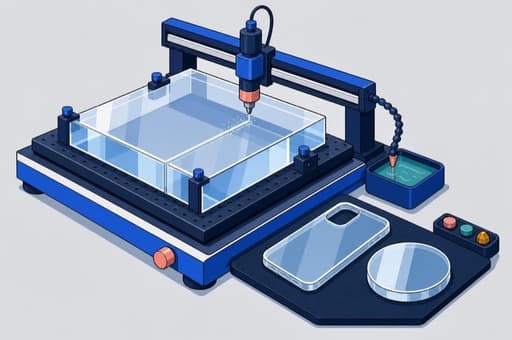
Protective device glass and precision optical materials together supplied $2.19B, or 14.0% of FY2025 revenue. Apple's dedicated Kentucky line supports the cover-glass side; device demand and advanced-equipment builds remain the watchpoints.
Competes with Dragontrail cover glass (AGC) · Xensation cover glass (SCHOTT) · ZERODUR glass-ceramic (SCHOTT) · SUPRASIL pure optical glass (Heraeus)
In plain English
The same glass know-how goes in two very different directions. Corning strengthens thin covers that protect phones, watches, tablets, and notebooks, and it also makes exceptionally stable, pure glass for chip-making machines, telescopes, and precision equipment.
Device makers pay for covers that survive drops and scratches without becoming bulky; Apple is building around a dedicated Kentucky supply line. Equipment makers pay because tiny shape or temperature changes can ruin delicate work. In both cases Corning sells a manufactured part, not a license. The watchpoints are device demand, customer approvals, and the hard job of repeating an exact recipe in high-volume factories.
Automotive
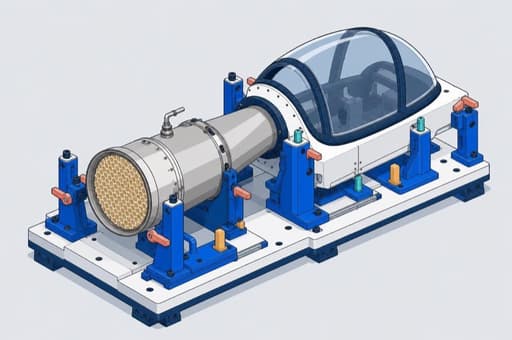
Exhaust-cleaning ceramics and shaped cockpit glass supplied $1.78B, or 11.4% of FY2025 revenue. Sales have stayed broadly flat; electric vehicles shrink the exhaust opportunity while larger dashboard screens offer a counterweight.
Competes with HONEYCERAM exhaust filters (NGK) · Diesel particulate filters (Ibiden)
In plain English
Under a car, Corning's ceramic honeycomb sits in the exhaust system and gives pollution-cleaning material a large surface to work on; filters catch soot before it reaches the air. The same business also sells tough, shaped glass for dashboard screens.
Exhaust-system suppliers buy the ceramic parts, although carmakers choose what goes into each vehicle design. Carmakers and their suppliers also pay for larger, curved cockpit displays. Corning earns with each vehicle program shipped. Tougher pollution rules help the older ceramic line, while electric vehicles remove the exhaust pipe entirely, making cockpit glass the natural counterweight.
Solar
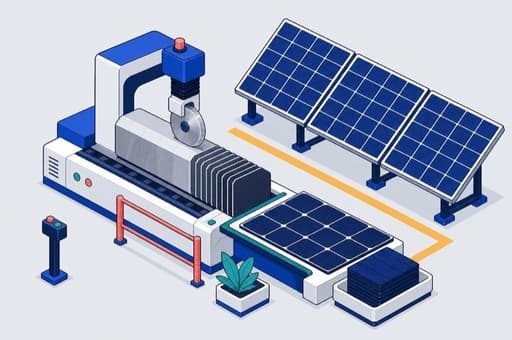
High-purity silicon and newer United States solar operations form a roughly 7–8% business. Solar sales rose from $370M in FY2026 Q1 to $438M in Q2, but cheap global supply can still squeeze material prices.
Competes with Hyperpure solar silicon (WACKER) · TaiRay silicon slices and Hi-MO panels (LONGi)
In plain English
Sunlight starts as factory work here. Corning's Hemlock operation makes extremely pure silicon, the raw material that is melted into solid blocks, sliced into thin squares, and turned into solar cells. Newer United States operations extend farther toward those slices and finished panels.
Solar manufacturers and buyers seeking locally made equipment pay for these materials. Corning earns on shipped silicon and other solar products, while government manufacturing credits can soften the cost of expanding at home. More solar installations help demand, but cheap global supply can still crush the price of the material. Watch power costs, trade rules, and factory output.
Life Sciences
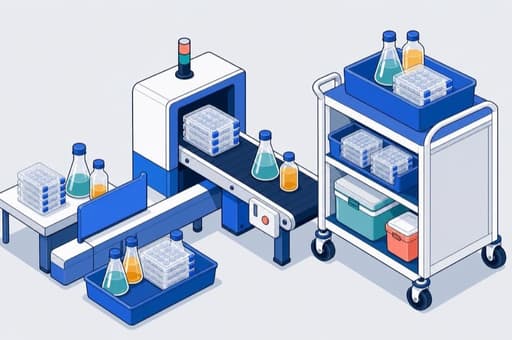
Everyday laboratory vessels and handling tools supplied $959M, or 6.1% of FY2025 revenue. This steady line follows research funding, medicine production, customer stock levels, and the ability to keep supplies sterile and consistent.
Competes with Nunc cell-growing laboratory vessels (Thermo Fisher) · CELLSTAR cell-growing vessels (Greiner Bio-One)
In plain English
The quiet repeat business comes in boxes of things a laboratory uses every day: dishes and flasks for growing cells, small plates for running many tests, tubes, and tools that move tiny amounts of liquid.
Drugmakers, research laboratories, hospitals, and distributors reorder these supplies as experiments and production continue. Corning gets paid per vessel or package shipped, much like a restaurant supplier selling a steady stream of containers rather than the meal itself. Growth follows research budgets and new medicines made from living cells; the work also depends on sterile, consistent production and on customers keeping normal inventories.


 Optical CommunicationsFiber and connection hardware for data centers and telecom networks supplied $6.27B, or 40.1% of FY2025 revenue. Artificial-intelligence sites are accelerating demand; watch whether large customer programs become steady shipments.
Fiber and connection hardware for data centers and telecom networks supplied $6.27B, or 40.1% of FY2025 revenue. Artificial-intelligence sites are accelerating demand; watch whether large customer programs become steady shipments.
In plain English
Most people never see Corning's biggest business. It makes the strands of glass that carry data, wraps them into dense cables, and adds the plugs, boxes, and cabinets needed to connect buildings and machines. One branch serves data centers and campuses; another serves phone and internet networks.
Cloud operators such as Meta, Amazon, and NVIDIA pay for more connections as they build sites packed with computers that train and run artificial intelligence. Carriers such as AT&T and Lumen buy fiber and connection gear for long-distance and neighborhood routes. Corning gets paid when the equipment ships, so signed programs matter only as factories fill and customers keep building.
Competes with Sirocco HD/XT cable (Prysmian) · WTC/Spider Web Ribbon cable (Fujikura)
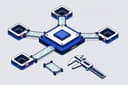 PhotonicsLight-based connections placed beside computer chips are not yet contributing sales. Corning wants Photonics to reach $10B of revenue in 2030; customer approval and reliable mass production stand between the demonstration and that goal.
Light-based connections placed beside computer chips are not yet contributing sales. Corning wants Photonics to reach $10B of revenue in 2030; customer approval and reliable mass production stand between the demonstration and that goal.
In plain English
Here the fiber keeps moving inward. Photonics means carrying information as flashes of light right up to the computer chip, replacing some short copper paths that use more power as machines get faster. Corning is developing the tiny fiber arrays, bendable strands, and trays that make those close connections possible.
The likely buyers are the companies that assemble switches and computing systems for enormous artificial-intelligence sites. Corning would make money by supplying more glass connections around each chip, but customers still must approve the designs and factories must learn to make them reliably at scale. For now this is a promised next act, not current sales.
Competes with FlexBeamGuidE-UM fiber array (Sumitomo Electric) · Socketed light links beside chips (Coherent)
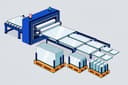 DisplayUltra-thin glass bases for televisions, monitors, laptops, tablets, and phones supplied $2.96B, or 19.0% of FY2025 revenue. Screen area, factory activity, and price determine whether this mature business grows.
Ultra-thin glass bases for televisions, monitors, laptops, tablets, and phones supplied $2.96B, or 19.0% of FY2025 revenue. Screen area, factory activity, and price determine whether this mature business grows.
In plain English
A television screen begins with a nearly invisible sheet of glass. Corning makes that thin, flat base for factories that build screens, from giant televisions down to phones and tablets. The glass must stay smooth and stable while many layers are added.
Asian screen makers buy huge sheets and cut them into many panels. Corning earns when those sheets ship; the economics improve when factories run full and each sheet yields more usable screen area. Demand rises with the total area of screens sold, but pricing and reliance on a few large buyers can move results quickly.
Competes with Alkali-free display glass (AGC) · OA-11 display glass (Nippon Electric Glass)
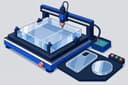 Specialty MaterialsProtective device glass and precision optical materials together supplied $2.19B, or 14.0% of FY2025 revenue. Apple's dedicated Kentucky line supports the cover-glass side; device demand and advanced-equipment builds remain the watchpoints.
Protective device glass and precision optical materials together supplied $2.19B, or 14.0% of FY2025 revenue. Apple's dedicated Kentucky line supports the cover-glass side; device demand and advanced-equipment builds remain the watchpoints.
In plain English
The same glass know-how goes in two very different directions. Corning strengthens thin covers that protect phones, watches, tablets, and notebooks, and it also makes exceptionally stable, pure glass for chip-making machines, telescopes, and precision equipment.
Device makers pay for covers that survive drops and scratches without becoming bulky; Apple is building around a dedicated Kentucky supply line. Equipment makers pay because tiny shape or temperature changes can ruin delicate work. In both cases Corning sells a manufactured part, not a license. The watchpoints are device demand, customer approvals, and the hard job of repeating an exact recipe in high-volume factories.
Competes with Dragontrail cover glass (AGC) · Xensation cover glass (SCHOTT) · ZERODUR glass-ceramic (SCHOTT) · SUPRASIL pure optical glass (Heraeus)
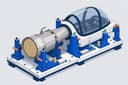 AutomotiveExhaust-cleaning ceramics and shaped cockpit glass supplied $1.78B, or 11.4% of FY2025 revenue. Sales have stayed broadly flat; electric vehicles shrink the exhaust opportunity while larger dashboard screens offer a counterweight.
Exhaust-cleaning ceramics and shaped cockpit glass supplied $1.78B, or 11.4% of FY2025 revenue. Sales have stayed broadly flat; electric vehicles shrink the exhaust opportunity while larger dashboard screens offer a counterweight.
In plain English
Under a car, Corning's ceramic honeycomb sits in the exhaust system and gives pollution-cleaning material a large surface to work on; filters catch soot before it reaches the air. The same business also sells tough, shaped glass for dashboard screens.
Exhaust-system suppliers buy the ceramic parts, although carmakers choose what goes into each vehicle design. Carmakers and their suppliers also pay for larger, curved cockpit displays. Corning earns with each vehicle program shipped. Tougher pollution rules help the older ceramic line, while electric vehicles remove the exhaust pipe entirely, making cockpit glass the natural counterweight.
Competes with HONEYCERAM exhaust filters (NGK) · Diesel particulate filters (Ibiden)
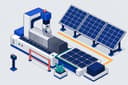 SolarHigh-purity silicon and newer United States solar operations form a roughly 7–8% business. Solar sales rose from $370M in FY2026 Q1 to $438M in Q2, but cheap global supply can still squeeze material prices.
High-purity silicon and newer United States solar operations form a roughly 7–8% business. Solar sales rose from $370M in FY2026 Q1 to $438M in Q2, but cheap global supply can still squeeze material prices.
In plain English
Sunlight starts as factory work here. Corning's Hemlock operation makes extremely pure silicon, the raw material that is melted into solid blocks, sliced into thin squares, and turned into solar cells. Newer United States operations extend farther toward those slices and finished panels.
Solar manufacturers and buyers seeking locally made equipment pay for these materials. Corning earns on shipped silicon and other solar products, while government manufacturing credits can soften the cost of expanding at home. More solar installations help demand, but cheap global supply can still crush the price of the material. Watch power costs, trade rules, and factory output.
Competes with Hyperpure solar silicon (WACKER) · TaiRay silicon slices and Hi-MO panels (LONGi)
 Life SciencesEveryday laboratory vessels and handling tools supplied $959M, or 6.1% of FY2025 revenue. This steady line follows research funding, medicine production, customer stock levels, and the ability to keep supplies sterile and consistent.
Everyday laboratory vessels and handling tools supplied $959M, or 6.1% of FY2025 revenue. This steady line follows research funding, medicine production, customer stock levels, and the ability to keep supplies sterile and consistent.
In plain English
The quiet repeat business comes in boxes of things a laboratory uses every day: dishes and flasks for growing cells, small plates for running many tests, tubes, and tools that move tiny amounts of liquid.
Drugmakers, research laboratories, hospitals, and distributors reorder these supplies as experiments and production continue. Corning gets paid per vessel or package shipped, much like a restaurant supplier selling a steady stream of containers rather than the meal itself. Growth follows research budgets and new medicines made from living cells; the work also depends on sterile, consistent production and on customers keeping normal inventories.
Competes with Nunc cell-growing laboratory vessels (Thermo Fisher) · CELLSTAR cell-growing vessels (Greiner Bio-One)
Named in filings, launches and programs
- Enterprise NetworksProduct line · RampingDense fiber, cable, connectors, and cabinets for data centers and campuses—the fast-growing half of Optical Communications.
- Carrier NetworksProduct lineFiber, cable, and street-side connection hardware for phone-company backbone, neighborhood broadband, and mobile-network routes.
- Corning® Gorilla® GlassBrand · RampingStrengthened cover material for phones, watches, tablets, and notebooks, anchored by Apple's dedicated Kentucky production line.
- Advanced Optics and Other Specialty GlassProduct linePure, shape-stable glass for chip-making machines, astronomy, aerospace, defense, and other precision optical equipment.
- Corning® GlassWorks AI™ SolutionsEcosystemThe umbrella joining Corning's fiber, cable, connections, strands with many light paths, and chip-adjacent products for artificial-intelligence sites.
- Meta AI data-center agreementCustomer program · RampingA multiyear program worth up to $6B for United States-made fiber, cable, and connection gear.
- NVIDIA AI-infrastructure partnershipCustomer program · RampingA long-term technology and manufacturing program supporting a tenfold expansion of United States optical-connection capacity.
- Amazon data-center fiber agreementCustomer program · AnnouncedA multiyear, multibillion-dollar fiber, cable, and connection program tied to Corning's North Carolina expansion.
- Lumen Gen-AI fiber and cable agreementCustomer programLumen reserved 10% of Corning's worldwide fiber-cable capacity for the two years ending in 2026.
- AT&T Evolv® purchase agreementCustomer programCorning's largest communications customer signed a multiyear agreement above $1B with preferred access to network equipment.
- Zayo long-term fiber supply agreementCustomer program · AnnouncedA supply commitment covering a significant portion of Zayo's fiber needs through the end of the decade.
- Apple–Corning U.S. cover-glass programCustomer program · RampingApple committed $2.5B to a dedicated Kentucky line for iPhone and Apple Watch cover glass.
- Pharmaceutical TechnologiesProduct lineGlass tubing and vials for medicines, carried inside Corning's smaller emerging businesses.
Enterprise NetworksProduct line · Ramping
Dense fiber, cable, connectors, and cabinets for data centers and campuses—the fast-growing half of Optical Communications.
Carrier NetworksProduct line
Fiber, cable, and street-side connection hardware for phone-company backbone, neighborhood broadband, and mobile-network routes.
Corning® Gorilla® GlassBrand · Ramping
Strengthened cover material for phones, watches, tablets, and notebooks, anchored by Apple's dedicated Kentucky production line.
Advanced Optics and Other Specialty GlassProduct line
Pure, shape-stable glass for chip-making machines, astronomy, aerospace, defense, and other precision optical equipment.
Corning® GlassWorks AI™ SolutionsEcosystem
The umbrella joining Corning's fiber, cable, connections, strands with many light paths, and chip-adjacent products for artificial-intelligence sites.
Meta AI data-center agreementCustomer program · Ramping
A multiyear program worth up to $6B for United States-made fiber, cable, and connection gear.
NVIDIA AI-infrastructure partnershipCustomer program · Ramping
A long-term technology and manufacturing program supporting a tenfold expansion of United States optical-connection capacity.
Amazon data-center fiber agreementCustomer program · Announced
A multiyear, multibillion-dollar fiber, cable, and connection program tied to Corning's North Carolina expansion.
Lumen Gen-AI fiber and cable agreementCustomer program
Lumen reserved 10% of Corning's worldwide fiber-cable capacity for the two years ending in 2026.
AT&T Evolv® purchase agreementCustomer program
Corning's largest communications customer signed a multiyear agreement above $1B with preferred access to network equipment.
Zayo long-term fiber supply agreementCustomer program · Announced
A supply commitment covering a significant portion of Zayo's fiber needs through the end of the decade.
Apple–Corning U.S. cover-glass programCustomer program · Ramping
Apple committed $2.5B to a dedicated Kentucky line for iPhone and Apple Watch cover glass.
Pharmaceutical TechnologiesProduct line
Glass tubing and vials for medicines, carried inside Corning's smaller emerging businesses.