
General Motors (GM)
Builds Chevrolet, GMC, Buick, and Cadillac vehicles and finances buyers and dealers.
Something off on this page? Send us feedback.
General Motors is still overwhelmingly a North American vehicle maker, with big gasoline-powered trucks and family SUVs paying for nearly everything else. Financing adds steady income around each sale. Electric vehicles are being resized after demand fell short of earlier plans, while connected services and personal driving technology are becoming the quieter long-term bet.
Item facts: FY2025 · year ended Dec 31, 2025, from filings, earnings calls and company pages.
Judgment weights, not filed revenue
The band summarizes business focus and direction. ~ marks estimates.
9 in detail · 14 more below
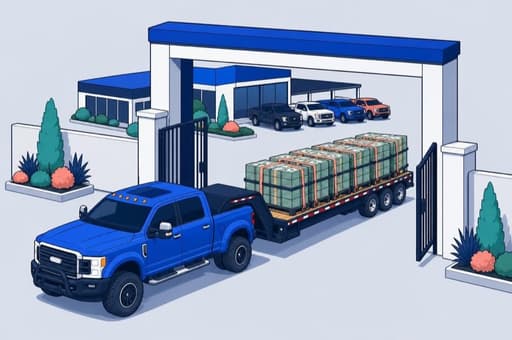
Chevrolet Silverado and GMC Sierra
GM's biggest product family sold roughly 926,000 gasoline and diesel trucks in the U.S. during 2025. These high-value workhorses remain a main source of profit; demand, discounts and import costs are the watchpoints.
Competes with F-Series (Ford) · Ram 1500/2500/3500 (Stellantis)
In plain English
This is the workhorse at the center of GM: large pickups bought by households, tradespeople and fleets for hauling, towing and everyday driving. Chevrolet and GMC dress the same basic job for different buyers, from practical work trucks to expensive family vehicles.
GM builds them and sells them to independent dealers, which then sell or lease them to drivers. Each truck can also lead to a loan, accessories, repairs and replacement parts. Keeping factories busy matters because an assembly plant costs plenty even when fewer trucks leave the line.
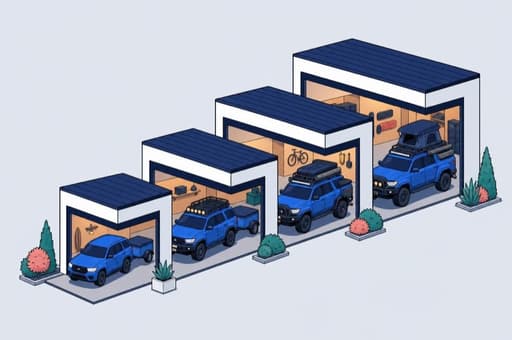
Tahoe, Suburban, Yukon and Escalade
Four large, truck-based SUVs delivered about 315,000 gasoline and diesel vehicles in the U.S. during 2025. Their higher prices make them unusually important; watch whether buyers keep choosing size and towing ability despite fuel and rule changes.
Competes with Expedition (Ford) · Sequoia (Toyota)
In plain English
Bigger families and towing buyers want the room of a three-row SUV without giving up the strength of a truck. GM answers with four versions that climb from mainstream Chevrolet to luxury Cadillac, all serving the same broad need at different prices.
Dealers buy these SUVs from GM and sell them to households, often with financing and added features. The upper-priced models can bring in more money per vehicle, while sharing their basic structure with GM's trucks helps spread factory and engineering costs across two popular families.
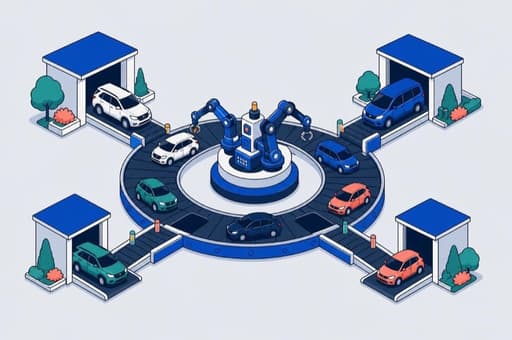
Chevrolet, Buick, GMC and Cadillac ICE Crossovers
The broad family-vehicle range produced about 1.16 million U.S. gasoline and diesel deliveries in 2025. It supplies enormous volume but was not growing in the latest quarter; monthly payments and discounting matter most.
Competes with RAV4, Corolla Cross and Highlander (Toyota) · Escape and Explorer (Ford)
In plain English
Think of these as roomy family vehicles built more like cars than work trucks. The range runs from the everyday Chevrolet Equinox through Buick and GMC models to Cadillac's more expensive choices, letting GM meet similar needs at several budgets.
GM earns when dealers stock the vehicles, and buyers keep the system moving through purchases, leases, repairs and eventual replacement. This is a scale business: shared factories and components help, but profits can thin quickly if GM must offer bigger discounts or if plants run below capacity.
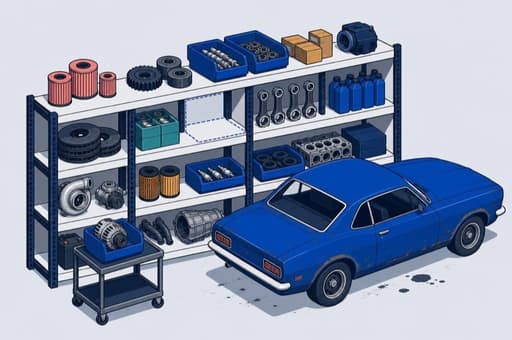
GM Genuine Parts and ACDelco
Replacement and repair parts contribute an estimated three cents of each sales dollar. Their strength is repetition after the original car sale; watch vehicle age, parts availability and how easy GM vehicles are to repair.
Competes with Mopar Genuine Parts (Stellantis) · Ford Parts (Ford)
In plain English
Cars keep needing filters, brakes, batteries and replacement pieces long after they leave the showroom. GM Genuine Parts focuses on parts made for GM vehicles, while ACDelco also reaches some vehicles made by others.
Owners, repair shops and fleets buy these pieces through dealers, distributors and service locations. It works like a pantry that must be restocked whenever something wears out or breaks: the installed fleet creates repeat demand even in a slow year for new-car sales, though GM does not separately disclose the line's exact sales.
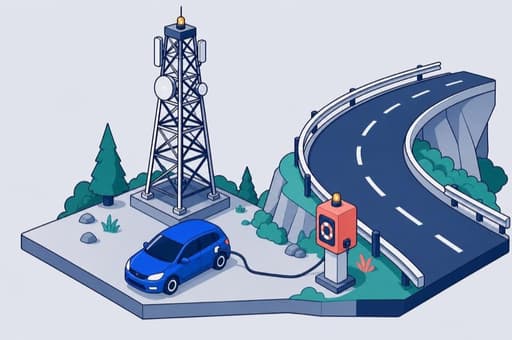
OnStar and Super Cruise
OnStar connects cars to safety and remote services; Super Cruise lets drivers take their hands off on approved roads while still watching. By mid-2026, GM held $6.3 billion in payments tied to services still to be delivered; renewals are the test.
Competes with BlueCruise (Ford) · Full Self-Driving (Supervised) (Tesla)
In plain English
OnStar is the helpful connection built into a GM vehicle: it can call for assistance, provide directions, unlock a car remotely or support a fleet. Super Cruise is the paid driving helper that steers on approved roads while the driver keeps watching.
Some service comes bundled with a new vehicle, then owners or businesses can keep paying after the included period ends. That turns a one-time car sale into a continuing relationship. The economics depend on drivers finding the features useful enough to renew, and on wireless links and mapped roads working reliably.

Personal Autonomous Vehicles
Selected technology and engineers from the closed Cruise taxi effort now work on self-driving features for personally owned GM vehicles. There are no reported customer sales; the question is when safe, affordable features reach GM cars people can buy.
Competes with Full Self-Driving (Supervised) (Tesla) · Waymo Driver (Alphabet)
In plain English
After closing its driverless-taxi business, GM kept some of its computer driving know-how and moved it into the main vehicle operation. The aim is now personal cars that can handle more of the driving task, rather than a fleet of driverless taxis.
For now this is development work, not a paying business. GM would eventually need to put the technology into its own vehicles and persuade buyers to pay for it, while proving that the system is safe and meeting road rules. Hardware cost and the lack of a stated launch date keep the payoff uncertain.
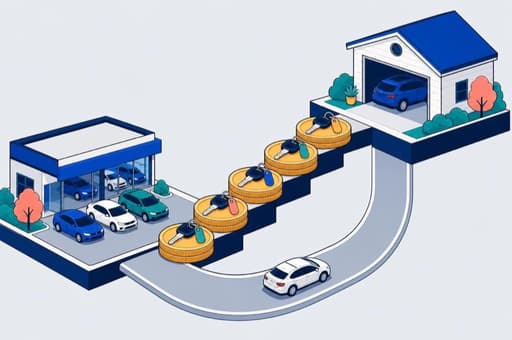
GM Financial
GM's lending and leasing arm brought in $17.06 billion during FY2025 and also helps dealers stock vehicles. Its job is to make purchases easier and send cash back to GM; borrowing costs, missed payments and used-car values can change the result.
Competes with Ally Auto (Ally Financial) · Ford Credit (Ford Motor)
In plain English
A car sale often needs money before it needs metal. GM Financial lends to drivers, leases them vehicles and finances the inventory sitting on dealer lots, so it helps turn shoppers into buyers while earning interest, lease payments and fees.
The business borrows large sums, then lends or leases at terms meant to leave a profit after funding costs and losses. It is like owning both the shop's payment plan and part of the stockroom bill. When customers fall behind or returned leased cars are worth less than expected, that profit can shrink.
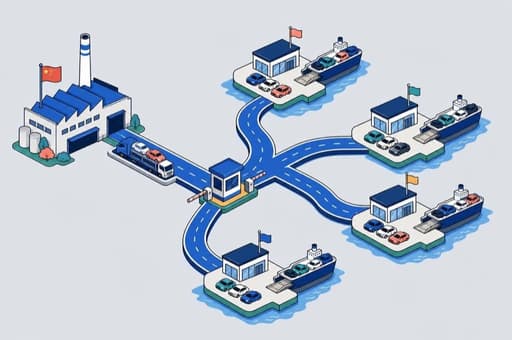
GM International
This is GM's smaller sales engine outside North America, led mainly by Chevrolet. Sales grew 13.9% in the first half of 2026, but China remains difficult and much of its scale there does not enter GM's sales total.
Competes with Corolla Cross (Toyota) · T-Cross (Volkswagen)
In plain English
Outside North America, GM mainly sells Chevrolet vehicles through regional plants and thousands of dealers. Brazil and other markets contribute directly, while China works differently: GM shares large local vehicle businesses with SAIC, a Chinese automaker.
GM makes money when its international operation sells vehicles and parts to dealers. In the Chinese businesses it co-owns, the partners' sales do not enter GM's sales total; GM receives only its portion of the profit or loss. Currency swings, local rules and the health of each country's car market all shape what comes back.
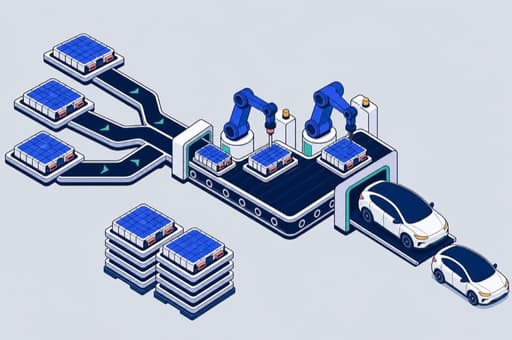
GM North America EV Portfolio
GM delivered about 170,000 electric vehicles in the U.S. during 2025, a small base beside its gasoline range. Earlier demand hopes proved too high, so GM is reducing planned output and supplier orders while trying to cut losses.
Competes with Model Y (Tesla) · Mustang Mach-E (Ford)
In plain English
Here is GM's broad electric lineup, from Chevrolet family vehicles and pickups through Cadillac luxury models, GMC trucks and BrightDrop commercial vans. Batteries replace the engine and fuel tank, but buyers still purchase through GM's familiar dealer network.
GM earns on each vehicle sold to a dealer, while battery costs, factory use and sales discounts decide whether those sales make money. The difficult part is matching expensive factories and battery orders to real demand. GM built for a faster market than arrived, so this phase is as much about shrinking waste as growing sales.


 Chevrolet Silverado and GMC SierraGM's biggest product family sold roughly 926,000 gasoline and diesel trucks in the U.S. during 2025. These high-value workhorses remain a main source of profit; demand, discounts and import costs are the watchpoints.
GM's biggest product family sold roughly 926,000 gasoline and diesel trucks in the U.S. during 2025. These high-value workhorses remain a main source of profit; demand, discounts and import costs are the watchpoints.
In plain English
This is the workhorse at the center of GM: large pickups bought by households, tradespeople and fleets for hauling, towing and everyday driving. Chevrolet and GMC dress the same basic job for different buyers, from practical work trucks to expensive family vehicles.
GM builds them and sells them to independent dealers, which then sell or lease them to drivers. Each truck can also lead to a loan, accessories, repairs and replacement parts. Keeping factories busy matters because an assembly plant costs plenty even when fewer trucks leave the line.
Competes with F-Series (Ford) · Ram 1500/2500/3500 (Stellantis)
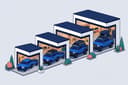 Tahoe, Suburban, Yukon and EscaladeFour large, truck-based SUVs delivered about 315,000 gasoline and diesel vehicles in the U.S. during 2025. Their higher prices make them unusually important; watch whether buyers keep choosing size and towing ability despite fuel and rule changes.
Four large, truck-based SUVs delivered about 315,000 gasoline and diesel vehicles in the U.S. during 2025. Their higher prices make them unusually important; watch whether buyers keep choosing size and towing ability despite fuel and rule changes.
In plain English
Bigger families and towing buyers want the room of a three-row SUV without giving up the strength of a truck. GM answers with four versions that climb from mainstream Chevrolet to luxury Cadillac, all serving the same broad need at different prices.
Dealers buy these SUVs from GM and sell them to households, often with financing and added features. The upper-priced models can bring in more money per vehicle, while sharing their basic structure with GM's trucks helps spread factory and engineering costs across two popular families.
Competes with Expedition (Ford) · Sequoia (Toyota)
 Chevrolet, Buick, GMC and Cadillac ICE CrossoversThe broad family-vehicle range produced about 1.16 million U.S. gasoline and diesel deliveries in 2025. It supplies enormous volume but was not growing in the latest quarter; monthly payments and discounting matter most.
The broad family-vehicle range produced about 1.16 million U.S. gasoline and diesel deliveries in 2025. It supplies enormous volume but was not growing in the latest quarter; monthly payments and discounting matter most.
In plain English
Think of these as roomy family vehicles built more like cars than work trucks. The range runs from the everyday Chevrolet Equinox through Buick and GMC models to Cadillac's more expensive choices, letting GM meet similar needs at several budgets.
GM earns when dealers stock the vehicles, and buyers keep the system moving through purchases, leases, repairs and eventual replacement. This is a scale business: shared factories and components help, but profits can thin quickly if GM must offer bigger discounts or if plants run below capacity.
Competes with RAV4, Corolla Cross and Highlander (Toyota) · Escape and Explorer (Ford)
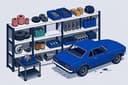 GM Genuine Parts and ACDelcoReplacement and repair parts contribute an estimated three cents of each sales dollar. Their strength is repetition after the original car sale; watch vehicle age, parts availability and how easy GM vehicles are to repair.
Replacement and repair parts contribute an estimated three cents of each sales dollar. Their strength is repetition after the original car sale; watch vehicle age, parts availability and how easy GM vehicles are to repair.
In plain English
Cars keep needing filters, brakes, batteries and replacement pieces long after they leave the showroom. GM Genuine Parts focuses on parts made for GM vehicles, while ACDelco also reaches some vehicles made by others.
Owners, repair shops and fleets buy these pieces through dealers, distributors and service locations. It works like a pantry that must be restocked whenever something wears out or breaks: the installed fleet creates repeat demand even in a slow year for new-car sales, though GM does not separately disclose the line's exact sales.
Competes with Mopar Genuine Parts (Stellantis) · Ford Parts (Ford)
 OnStar and Super CruiseOnStar connects cars to safety and remote services; Super Cruise lets drivers take their hands off on approved roads while still watching. By mid-2026, GM held $6.3 billion in payments tied to services still to be delivered; renewals are the test.
OnStar connects cars to safety and remote services; Super Cruise lets drivers take their hands off on approved roads while still watching. By mid-2026, GM held $6.3 billion in payments tied to services still to be delivered; renewals are the test.
In plain English
OnStar is the helpful connection built into a GM vehicle: it can call for assistance, provide directions, unlock a car remotely or support a fleet. Super Cruise is the paid driving helper that steers on approved roads while the driver keeps watching.
Some service comes bundled with a new vehicle, then owners or businesses can keep paying after the included period ends. That turns a one-time car sale into a continuing relationship. The economics depend on drivers finding the features useful enough to renew, and on wireless links and mapped roads working reliably.
Competes with BlueCruise (Ford) · Full Self-Driving (Supervised) (Tesla)
 Personal Autonomous VehiclesSelected technology and engineers from the closed Cruise taxi effort now work on self-driving features for personally owned GM vehicles. There are no reported customer sales; the question is when safe, affordable features reach GM cars people can buy.
Selected technology and engineers from the closed Cruise taxi effort now work on self-driving features for personally owned GM vehicles. There are no reported customer sales; the question is when safe, affordable features reach GM cars people can buy.
In plain English
After closing its driverless-taxi business, GM kept some of its computer driving know-how and moved it into the main vehicle operation. The aim is now personal cars that can handle more of the driving task, rather than a fleet of driverless taxis.
For now this is development work, not a paying business. GM would eventually need to put the technology into its own vehicles and persuade buyers to pay for it, while proving that the system is safe and meeting road rules. Hardware cost and the lack of a stated launch date keep the payoff uncertain.
Competes with Full Self-Driving (Supervised) (Tesla) · Waymo Driver (Alphabet)
 GM FinancialGM's lending and leasing arm brought in $17.06 billion during FY2025 and also helps dealers stock vehicles. Its job is to make purchases easier and send cash back to GM; borrowing costs, missed payments and used-car values can change the result.
GM's lending and leasing arm brought in $17.06 billion during FY2025 and also helps dealers stock vehicles. Its job is to make purchases easier and send cash back to GM; borrowing costs, missed payments and used-car values can change the result.
In plain English
A car sale often needs money before it needs metal. GM Financial lends to drivers, leases them vehicles and finances the inventory sitting on dealer lots, so it helps turn shoppers into buyers while earning interest, lease payments and fees.
The business borrows large sums, then lends or leases at terms meant to leave a profit after funding costs and losses. It is like owning both the shop's payment plan and part of the stockroom bill. When customers fall behind or returned leased cars are worth less than expected, that profit can shrink.
Competes with Ally Auto (Ally Financial) · Ford Credit (Ford Motor)
 GM InternationalThis is GM's smaller sales engine outside North America, led mainly by Chevrolet. Sales grew 13.9% in the first half of 2026, but China remains difficult and much of its scale there does not enter GM's sales total.
This is GM's smaller sales engine outside North America, led mainly by Chevrolet. Sales grew 13.9% in the first half of 2026, but China remains difficult and much of its scale there does not enter GM's sales total.
In plain English
Outside North America, GM mainly sells Chevrolet vehicles through regional plants and thousands of dealers. Brazil and other markets contribute directly, while China works differently: GM shares large local vehicle businesses with SAIC, a Chinese automaker.
GM makes money when its international operation sells vehicles and parts to dealers. In the Chinese businesses it co-owns, the partners' sales do not enter GM's sales total; GM receives only its portion of the profit or loss. Currency swings, local rules and the health of each country's car market all shape what comes back.
Competes with Corolla Cross (Toyota) · T-Cross (Volkswagen)
 GM North America EV PortfolioGM delivered about 170,000 electric vehicles in the U.S. during 2025, a small base beside its gasoline range. Earlier demand hopes proved too high, so GM is reducing planned output and supplier orders while trying to cut losses.
GM delivered about 170,000 electric vehicles in the U.S. during 2025, a small base beside its gasoline range. Earlier demand hopes proved too high, so GM is reducing planned output and supplier orders while trying to cut losses.
In plain English
Here is GM's broad electric lineup, from Chevrolet family vehicles and pickups through Cadillac luxury models, GMC trucks and BrightDrop commercial vans. Batteries replace the engine and fuel tank, but buyers still purchase through GM's familiar dealer network.
GM earns on each vehicle sold to a dealer, while battery costs, factory use and sales discounts decide whether those sales make money. The difficult part is matching expensive factories and battery orders to real demand. GM built for a faster market than arrived, so this phase is as much about shrinking waste as growing sales.
Competes with Model Y (Tesla) · Mustang Mach-E (Ford)
Named in filings, launches and programs
- Chevrolet Colorado and GMC CanyonProduct lineSmaller pickups with roughly 144,000 combined U.S. deliveries in 2025, extending GM's truck range below Silverado and Sierra.
- Chevrolet CorvetteProductThe performance-car outlier in GM's range, with roughly 25,000 U.S. deliveries in 2025.
- Chevrolet Express, GMC Savana and Chevrolet Low Cab ForwardProduct lineVans and cab-forward trucks built for work fleets rather than household buyers.
- GM Envolve and GM FleetEcosystemCommercial sales and service channels that package GM vehicles and support for business and government fleets.
- Used vehiclesProduct lineReselling and handling used vehicles produced $1.74 billion of FY2025 revenue.
- GM Defense and Infantry Squad VehicleBrandMilitary vehicles and power systems; a Lockheed Martin cooperation agreement names possibilities but carries no awarded revenue.
- GM EnergyEcosystemHome, fleet and grid products connect compatible GM electric vehicles with charging and energy storage.
- GM InsuranceServiceAn insurance offer attached to GM vehicle ownership; GM does not disclose its sales separately.
- GM Powered SolutionsProduct lineSells GM-built engines, motors and related components for equipment made by outside companies.
- Hyundai co-developed vehicle programCustomer program · AnnouncedFive jointly developed vehicles are targeted for 2028, including an electric commercial van for North America.
- Ultium CellsBrandBattery-cell plants co-owned with LG Energy Solution are being resized alongside GM's lower electric-vehicle production plan.
- Lithium Americas and Thacker Pass supplyEcosystemAn ownership-backed arrangement intended to supply GM with the mine's first-phase lithium output from 2027.
- Procura critical-inventory programEcosystemFinances up to $4.5 billion of critical parts held by suppliers; it protects supply rather than creating customer sales.
- Pilot and EVgo charging networkEcosystemA partner fast-charging network with a few hundred public locations, helping make GM electric vehicles easier to use on trips.
Chevrolet Colorado and GMC CanyonProduct line
Smaller pickups with roughly 144,000 combined U.S. deliveries in 2025, extending GM's truck range below Silverado and Sierra.
Chevrolet CorvetteProduct
The performance-car outlier in GM's range, with roughly 25,000 U.S. deliveries in 2025.
Chevrolet Express, GMC Savana and Chevrolet Low Cab ForwardProduct line
Vans and cab-forward trucks built for work fleets rather than household buyers.
GM Envolve and GM FleetEcosystem
Commercial sales and service channels that package GM vehicles and support for business and government fleets.
Used vehiclesProduct line
Reselling and handling used vehicles produced $1.74 billion of FY2025 revenue.
GM Defense and Infantry Squad VehicleBrand
Military vehicles and power systems; a Lockheed Martin cooperation agreement names possibilities but carries no awarded revenue.
GM EnergyEcosystem
Home, fleet and grid products connect compatible GM electric vehicles with charging and energy storage.
GM InsuranceService
An insurance offer attached to GM vehicle ownership; GM does not disclose its sales separately.
GM Powered SolutionsProduct line
Sells GM-built engines, motors and related components for equipment made by outside companies.
Hyundai co-developed vehicle programCustomer program · Announced
Five jointly developed vehicles are targeted for 2028, including an electric commercial van for North America.
Ultium CellsBrand
Battery-cell plants co-owned with LG Energy Solution are being resized alongside GM's lower electric-vehicle production plan.
Lithium Americas and Thacker Pass supplyEcosystem
An ownership-backed arrangement intended to supply GM with the mine's first-phase lithium output from 2027.
Procura critical-inventory programEcosystem
Finances up to $4.5 billion of critical parts held by suppliers; it protects supply rather than creating customer sales.
Pilot and EVgo charging networkEcosystem
A partner fast-charging network with a few hundred public locations, helping make GM electric vehicles easier to use on trips.