
Hilton (HLT)
Franchises and manages a global hotel portfolio spanning luxury through extended stay.
Something off on this page? Send us feedback.
Hilton is mostly a hotel brand and operating system, not a hotel owner. Outside owners fund nearly all the buildings and much of the work; Hilton collects recurring fees for names, bookings, loyalty and management. It is becoming a broader travel network by adding rooms, partner hotels and new formats with other people's capital.
Item facts: FY2025 · year ended Dec 31, 2025, from filings, earnings calls and company pages.
Judgment weights, not filed revenue
The band summarizes business focus and direction. ~ marks estimates.
8 in detail · 14 more below
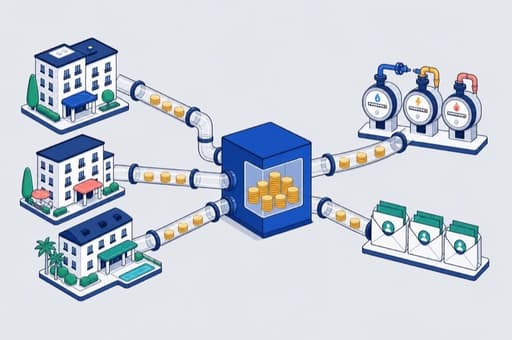
Cost reimbursement programs
Hotel owners paid Hilton $7.085 billion in FY2025 to cover staff and shared booking, marketing and technology costs. This giant line is meant to break even; watch whether later collections catch up with spending.
Competes with Program services and reimbursed expenses (Marriott International) · System Fund and reimbursables (IHG)
In plain English
Imagine several hotel owners sharing one reservations desk, advertising team and rewards program. Hilton pays the common bills, also covers payroll at hotels it manages, then collects the money back from the owners that use those services.
That repayment shows up as revenue even though it is not designed to make a profit. In FY2025, Hilton collected less than it spent because the timing did not line up; its contracts let it adjust later collections. The line grows with hotel count, wages and booking activity, but its main job is to keep the wider system running.
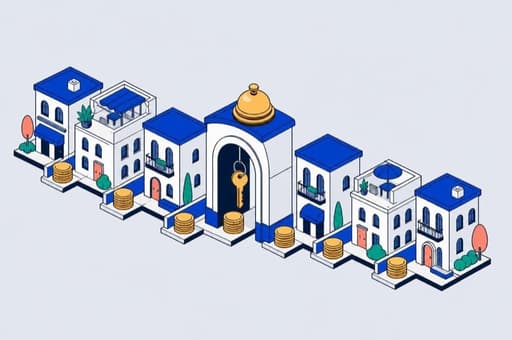
Franchise and licensing fees
These fees are Hilton's scalable profit engine. Nearly all of its roughly 541,000-room development pipeline at June 2026 was headed to fee businesses; watch how many planned rooms actually open and start paying.
Competes with Franchise and licensing fees (Marriott International) · Franchise fee business (IHG)
In plain English
Hilton usually sells permission to use its name rather than paying to build the hotel. An outside owner buys the land, puts up the building, hires the staff and carries the operating risk. Hilton supplies a known brand, standards, booking channels and access to its rewards members.
The owner pays an entry charge and then regular royalties tied mainly to room sales, often for a decade or two. Card partners, partner hotels and the separately owned Hilton Grand Vacations also pay licensing fees. Because new owners bring their own capital, each added room can widen Hilton's fee stream without Hilton buying another property.
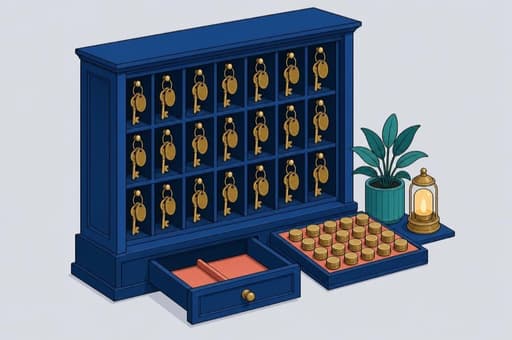
Hilton Honors
Hilton's rewards program had roughly 240 million members at FY2025. It steers guests toward Hilton's own booking channels; watch the cost of honoring points and whether those members keep staying.
Competes with Marriott Bonvoy (Marriott International) · IHG One Rewards (IHG)
In plain English
A hotel rewards account is a promise: stay or spend with a partner now, then trade the points for a room later. Hilton Honors uses that promise to bring travelers back and to nudge them toward booking directly with Hilton.
Hotels contribute money when members stay, while American Express and other partners also fund points. Hilton then pays hotels and partners when members redeem them, and covers administration and marketing. Membership makes the hotel network more useful to owners, but the headline count includes people who may not be active; unused points represented a $2.913 billion future obligation at year-end.
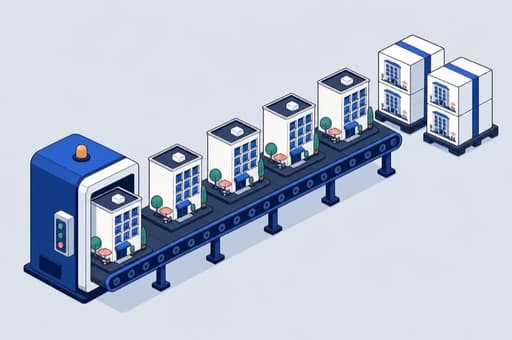
Hampton by Hilton
Hampton is Hilton's largest brand and almost all of its rooms are franchised. India partners target 200 more hotels; watch owner financing and demand from middle-income travelers.
Competes with Fairfield by Marriott (Marriott International) · Holiday Inn Express (IHG)
In plain English
The familiar, repeatable box in Hilton's lineup. Hampton gives travelers a predictable upper-midpriced stay and gives owners a standard hotel format they can build and run under a known name.
Owners supply the property, staff and construction money; Hilton supplies the design rules, reservations and Honors members, then collects franchise fees. That repeatability made Hampton about a quarter of Hilton's rooms at FY2025. Agreements with Regenta and NILE set paths for 125 and 75 hotels in India, but targets become fees only as owners finance, open and fill those properties.

Strategic partner hotels
Independent hotels add roughly 24,000 rooms to Hilton's booking and rewards network without handing over operations. The base is small but growing; watch integration quality and whether partnerships keep adding useful places to stay.
Competes with MGM Collection with Marriott Bonvoy (Marriott International) · Iberostar Beachfront Resorts (IHG)
In plain English
Not every room on Hilton's website wears a Hilton name. Independent operators such as Small Luxury Hotels can plug their properties into Hilton's booking system and let Honors members earn or spend points there, while keeping control of the hotel itself.
The operator gains access to Hilton's travelers and Hilton receives fees without taking on the building or daily work. AutoCamp adds outdoor stays, Explora Journeys adds cruises, and YOTEL was due to begin joining later in 2026. The trade-off is control: the network expands quickly, but Hilton depends on partners to deliver the promised experience.

Spark by Hilton
Spark turns existing lower-priced hotels into a Hilton format; it had roughly 20,000 rooms at FY2025, a small base. Its faster conversion route favors growth, while affordable-travel demand and owner credit remain the checks.
Competes with Quality Inn (Choice Hotels) · Baymont by Wyndham (Wyndham)
In plain English
An older roadside hotel does not always need to be demolished to join Hilton. Spark is a lower-priced format built for conversion: an owner renovates an existing property to a simpler Hilton standard, connects it to reservations and Honors, and reopens under the new name.
Hilton collects franchise fees while the owner pays for the work and runs the hotel. This can add rooms faster than waiting for a new building, especially when construction loans are hard to obtain. An agreement with Olive by Embassy targets 150 hotels in India, but Spark was still a small part of Hilton's system at FY2025.
Ownership
This is the small group where Hilton carries the property costs itself. One-third of the hotels generated over 80% of FY2025 hotel profit; watch renovations, how full the rooms stay and fixed costs.
Competes with Owned and leased hotels (Marriott International) · Owned and leased segment (Hyatt Hotels)
In plain English
Here Hilton owns or leases the hotel itself. Guests pay Hilton for rooms, meals, meetings and extras, but Hilton also carries the rent, staff and other property bills. That makes a busy hotel powerful and a quiet one painful in a way a royalty contract is not.
Only a tiny fraction of Hilton's worldwide rooms sit in this group, yet these hotels bring in much more revenue per room because Hilton collects the guest's whole bill. Earnings are concentrated in a small set of properties, and renovations were expected to weigh on the group in 2026.

Hotel management
Owners paid Hilton $689 million in FY2025 to run their hotels. The basic fee is steadier than the profit bonus, which weakened in mid-2026; watch hotel profitability and contract performance.
Competes with Hotel-management agreements (Marriott International) · Management fee business (Hyatt Hotels)
In plain English
Sometimes an owner has the building and money but wants Hilton to run the place. Hilton supplies the operating know-how and hotel teams, uses its reservations and rewards network to bring in guests, and manages the daily work under long contracts.
The owner keeps the hotel after paying its bills and Hilton's fee. Hilton usually earns a small cut of hotel sales, plus a bonus when profit clears the return promised to the owner. That bonus can swing even when room sales hold up, so strong occupancy alone does not guarantee that both parts of the fee rise together.


 Cost reimbursement programsHotel owners paid Hilton $7.085 billion in FY2025 to cover staff and shared booking, marketing and technology costs. This giant line is meant to break even; watch whether later collections catch up with spending.
Hotel owners paid Hilton $7.085 billion in FY2025 to cover staff and shared booking, marketing and technology costs. This giant line is meant to break even; watch whether later collections catch up with spending.
In plain English
Imagine several hotel owners sharing one reservations desk, advertising team and rewards program. Hilton pays the common bills, also covers payroll at hotels it manages, then collects the money back from the owners that use those services.
That repayment shows up as revenue even though it is not designed to make a profit. In FY2025, Hilton collected less than it spent because the timing did not line up; its contracts let it adjust later collections. The line grows with hotel count, wages and booking activity, but its main job is to keep the wider system running.
Competes with Program services and reimbursed expenses (Marriott International) · System Fund and reimbursables (IHG)
 Franchise and licensing feesThese fees are Hilton's scalable profit engine. Nearly all of its roughly 541,000-room development pipeline at June 2026 was headed to fee businesses; watch how many planned rooms actually open and start paying.
These fees are Hilton's scalable profit engine. Nearly all of its roughly 541,000-room development pipeline at June 2026 was headed to fee businesses; watch how many planned rooms actually open and start paying.
In plain English
Hilton usually sells permission to use its name rather than paying to build the hotel. An outside owner buys the land, puts up the building, hires the staff and carries the operating risk. Hilton supplies a known brand, standards, booking channels and access to its rewards members.
The owner pays an entry charge and then regular royalties tied mainly to room sales, often for a decade or two. Card partners, partner hotels and the separately owned Hilton Grand Vacations also pay licensing fees. Because new owners bring their own capital, each added room can widen Hilton's fee stream without Hilton buying another property.
Competes with Franchise and licensing fees (Marriott International) · Franchise fee business (IHG)
 Hilton HonorsHilton's rewards program had roughly 240 million members at FY2025. It steers guests toward Hilton's own booking channels; watch the cost of honoring points and whether those members keep staying.
Hilton's rewards program had roughly 240 million members at FY2025. It steers guests toward Hilton's own booking channels; watch the cost of honoring points and whether those members keep staying.
In plain English
A hotel rewards account is a promise: stay or spend with a partner now, then trade the points for a room later. Hilton Honors uses that promise to bring travelers back and to nudge them toward booking directly with Hilton.
Hotels contribute money when members stay, while American Express and other partners also fund points. Hilton then pays hotels and partners when members redeem them, and covers administration and marketing. Membership makes the hotel network more useful to owners, but the headline count includes people who may not be active; unused points represented a $2.913 billion future obligation at year-end.
Competes with Marriott Bonvoy (Marriott International) · IHG One Rewards (IHG)
 Hampton by HiltonHampton is Hilton's largest brand and almost all of its rooms are franchised. India partners target 200 more hotels; watch owner financing and demand from middle-income travelers.
Hampton is Hilton's largest brand and almost all of its rooms are franchised. India partners target 200 more hotels; watch owner financing and demand from middle-income travelers.
In plain English
The familiar, repeatable box in Hilton's lineup. Hampton gives travelers a predictable upper-midpriced stay and gives owners a standard hotel format they can build and run under a known name.
Owners supply the property, staff and construction money; Hilton supplies the design rules, reservations and Honors members, then collects franchise fees. That repeatability made Hampton about a quarter of Hilton's rooms at FY2025. Agreements with Regenta and NILE set paths for 125 and 75 hotels in India, but targets become fees only as owners finance, open and fill those properties.
Competes with Fairfield by Marriott (Marriott International) · Holiday Inn Express (IHG)
 Strategic partner hotelsIndependent hotels add roughly 24,000 rooms to Hilton's booking and rewards network without handing over operations. The base is small but growing; watch integration quality and whether partnerships keep adding useful places to stay.
Independent hotels add roughly 24,000 rooms to Hilton's booking and rewards network without handing over operations. The base is small but growing; watch integration quality and whether partnerships keep adding useful places to stay.
In plain English
Not every room on Hilton's website wears a Hilton name. Independent operators such as Small Luxury Hotels can plug their properties into Hilton's booking system and let Honors members earn or spend points there, while keeping control of the hotel itself.
The operator gains access to Hilton's travelers and Hilton receives fees without taking on the building or daily work. AutoCamp adds outdoor stays, Explora Journeys adds cruises, and YOTEL was due to begin joining later in 2026. The trade-off is control: the network expands quickly, but Hilton depends on partners to deliver the promised experience.
Competes with MGM Collection with Marriott Bonvoy (Marriott International) · Iberostar Beachfront Resorts (IHG)
 Spark by HiltonSpark turns existing lower-priced hotels into a Hilton format; it had roughly 20,000 rooms at FY2025, a small base. Its faster conversion route favors growth, while affordable-travel demand and owner credit remain the checks.
Spark turns existing lower-priced hotels into a Hilton format; it had roughly 20,000 rooms at FY2025, a small base. Its faster conversion route favors growth, while affordable-travel demand and owner credit remain the checks.
In plain English
An older roadside hotel does not always need to be demolished to join Hilton. Spark is a lower-priced format built for conversion: an owner renovates an existing property to a simpler Hilton standard, connects it to reservations and Honors, and reopens under the new name.
Hilton collects franchise fees while the owner pays for the work and runs the hotel. This can add rooms faster than waiting for a new building, especially when construction loans are hard to obtain. An agreement with Olive by Embassy targets 150 hotels in India, but Spark was still a small part of Hilton's system at FY2025.
Competes with Quality Inn (Choice Hotels) · Baymont by Wyndham (Wyndham)
 OwnershipThis is the small group where Hilton carries the property costs itself. One-third of the hotels generated over 80% of FY2025 hotel profit; watch renovations, how full the rooms stay and fixed costs.
This is the small group where Hilton carries the property costs itself. One-third of the hotels generated over 80% of FY2025 hotel profit; watch renovations, how full the rooms stay and fixed costs.
In plain English
Here Hilton owns or leases the hotel itself. Guests pay Hilton for rooms, meals, meetings and extras, but Hilton also carries the rent, staff and other property bills. That makes a busy hotel powerful and a quiet one painful in a way a royalty contract is not.
Only a tiny fraction of Hilton's worldwide rooms sit in this group, yet these hotels bring in much more revenue per room because Hilton collects the guest's whole bill. Earnings are concentrated in a small set of properties, and renovations were expected to weigh on the group in 2026.
Competes with Owned and leased hotels (Marriott International) · Owned and leased segment (Hyatt Hotels)
 Hotel managementOwners paid Hilton $689 million in FY2025 to run their hotels. The basic fee is steadier than the profit bonus, which weakened in mid-2026; watch hotel profitability and contract performance.
Owners paid Hilton $689 million in FY2025 to run their hotels. The basic fee is steadier than the profit bonus, which weakened in mid-2026; watch hotel profitability and contract performance.
In plain English
Sometimes an owner has the building and money but wants Hilton to run the place. Hilton supplies the operating know-how and hotel teams, uses its reservations and rewards network to bring in guests, and manages the daily work under long contracts.
The owner keeps the hotel after paying its bills and Hilton's fee. Hilton usually earns a small cut of hotel sales, plus a bonus when profit clears the return promised to the owner. That bonus can swing even when room sales hold up, so strong occupancy alone does not guarantee that both parts of the fee rise together.
Competes with Hotel-management agreements (Marriott International) · Management fee business (Hyatt Hotels)
Named in filings, launches and programs
- Hilton Hotels & ResortsBrandThe namesake full-service brand held roughly one-sixth of Hilton's rooms at FY2025.
- Hilton Garden InnBrandAn upscale, focused-service brand with roughly 166,000 rooms at FY2025.
- DoubleTree by HiltonBrandA full-service brand with roughly 160,000 rooms at FY2025.
- Home2 Suites by HiltonBrandAn extended-stay brand with roughly 95,000 rooms at FY2025.
- Embassy Suites by HiltonBrandAn all-suites brand with roughly 62,000 rooms at FY2025.
- Waldorf Astoria Hotels & ResortsBrandA luxury brand with nearly 10,000 rooms; revenue per available room rose 9.7% in FY2025.
- Curio Collection by HiltonBrandA collection brand with roughly 38,000 rooms at FY2025.
- Graduate by HiltonBrandA college-market brand bought in 2024, with 35 hotels at FY2025.
- NoMadBrandA luxury lifestyle brand controlled through Sydell Group, with one managed hotel at FY2025.
- Apartment Collection by HiltonBrand · RampingFurnished apartments launched with Placemakr in 2026, initially offering up to 3,000 units.
- Undergraduate by HiltonBrand · AnnouncedA university-market hotel brand announced in 2026, with stays promoted as coming in 2027.
- Hilton AI PlannerProductA website trip-planning helper opened broadly in beta in 2026; Hilton discloses no sales from it.
- Hilton Grand Vacations licenseEcosystemA long-term name and Honors relationship with the separately owned timeshare company; fees sit inside franchise and licensing revenue.
- Purchasing operationsServiceHotel purchasing services contribute to $252 million of other sales, but Hilton does not split their amount.
Hilton Hotels & ResortsBrand
The namesake full-service brand held roughly one-sixth of Hilton's rooms at FY2025.
Hilton Garden InnBrand
An upscale, focused-service brand with roughly 166,000 rooms at FY2025.
DoubleTree by HiltonBrand
A full-service brand with roughly 160,000 rooms at FY2025.
Home2 Suites by HiltonBrand
An extended-stay brand with roughly 95,000 rooms at FY2025.
Embassy Suites by HiltonBrand
An all-suites brand with roughly 62,000 rooms at FY2025.
Waldorf Astoria Hotels & ResortsBrand
A luxury brand with nearly 10,000 rooms; revenue per available room rose 9.7% in FY2025.
Curio Collection by HiltonBrand
A collection brand with roughly 38,000 rooms at FY2025.
Graduate by HiltonBrand
A college-market brand bought in 2024, with 35 hotels at FY2025.
NoMadBrand
A luxury lifestyle brand controlled through Sydell Group, with one managed hotel at FY2025.
Apartment Collection by HiltonBrand · Ramping
Furnished apartments launched with Placemakr in 2026, initially offering up to 3,000 units.
Undergraduate by HiltonBrand · Announced
A university-market hotel brand announced in 2026, with stays promoted as coming in 2027.
Hilton AI PlannerProduct
A website trip-planning helper opened broadly in beta in 2026; Hilton discloses no sales from it.
Hilton Grand Vacations licenseEcosystem
A long-term name and Honors relationship with the separately owned timeshare company; fees sit inside franchise and licensing revenue.
Purchasing operationsService
Hotel purchasing services contribute to $252 million of other sales, but Hilton does not split their amount.