
Honeywell Aerospace (HONA)
Supplying nose-to-tail aerospace systems and long-duration aftermarket support.
Something off on this page? Send us feedback.
Honeywell Aerospace makes the pieces other companies bolt into aircraft: cockpit electronics, engines and tail power units, brakes, air and cooling systems, navigation gear. Winning a slot on a new plane is only the entry ticket — most of the money arrives later, as spares, repairs and upgrades for jets that fly for decades. Newly standing on its own, its limit right now is not orders but its own suppliers' output.
Item facts: FY2025 · year ended Dec 31, 2025, from filings, earnings calls and company pages.
Judgment weights, not filed revenue
The band summarizes business focus and direction. ~ marks estimates.
10 in detail · 17 more below
Commercial Aftermarket and Services
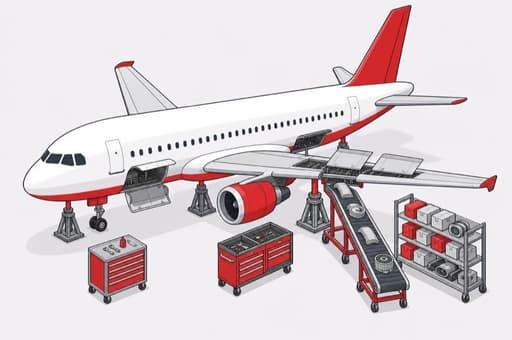
Spares, certified used parts, shop repairs, overhauls and flat-rate service plans for jets already flying — about $7.7B last year, up 12%. Watch the squeeze: scarce parts are being steered to new-build orders, which cut this year's service growth to low-to-mid single digits.
Competes with Aftermarket parts and predictive maintenance (Collins Aerospace (RTX)) · Engine services and spares (GE Aerospace) · Approved copy parts and repair fixes (Independent repair shops)
In plain English
Think of a firm that sells the pump for a well cheaply, then sells every replacement seal for the next thirty years. Honeywell equipment sits on roughly nine in ten of the world's aircraft, and aircraft are inspected, repaired and re-fitted constantly — some 65,000 of them out there flying.
Airlines and business-jet operators pay for new spares, for used parts Honeywell has certified as good, for shop visits when something comes off the wing, and for plans that cover maintenance by the flight hour. They keep paying because a replacement has to match what is already bolted on, and because the inspections are not optional.
Retrofits, Modifications and Upgrades
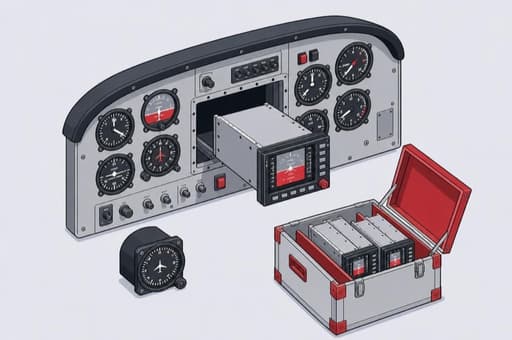
Kits that give an old aircraft new capability: about $1.5B in 2024, roughly a tenth of sales, compounding near 18% a year, with 40-plus new releases planned through 2030. Management says demand here barely follows the airline cycle.
Competes with Connected-avionics upgrade contracts (Collins Aerospace (RTX)) · G3000 Prime flight deck (Garmin)
In plain English
A twenty-year-old jet is not scrapped when the rules change; it gets a new box fitted. When 5G phone masts began confusing older altitude-measuring radar, the fix was a replacement unit, and much of the fleet needs one.
Honeywell sells those kits into aircraft it already equipped: warnings about traffic on the runway ahead, newer navigation boxes. The operator pays once per aircraft and takes it out of service while the work is done. The appeal for Honeywell is what sets the demand off — a rule change or an aging part, rather than whether airlines happen to be ordering new planes.
Auxiliary Power Units and Jet Engines
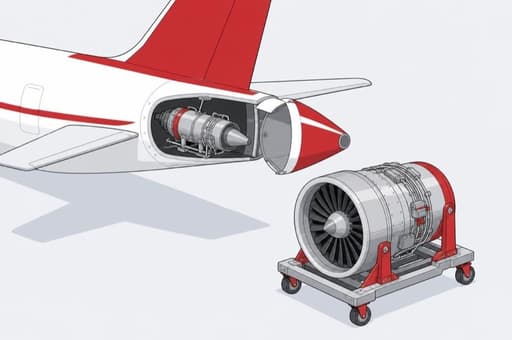
The small turbine in a jet's tail that supplies power and air while the main engines are off, plus engines for business jets. More than 100,000 shipped since 1959 — and the thinnest margins in the company, about twelve cents per dollar in the June quarter.
Competes with APS3200 and APS5000 power units (Pratt & Whitney Canada) · Safran Power Units / Microturbo (Safran) · Pearl business-jet engines (Rolls-Royce)
In plain English
Every airliner carries a second, much smaller engine in its tail. It does not push the plane anywhere; it makes electricity and air while the aircraft sits at the gate, and it is the thing humming as you board. Honeywell says it has the largest installed base of them; its GTCP131 units fly on the A320 and 737 families.
An airframer or an airline picks the unit once, then needs overhauls for decades. The same shop-floor skills turn out engines for mid-size and large business jets: the HTF7000 is the current workhorse, the older TFE731 keeps the legacy fleet flying.
Air, Thermal and Braking Systems
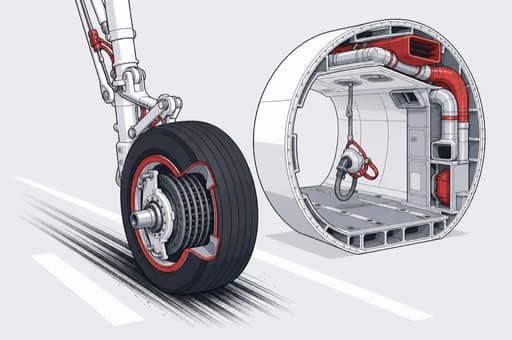
Cabin air and pressure, cooling, on-board oxygen, the motors that move an aircraft's control surfaces, and wheels and brakes. It grew 10% last year and earned the company's best margins in the June quarter, 29 cents per dollar — and it depends on the same scarce castings and forgings holding the company back.
Competes with Carbon wheels and brakes (Safran Landing Systems) · Meggitt wheels and brakes (Parker-Hannifin) · Actuation and flight controls (Collins Aerospace (RTX))
In plain English
Strip the glamour out of an aircraft and this is what is left: ducts that keep cabin air breathable, cooling that stops the electronics cooking, the oxygen masks overhead, the pistons that move the control surfaces, and brakes that stop a loaded airliner on a wet runway.
By the company's own count, an aircraft touches down somewhere on its wheels and brakes every few seconds. Brake discs wear out, which makes them a consumable an airline reorders forever, and a shortage of rough metal parts — castings, forgings, precision machining — is exactly what is capping how fast this side can grow.
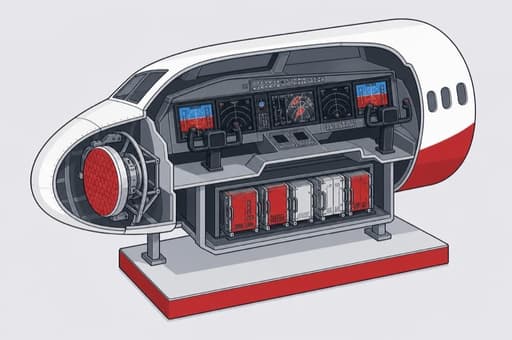
Avionics and Integrated Flight Decks
Cockpit displays, flight controls, route computers, weather radar and collision warnings — the biggest single line in the electronics business. Garmin's competing touchscreen deck, out since late 2024, is strongest at the smaller-jet end of the market.
Competes with Integrated and connected avionics (Collins Aerospace (RTX)) · Avionics suites (Thales) · Avionics suites (L3Harris)
In plain English
The pilots' half of the aircraft. Screens instead of dials, a computer that holds the route, radar that paints the weather ahead, and boxes that call out when another aircraft gets close.
It is sold in an unusual way. On many programs the airline or the aircraft maker, not the supplier, chooses whose kit goes in — a contest Honeywell calls selectable equipment — and the winner then supplies that content on every aircraft built to that specification. Boeing, Airbus, Embraer and airlines are the buyers. For anything new, the pace is set by how long the safety certification takes, not by the factory.
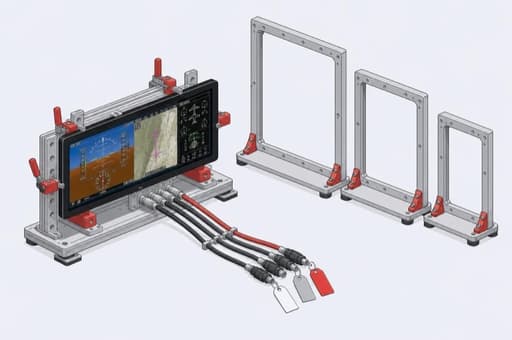
Honeywell Anthem
The next-generation cockpit: modular, internet-connected, meant to scale from small unmanned aircraft up to airliners. It advanced through formal qualification on major subsystems last quarter and flies on Vertical Aerospace's VX4. Real revenue is still ahead of it.
Competes with G3000 Prime flight deck (Garmin) · Integrated and connected avionics (Collins Aerospace (RTX))
In plain English
Most cockpits are designed once and then frozen. Anthem is built more like a phone: one common core with different screens and options attached, so a single design can suit a small drone or a passenger jet, and it can be updated over a connection instead of only in a shop.
Nothing gets paid for until a safety regulator signs the design off, so today's work is test flights and qualification paperwork. The first aircraft carrying it is the VX4, an electric air taxi under development by Vertical Aerospace, a partner Honeywell has been working with.
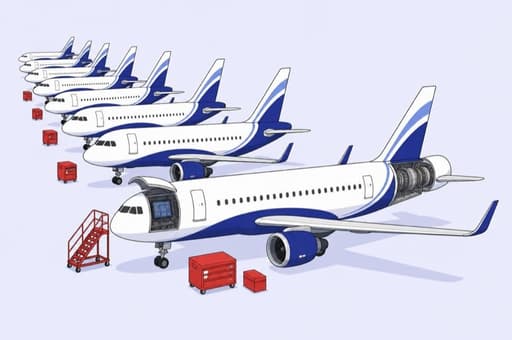
IndiGo 810-Aircraft Program
The largest new-aircraft equipment win in company history: flight decks, the 131-9A tail power unit, weather radar and collision avoidance on 810 A320-family jets, plus long-term support. No value disclosed; the whole order book was $18.2B in late June, up 9%.
Competes with Competing selectable avionics (Collins Aerospace (RTX)) · APS3200 power unit (Pratt & Whitney Canada) · Avionics in selectable-content campaigns (Thales)
In plain English
IndiGo is India's largest airline and holds one of the biggest outstanding orders anywhere for Airbus narrow-bodies. In 2026 it picked Honeywell's cockpit systems and tail power units for 810 of those aircraft and signed up for the parts-and-repair support that follows.
So this is the whole business model squeezed into one deal: win the content once, get paid as Airbus hands the jets over, then get paid again for decades of servicing them. It also arrives slowly, at Airbus's delivery pace and Honeywell's own build rate — and even a win this size stays modest against the whole, since no single aircraft program was more than 8% of last year's sales.
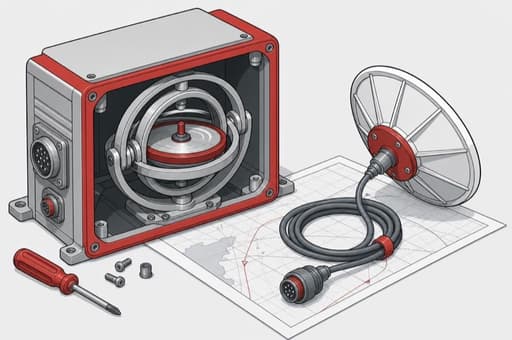
Navigation and Sensors
Instruments that tell an aircraft or a missile where it is when satellite signals are jammed or missing — gyroscopes, motion and air-data sensors, radar altimeters. Roughly 8% of sales, growing faster than the company, and management says supply is not holding it back.
Competes with Inertial navigation systems (Northrop Grumman) · Inertial navigation systems (Safran Electronics & Defense) · Satellite-plus-inertial positioning (Thales)
In plain English
Satellite navigation can be jammed, so serious aircraft carry a backup that needs no signal at all: a sealed box of spinning and vibrating sensors that tracks every turn and nudge from a known starting point and keeps a running answer. Dead reckoning, done by machine.
The buyers are the big defense contractors — BAE Systems, Leonardo, Lockheed Martin, Northrop Grumman, RTX — who fit these inside their own products, which makes Honeywell a supplier to suppliers. It bought the Italian maker Civitanavi in 2024 to add European production and the ARGO 4000 sensor unit.
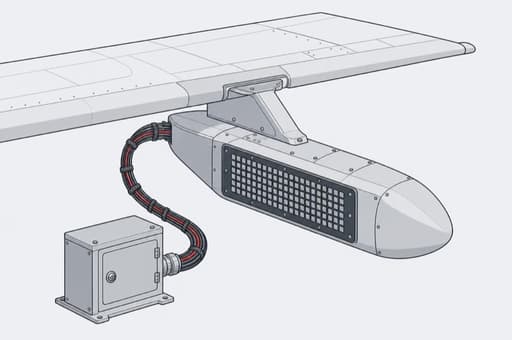
Electromagnetic Defensive Solutions
Antennas, radio-frequency assemblies and the instrument packs that ride inside missiles on test flights — the CAES business, bought for about $1.9B in 2024. Roughly 5% of sales, and about 85% of it has no approved second supplier.
Competes with Radio-frequency assemblies (Mercury Systems) · Electronic-warfare, radar and satellite-link electronics (Teledyne)
In plain English
Radio hardware for war. Flat antennas that let an aircraft detect and interfere with radar signals — electronic warfare, in the trade's words — small instrument packs that record what a missile did on a test flight, and the tiny high-frequency parts inside all of it.
Honeywell bought this business, CAES, in 2024. It sells to the large defense contractors who assemble the finished systems, and for most of the work no rival part is approved for the slot, which is good for pricing. The real risk is the reverse: losing a slot the next time the contract is put out for bid.
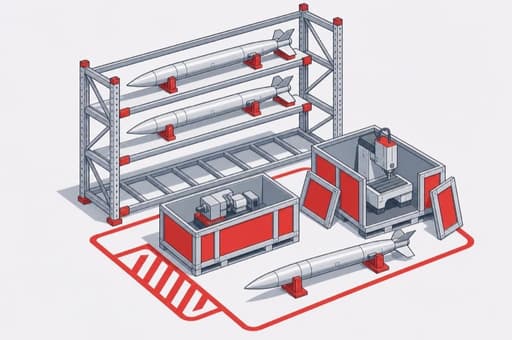
U.S. Munitions Framework Agreement
A 2026 agreement with the U.S. Department of War to surge output of munitions parts — navigation units, Assure actuators, electronic-warfare gear — against $500M of Honeywell's own capacity spending. Almost no revenue yet, in a company already about two-fifths military and space work.
Competes with Precision Strike Missile agreement (Lockheed Martin) · Munitions production agreement (BAE Systems)
In plain English
Missile stockpiles were drawn down faster than they were refilled, after decades of underinvestment as management describes it, and the U.S. government has been signing deals with suppliers to rebuild them. Honeywell's version is a framework: agreed terms and a promise of capacity, with the actual orders still to come.
Which means the spending comes first. The company is putting $500M into production — an actuator line in Arizona, more sensor capacity in Minnesota — before much is sold. A framework sets the terms of admission, not the volume, so it turns into real money only if budgets are approved and orders follow. Lockheed Martin and BAE Systems signed comparable deals the same day.


 Commercial Aftermarket and ServicesSpares, certified used parts, shop repairs, overhauls and flat-rate service plans for jets already flying — about $7.7B last year, up 12%. Watch the squeeze: scarce parts are being steered to new-build orders, which cut this year's service growth to low-to-mid single digits.
Spares, certified used parts, shop repairs, overhauls and flat-rate service plans for jets already flying — about $7.7B last year, up 12%. Watch the squeeze: scarce parts are being steered to new-build orders, which cut this year's service growth to low-to-mid single digits.
In plain English
Think of a firm that sells the pump for a well cheaply, then sells every replacement seal for the next thirty years. Honeywell equipment sits on roughly nine in ten of the world's aircraft, and aircraft are inspected, repaired and re-fitted constantly — some 65,000 of them out there flying.
Airlines and business-jet operators pay for new spares, for used parts Honeywell has certified as good, for shop visits when something comes off the wing, and for plans that cover maintenance by the flight hour. They keep paying because a replacement has to match what is already bolted on, and because the inspections are not optional.
Competes with Aftermarket parts and predictive maintenance (Collins Aerospace (RTX)) · Engine services and spares (GE Aerospace) · Approved copy parts and repair fixes (Independent repair shops)
 Retrofits, Modifications and UpgradesKits that give an old aircraft new capability: about $1.5B in 2024, roughly a tenth of sales, compounding near 18% a year, with 40-plus new releases planned through 2030. Management says demand here barely follows the airline cycle.
Kits that give an old aircraft new capability: about $1.5B in 2024, roughly a tenth of sales, compounding near 18% a year, with 40-plus new releases planned through 2030. Management says demand here barely follows the airline cycle.
In plain English
A twenty-year-old jet is not scrapped when the rules change; it gets a new box fitted. When 5G phone masts began confusing older altitude-measuring radar, the fix was a replacement unit, and much of the fleet needs one.
Honeywell sells those kits into aircraft it already equipped: warnings about traffic on the runway ahead, newer navigation boxes. The operator pays once per aircraft and takes it out of service while the work is done. The appeal for Honeywell is what sets the demand off — a rule change or an aging part, rather than whether airlines happen to be ordering new planes.
Competes with Connected-avionics upgrade contracts (Collins Aerospace (RTX)) · G3000 Prime flight deck (Garmin)
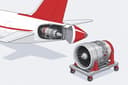 Auxiliary Power Units and Jet EnginesThe small turbine in a jet's tail that supplies power and air while the main engines are off, plus engines for business jets. More than 100,000 shipped since 1959 — and the thinnest margins in the company, about twelve cents per dollar in the June quarter.
The small turbine in a jet's tail that supplies power and air while the main engines are off, plus engines for business jets. More than 100,000 shipped since 1959 — and the thinnest margins in the company, about twelve cents per dollar in the June quarter.
In plain English
Every airliner carries a second, much smaller engine in its tail. It does not push the plane anywhere; it makes electricity and air while the aircraft sits at the gate, and it is the thing humming as you board. Honeywell says it has the largest installed base of them; its GTCP131 units fly on the A320 and 737 families.
An airframer or an airline picks the unit once, then needs overhauls for decades. The same shop-floor skills turn out engines for mid-size and large business jets: the HTF7000 is the current workhorse, the older TFE731 keeps the legacy fleet flying.
Competes with APS3200 and APS5000 power units (Pratt & Whitney Canada) · Safran Power Units / Microturbo (Safran) · Pearl business-jet engines (Rolls-Royce)
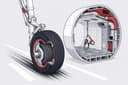 Air, Thermal and Braking SystemsCabin air and pressure, cooling, on-board oxygen, the motors that move an aircraft's control surfaces, and wheels and brakes. It grew 10% last year and earned the company's best margins in the June quarter, 29 cents per dollar — and it depends on the same scarce castings and forgings holding the company back.
Cabin air and pressure, cooling, on-board oxygen, the motors that move an aircraft's control surfaces, and wheels and brakes. It grew 10% last year and earned the company's best margins in the June quarter, 29 cents per dollar — and it depends on the same scarce castings and forgings holding the company back.
In plain English
Strip the glamour out of an aircraft and this is what is left: ducts that keep cabin air breathable, cooling that stops the electronics cooking, the oxygen masks overhead, the pistons that move the control surfaces, and brakes that stop a loaded airliner on a wet runway.
By the company's own count, an aircraft touches down somewhere on its wheels and brakes every few seconds. Brake discs wear out, which makes them a consumable an airline reorders forever, and a shortage of rough metal parts — castings, forgings, precision machining — is exactly what is capping how fast this side can grow.
Competes with Carbon wheels and brakes (Safran Landing Systems) · Meggitt wheels and brakes (Parker-Hannifin) · Actuation and flight controls (Collins Aerospace (RTX))
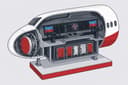 Avionics and Integrated Flight DecksCockpit displays, flight controls, route computers, weather radar and collision warnings — the biggest single line in the electronics business. Garmin's competing touchscreen deck, out since late 2024, is strongest at the smaller-jet end of the market.
Cockpit displays, flight controls, route computers, weather radar and collision warnings — the biggest single line in the electronics business. Garmin's competing touchscreen deck, out since late 2024, is strongest at the smaller-jet end of the market.
In plain English
The pilots' half of the aircraft. Screens instead of dials, a computer that holds the route, radar that paints the weather ahead, and boxes that call out when another aircraft gets close.
It is sold in an unusual way. On many programs the airline or the aircraft maker, not the supplier, chooses whose kit goes in — a contest Honeywell calls selectable equipment — and the winner then supplies that content on every aircraft built to that specification. Boeing, Airbus, Embraer and airlines are the buyers. For anything new, the pace is set by how long the safety certification takes, not by the factory.
Competes with Integrated and connected avionics (Collins Aerospace (RTX)) · Avionics suites (Thales) · Avionics suites (L3Harris)
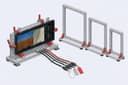 Honeywell AnthemThe next-generation cockpit: modular, internet-connected, meant to scale from small unmanned aircraft up to airliners. It advanced through formal qualification on major subsystems last quarter and flies on Vertical Aerospace's VX4. Real revenue is still ahead of it.
The next-generation cockpit: modular, internet-connected, meant to scale from small unmanned aircraft up to airliners. It advanced through formal qualification on major subsystems last quarter and flies on Vertical Aerospace's VX4. Real revenue is still ahead of it.
In plain English
Most cockpits are designed once and then frozen. Anthem is built more like a phone: one common core with different screens and options attached, so a single design can suit a small drone or a passenger jet, and it can be updated over a connection instead of only in a shop.
Nothing gets paid for until a safety regulator signs the design off, so today's work is test flights and qualification paperwork. The first aircraft carrying it is the VX4, an electric air taxi under development by Vertical Aerospace, a partner Honeywell has been working with.
Competes with G3000 Prime flight deck (Garmin) · Integrated and connected avionics (Collins Aerospace (RTX))
 IndiGo 810-Aircraft ProgramThe largest new-aircraft equipment win in company history: flight decks, the 131-9A tail power unit, weather radar and collision avoidance on 810 A320-family jets, plus long-term support. No value disclosed; the whole order book was $18.2B in late June, up 9%.
The largest new-aircraft equipment win in company history: flight decks, the 131-9A tail power unit, weather radar and collision avoidance on 810 A320-family jets, plus long-term support. No value disclosed; the whole order book was $18.2B in late June, up 9%.
In plain English
IndiGo is India's largest airline and holds one of the biggest outstanding orders anywhere for Airbus narrow-bodies. In 2026 it picked Honeywell's cockpit systems and tail power units for 810 of those aircraft and signed up for the parts-and-repair support that follows.
So this is the whole business model squeezed into one deal: win the content once, get paid as Airbus hands the jets over, then get paid again for decades of servicing them. It also arrives slowly, at Airbus's delivery pace and Honeywell's own build rate — and even a win this size stays modest against the whole, since no single aircraft program was more than 8% of last year's sales.
Competes with Competing selectable avionics (Collins Aerospace (RTX)) · APS3200 power unit (Pratt & Whitney Canada) · Avionics in selectable-content campaigns (Thales)
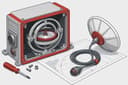 Navigation and SensorsInstruments that tell an aircraft or a missile where it is when satellite signals are jammed or missing — gyroscopes, motion and air-data sensors, radar altimeters. Roughly 8% of sales, growing faster than the company, and management says supply is not holding it back.
Instruments that tell an aircraft or a missile where it is when satellite signals are jammed or missing — gyroscopes, motion and air-data sensors, radar altimeters. Roughly 8% of sales, growing faster than the company, and management says supply is not holding it back.
In plain English
Satellite navigation can be jammed, so serious aircraft carry a backup that needs no signal at all: a sealed box of spinning and vibrating sensors that tracks every turn and nudge from a known starting point and keeps a running answer. Dead reckoning, done by machine.
The buyers are the big defense contractors — BAE Systems, Leonardo, Lockheed Martin, Northrop Grumman, RTX — who fit these inside their own products, which makes Honeywell a supplier to suppliers. It bought the Italian maker Civitanavi in 2024 to add European production and the ARGO 4000 sensor unit.
Competes with Inertial navigation systems (Northrop Grumman) · Inertial navigation systems (Safran Electronics & Defense) · Satellite-plus-inertial positioning (Thales)
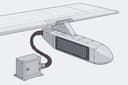 Electromagnetic Defensive SolutionsAntennas, radio-frequency assemblies and the instrument packs that ride inside missiles on test flights — the CAES business, bought for about $1.9B in 2024. Roughly 5% of sales, and about 85% of it has no approved second supplier.
Antennas, radio-frequency assemblies and the instrument packs that ride inside missiles on test flights — the CAES business, bought for about $1.9B in 2024. Roughly 5% of sales, and about 85% of it has no approved second supplier.
In plain English
Radio hardware for war. Flat antennas that let an aircraft detect and interfere with radar signals — electronic warfare, in the trade's words — small instrument packs that record what a missile did on a test flight, and the tiny high-frequency parts inside all of it.
Honeywell bought this business, CAES, in 2024. It sells to the large defense contractors who assemble the finished systems, and for most of the work no rival part is approved for the slot, which is good for pricing. The real risk is the reverse: losing a slot the next time the contract is put out for bid.
Competes with Radio-frequency assemblies (Mercury Systems) · Electronic-warfare, radar and satellite-link electronics (Teledyne)
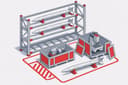 U.S. Munitions Framework AgreementA 2026 agreement with the U.S. Department of War to surge output of munitions parts — navigation units, Assure actuators, electronic-warfare gear — against $500M of Honeywell's own capacity spending. Almost no revenue yet, in a company already about two-fifths military and space work.
A 2026 agreement with the U.S. Department of War to surge output of munitions parts — navigation units, Assure actuators, electronic-warfare gear — against $500M of Honeywell's own capacity spending. Almost no revenue yet, in a company already about two-fifths military and space work.
In plain English
Missile stockpiles were drawn down faster than they were refilled, after decades of underinvestment as management describes it, and the U.S. government has been signing deals with suppliers to rebuild them. Honeywell's version is a framework: agreed terms and a promise of capacity, with the actual orders still to come.
Which means the spending comes first. The company is putting $500M into production — an actuator line in Arizona, more sensor capacity in Minnesota — before much is sold. A framework sets the terms of admission, not the volume, so it turns into real money only if budgets are approved and orders follow. Lockheed Martin and BAE Systems signed comparable deals the same day.
Competes with Precision Strike Missile agreement (Lockheed Martin) · Munitions production agreement (BAE Systems)
Named in filings, launches and programs
- Maintenance Service PlansServiceFlat-rate cover for engines and tail power units priced by the flight hour, turning a shop visit into a budgeted expense rather than a shock.
- 5G-tolerant radio altimeter upgradeProductReplacement altitude-measuring radar driven by an FAA mandate; management names it one of five things that should lift 2027.
- SURF-A / SURF-IA runway alertingProduct · RampingCockpit warnings about traffic on the runway ahead; Aeromexico intends to fit more than 100 of its 737s.
- Assure actuationProduct · RampingElectric actuators from a new Arizona line, and one of the parts named in the munitions agreement with the U.S. government.
- Electric power systemsProduct lineGenerators and power-conversion boxes sold alongside the engines and tail power units.
- Fuel cell and hybrid-electric systemsProduct · Pre-revenueElectrification work inside the engines business: fuel cells and mixed engine-and-battery propulsion.
- JetWave connectivity and satcomProduct lineThe satellite gear that gives passengers and crews internet in the air, sold since 2017.
- Honeywell Forge for AircraftPlatformSoftware that reads flight data to trim fuel burn; 29 airlines have used it.
- MyAerospace portalPlatformThe parts-ordering website for operators: roughly 30,000 users placing about 90,000 orders a year.
- Space products — radiation-hardened microelectronicsProduct lineChips built to survive orbit; the company says they fly on roughly 80% of the satellites up there.
- Advanced Air Mobility and drone systemsProduct line · Pre-revenueFlight decks and electronic flight controls for air taxis and unmanned aircraft, starting with Vertical Aerospace's VX4.
- Enigma Aerospace PhoenixCustomer program · AnnouncedAn exploratory agreement from July 2026 to integrate mission systems on an autonomous aircraft.
- Gulfstream G300 packageCustomer programHarmony flight deck, cabin environment systems and HTF7250G engines on a single business-jet program.
- CARBENIX carbon brakesProductIts carbon brake discs, sold into a market where five suppliers between them hold roughly nine-tenths of the revenue.
- Epic flight deckProduct lineThe earlier-generation integrated cockpit, still selling and the basis of Gulfstream's Harmony deck.
- Civitanavi SystemsBrandThe Italian navigation-sensor maker bought in 2024; its sales are expected to double in 2026.
- Bombardier and Airbus joint developmentProduct · Pre-revenueShared engineering work with both airframers on the Anthem cockpit and the HTF7000 engine family.
Maintenance Service PlansService
Flat-rate cover for engines and tail power units priced by the flight hour, turning a shop visit into a budgeted expense rather than a shock.
5G-tolerant radio altimeter upgradeProduct
Replacement altitude-measuring radar driven by an FAA mandate; management names it one of five things that should lift 2027.
SURF-A / SURF-IA runway alertingProduct · Ramping
Cockpit warnings about traffic on the runway ahead; Aeromexico intends to fit more than 100 of its 737s.
Assure actuationProduct · Ramping
Electric actuators from a new Arizona line, and one of the parts named in the munitions agreement with the U.S. government.
Electric power systemsProduct line
Generators and power-conversion boxes sold alongside the engines and tail power units.
Fuel cell and hybrid-electric systemsProduct · Pre-revenue
Electrification work inside the engines business: fuel cells and mixed engine-and-battery propulsion.
JetWave connectivity and satcomProduct line
The satellite gear that gives passengers and crews internet in the air, sold since 2017.
Honeywell Forge for AircraftPlatform
Software that reads flight data to trim fuel burn; 29 airlines have used it.
MyAerospace portalPlatform
The parts-ordering website for operators: roughly 30,000 users placing about 90,000 orders a year.
Space products — radiation-hardened microelectronicsProduct line
Chips built to survive orbit; the company says they fly on roughly 80% of the satellites up there.
Advanced Air Mobility and drone systemsProduct line · Pre-revenue
Flight decks and electronic flight controls for air taxis and unmanned aircraft, starting with Vertical Aerospace's VX4.
Enigma Aerospace PhoenixCustomer program · Announced
An exploratory agreement from July 2026 to integrate mission systems on an autonomous aircraft.
Gulfstream G300 packageCustomer program
Harmony flight deck, cabin environment systems and HTF7250G engines on a single business-jet program.
CARBENIX carbon brakesProduct
Its carbon brake discs, sold into a market where five suppliers between them hold roughly nine-tenths of the revenue.
Epic flight deckProduct line
The earlier-generation integrated cockpit, still selling and the basis of Gulfstream's Harmony deck.
Civitanavi SystemsBrand
The Italian navigation-sensor maker bought in 2024; its sales are expected to double in 2026.
Bombardier and Airbus joint developmentProduct · Pre-revenue
Shared engineering work with both airframers on the Anthem cockpit and the HTF7000 engine family.