
Incyte (INCY)
Developer of Jakafi, Opzelura, and targeted hematology, oncology, and immune-disease medicines.
Something off on this page? Send us feedback.
Incyte makes prescription medicines for blood cancers and for stubborn skin and immune diseases. Most of what it earns still traces to one molecule, sold as a pill, as a skin cream, and by a partner everywhere outside the United States — and the patents protecting it run out later this decade. So the pill's cash is being spent, fast, on the medicines meant to replace it.
Item facts: FY2025 · year ended Dec 31, 2025, from filings, earnings calls and company pages.
Judgment weights, not filed revenue
The band summarizes business focus and direction. ~ marks estimates.
9 in detail · 13 more below
Jakafi (ruxolitinib)
The twice-daily tablet for two bone-marrow diseases and a transplant complication, and the thing that pays for everything else: $3.09B in 2025, up 11%. That molecule in its three forms — this pill, a cream, and Novartis's version abroad — is about four-fifths of all revenue. The patents run out in mid-to-late 2028.
Competes with Ojjaara/Omjjara (momelotinib) (GSK) · Vonjo (pacritinib) (Sobi) · Inrebic (fedratinib) (Bristol Myers Squibb)
In plain English
Bone marrow is the factory that makes your blood. In some diseases it misbehaves — scarring up, or churning out far too many cells — and people feel wrung out. Jakafi is a tablet, morning and night, that turns down the faulty signal telling the marrow to do that.
Patients stay on it for years; insurers and government health plans pay, and only a few cents of each dollar goes into actually making the tablet. That is how one product funds the laboratories, the trials and the deal-making. Growth now comes only from treating more people — price caps and mandatory discounts take back the rest.
Jakafi XR
Same medicine, once a day instead of twice, launched in 2026 and counted inside the Jakafi line. Management thinks it can be 10–30% of Jakafi's business by 2029. The thing to watch is how quickly patients actually switch.
Competes with Generic twice-daily ruxolitinib, from 2028 (Generic makers) · Ojjaara/Omjjara (momelotinib) (GSK)
In plain English
Same drug, different schedule. One tablet a day rather than one morning and one night — a small convenience, and a deliberate piece of strategy.
From 2028, cheap copies of the twice-daily tablet are allowed, and they will compete on price alone. Patients already settled on the once-daily version are the ones least likely to drift across to a copy of the old one, so every switch made before that date is revenue defended. Management calls this the first of two bridges over 2028, and it is a race against a fixed calendar — the converting has to finish while the original is still protected.
Opzelura (ruxolitinib) cream
A prescription skin cream for vitiligo and eczema, and the second engine: $678.5M in 2025. The 2026 target of $1.05–1.1B is flattered by roughly $300M from a one-off Medicaid settlement, so the real tell is the European launch.
Competes with Zoryve (roflumilast) cream (Arcutis) · Vtama (tapinarof) cream (Dermavant) · Topical steroid creams (Generic makers)
In plain English
Vitiligo is the condition where patches of skin lose their colour. Before this cream there was no approved medicine to bring the colour back — the standard was a light-box treatment, or nothing. Opzelura is the same molecule as Jakafi, remade to be rubbed on instead of swallowed, and it also treats mild-to-moderate eczema, children included.
Dermatologists write it, pharmacies hand over tubes, insurers pay. Around one and a half million Americans live with vitiligo and only a fifth to a third of them ever seek treatment, so most of the market is people who never came in. Europe has just opened for the eczema use.
Niktimvo (axatilimab)
For people whose transplanted immune system has turned on them and two earlier treatments have failed. Roughly $147M in 2025, growing purely on patient numbers — but partner Syndax takes half the profit, so the sales line overstates what Incyte keeps.
Competes with Rezurock (belumosudil) (Sanofi) · Jakafi, used at an earlier stage of the same disease (Incyte)
In plain English
When someone receives bone marrow from a donor, the new immune system can turn on the body it was given to. Niktimvo is for patients whose case has already shrugged off two rounds of treatment — a late, hard line of care.
It is sold into the transplant centres where those patients are treated. Incyte books the full sale, then hands half the profit to Syndax, the partner it developed the drug with; think of a shop and a supplier splitting the till. About a third of patients at that late stage are now on it, and trials testing whether it can be used earlier report through 2028.
Monjuvi / Minjuvi (tafasitamab)
A lymphoma antibody: $144.6M in 2025 and up 72% in the latest quarter as a new use took hold. The prize is treating newly diagnosed patients, now under review — where Roche's Polivy already holds about a third of the field.
Competes with Polivy (polatuzumab vedotin) (Roche) · Columvi (glofitamab) (Roche) · Epkinly (epcoritamab) (AbbVie and Genmab)
In plain English
This one is an antibody — a lab-made version of the proteins the body uses to tag intruders — aimed at a marker that lymphoma cells carry, so the immune system can find them. Incyte took the rights from MorphoSys in 2024 and now sells it worldwide, as Monjuvi at home and Minjuvi elsewhere.
Hospitals order it, insurers pay, and Xencor, which engineered part of the molecule, keeps a slice of every sale. Everything hinges on whether regulators clear it for newly diagnosed patients — roughly thirty thousand Americans a year, a pool many times the one it serves now.
Zynyz (retifanlimab)
A drug that takes the brakes off the immune system, cleared for a rare skin cancer and for advanced anal cancer. $66.4M in 2025 from almost nothing the year before — the cleanest ramp in the portfolio, off a very small base.
Competes with Keytruda (pembrolizumab) (Merck) · Bavencio (avelumab) (Merck KGaA)
In plain English
Some tumours put up a chemical stop sign that switches off the immune cells sent to deal with them. Zynyz blocks that sign so the attack carries on. Incyte did not discover it — the molecule is licensed from MacroGenics — but it owns the selling.
Cancer centres buy it and bill the insurer. Two approvals carry the line: a rare skin cancer, and advanced anal cancer, where it is the only treatment cleared to be used first and already accounts for roughly two in five of those patients. Sales have risen every single quarter since launch, which is rare and easy to overrate when the starting point was three million dollars.
Jakavi royalty (Novartis)
Novartis sells the same molecule outside the United States as Jakavi and pays Incyte a cut — roughly $457M in 2025, lately growing faster than the US pill. Nothing to manufacture, nobody to hire, and the same 2028 patent clock.
Competes with Ojjaara/Omjjara (momelotinib) outside the US (GSK) · Generic ruxolitinib in Europe and Japan (Generic makers)
In plain English
Incyte never built a sales operation abroad for this medicine. Novartis holds the rights everywhere outside the United States, makes it, sells it as Jakavi, and sends a cheque for a share of the takings. It is the cleanest money on the books, and it rises or falls entirely on what Novartis's salespeople do.
It is also the one outside relationship large enough to matter on its own — more than five cents of every revenue dollar. The traffic runs both ways: Incyte pays Novartis a royalty on US Jakafi sales, at half the old rate since a 2025 settlement. Both streams end with the same patents in 2028.

Povorcitinib
A tablet for hidradenitis suppurativa, a painful recurring skin disease. Approval is expected in Europe late 2026 and the US in early 2027; management puts peak sales at $500M to $1B. Two vitiligo trials also came out positive.
Competes with Humira (adalimumab) (AbbVie) · Bimzelx (bimekizumab) (UCB) · Cosentyx (secukinumab) (Novartis)
In plain English
Painful lumps that keep coming back under the skin: that is hidradenitis suppurativa, and roughly three in four people who have it have never been put on the powerful injected drugs. Povorcitinib is a tablet aimed at exactly them.
The cost of reaching them is already paid, which is the attractive part — the same representatives who sell the vitiligo cream call on the same skin doctors. More than three hundred thousand Americans have the disease, about two hundred thousand look for treatment, and only around fifty thousand are on advanced medicines. Nothing is assured: this same molecule was dropped in hives last year despite a good mid-stage result.
INCA033989 (mutant-CALR antibody)
An antibody that goes only after blood cells carrying one faulty protein — about a quarter of patients with one marrow disease, a third with another. Final-stage testing began in 2026. Management says plainly it will not arrive in time to cover 2028.
Competes with JNJ-88549968, a CALR-mutant antibody (Johnson & Johnson) · LBM-104, a CALR-directed T-cell engager (Allogene) · Jakafi and hydroxyurea, the non-selective incumbents (Incyte and generic makers)
In plain English
Jakafi quiets a misbehaving bone marrow without touching the cells causing the trouble. This antibody, discovered in-house, goes after those cells themselves — the ones carrying a particular mutated protein — with the aim of clearing them out rather than managing around them.
There is no product and no money yet. The first late-stage trial, in patients whose platelet disorder has already failed one treatment, started in 2026. If it works it sells to precisely the blood specialists who already write Jakafi, so no new sales force is needed. Management is blunt that this is not the patch for the patent cliff — it is the long game on the other side of it.


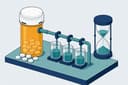 Jakafi (ruxolitinib)The twice-daily tablet for two bone-marrow diseases and a transplant complication, and the thing that pays for everything else: $3.09B in 2025, up 11%. That molecule in its three forms — this pill, a cream, and Novartis's version abroad — is about four-fifths of all revenue. The patents run out in mid-to-late 2028.
The twice-daily tablet for two bone-marrow diseases and a transplant complication, and the thing that pays for everything else: $3.09B in 2025, up 11%. That molecule in its three forms — this pill, a cream, and Novartis's version abroad — is about four-fifths of all revenue. The patents run out in mid-to-late 2028.
In plain English
Bone marrow is the factory that makes your blood. In some diseases it misbehaves — scarring up, or churning out far too many cells — and people feel wrung out. Jakafi is a tablet, morning and night, that turns down the faulty signal telling the marrow to do that.
Patients stay on it for years; insurers and government health plans pay, and only a few cents of each dollar goes into actually making the tablet. That is how one product funds the laboratories, the trials and the deal-making. Growth now comes only from treating more people — price caps and mandatory discounts take back the rest.
Competes with Ojjaara/Omjjara (momelotinib) (GSK) · Vonjo (pacritinib) (Sobi) · Inrebic (fedratinib) (Bristol Myers Squibb)
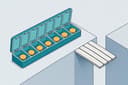 Jakafi XRSame medicine, once a day instead of twice, launched in 2026 and counted inside the Jakafi line. Management thinks it can be 10–30% of Jakafi's business by 2029. The thing to watch is how quickly patients actually switch.
Same medicine, once a day instead of twice, launched in 2026 and counted inside the Jakafi line. Management thinks it can be 10–30% of Jakafi's business by 2029. The thing to watch is how quickly patients actually switch.
In plain English
Same drug, different schedule. One tablet a day rather than one morning and one night — a small convenience, and a deliberate piece of strategy.
From 2028, cheap copies of the twice-daily tablet are allowed, and they will compete on price alone. Patients already settled on the once-daily version are the ones least likely to drift across to a copy of the old one, so every switch made before that date is revenue defended. Management calls this the first of two bridges over 2028, and it is a race against a fixed calendar — the converting has to finish while the original is still protected.
Competes with Generic twice-daily ruxolitinib, from 2028 (Generic makers) · Ojjaara/Omjjara (momelotinib) (GSK)
 Opzelura (ruxolitinib) creamA prescription skin cream for vitiligo and eczema, and the second engine: $678.5M in 2025. The 2026 target of $1.05–1.1B is flattered by roughly $300M from a one-off Medicaid settlement, so the real tell is the European launch.
A prescription skin cream for vitiligo and eczema, and the second engine: $678.5M in 2025. The 2026 target of $1.05–1.1B is flattered by roughly $300M from a one-off Medicaid settlement, so the real tell is the European launch.
In plain English
Vitiligo is the condition where patches of skin lose their colour. Before this cream there was no approved medicine to bring the colour back — the standard was a light-box treatment, or nothing. Opzelura is the same molecule as Jakafi, remade to be rubbed on instead of swallowed, and it also treats mild-to-moderate eczema, children included.
Dermatologists write it, pharmacies hand over tubes, insurers pay. Around one and a half million Americans live with vitiligo and only a fifth to a third of them ever seek treatment, so most of the market is people who never came in. Europe has just opened for the eczema use.
Competes with Zoryve (roflumilast) cream (Arcutis) · Vtama (tapinarof) cream (Dermavant) · Topical steroid creams (Generic makers)
 Niktimvo (axatilimab)For people whose transplanted immune system has turned on them and two earlier treatments have failed. Roughly $147M in 2025, growing purely on patient numbers — but partner Syndax takes half the profit, so the sales line overstates what Incyte keeps.
For people whose transplanted immune system has turned on them and two earlier treatments have failed. Roughly $147M in 2025, growing purely on patient numbers — but partner Syndax takes half the profit, so the sales line overstates what Incyte keeps.
In plain English
When someone receives bone marrow from a donor, the new immune system can turn on the body it was given to. Niktimvo is for patients whose case has already shrugged off two rounds of treatment — a late, hard line of care.
It is sold into the transplant centres where those patients are treated. Incyte books the full sale, then hands half the profit to Syndax, the partner it developed the drug with; think of a shop and a supplier splitting the till. About a third of patients at that late stage are now on it, and trials testing whether it can be used earlier report through 2028.
Competes with Rezurock (belumosudil) (Sanofi) · Jakafi, used at an earlier stage of the same disease (Incyte)
 Monjuvi / Minjuvi (tafasitamab)A lymphoma antibody: $144.6M in 2025 and up 72% in the latest quarter as a new use took hold. The prize is treating newly diagnosed patients, now under review — where Roche's Polivy already holds about a third of the field.
A lymphoma antibody: $144.6M in 2025 and up 72% in the latest quarter as a new use took hold. The prize is treating newly diagnosed patients, now under review — where Roche's Polivy already holds about a third of the field.
In plain English
This one is an antibody — a lab-made version of the proteins the body uses to tag intruders — aimed at a marker that lymphoma cells carry, so the immune system can find them. Incyte took the rights from MorphoSys in 2024 and now sells it worldwide, as Monjuvi at home and Minjuvi elsewhere.
Hospitals order it, insurers pay, and Xencor, which engineered part of the molecule, keeps a slice of every sale. Everything hinges on whether regulators clear it for newly diagnosed patients — roughly thirty thousand Americans a year, a pool many times the one it serves now.
Competes with Polivy (polatuzumab vedotin) (Roche) · Columvi (glofitamab) (Roche) · Epkinly (epcoritamab) (AbbVie and Genmab)
 Zynyz (retifanlimab)A drug that takes the brakes off the immune system, cleared for a rare skin cancer and for advanced anal cancer. $66.4M in 2025 from almost nothing the year before — the cleanest ramp in the portfolio, off a very small base.
A drug that takes the brakes off the immune system, cleared for a rare skin cancer and for advanced anal cancer. $66.4M in 2025 from almost nothing the year before — the cleanest ramp in the portfolio, off a very small base.
In plain English
Some tumours put up a chemical stop sign that switches off the immune cells sent to deal with them. Zynyz blocks that sign so the attack carries on. Incyte did not discover it — the molecule is licensed from MacroGenics — but it owns the selling.
Cancer centres buy it and bill the insurer. Two approvals carry the line: a rare skin cancer, and advanced anal cancer, where it is the only treatment cleared to be used first and already accounts for roughly two in five of those patients. Sales have risen every single quarter since launch, which is rare and easy to overrate when the starting point was three million dollars.
Competes with Keytruda (pembrolizumab) (Merck) · Bavencio (avelumab) (Merck KGaA)
 Jakavi royalty (Novartis)Novartis sells the same molecule outside the United States as Jakavi and pays Incyte a cut — roughly $457M in 2025, lately growing faster than the US pill. Nothing to manufacture, nobody to hire, and the same 2028 patent clock.
Novartis sells the same molecule outside the United States as Jakavi and pays Incyte a cut — roughly $457M in 2025, lately growing faster than the US pill. Nothing to manufacture, nobody to hire, and the same 2028 patent clock.
In plain English
Incyte never built a sales operation abroad for this medicine. Novartis holds the rights everywhere outside the United States, makes it, sells it as Jakavi, and sends a cheque for a share of the takings. It is the cleanest money on the books, and it rises or falls entirely on what Novartis's salespeople do.
It is also the one outside relationship large enough to matter on its own — more than five cents of every revenue dollar. The traffic runs both ways: Incyte pays Novartis a royalty on US Jakafi sales, at half the old rate since a 2025 settlement. Both streams end with the same patents in 2028.
Competes with Ojjaara/Omjjara (momelotinib) outside the US (GSK) · Generic ruxolitinib in Europe and Japan (Generic makers)
 PovorcitinibA tablet for hidradenitis suppurativa, a painful recurring skin disease. Approval is expected in Europe late 2026 and the US in early 2027; management puts peak sales at $500M to $1B. Two vitiligo trials also came out positive.
A tablet for hidradenitis suppurativa, a painful recurring skin disease. Approval is expected in Europe late 2026 and the US in early 2027; management puts peak sales at $500M to $1B. Two vitiligo trials also came out positive.
In plain English
Painful lumps that keep coming back under the skin: that is hidradenitis suppurativa, and roughly three in four people who have it have never been put on the powerful injected drugs. Povorcitinib is a tablet aimed at exactly them.
The cost of reaching them is already paid, which is the attractive part — the same representatives who sell the vitiligo cream call on the same skin doctors. More than three hundred thousand Americans have the disease, about two hundred thousand look for treatment, and only around fifty thousand are on advanced medicines. Nothing is assured: this same molecule was dropped in hives last year despite a good mid-stage result.
Competes with Humira (adalimumab) (AbbVie) · Bimzelx (bimekizumab) (UCB) · Cosentyx (secukinumab) (Novartis)
 INCA033989 (mutant-CALR antibody)An antibody that goes only after blood cells carrying one faulty protein — about a quarter of patients with one marrow disease, a third with another. Final-stage testing began in 2026. Management says plainly it will not arrive in time to cover 2028.
An antibody that goes only after blood cells carrying one faulty protein — about a quarter of patients with one marrow disease, a third with another. Final-stage testing began in 2026. Management says plainly it will not arrive in time to cover 2028.
In plain English
Jakafi quiets a misbehaving bone marrow without touching the cells causing the trouble. This antibody, discovered in-house, goes after those cells themselves — the ones carrying a particular mutated protein — with the aim of clearing them out rather than managing around them.
There is no product and no money yet. The first late-stage trial, in patients whose platelet disorder has already failed one treatment, started in 2026. If it works it sells to precisely the blood specialists who already write Jakafi, so no new sales force is needed. Management is blunt that this is not the patch for the patent cliff — it is the long game on the other side of it.
Competes with JNJ-88549968, a CALR-mutant antibody (Johnson & Johnson) · LBM-104, a CALR-directed T-cell engager (Allogene) · Jakafi and hydroxyurea, the non-selective incumbents (Incyte and generic makers)
Named in filings, launches and programs
- Olumiant royalty (Eli Lilly)Customer programEli Lilly sells this Incyte-discovered pill and pays a cut — $144.6M in 2025, earned on laboratory work long since finished.
- Iclusig (ponatinib)ProductA targeted pill for two leukaemias; $134.1M in 2025 and mentioned once across two years of earnings calls.
- Milestone and contract revenueCustomer program$150.0M in 2025 from partners paying when agreed goals are hit — lumpy by nature; $100.0M of it landed in a single quarter.
- Pemazyre (pemigatinib)ProductA targeted cancer pill worth $86.7M in 2025 — small, steady, and easy to miss beside the big two.
- Tabrecta royalty (Novartis)Customer program$26.7M in 2025 from a second molecule Incyte discovered and Novartis sells.
- Other royaltiesCustomer programA few million dollars a quarter from partners Incyte does not name.
- Latarcibart (VGA039)Product · Pre-revenueA once-monthly injection for von Willebrand disease, an inherited bleeding disorder; in final-stage testing, first results due early 2029.
- Vega TherapeuticsBrandBought outright in July 2026 — $1.25B up front plus up to $750M if sales goals are met. It came with latarcibart.
- Opzelura in hidradenitis suppurativaProduct · Pre-revenueThe cream tested on the milder form of the same painful skin disease; results by end-2026, a filing in 2027 if they are good.
- INCB161734Product · Pre-revenueA pill aimed at one specific pancreatic-cancer mutation, in final-stage testing as a first treatment.
- INCA33890Product · Pre-revenueA two-headed antibody built with partner Merus, in final-stage testing in a form of bowel cancer.
- INCB123667Product · Pre-revenueIn decisive testing for ovarian cancer that has stopped responding to platinum chemotherapy; a second late-stage trial starts in late 2026.
- INCA035784Product · Pre-revenueAn early-stage antibody that hooks immune cells onto the same faulty protein INCA033989 targets; first human testing.
Olumiant royalty (Eli Lilly)Customer program
Eli Lilly sells this Incyte-discovered pill and pays a cut — $144.6M in 2025, earned on laboratory work long since finished.
Iclusig (ponatinib)Product
A targeted pill for two leukaemias; $134.1M in 2025 and mentioned once across two years of earnings calls.
Milestone and contract revenueCustomer program
$150.0M in 2025 from partners paying when agreed goals are hit — lumpy by nature; $100.0M of it landed in a single quarter.
Pemazyre (pemigatinib)Product
A targeted cancer pill worth $86.7M in 2025 — small, steady, and easy to miss beside the big two.
Tabrecta royalty (Novartis)Customer program
$26.7M in 2025 from a second molecule Incyte discovered and Novartis sells.
Other royaltiesCustomer program
A few million dollars a quarter from partners Incyte does not name.
Latarcibart (VGA039)Product · Pre-revenue
A once-monthly injection for von Willebrand disease, an inherited bleeding disorder; in final-stage testing, first results due early 2029.
Vega TherapeuticsBrand
Bought outright in July 2026 — $1.25B up front plus up to $750M if sales goals are met. It came with latarcibart.
Opzelura in hidradenitis suppurativaProduct · Pre-revenue
The cream tested on the milder form of the same painful skin disease; results by end-2026, a filing in 2027 if they are good.
INCB161734Product · Pre-revenue
A pill aimed at one specific pancreatic-cancer mutation, in final-stage testing as a first treatment.
INCA33890Product · Pre-revenue
A two-headed antibody built with partner Merus, in final-stage testing in a form of bowel cancer.
INCB123667Product · Pre-revenue
In decisive testing for ovarian cancer that has stopped responding to platinum chemotherapy; a second late-stage trial starts in late 2026.
INCA035784Product · Pre-revenue
An early-stage antibody that hooks immune cells onto the same faulty protein INCA033989 targets; first human testing.