
Insmed (INSM)
Commercializes rare pulmonary disease medicines while developing pulmonary, antibody and gene therapies.
Something off on this page? Send us feedback.
Insmed makes prescription medicines for rare lung diseases. For years an inhaled antibiotic for a stubborn lung infection was the entire company; then a once-daily pill for a lung disease that had never had an approved treatment arrived and passed it within three quarters. Insmed has never turned a profit, and that pill's climb is what is meant to end that — with a third lung drug still in trials behind it.
Item facts: 1H FY2026 · six months ended June 30, 2026, from filings, earnings calls and company pages.
Judgment weights, not filed revenue
The band summarizes business focus and direction. ~ marks estimates.
5 in detail · 10 more below
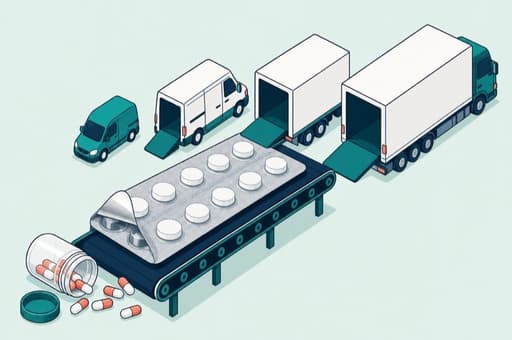
BRINSUPRI (brensocatib)
The first approved treatment for a chronic lung disease that leaves people with infection after infection, on sale since August 2025 and already seven of every ten dollars Insmed takes in. Guided to $1.25–1.4 billion this year; watch whether about 7,000 new patients keep starting every quarter.
Competes with Verducatib (BI 1291583) (Boehringer Ingelheim) · HSK31858 (Haisco Pharmaceutical) · Airway clearance and macrolide antibiotics (Standard of care)
In plain English
Bronchiectasis is a long-term lung disease whose sufferers catch chest infection after chest infection, and until August 2025 nothing at all was approved to treat it — doctors cleared mucus out and reached for old antibiotics. BRINSUPRI is a once-a-day pill that damps down the inflammation behind those flare-ups; in its main trial it cut the yearly flare-up rate by about a fifth.
Insmed did not invent it. The molecule was licensed from AstraZeneca a decade ago, and AstraZeneca still collects milestone payments and royalties as it sells. The pills reach patients through a short list of specialty pharmacies and one distributor rather than ordinary drugstores — three buyers were roughly three-quarters of Insmed's gross sales last year, and the filings do not name them.
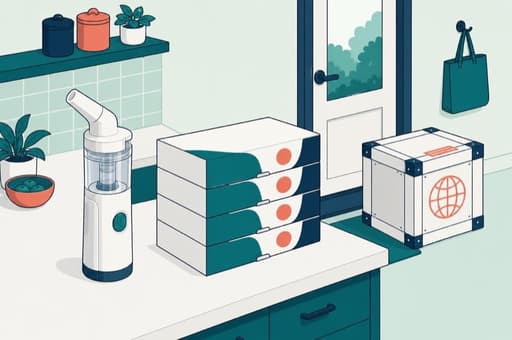
ARIKAYCE
An inhaled antibiotic mist for a stubborn lung infection, in its eighth year on the market and still growing high single digits — it fell from the whole company to under a third of it in four quarters without ever shrinking. Guided to $450–470 million this year.
Competes with MNKD-101 inhaled clofazimine (MannKind) · Epetraborole (AN2 Therapeutics) · Azithromycin and ethambutol regimens (Generic drugmakers)
In plain English
The medicine that paid for everything until last summer. A few tens of thousands of people carry a bacterial infection deep in the lungs that ordinary tablets often fail to clear; ARIKAYCE wraps an antibiotic in tiny fatty bubbles so it can be breathed straight into the lung, once a day, through a small hand-held mister that the device maker PARI builds for this drug alone.
Every patient on therapy is money for Insmed and for PARI, which earns on the device side. Almost all of Insmed's sales outside America are this drug, Japan the biggest of those markets. Its job now is to throw off steady cash while the pill scales.
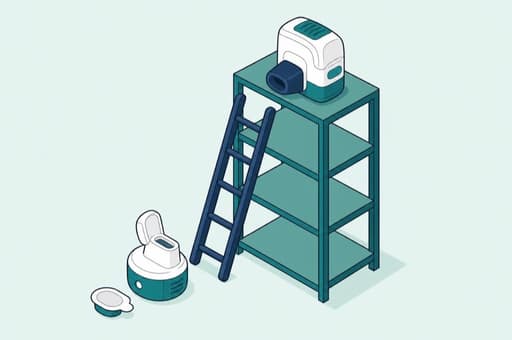
TPIP (treprostinil palmitil inhalation powder)
A once-daily powder you breathe in, in late-stage testing for high pressure in the lungs' blood vessels and for scarred lungs. Nothing is sold yet; management's stated hope is more than $6 billion a year at its peak.
Competes with Tyvaso and Tyvaso DPI (United Therapeutics) · YUTREPIA (Liquidia) · WINREVAIR (Merck)
In plain English
Insmed took treprostinil — a medicine already used for high pressure in the lungs' blood vessels — and rebuilt it as a dry powder breathed in once a day. This is the third of the company's three lung bets, and the one carrying the biggest ambition.
It earns nothing yet and will not for years. Two late-stage trials are running and two more are planned, all paid for out of the two selling drugs plus a cash pile of a little over a billion dollars; management expects the company to stop burning cash next year. To win, the powder has to take patients from an inhaled rival that already sells well over a billion dollars a year, and from a newer dry-powder entrant.
INS1148
An experimental antibody Insmed bought outright at the end of 2025 for what it called a very modest amount, aimed first at scarred lungs — the same disease TPIP is chasing. Management has gone quiet on it since.
Competes with Nintedanib and pirfenidone (Incumbent lung-scarring pills) · TPIP in scarred-lung disease (Insmed)
In plain English
December 2025: Insmed went shopping and came home with an antibody. It bought the worldwide rights from Opsidio, a small private developer, renamed the asset INS1148, and pointed it at the same scarred-lung diseases TPIP is entering. An antibody is a protein grown in a lab to latch onto one target in the body; this one goes after a particular form of a body signal called stem cell factor.
There is no money in it today and there will not be for years — it has only just reached testing in people. Insmed folded the purchase price into a lump of one-off costs and called it a very modest amount for something it rates alongside the science behind BRINSUPRI.

Gene therapy portfolio (INS1201, INS1202, INS1203)
Three genetic treatments out of the San Diego lab Insmed bought around 2021: one for Duchenne muscular dystrophy, one for ALS, one for an inherited eye condition. Two have reached first tests in people; the launch has crowded them out of management's talk.
Competes with Elevidys (Sarepta Therapeutics) · Cambridge ALS program (Insmed)
In plain English
Most medicines have to be taken again and again. Gene therapy goes after the instruction instead — deliver a working copy of a faulty gene, or switch off a harmful one, ideally once. Insmed's three come from the San Diego research site it bought around 2021: one for Duchenne muscular dystrophy, a muscle-wasting disease; one for ALS; one for an inherited eye condition, still in animal work.
None of it earns anything and none of it is close. Insmed holds early research below a fifth of what it spends and asks the site for one or two new candidates a year — a cheap side bet that the two selling drugs pay for.


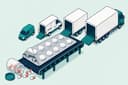 BRINSUPRI (brensocatib)The first approved treatment for a chronic lung disease that leaves people with infection after infection, on sale since August 2025 and already seven of every ten dollars Insmed takes in. Guided to $1.25–1.4 billion this year; watch whether about 7,000 new patients keep starting every quarter.
The first approved treatment for a chronic lung disease that leaves people with infection after infection, on sale since August 2025 and already seven of every ten dollars Insmed takes in. Guided to $1.25–1.4 billion this year; watch whether about 7,000 new patients keep starting every quarter.
In plain English
Bronchiectasis is a long-term lung disease whose sufferers catch chest infection after chest infection, and until August 2025 nothing at all was approved to treat it — doctors cleared mucus out and reached for old antibiotics. BRINSUPRI is a once-a-day pill that damps down the inflammation behind those flare-ups; in its main trial it cut the yearly flare-up rate by about a fifth.
Insmed did not invent it. The molecule was licensed from AstraZeneca a decade ago, and AstraZeneca still collects milestone payments and royalties as it sells. The pills reach patients through a short list of specialty pharmacies and one distributor rather than ordinary drugstores — three buyers were roughly three-quarters of Insmed's gross sales last year, and the filings do not name them.
Competes with Verducatib (BI 1291583) (Boehringer Ingelheim) · HSK31858 (Haisco Pharmaceutical) · Airway clearance and macrolide antibiotics (Standard of care)
 ARIKAYCEAn inhaled antibiotic mist for a stubborn lung infection, in its eighth year on the market and still growing high single digits — it fell from the whole company to under a third of it in four quarters without ever shrinking. Guided to $450–470 million this year.
An inhaled antibiotic mist for a stubborn lung infection, in its eighth year on the market and still growing high single digits — it fell from the whole company to under a third of it in four quarters without ever shrinking. Guided to $450–470 million this year.
In plain English
The medicine that paid for everything until last summer. A few tens of thousands of people carry a bacterial infection deep in the lungs that ordinary tablets often fail to clear; ARIKAYCE wraps an antibiotic in tiny fatty bubbles so it can be breathed straight into the lung, once a day, through a small hand-held mister that the device maker PARI builds for this drug alone.
Every patient on therapy is money for Insmed and for PARI, which earns on the device side. Almost all of Insmed's sales outside America are this drug, Japan the biggest of those markets. Its job now is to throw off steady cash while the pill scales.
Competes with MNKD-101 inhaled clofazimine (MannKind) · Epetraborole (AN2 Therapeutics) · Azithromycin and ethambutol regimens (Generic drugmakers)
 TPIP (treprostinil palmitil inhalation powder)A once-daily powder you breathe in, in late-stage testing for high pressure in the lungs' blood vessels and for scarred lungs. Nothing is sold yet; management's stated hope is more than $6 billion a year at its peak.
A once-daily powder you breathe in, in late-stage testing for high pressure in the lungs' blood vessels and for scarred lungs. Nothing is sold yet; management's stated hope is more than $6 billion a year at its peak.
In plain English
Insmed took treprostinil — a medicine already used for high pressure in the lungs' blood vessels — and rebuilt it as a dry powder breathed in once a day. This is the third of the company's three lung bets, and the one carrying the biggest ambition.
It earns nothing yet and will not for years. Two late-stage trials are running and two more are planned, all paid for out of the two selling drugs plus a cash pile of a little over a billion dollars; management expects the company to stop burning cash next year. To win, the powder has to take patients from an inhaled rival that already sells well over a billion dollars a year, and from a newer dry-powder entrant.
Competes with Tyvaso and Tyvaso DPI (United Therapeutics) · YUTREPIA (Liquidia) · WINREVAIR (Merck)
 INS1148An experimental antibody Insmed bought outright at the end of 2025 for what it called a very modest amount, aimed first at scarred lungs — the same disease TPIP is chasing. Management has gone quiet on it since.
An experimental antibody Insmed bought outright at the end of 2025 for what it called a very modest amount, aimed first at scarred lungs — the same disease TPIP is chasing. Management has gone quiet on it since.
In plain English
December 2025: Insmed went shopping and came home with an antibody. It bought the worldwide rights from Opsidio, a small private developer, renamed the asset INS1148, and pointed it at the same scarred-lung diseases TPIP is entering. An antibody is a protein grown in a lab to latch onto one target in the body; this one goes after a particular form of a body signal called stem cell factor.
There is no money in it today and there will not be for years — it has only just reached testing in people. Insmed folded the purchase price into a lump of one-off costs and called it a very modest amount for something it rates alongside the science behind BRINSUPRI.
Competes with Nintedanib and pirfenidone (Incumbent lung-scarring pills) · TPIP in scarred-lung disease (Insmed)
 Gene therapy portfolio (INS1201, INS1202, INS1203)Three genetic treatments out of the San Diego lab Insmed bought around 2021: one for Duchenne muscular dystrophy, one for ALS, one for an inherited eye condition. Two have reached first tests in people; the launch has crowded them out of management's talk.
Three genetic treatments out of the San Diego lab Insmed bought around 2021: one for Duchenne muscular dystrophy, one for ALS, one for an inherited eye condition. Two have reached first tests in people; the launch has crowded them out of management's talk.
In plain English
Most medicines have to be taken again and again. Gene therapy goes after the instruction instead — deliver a working copy of a faulty gene, or switch off a harmful one, ideally once. Insmed's three come from the San Diego research site it bought around 2021: one for Duchenne muscular dystrophy, a muscle-wasting disease; one for ALS; one for an inherited eye condition, still in animal work.
None of it earns anything and none of it is close. Insmed holds early research below a fifth of what it spends and asks the site for one or two new candidates a year — a cheap side bet that the two selling drugs pay for.
Competes with Elevidys (Sarepta Therapeutics) · Cambridge ALS program (Insmed)
Named in filings, launches and programs
- ARIKAYCE for newly diagnosed MACProduct line · AnnouncedFiled with the FDA to move ARIKAYCE from last resort to first choice — management says that lifts the treatable pool from roughly 30,000 patients past 200,000.
- BRINSUPRI in JapanProduct line · AnnouncedApproved by Japan's health ministry in August 2026; management frames sales outside America as a tenth or so of the total, mostly Japanese.
- BRINSUPRI in Europe and the UKProduct line · AnnouncedCleared for sale across the EU in November 2025, then paused in May 2026 — management says a US drug-pricing policy makes selling there not worth it.
- EMBARC bronchiectasis studyCustomer program · AnnouncedA European research network intends to test BRINSUPRI in about 3,000 patients, to see whether it slows the disease itself and not just the flare-ups.
- Lamira nebulizerProductThe hand-held mister ARIKAYCE is breathed through, built for it by PARI under supply and licensing deals; PARI earns on every patient on therapy.
- INS1033 and the next DPP1 programProduct · Pre-revenueInsmed's own follow-up to BRINSUPRI, owned outright with no licence to pay, headed first into rheumatoid arthritis — after two tries at widening brensocatib missed.
- Synthetic rescue platformPlatform · Pre-revenueGene-silencing work from the Cambridge, England site bought in 2023, aimed at two rare inherited nerve disorders.
- Next-Gen UricaseProduct · Pre-revenueEarly lab work for gout that will not respond to treatment, designed on the New Hampshire platform that redesigns proteins so the body tolerates them.
- IgG ProteaseProduct · Pre-revenueSecond output of that same New Hampshire protein platform, running since early 2021; the disease it is aimed at has not been disclosed.
- Shared respiratory sales forceServiceOne US team calls on lung doctors for both selling drugs, and would carry TPIP too if it is ever approved.
ARIKAYCE for newly diagnosed MACProduct line · Announced
Filed with the FDA to move ARIKAYCE from last resort to first choice — management says that lifts the treatable pool from roughly 30,000 patients past 200,000.
BRINSUPRI in JapanProduct line · Announced
Approved by Japan's health ministry in August 2026; management frames sales outside America as a tenth or so of the total, mostly Japanese.
BRINSUPRI in Europe and the UKProduct line · Announced
Cleared for sale across the EU in November 2025, then paused in May 2026 — management says a US drug-pricing policy makes selling there not worth it.
EMBARC bronchiectasis studyCustomer program · Announced
A European research network intends to test BRINSUPRI in about 3,000 patients, to see whether it slows the disease itself and not just the flare-ups.
Lamira nebulizerProduct
The hand-held mister ARIKAYCE is breathed through, built for it by PARI under supply and licensing deals; PARI earns on every patient on therapy.
INS1033 and the next DPP1 programProduct · Pre-revenue
Insmed's own follow-up to BRINSUPRI, owned outright with no licence to pay, headed first into rheumatoid arthritis — after two tries at widening brensocatib missed.
Synthetic rescue platformPlatform · Pre-revenue
Gene-silencing work from the Cambridge, England site bought in 2023, aimed at two rare inherited nerve disorders.
Next-Gen UricaseProduct · Pre-revenue
Early lab work for gout that will not respond to treatment, designed on the New Hampshire platform that redesigns proteins so the body tolerates them.
IgG ProteaseProduct · Pre-revenue
Second output of that same New Hampshire protein platform, running since early 2021; the disease it is aimed at has not been disclosed.
Shared respiratory sales forceService
One US team calls on lung doctors for both selling drugs, and would carry TPIP too if it is ever approved.