
Alliant Energy (LNT)
Provides regulated electricity and natural gas service across Iowa and Wisconsin.
Something off on this page? Send us feedback.
Alliant Energy keeps the lights on and the heat running across Iowa and Wisconsin. It earns by sinking money into poles, wires and power plants, then charging rates regulators set to cover the cost plus a profit — so growth comes from building, not from selling more. What changed is who wants the power: giant computer warehouses have signed up for a lot of it, and the build-out to serve them is the story.
Item facts: FY2025 · year ended Dec 31, 2025, from filings, earnings calls and company pages.
Judgment weights, not filed revenue
The band summarizes business focus and direction. ~ marks estimates.
7 in detail · 14 more below
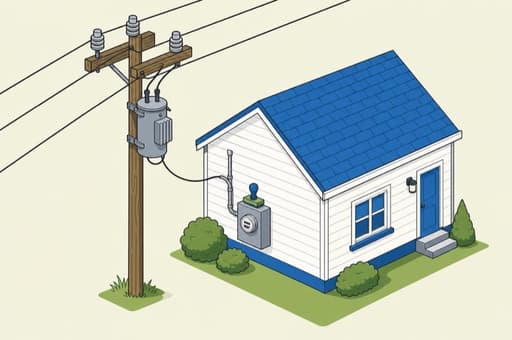
Utility Electric Operations
Generating and delivering power to about a million homes and businesses across Iowa and Wisconsin — $3.70 billion in 2025, up 9.6%. Summer air conditioning makes the third quarter the big one. No single customer reaches a tenth of sales, yet.
Competes with We Energies electric service (WEC Energy Group) · MidAmerican Energy electric service (Berkshire Hathaway Energy) · Power plants customers build on site (Independent power developers)
In plain English
Think of the bill on your kitchen counter. Alliant owns the wires running to that meter, and across its territory the power plants behind them — and in each town it is the only company allowed to do the job.
Because there is no competition, there is no haggling over price either. Regulators in Iowa and Wisconsin add up what the company spent on plants and wires, what it costs to run them, and a set profit on that investment, then spread the total across customers as a rate. Fuel is handed through at cost, so a jump in the gas price lifts the bill without lifting the earnings.
Interstate Power and Light
The Iowa half, and the bigger earner. Basic electric rates are frozen until 2029, so growth has to come from surcharges and from data centers paying their own way. Renewables covered 53% of what its Iowa customers used in 2025.
Competes with MidAmerican Energy's Iowa utility (Berkshire Hathaway Energy) · NSP upper-Midwest utility (Xcel Energy)
In plain English
Two utilities sit under Alliant, and this is the Iowa one — the bigger earner, and the place the growth story is happening. It generates and delivers electricity, pipes gas to Iowa homes, and sells power wholesale to other buyers.
Iowa is also where Alliant made an unusual promise: it will not ask to raise basic electric rates until 2029. New money has to come from two narrow channels instead — a surcharge that lets pipe-and-wire replacement earn a return between rate reviews, and the data centers, each of which signs its own contract and pays for the plants it makes necessary. Most of the announced campuses sit here.
Wisconsin Power and Light
The Wisconsin half. Its regulator resets rates every two years on next year's budget, so new plants earn back sooner than in Iowa. The pieces don't simply add up: borrowing costs at the parent company subtract about $0.33 a share.
Competes with We Energies electric and gas service (WEC Energy Group) · Madison Gas and Electric (MGE Energy) · NSP-Wisconsin (Xcel Energy)
In plain English
Same job as the Iowa side — wires, power plants, gas mains — under a different rulebook. Wisconsin regulators reset rates every two years using next year's budget rather than last year's, so a new plant starts earning back its cost sooner.
The Wisconsin year was about politics as much as engineering. A data-center project in DeForest was withdrawn after residents objected, and that load moved across the border to Iowa. Meta's campus at Beaver Dam was approved, though the commission complained that the terms of the deal had been kept out of view. The storage and gas projects at the Columbia site sit here too.
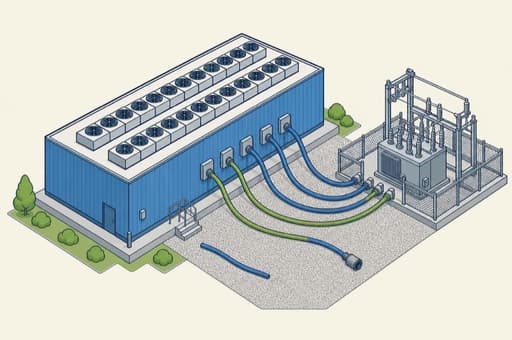
Large-Load Electric Service Agreements
Five signed contracts with data-center owners — QTS, Google, Meta and one unnamed buyer — for roughly 3.4 gigawatts, enough to push peak demand up about 60% by 2031. Barely any of it flows yet — the first site was carrying about 40 megawatts in mid-2026.
Competes with Very Large Customer power contracts (WEC Energy Group) · Large-load power contracts (Xcel Energy) · Iowa large-load hookups (MidAmerican Energy)
In plain English
A data center is a warehouse packed with computers, and what it needs most is electricity — one campus can draw as much as a small city. Five have signed up here: QTS, a data-center owner backed by the investment firm Blackstone, in Cedar Rapids; Google, also in Cedar Rapids; Meta at Beaver Dam, Wisconsin; a second QTS site; and one buyer who has not been named.
Each signs its own contract rather than paying the standard published rate. That is how Alliant argues the newcomers cover the plants they make necessary instead of pushing everyone else's bill up. Regulators have to approve every one of them.
Generation and Storage Investment Program
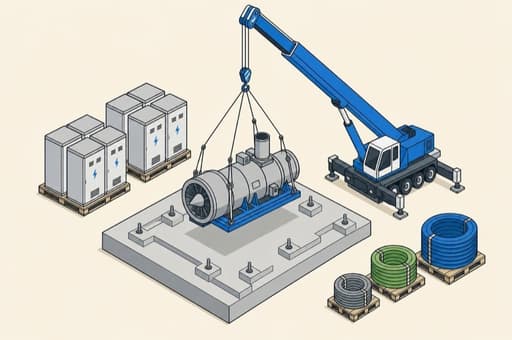
The 2026–2029 spending plan: $13.4 billion of gas plants, wind turbines and batteries. It is how signed demand turns into earnings — and why cash going out has exceeded cash coming in every year since 2020.
Competes with Wisconsin generation build-out (WEC Energy Group) · Upper-Midwest generation build-out (Xcel Energy) · Power plants sold straight to big users (Independent power developers)
In plain English
Building is the business model here. When Alliant puts money into a power plant, regulators let it charge customers enough to get that money back with a profit on top — so the bigger the pile of equipment, the bigger the earnings. Management expects that earning base to grow around twelve percent a year.
In the ground or on the drawing board: a 720-megawatt gas plant in Marshall County, Iowa; a smaller gas engine unit at Burlington; more turbines at the Bent Tree wind farm; two more gas projects waiting on permits; and batteries. Paying for it means borrowing and selling shares, which the company has been lining up years ahead.
Utility Gas Operations
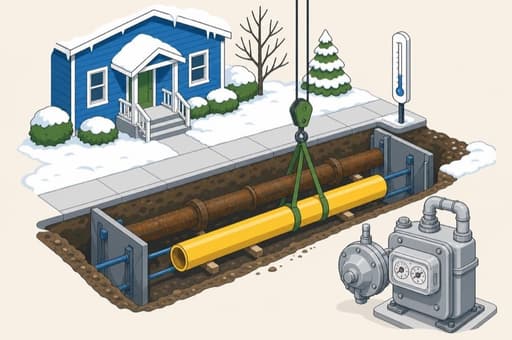
Gas mains and meters serving roughly 435,000 customers — $525 million in 2025, up 12.9% on the cost of the fuel and the weather, not on higher rates. Revenue more than triples from summer to midwinter.
Competes with We Energies gas distribution (WEC Energy Group) · MidAmerican Energy gas distribution (Berkshire Hathaway Energy) · Heat pumps and rural propane (Home heating alternatives)
In plain English
Winter is what this business is. Alliant owns the gas mains under the streets in parts of both states and delivers fuel to roughly 435,000 furnaces and water heaters. It makes nothing on the gas itself — the cost is handed to customers exactly as it arrives, so a cold, expensive winter raises the bill without raising the earnings.
What it earns on is the pipe. Replacing an old main counts as investment, and in Iowa a surcharge lets that spending start earning a return without waiting for a full rate review. Slow, steady, and at the mercy of how cold it gets.
ATC Holdings
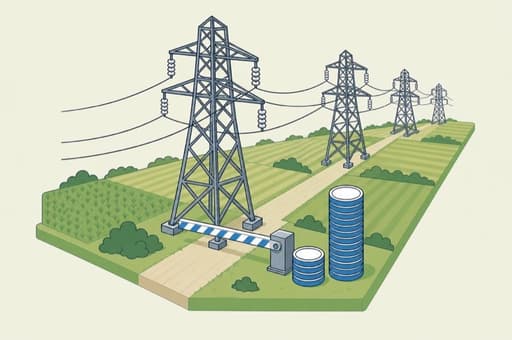
A minority stake in American Transmission Company, which owns the long-distance power lines across Wisconsin and nearby states. Worth $0.16 per Alliant share in 2025 while showing up nowhere in revenue — and Alliant is both owner and customer.
Competes with ITC Holdings' MISO transmission lines (Fortis) · Transmission lines utilities own themselves (WEC Energy Group)
In plain English
Alliant owns a slice of a separate company that does one thing: build and run the tall steel lines that carry electricity long distances across Wisconsin and its neighbours. Think of it as a toll road for electricity.
Because Alliant holds only a minority share, none of that company's sales land in Alliant's revenue — just its cut of the profit lands in the bottom line. The odd part is that Alliant sits on both sides: it pays to move power over those lines, and it collects part of what the lines earn.


 Utility Electric OperationsGenerating and delivering power to about a million homes and businesses across Iowa and Wisconsin — $3.70 billion in 2025, up 9.6%. Summer air conditioning makes the third quarter the big one. No single customer reaches a tenth of sales, yet.
Generating and delivering power to about a million homes and businesses across Iowa and Wisconsin — $3.70 billion in 2025, up 9.6%. Summer air conditioning makes the third quarter the big one. No single customer reaches a tenth of sales, yet.
In plain English
Think of the bill on your kitchen counter. Alliant owns the wires running to that meter, and across its territory the power plants behind them — and in each town it is the only company allowed to do the job.
Because there is no competition, there is no haggling over price either. Regulators in Iowa and Wisconsin add up what the company spent on plants and wires, what it costs to run them, and a set profit on that investment, then spread the total across customers as a rate. Fuel is handed through at cost, so a jump in the gas price lifts the bill without lifting the earnings.
Competes with We Energies electric service (WEC Energy Group) · MidAmerican Energy electric service (Berkshire Hathaway Energy) · Power plants customers build on site (Independent power developers)
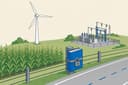 Interstate Power and LightThe Iowa half, and the bigger earner. Basic electric rates are frozen until 2029, so growth has to come from surcharges and from data centers paying their own way. Renewables covered 53% of what its Iowa customers used in 2025.
The Iowa half, and the bigger earner. Basic electric rates are frozen until 2029, so growth has to come from surcharges and from data centers paying their own way. Renewables covered 53% of what its Iowa customers used in 2025.
In plain English
Two utilities sit under Alliant, and this is the Iowa one — the bigger earner, and the place the growth story is happening. It generates and delivers electricity, pipes gas to Iowa homes, and sells power wholesale to other buyers.
Iowa is also where Alliant made an unusual promise: it will not ask to raise basic electric rates until 2029. New money has to come from two narrow channels instead — a surcharge that lets pipe-and-wire replacement earn a return between rate reviews, and the data centers, each of which signs its own contract and pays for the plants it makes necessary. Most of the announced campuses sit here.
Competes with MidAmerican Energy's Iowa utility (Berkshire Hathaway Energy) · NSP upper-Midwest utility (Xcel Energy)
 Wisconsin Power and LightThe Wisconsin half. Its regulator resets rates every two years on next year's budget, so new plants earn back sooner than in Iowa. The pieces don't simply add up: borrowing costs at the parent company subtract about $0.33 a share.
The Wisconsin half. Its regulator resets rates every two years on next year's budget, so new plants earn back sooner than in Iowa. The pieces don't simply add up: borrowing costs at the parent company subtract about $0.33 a share.
In plain English
Same job as the Iowa side — wires, power plants, gas mains — under a different rulebook. Wisconsin regulators reset rates every two years using next year's budget rather than last year's, so a new plant starts earning back its cost sooner.
The Wisconsin year was about politics as much as engineering. A data-center project in DeForest was withdrawn after residents objected, and that load moved across the border to Iowa. Meta's campus at Beaver Dam was approved, though the commission complained that the terms of the deal had been kept out of view. The storage and gas projects at the Columbia site sit here too.
Competes with We Energies electric and gas service (WEC Energy Group) · Madison Gas and Electric (MGE Energy) · NSP-Wisconsin (Xcel Energy)
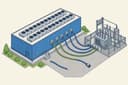 Large-Load Electric Service AgreementsFive signed contracts with data-center owners — QTS, Google, Meta and one unnamed buyer — for roughly 3.4 gigawatts, enough to push peak demand up about 60% by 2031. Barely any of it flows yet — the first site was carrying about 40 megawatts in mid-2026.
Five signed contracts with data-center owners — QTS, Google, Meta and one unnamed buyer — for roughly 3.4 gigawatts, enough to push peak demand up about 60% by 2031. Barely any of it flows yet — the first site was carrying about 40 megawatts in mid-2026.
In plain English
A data center is a warehouse packed with computers, and what it needs most is electricity — one campus can draw as much as a small city. Five have signed up here: QTS, a data-center owner backed by the investment firm Blackstone, in Cedar Rapids; Google, also in Cedar Rapids; Meta at Beaver Dam, Wisconsin; a second QTS site; and one buyer who has not been named.
Each signs its own contract rather than paying the standard published rate. That is how Alliant argues the newcomers cover the plants they make necessary instead of pushing everyone else's bill up. Regulators have to approve every one of them.
Competes with Very Large Customer power contracts (WEC Energy Group) · Large-load power contracts (Xcel Energy) · Iowa large-load hookups (MidAmerican Energy)
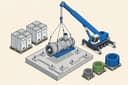 Generation and Storage Investment ProgramThe 2026–2029 spending plan: $13.4 billion of gas plants, wind turbines and batteries. It is how signed demand turns into earnings — and why cash going out has exceeded cash coming in every year since 2020.
The 2026–2029 spending plan: $13.4 billion of gas plants, wind turbines and batteries. It is how signed demand turns into earnings — and why cash going out has exceeded cash coming in every year since 2020.
In plain English
Building is the business model here. When Alliant puts money into a power plant, regulators let it charge customers enough to get that money back with a profit on top — so the bigger the pile of equipment, the bigger the earnings. Management expects that earning base to grow around twelve percent a year.
In the ground or on the drawing board: a 720-megawatt gas plant in Marshall County, Iowa; a smaller gas engine unit at Burlington; more turbines at the Bent Tree wind farm; two more gas projects waiting on permits; and batteries. Paying for it means borrowing and selling shares, which the company has been lining up years ahead.
Competes with Wisconsin generation build-out (WEC Energy Group) · Upper-Midwest generation build-out (Xcel Energy) · Power plants sold straight to big users (Independent power developers)
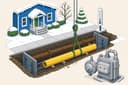 Utility Gas OperationsGas mains and meters serving roughly 435,000 customers — $525 million in 2025, up 12.9% on the cost of the fuel and the weather, not on higher rates. Revenue more than triples from summer to midwinter.
Gas mains and meters serving roughly 435,000 customers — $525 million in 2025, up 12.9% on the cost of the fuel and the weather, not on higher rates. Revenue more than triples from summer to midwinter.
In plain English
Winter is what this business is. Alliant owns the gas mains under the streets in parts of both states and delivers fuel to roughly 435,000 furnaces and water heaters. It makes nothing on the gas itself — the cost is handed to customers exactly as it arrives, so a cold, expensive winter raises the bill without raising the earnings.
What it earns on is the pipe. Replacing an old main counts as investment, and in Iowa a surcharge lets that spending start earning a return without waiting for a full rate review. Slow, steady, and at the mercy of how cold it gets.
Competes with We Energies gas distribution (WEC Energy Group) · MidAmerican Energy gas distribution (Berkshire Hathaway Energy) · Heat pumps and rural propane (Home heating alternatives)
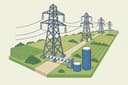 ATC HoldingsA minority stake in American Transmission Company, which owns the long-distance power lines across Wisconsin and nearby states. Worth $0.16 per Alliant share in 2025 while showing up nowhere in revenue — and Alliant is both owner and customer.
A minority stake in American Transmission Company, which owns the long-distance power lines across Wisconsin and nearby states. Worth $0.16 per Alliant share in 2025 while showing up nowhere in revenue — and Alliant is both owner and customer.
In plain English
Alliant owns a slice of a separate company that does one thing: build and run the tall steel lines that carry electricity long distances across Wisconsin and its neighbours. Think of it as a toll road for electricity.
Because Alliant holds only a minority share, none of that company's sales land in Alliant's revenue — just its cut of the profit lands in the bottom line. The odd part is that Alliant sits on both sides: it pays to move power over those lines, and it collects part of what the lines earn.
Competes with ITC Holdings' MISO transmission lines (Fortis) · Transmission lines utilities own themselves (WEC Energy Group)
Named in filings, launches and programs
- TraveroBrandAlliant's freight arm — brokerage, warehousing, transloading, a short-line Iowa railroad and barge terminals. Part of the small revenue earned outside the two utilities.
- Alliant Energy FinanceBrandThe pocket holding everything that is not a regulated utility: the transmission stake, Travero, venture investments, a wind farm and the Sheboygan Falls gas plant.
- Alliant Energy Corporate ServicesBrandShared back-office work for the group; contributed $0.06 of the $3.22 earned per share in 2025.
- QIP rider programServiceAn Iowa surcharge that lets pipe-and-wire replacement start earning a return between rate cases — about two points of the roughly twelve percent growth.
- Energy DomeProduct · AnnouncedA carbon-dioxide battery that stores power for long stretches, next to the Columbia plant in Wisconsin; approved by the state and part of a roughly $50 million federal grant.
- Meta fiber and conduit leaseCustomer programMeta rents space in Alliant's underground conduit to run data-center fiber — a small second way the same customer pays.
- Corporate venture fund investmentsPlatformA portfolio of stakes in young energy companies; higher earnings from it were named as a driver of the June 2026 quarter.
- Sheboygan Falls Energy FacilityProductA gas generating plant held outside the two regulated utilities; upgrades there and at Neenah unlock 260 megawatts from equipment already standing.
- Non-utility wind farmProductA wind farm owned outside the regulated utilities, sitting in the same small non-regulated revenue line as Travero.
- Bobcat Energy CenterProduct · AnnouncedA 720-megawatt gas plant under construction in Marshall County, Iowa.
- Burlington gas engine unitProduct · AnnouncedA roughly 95-megawatt gas engine unit under construction at Burlington, Iowa.
- Bent Tree Wind expansionProduct · AnnouncedAbout 150 megawatts of extra turbines at an existing Alliant wind farm, run by the Wisconsin utility.
- Morgan Valley and Riverhawk gas projectsProduct · AnnouncedTwo proposed gas plants, 720 megawatts and 1.2 gigawatts, with permit applications filed alongside about 125 megawatts of batteries.
- QTS ClintonCustomer program · AnnouncedA proposed 900-megawatt data-center hookup at Clinton, Iowa, with a rate filing due in 2026 — not yet one of the five signed deals.
TraveroBrand
Alliant's freight arm — brokerage, warehousing, transloading, a short-line Iowa railroad and barge terminals. Part of the small revenue earned outside the two utilities.
Alliant Energy FinanceBrand
The pocket holding everything that is not a regulated utility: the transmission stake, Travero, venture investments, a wind farm and the Sheboygan Falls gas plant.
Alliant Energy Corporate ServicesBrand
Shared back-office work for the group; contributed $0.06 of the $3.22 earned per share in 2025.
QIP rider programService
An Iowa surcharge that lets pipe-and-wire replacement start earning a return between rate cases — about two points of the roughly twelve percent growth.
Energy DomeProduct · Announced
A carbon-dioxide battery that stores power for long stretches, next to the Columbia plant in Wisconsin; approved by the state and part of a roughly $50 million federal grant.
Meta fiber and conduit leaseCustomer program
Meta rents space in Alliant's underground conduit to run data-center fiber — a small second way the same customer pays.
Corporate venture fund investmentsPlatform
A portfolio of stakes in young energy companies; higher earnings from it were named as a driver of the June 2026 quarter.
Sheboygan Falls Energy FacilityProduct
A gas generating plant held outside the two regulated utilities; upgrades there and at Neenah unlock 260 megawatts from equipment already standing.
Non-utility wind farmProduct
A wind farm owned outside the regulated utilities, sitting in the same small non-regulated revenue line as Travero.
Bobcat Energy CenterProduct · Announced
A 720-megawatt gas plant under construction in Marshall County, Iowa.
Burlington gas engine unitProduct · Announced
A roughly 95-megawatt gas engine unit under construction at Burlington, Iowa.
Bent Tree Wind expansionProduct · Announced
About 150 megawatts of extra turbines at an existing Alliant wind farm, run by the Wisconsin utility.
Morgan Valley and Riverhawk gas projectsProduct · Announced
Two proposed gas plants, 720 megawatts and 1.2 gigawatts, with permit applications filed alongside about 125 megawatts of batteries.
QTS ClintonCustomer program · Announced
A proposed 900-megawatt data-center hookup at Clinton, Iowa, with a rate filing due in 2026 — not yet one of the five signed deals.