
MACOM Technology Solutions (MTSI)
Builds RF-to-lightwave semiconductors for industrial, defense, data center, and telecommunications systems.
Something off on this page? Send us feedback.
MACOM makes the small chips that turn electricity into radio waves and light — the parts hidden inside radars, satellites, phone networks and the fast links that wire AI data centres together. Defence and telecom work built the company and still pay much of the bill. The data-centre side is now growing far faster than the rest, and MACOM is spending to make more of the light-emitting parts itself.
Item facts: FY2026 · nine months ended July 3, 2026, from filings, earnings calls and company pages.
Judgment weights, not filed revenue
The band summarizes business focus and direction. ~ marks estimates.
8 in detail · 14 more below
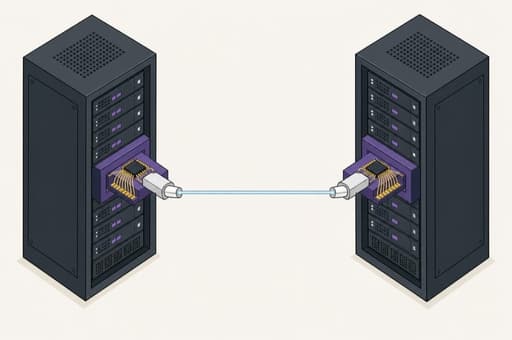
Data Center Connectivity Chipsets
Chips that sit at both ends of the fast links wiring an AI data centre together. Data-centre sales hit $137.6M last quarter, up 40% on the one before; company-wide, orders ran a record 1.6 times shipments.
Competes with FiberEdge amplifiers and drivers (Semtech) · Optical DSP chips with the driver built in (Marvell) · Optical DSP chips (Broadcom)
In plain English
Inside a data centre, machines talk to each other down glass fibre and copper cable, and a signal that leaves crisp arrives faint and smeared. MACOM sells the chips at both ends: one pushes the light or the current out, the other amplifies the whisper that comes back and squares it into clean ones and zeros.
The buyers are the firms that build the plug-in modules and cables, who solder a few dollars' worth of MACOM silicon into each one and ship them to the companies filling halls with AI machines. Get picked for a design and you ship into it for years — so what matters is whose product you sit inside, not this month's order.
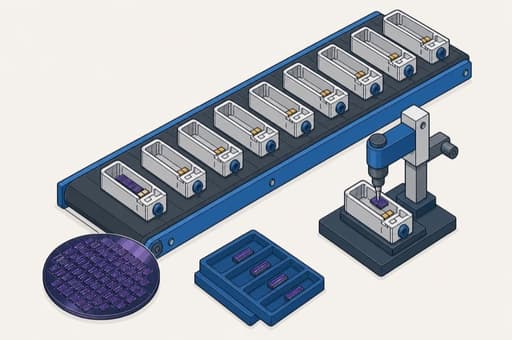
Indium Phosphide Photonics
MACOM's own light-catching and light-making parts, grown in its own factories rather than bought in. The 200G detectors are in volume production; the 75-milliwatt laser is still being qualified, and management says it cannot declare success yet.
Competes with Indium phosphide lasers and photodiodes (Coherent Corp.) · Indium phosphide laser chips (Lumentum) · Optical devices (Sumitomo Electric Device Innovations)
In plain English
Fibre carries light, so every optical link needs something to make light at one end and something to catch it at the other. MACOM grows both from indium phosphide, a crystal suited to the wavelengths fibre likes.
The catching half — photodetectors, which turn light back into electricity — already ships in volume, and MACOM says it has been designed in at all the major module makers building 800-gigabit or 1.6-terabit parts. Lasers are the harder half: the industry is short of them, which is pulling demand for MACOM's older 25-gigabit lasers, while a stronger always-on laser sits in qualification testing. Making these in-house means MACOM sells the whole light path instead of buying a piece of it.
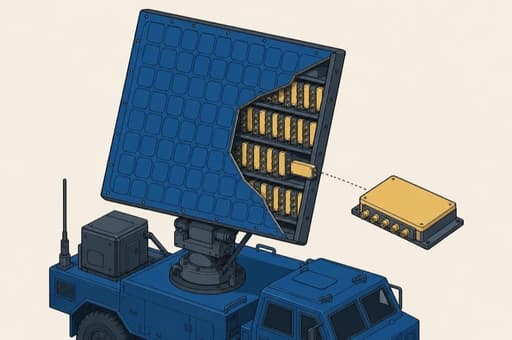
Defense RF & Microwave Components
Amplifiers, switches and radar chips for radar, missile defence, drones and electronic warfare. Defence grew about 19% last fiscal year and management expects roughly 25% more this year. It rides government budgets and keeps the Massachusetts factory loaded.
Competes with Defense radar chips in gallium nitride and gallium arsenide (Qorvo) · RF and microwave power amplifiers (Analog Devices) · RF discretes for defense systems (NXP)
In plain English
Radar works by shouting in radio waves and listening for the echo. Somebody has to build the parts that do both — the amplifier that puts power behind the shout, the switch that flips between sending and listening, the core chips at the heart of the radar set. That is this business.
Defence contractors in America and Europe design those parts into radars, missile-defence systems, drone and counter-drone kit and jamming gear, then keep buying them for as long as the programme runs. MACOM builds them in its own Massachusetts plant, so every extra order also makes that plant cheaper to run — management ties its loading straight to defence volume.
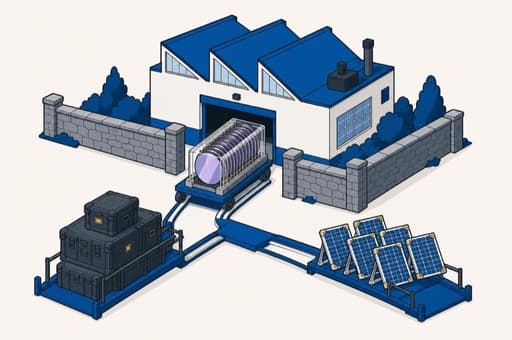
MACOM European Semiconductor Center
A wafer plant and design house in France, bought from the French government for about 38 million euros. It reaches European defence, space and telecom customers MACOM did not serve before, and holds space-qualified recipes from the European Space Agency.
Competes with Defense and space chip lines in Europe (Qorvo) · Epitaxial wafers and foundry services (IQE) · Microwave chip lines (Analog Devices)
In plain English
Buying a factory is also buying a customer list. Taking over this French site gave MACOM a building that grows and processes compound-semiconductor wafers — the exotic crystals radio and radar chips are cut from — plus a design team and a set of European buyers it had not reached.
The money arrives two ways. Some wafers become MACOM's own products for defence, space and telecom. The rest are made to order for outside companies that bring their own designs, the chip equivalent of renting time in a commercial kitchen. The French state, which sold the site, is also funding a chip-development project there, and a new wafer-growing furnace started going in this year.
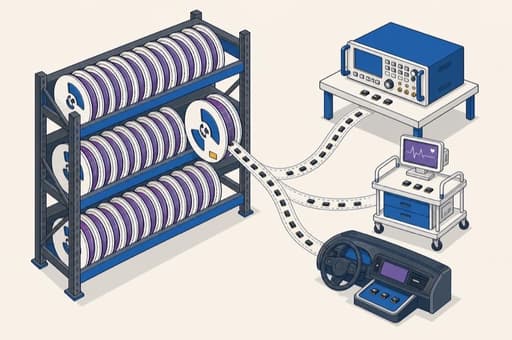
Industrial & Multi-Market Products
The catalogue half of the industrial and defence business: parts for test instruments, medical kit, factory machines and cars. Test-gear demand is picking up as instrument makers tool up for AI production; the car line is tiny but expected to double this year.
Competes with Catalogue analog and RF parts (Analog Devices) · RF diodes and discretes (Skyworks) · Catalogue RF parts (Microchip)
In plain English
Thousands of small parts, no single big buyer. Diodes, switches and amplifiers that end up in bench test instruments, hospital equipment, factory machines and cars, including non-magnetic high-voltage diodes where MACOM says it holds a strong installed position.
Most of it moves through distributors — wholesalers who stock chips and resell them to whoever needs fifty. That is why MACOM's two largest revenue counterparties are resellers rather than end users: two of them carried 19% and 12% of all company revenue over the past nine months, and MACOM does not name them. The wrinkle worth noticing is that some AI money lands here too, arriving through the instrument makers whose gear MACOM's chips sit inside.

SATCOM & LEO Satellite Programs
Radio gear for satellites and the ground stations that talk to them. Management says MACOM is engaged at some level with every major low-orbit constellation; the one publicly sized job is a $55M contract with a $25M option, spread over a multi-year build.
Competes with Space-qualified amplifiers and frequency conversion (Analog Devices) · Space-qualified RF amplifiers (Qorvo) · Microwave and millimetre-wave devices (Sumitomo Electric Device Innovations)
In plain English
Every satellite carries a radio, and so does every dish on the ground that talks to it. MACOM supplies the innards: chipsets that shift signals between frequency bands, amplifiers that push a signal up to something in orbit, and sealed amplifier boxes built to survive a launch and years in space.
Those space-qualified boxes sell for five and six figures each, against cents to a few dollars for a high-volume optical chip — few units, big tickets. Buyers are the companies flying low-orbit broadband and direct-to-phone constellations, plus the suppliers who build their payloads and ground stations. Designs take a while to reach production, then order for years.

Telecom, Cable & Long-Haul Optics
The older optical-chip line — home fibre, cable broadband, links between cities. This is the flat part: telecom sales crept up about 2% a quarter this year while data-centre sales jumped 40% in one, and next quarter is guided to low-single-digit growth.
Competes with PON-X burst-mode amplifiers for access fibre (Semtech) · Access network chips (MaxLinear) · Cable broadband chips (Broadcom)
In plain English
Before AI data centres, this was the optical business. The same job — drive light out one end, rebuild a faint signal at the other — but over kilometres instead of metres: fibre running to houses, cable-broadband gear, and the long links that carry traffic between cities and between data centres.
Phone carriers and cable operators upgrade on slow budget cycles, so the equipment makers who buy these chips order on slow cycles too. Parts for the newest cable-broadband standard began drawing orders a year ago, and management calls that upgrade a modest contributor. The line still pays; the growth has simply moved to the data-centre side of the same technology.
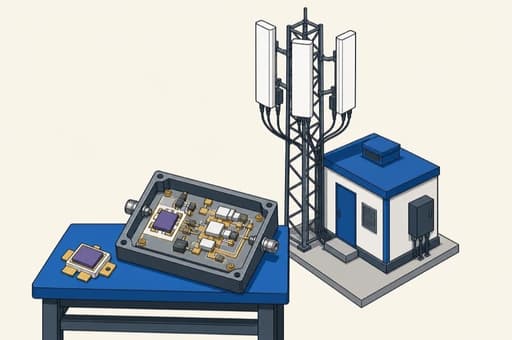
GaN RF Power for 5G Base Stations
Power amplifier chips for mobile-phone towers, made in the North Carolina plant MACOM took over with Wolfspeed's radio business. Small today, and mostly in ordinary macro towers — management frames the gap as room to perhaps more than double 5G revenue.
Competes with Base-station gallium nitride power amplifiers (NXP) · Base-station RF power devices (Qorvo) · Microwave power devices (Sumitomo Electric Device Innovations)
In plain English
A mobile tower needs a chip that can take a weak signal and push it out across the whole area the tower covers. The industry builds those out of gallium nitride grown on silicon carbide, and MACOM bought the factory and the product line that make them from Wolfspeed.
The fourth generation of that recipe has gone to major customers for testing, and MACOM is bringing the surrounding matching circuitry in-house, so it sells more of each amplifier rather than just the bare transistor. The buyers are the handful of firms that build base stations, including two large European ones. It moves slowly: about a year passes between being designed in and shipping in volume.


 Data Center Connectivity ChipsetsChips that sit at both ends of the fast links wiring an AI data centre together. Data-centre sales hit $137.6M last quarter, up 40% on the one before; company-wide, orders ran a record 1.6 times shipments.
Chips that sit at both ends of the fast links wiring an AI data centre together. Data-centre sales hit $137.6M last quarter, up 40% on the one before; company-wide, orders ran a record 1.6 times shipments.
In plain English
Inside a data centre, machines talk to each other down glass fibre and copper cable, and a signal that leaves crisp arrives faint and smeared. MACOM sells the chips at both ends: one pushes the light or the current out, the other amplifies the whisper that comes back and squares it into clean ones and zeros.
The buyers are the firms that build the plug-in modules and cables, who solder a few dollars' worth of MACOM silicon into each one and ship them to the companies filling halls with AI machines. Get picked for a design and you ship into it for years — so what matters is whose product you sit inside, not this month's order.
Competes with FiberEdge amplifiers and drivers (Semtech) · Optical DSP chips with the driver built in (Marvell) · Optical DSP chips (Broadcom)
 Indium Phosphide PhotonicsMACOM's own light-catching and light-making parts, grown in its own factories rather than bought in. The 200G detectors are in volume production; the 75-milliwatt laser is still being qualified, and management says it cannot declare success yet.
MACOM's own light-catching and light-making parts, grown in its own factories rather than bought in. The 200G detectors are in volume production; the 75-milliwatt laser is still being qualified, and management says it cannot declare success yet.
In plain English
Fibre carries light, so every optical link needs something to make light at one end and something to catch it at the other. MACOM grows both from indium phosphide, a crystal suited to the wavelengths fibre likes.
The catching half — photodetectors, which turn light back into electricity — already ships in volume, and MACOM says it has been designed in at all the major module makers building 800-gigabit or 1.6-terabit parts. Lasers are the harder half: the industry is short of them, which is pulling demand for MACOM's older 25-gigabit lasers, while a stronger always-on laser sits in qualification testing. Making these in-house means MACOM sells the whole light path instead of buying a piece of it.
Competes with Indium phosphide lasers and photodiodes (Coherent Corp.) · Indium phosphide laser chips (Lumentum) · Optical devices (Sumitomo Electric Device Innovations)
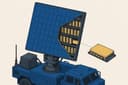 Defense RF & Microwave ComponentsAmplifiers, switches and radar chips for radar, missile defence, drones and electronic warfare. Defence grew about 19% last fiscal year and management expects roughly 25% more this year. It rides government budgets and keeps the Massachusetts factory loaded.
Amplifiers, switches and radar chips for radar, missile defence, drones and electronic warfare. Defence grew about 19% last fiscal year and management expects roughly 25% more this year. It rides government budgets and keeps the Massachusetts factory loaded.
In plain English
Radar works by shouting in radio waves and listening for the echo. Somebody has to build the parts that do both — the amplifier that puts power behind the shout, the switch that flips between sending and listening, the core chips at the heart of the radar set. That is this business.
Defence contractors in America and Europe design those parts into radars, missile-defence systems, drone and counter-drone kit and jamming gear, then keep buying them for as long as the programme runs. MACOM builds them in its own Massachusetts plant, so every extra order also makes that plant cheaper to run — management ties its loading straight to defence volume.
Competes with Defense radar chips in gallium nitride and gallium arsenide (Qorvo) · RF and microwave power amplifiers (Analog Devices) · RF discretes for defense systems (NXP)
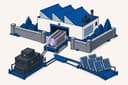 MACOM European Semiconductor CenterA wafer plant and design house in France, bought from the French government for about 38 million euros. It reaches European defence, space and telecom customers MACOM did not serve before, and holds space-qualified recipes from the European Space Agency.
A wafer plant and design house in France, bought from the French government for about 38 million euros. It reaches European defence, space and telecom customers MACOM did not serve before, and holds space-qualified recipes from the European Space Agency.
In plain English
Buying a factory is also buying a customer list. Taking over this French site gave MACOM a building that grows and processes compound-semiconductor wafers — the exotic crystals radio and radar chips are cut from — plus a design team and a set of European buyers it had not reached.
The money arrives two ways. Some wafers become MACOM's own products for defence, space and telecom. The rest are made to order for outside companies that bring their own designs, the chip equivalent of renting time in a commercial kitchen. The French state, which sold the site, is also funding a chip-development project there, and a new wafer-growing furnace started going in this year.
Competes with Defense and space chip lines in Europe (Qorvo) · Epitaxial wafers and foundry services (IQE) · Microwave chip lines (Analog Devices)
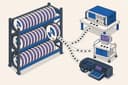 Industrial & Multi-Market ProductsThe catalogue half of the industrial and defence business: parts for test instruments, medical kit, factory machines and cars. Test-gear demand is picking up as instrument makers tool up for AI production; the car line is tiny but expected to double this year.
The catalogue half of the industrial and defence business: parts for test instruments, medical kit, factory machines and cars. Test-gear demand is picking up as instrument makers tool up for AI production; the car line is tiny but expected to double this year.
In plain English
Thousands of small parts, no single big buyer. Diodes, switches and amplifiers that end up in bench test instruments, hospital equipment, factory machines and cars, including non-magnetic high-voltage diodes where MACOM says it holds a strong installed position.
Most of it moves through distributors — wholesalers who stock chips and resell them to whoever needs fifty. That is why MACOM's two largest revenue counterparties are resellers rather than end users: two of them carried 19% and 12% of all company revenue over the past nine months, and MACOM does not name them. The wrinkle worth noticing is that some AI money lands here too, arriving through the instrument makers whose gear MACOM's chips sit inside.
Competes with Catalogue analog and RF parts (Analog Devices) · RF diodes and discretes (Skyworks) · Catalogue RF parts (Microchip)
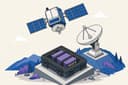 SATCOM & LEO Satellite ProgramsRadio gear for satellites and the ground stations that talk to them. Management says MACOM is engaged at some level with every major low-orbit constellation; the one publicly sized job is a $55M contract with a $25M option, spread over a multi-year build.
Radio gear for satellites and the ground stations that talk to them. Management says MACOM is engaged at some level with every major low-orbit constellation; the one publicly sized job is a $55M contract with a $25M option, spread over a multi-year build.
In plain English
Every satellite carries a radio, and so does every dish on the ground that talks to it. MACOM supplies the innards: chipsets that shift signals between frequency bands, amplifiers that push a signal up to something in orbit, and sealed amplifier boxes built to survive a launch and years in space.
Those space-qualified boxes sell for five and six figures each, against cents to a few dollars for a high-volume optical chip — few units, big tickets. Buyers are the companies flying low-orbit broadband and direct-to-phone constellations, plus the suppliers who build their payloads and ground stations. Designs take a while to reach production, then order for years.
Competes with Space-qualified amplifiers and frequency conversion (Analog Devices) · Space-qualified RF amplifiers (Qorvo) · Microwave and millimetre-wave devices (Sumitomo Electric Device Innovations)
 Telecom, Cable & Long-Haul OpticsThe older optical-chip line — home fibre, cable broadband, links between cities. This is the flat part: telecom sales crept up about 2% a quarter this year while data-centre sales jumped 40% in one, and next quarter is guided to low-single-digit growth.
The older optical-chip line — home fibre, cable broadband, links between cities. This is the flat part: telecom sales crept up about 2% a quarter this year while data-centre sales jumped 40% in one, and next quarter is guided to low-single-digit growth.
In plain English
Before AI data centres, this was the optical business. The same job — drive light out one end, rebuild a faint signal at the other — but over kilometres instead of metres: fibre running to houses, cable-broadband gear, and the long links that carry traffic between cities and between data centres.
Phone carriers and cable operators upgrade on slow budget cycles, so the equipment makers who buy these chips order on slow cycles too. Parts for the newest cable-broadband standard began drawing orders a year ago, and management calls that upgrade a modest contributor. The line still pays; the growth has simply moved to the data-centre side of the same technology.
Competes with PON-X burst-mode amplifiers for access fibre (Semtech) · Access network chips (MaxLinear) · Cable broadband chips (Broadcom)
 GaN RF Power for 5G Base StationsPower amplifier chips for mobile-phone towers, made in the North Carolina plant MACOM took over with Wolfspeed's radio business. Small today, and mostly in ordinary macro towers — management frames the gap as room to perhaps more than double 5G revenue.
Power amplifier chips for mobile-phone towers, made in the North Carolina plant MACOM took over with Wolfspeed's radio business. Small today, and mostly in ordinary macro towers — management frames the gap as room to perhaps more than double 5G revenue.
In plain English
A mobile tower needs a chip that can take a weak signal and push it out across the whole area the tower covers. The industry builds those out of gallium nitride grown on silicon carbide, and MACOM bought the factory and the product line that make them from Wolfspeed.
The fourth generation of that recipe has gone to major customers for testing, and MACOM is bringing the surrounding matching circuitry in-house, so it sells more of each amplifier rather than just the bare transistor. The buyers are the handful of firms that build base stations, including two large European ones. It moves slowly: about a year passes between being designed in and shipping in volume.
Competes with Base-station gallium nitride power amplifiers (NXP) · Base-station RF power devices (Qorvo) · Microwave power devices (Sumitomo Electric Device Innovations)
Named in filings, launches and programs
- 3.2T front-end chipsetProduct line · AnnouncedIntroduced September 2026: eight 448-gigabit drivers, receivers and detectors sold as one set for the next step up in optical speed.
- Active copper cable and PCIe connectivityProduct lineChips for short copper cables and for the links between processors and accelerators, running at 224 gigabits per lane.
- Coherent Light SolutionsProduct lineA family for optical links under roughly fifteen kilometres, sold as ZR and ZR Lite.
- Opto-AmpProduct lineA 40-watt all-optical amplifier for satellite gateways and for links that send light through open air rather than fibre; selling since 2025.
- Hot Via chip-scale packagingProduct · AnnouncedAnnounced June 2026: a way of packaging a chip that does away with the tiny wires normally used to connect it to its package.
- RF over Fiber modulesProduct lineModules that carry radio signals down optical fibre — a long-standing family, shown again at the ECOC optical show in September 2026.
- Non-magnetic high-voltage and Schottky diodesProduct lineCatalogue diodes for test instruments, medical equipment and factory automation, where management claims a strong installed position.
- Automotive RF productsProduct line · RampingExpected to double this fiscal year — fast growth off a base small enough that doubling it barely moves the company total.
- Foundry servicesServiceMaking chips to other companies' designs: a long-standing base at the French site and a few customers at the Massachusetts plant.
- IQE stake and supply agreementsCustomer programMACOM put £45M into IQE, which supplies the specially grown wafers its chips start from: £30M for about 11%, £15M as a loan convertible to shares.
- AFRL millimetre-wave GaN fundingProductUS Air Force research money to mature millimetre-wave gallium-nitride production — roughly $29M cumulative as of late 2024, topped up again this year.
- MESC France 2030 MMIC projectProductA French-government-funded chip-development project at the French site, awarded in early 2025.
- 75-milliwatt continuous laserProduct · Pre-revenueNot yet qualified; management cannot declare success yet, with production possibly starting in late calendar 2027.
- X-band radar front-end moduleProduct line · AnnouncedA 16-watt radar front-end module built around MACOM's gallium-nitride chips, shown at a microwave industry show in June 2026.
3.2T front-end chipsetProduct line · Announced
Introduced September 2026: eight 448-gigabit drivers, receivers and detectors sold as one set for the next step up in optical speed.
Active copper cable and PCIe connectivityProduct line
Chips for short copper cables and for the links between processors and accelerators, running at 224 gigabits per lane.
Coherent Light SolutionsProduct line
A family for optical links under roughly fifteen kilometres, sold as ZR and ZR Lite.
Opto-AmpProduct line
A 40-watt all-optical amplifier for satellite gateways and for links that send light through open air rather than fibre; selling since 2025.
Hot Via chip-scale packagingProduct · Announced
Announced June 2026: a way of packaging a chip that does away with the tiny wires normally used to connect it to its package.
RF over Fiber modulesProduct line
Modules that carry radio signals down optical fibre — a long-standing family, shown again at the ECOC optical show in September 2026.
Non-magnetic high-voltage and Schottky diodesProduct line
Catalogue diodes for test instruments, medical equipment and factory automation, where management claims a strong installed position.
Automotive RF productsProduct line · Ramping
Expected to double this fiscal year — fast growth off a base small enough that doubling it barely moves the company total.
Foundry servicesService
Making chips to other companies' designs: a long-standing base at the French site and a few customers at the Massachusetts plant.
IQE stake and supply agreementsCustomer program
MACOM put £45M into IQE, which supplies the specially grown wafers its chips start from: £30M for about 11%, £15M as a loan convertible to shares.
AFRL millimetre-wave GaN fundingProduct
US Air Force research money to mature millimetre-wave gallium-nitride production — roughly $29M cumulative as of late 2024, topped up again this year.
MESC France 2030 MMIC projectProduct
A French-government-funded chip-development project at the French site, awarded in early 2025.
75-milliwatt continuous laserProduct · Pre-revenue
Not yet qualified; management cannot declare success yet, with production possibly starting in late calendar 2027.
X-band radar front-end moduleProduct line · Announced
A 16-watt radar front-end module built around MACOM's gallium-nitride chips, shown at a microwave industry show in June 2026.