
Newmont (NEM)
Mines gold globally while producing copper, silver, zinc and lead as co-products.
Something off on this page? Send us feedback.
Newmont is a collection of giant mines that turn rock into gold bars and metal-rich powder for gold wholesalers and metal processors. Gold still does most of the work, but copper, silver, zinc and lead make a few sites more valuable and help pay their costs. New mines and underground expansions are meant to extend output, while Standard Chartered and JPMorgan Chase buy a large share of what the portfolio sells.
Item facts: FY2025 · year ended Dec 31, 2025, from filings, earnings calls and company pages.
Judgment weights, not filed revenue
The band summarizes business focus and direction. ~ marks estimates.
9 in detail · 7 more below
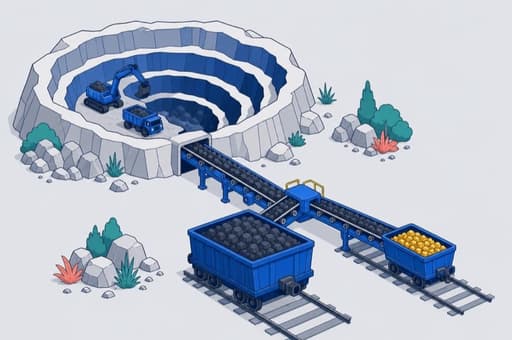
Nevada Gold Mines
Newmont’s share of Barrick-run Nevada mines produced $3.560 billion of sales. An August 2026 agreement adds Fourmile, Fiberline and Mike, but requires a $1.95 billion payment and changes joint decision-making.
Competes with Round Mountain (Kinross Gold) · Fort Knox (Kinross Gold)
In plain English
This is a slice of someone else’s machine. Barrick runs a group of Nevada mines and processing plants; Newmont owns a 38.5% share of the venture and receives the same share of its results, rather than directing daily work.
Newmont buys its portion of the rough, partly refined gold bars and resells them to gold wholesalers. That makes the operation a little like owning part of a factory managed by a partner: cash depends on its mineable gold, permits and how reliably it runs, while the August deal changes what goes into the shared factory and how the owners make decisions.
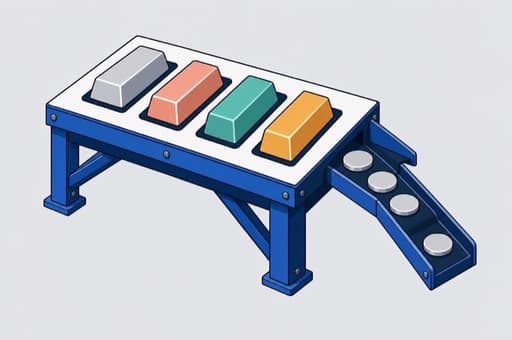
Peñasquito
This four-metal Mexican mine made $3.419 billion of sales. A quarter of its silver goes to Wheaton under a cheaper-of-market-or-contract deal, while ore quality and buyer terms shape what Newmont keeps.
Competes with Juanicipio (Fresnillo / Pan American Silver) · Saucito (Fresnillo)
In plain English
One pit, four saleable metals. Peñasquito crushes Mexican rock into a powder rich in gold, silver, lead and zinc, then sells that material to plants that separate and refine the metals. It is a mixed grocery basket rather than a single-product shelf: stronger prices or output in one metal can help when another weakens.
Those processing plants pay for the recoverable metal after subtracting their treatment costs. Wheaton receives a quarter of the silver under a long-running agreement, so Newmont’s take depends not only on tonnes processed and metal prices, but also on the rock’s metal content, transport and the contract price for that silver.
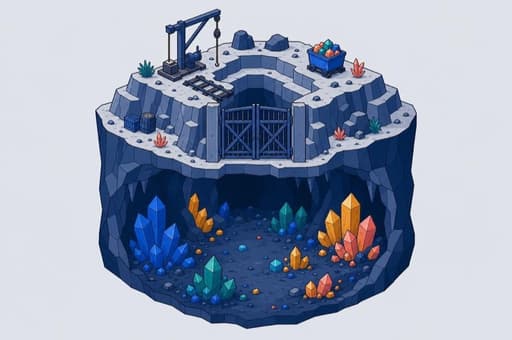
Red Chris
The current copper-gold open pit supplied $513 million of sales. The much larger underground plan had key permits by June 2026 but no final go-ahead, so today’s business remains small beside the proposed mine.
Competes with Oyu Tolgoi underground (Rio Tinto) · Grasberg Block Cave (Freeport-McMoRan)
In plain English
For now, Red Chris is a British Columbia open pit where trucks carry copper-and-gold rock to be crushed and sold as metal-rich powder. Newmont owns 70%, and processing plants pay for the copper and gold they can recover from each shipment.
The bigger idea sits underground: a mine designed so broken ore falls under its own weight into collection tunnels. That could turn Red Chris into a more important copper business, but permits are only one gate. Newmont and its partner still need a final build decision, and the outcome hangs on construction cost, underground conditions, roads, power and metal prices.
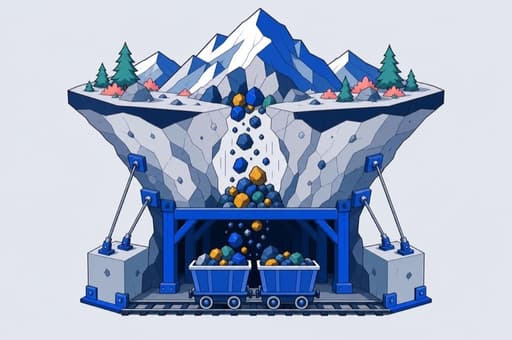
Cadia
This Australian gold-copper mine generated $2.294 billion of sales. Its next underground mining area is replacing the old one, and ground shaking in April 2026 showed how sensitive output is during the handover.
Competes with Oyu Tolgoi underground (Rio Tinto) · Grasberg Block Cave (Freeport-McMoRan)
In plain English
Deep beneath Cadia, miners undercut a large body of rock and let gravity break it into collection points—like drawing grain from the bottom of a silo. The crushed material becomes powder rich in gold and copper, with some rough gold bars produced as well.
Metal-processing plants pay for the gold and copper they can extract from the powder, while gold wholesalers buy the bars. Revenue therefore rises and falls with metal prices, output and how much metal the process captures. Right now, the practical challenge is moving from one underground area to the next without ground movement, equipment trouble or processing interruptions taking too much production away.
Boddington
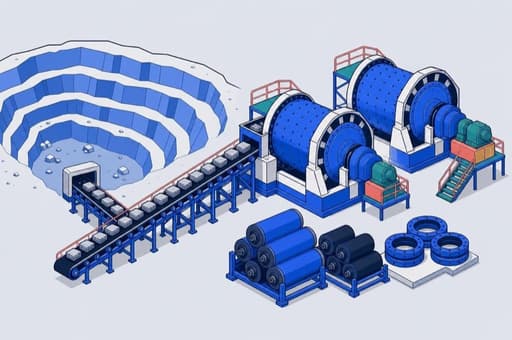
Boddington delivered $2.246 billion of gold-and-copper sales. Its economics rely on moving huge amounts of rock steadily, so keeping conveyors and mills running matters as much as what is in the ore.
Competes with Tropicana (AngloGold Ashanti / Regis Resources) · Round Mountain (Kinross Gold)
In plain English
Scale is the whole trick. Boddington is a vast Western Australian open pit that digs and crushes enormous amounts of rock to produce rough gold bars and powder rich in gold and copper. It behaves more like a bulk quarry than a hunt for rare nuggets.
Gold wholesalers pay for the bars, and metal-processing plants pay for the gold and copper they can extract from the powder. The mine makes money when trucks, crushers, conveyors and grinding equipment keep material moving without costly pauses. Copper adds a useful second source of value, but gold remains the main product; equipment reliability, energy and the amount of waste rock all shape the result.
Tanami
This remote underground gold mine produced $1.353 billion of sales. A deeper access shaft is targeted for the second half of 2027; until it is ready, logistics, safety and current mine output carry the business.
Competes with Tropicana underground (AngloGold Ashanti / Regis Resources) · Obuasi underground (AngloGold Ashanti)
In plain English
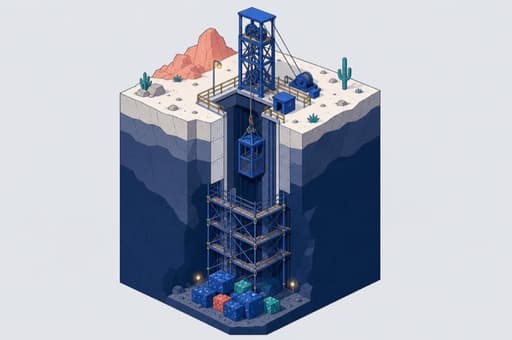
Picture an elevator serving a mine instead of an office tower. Tanami’s workers break gold-bearing rock deep below the Australian desert, lift it to the surface, process it into rough gold bars and sell those bars to gold wholesalers.
The new deep shaft is a larger, faster version of that elevator, meant to move more rock and keep the mine useful for longer. It does not earn money yet. For now, cash still comes from the existing mine, and the expansion’s value depends on finishing safely and on schedule despite remote supply lines, power needs and difficult underground conditions.
Yanacocha
Yanacocha supplied $1.804 billion of mostly gold sales. Its proposed deeper Sulfides project remains deferred after Newmont wrote $779 million off its value, leaving today’s open-pit operation to carry the Peruvian site.
Competes with Shahuindo (Pan American Silver) · Round Mountain (Kinross Gold)
In plain English
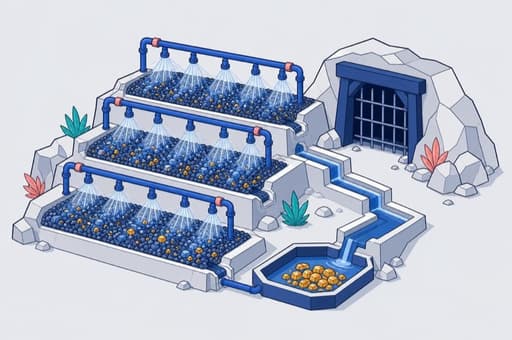
Instead of sending every tonne through a mill, Yanacocha stacks crushed Peruvian ore on lined pads and washes it with a chemical solution that carries gold into a collection system. Some ore is milled, and the recovered metal leaves as rough gold bars for gold wholesalers.
This method can handle large volumes of lower-gold rock, but water access, the amount of gold captured and community agreements decide how well it works. A proposed deeper project would reach different ore and extend the site, yet it is deferred. That keeps the money story simple for now: sell gold from the existing pits while managing water, closure work and permission to operate.
Ahafo South and Ahafo North
The two Ghanaian mines made $2.508 billion of sales together. North became a commercial operation in October 2025 and is ramping as South moves into rock containing less gold.
Competes with Obuasi (AngloGold Ashanti) · Tarkwa (Gold Fields)
In plain English
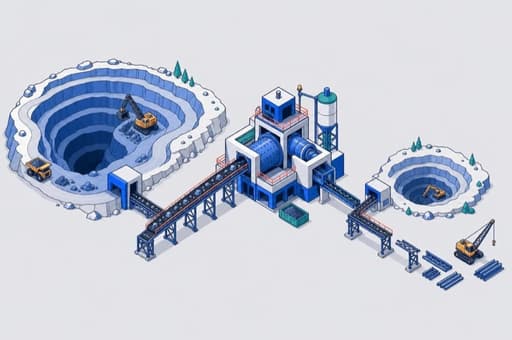
Two Ghanaian mines now feed Newmont’s gold business at different stages of life. Ahafo South is the established operation; Ahafo North began full commercial work late in 2025. Both dig and process gold-bearing rock into rough bars that gold wholesalers can buy.
Think of them as two taps feeding the same reservoir of sales. South remains the larger tap, but the amount of gold in each tonne of its rock is expected to decline, so North’s ramp matters. Newmont gets paid for ounces sold, while reliable power, skilled workers, local contractors and steady processing determine how quickly North can take on more of the load.
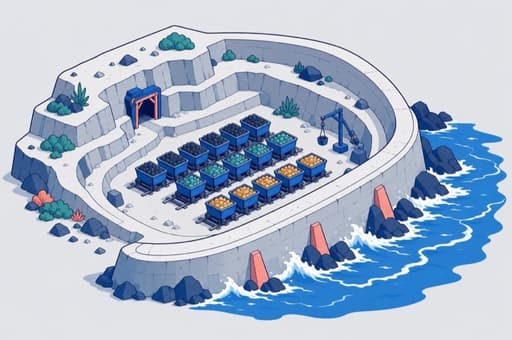
Lihir
This Papua New Guinea gold mine generated $1.983 billion of sales. A coastal barrier project is intended to open access to over five million additional ounces; construction and difficult site conditions are the watchpoints.
Competes with New Porgera (Barrick-led venture) · Hidden Valley (Harmony Gold)
In plain English
At this Papua New Guinea site, Newmont mines and processes gold-bearing rock into rough bars, then sells them through gold wholesalers. Because gold is easy to sell worldwide, Lihir wins or loses mainly through how much metal it captures, how often the plant runs and what it costs to operate in a remote location.
The next job resembles building a retaining wall beside a construction pit. A planned soil barrier near the shore is meant to let miners reach a large body of additional ore. Until that work is finished, shipping, heavy rainfall, ground conditions, permits and community relationships remain as important as the gold price.


 Nevada Gold MinesNewmont’s share of Barrick-run Nevada mines produced $3.560 billion of sales. An August 2026 agreement adds Fourmile, Fiberline and Mike, but requires a $1.95 billion payment and changes joint decision-making.
Newmont’s share of Barrick-run Nevada mines produced $3.560 billion of sales. An August 2026 agreement adds Fourmile, Fiberline and Mike, but requires a $1.95 billion payment and changes joint decision-making.
In plain English
This is a slice of someone else’s machine. Barrick runs a group of Nevada mines and processing plants; Newmont owns a 38.5% share of the venture and receives the same share of its results, rather than directing daily work.
Newmont buys its portion of the rough, partly refined gold bars and resells them to gold wholesalers. That makes the operation a little like owning part of a factory managed by a partner: cash depends on its mineable gold, permits and how reliably it runs, while the August deal changes what goes into the shared factory and how the owners make decisions.
Competes with Round Mountain (Kinross Gold) · Fort Knox (Kinross Gold)
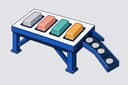 PeñasquitoThis four-metal Mexican mine made $3.419 billion of sales. A quarter of its silver goes to Wheaton under a cheaper-of-market-or-contract deal, while ore quality and buyer terms shape what Newmont keeps.
This four-metal Mexican mine made $3.419 billion of sales. A quarter of its silver goes to Wheaton under a cheaper-of-market-or-contract deal, while ore quality and buyer terms shape what Newmont keeps.
In plain English
One pit, four saleable metals. Peñasquito crushes Mexican rock into a powder rich in gold, silver, lead and zinc, then sells that material to plants that separate and refine the metals. It is a mixed grocery basket rather than a single-product shelf: stronger prices or output in one metal can help when another weakens.
Those processing plants pay for the recoverable metal after subtracting their treatment costs. Wheaton receives a quarter of the silver under a long-running agreement, so Newmont’s take depends not only on tonnes processed and metal prices, but also on the rock’s metal content, transport and the contract price for that silver.
Competes with Juanicipio (Fresnillo / Pan American Silver) · Saucito (Fresnillo)
 Red ChrisThe current copper-gold open pit supplied $513 million of sales. The much larger underground plan had key permits by June 2026 but no final go-ahead, so today’s business remains small beside the proposed mine.
The current copper-gold open pit supplied $513 million of sales. The much larger underground plan had key permits by June 2026 but no final go-ahead, so today’s business remains small beside the proposed mine.
In plain English
For now, Red Chris is a British Columbia open pit where trucks carry copper-and-gold rock to be crushed and sold as metal-rich powder. Newmont owns 70%, and processing plants pay for the copper and gold they can recover from each shipment.
The bigger idea sits underground: a mine designed so broken ore falls under its own weight into collection tunnels. That could turn Red Chris into a more important copper business, but permits are only one gate. Newmont and its partner still need a final build decision, and the outcome hangs on construction cost, underground conditions, roads, power and metal prices.
Competes with Oyu Tolgoi underground (Rio Tinto) · Grasberg Block Cave (Freeport-McMoRan)
 CadiaThis Australian gold-copper mine generated $2.294 billion of sales. Its next underground mining area is replacing the old one, and ground shaking in April 2026 showed how sensitive output is during the handover.
This Australian gold-copper mine generated $2.294 billion of sales. Its next underground mining area is replacing the old one, and ground shaking in April 2026 showed how sensitive output is during the handover.
In plain English
Deep beneath Cadia, miners undercut a large body of rock and let gravity break it into collection points—like drawing grain from the bottom of a silo. The crushed material becomes powder rich in gold and copper, with some rough gold bars produced as well.
Metal-processing plants pay for the gold and copper they can extract from the powder, while gold wholesalers buy the bars. Revenue therefore rises and falls with metal prices, output and how much metal the process captures. Right now, the practical challenge is moving from one underground area to the next without ground movement, equipment trouble or processing interruptions taking too much production away.
Competes with Oyu Tolgoi underground (Rio Tinto) · Grasberg Block Cave (Freeport-McMoRan)
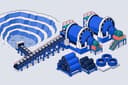 BoddingtonBoddington delivered $2.246 billion of gold-and-copper sales. Its economics rely on moving huge amounts of rock steadily, so keeping conveyors and mills running matters as much as what is in the ore.
Boddington delivered $2.246 billion of gold-and-copper sales. Its economics rely on moving huge amounts of rock steadily, so keeping conveyors and mills running matters as much as what is in the ore.
In plain English
Scale is the whole trick. Boddington is a vast Western Australian open pit that digs and crushes enormous amounts of rock to produce rough gold bars and powder rich in gold and copper. It behaves more like a bulk quarry than a hunt for rare nuggets.
Gold wholesalers pay for the bars, and metal-processing plants pay for the gold and copper they can extract from the powder. The mine makes money when trucks, crushers, conveyors and grinding equipment keep material moving without costly pauses. Copper adds a useful second source of value, but gold remains the main product; equipment reliability, energy and the amount of waste rock all shape the result.
Competes with Tropicana (AngloGold Ashanti / Regis Resources) · Round Mountain (Kinross Gold)
 TanamiThis remote underground gold mine produced $1.353 billion of sales. A deeper access shaft is targeted for the second half of 2027; until it is ready, logistics, safety and current mine output carry the business.
This remote underground gold mine produced $1.353 billion of sales. A deeper access shaft is targeted for the second half of 2027; until it is ready, logistics, safety and current mine output carry the business.
In plain English
Picture an elevator serving a mine instead of an office tower. Tanami’s workers break gold-bearing rock deep below the Australian desert, lift it to the surface, process it into rough gold bars and sell those bars to gold wholesalers.
The new deep shaft is a larger, faster version of that elevator, meant to move more rock and keep the mine useful for longer. It does not earn money yet. For now, cash still comes from the existing mine, and the expansion’s value depends on finishing safely and on schedule despite remote supply lines, power needs and difficult underground conditions.
Competes with Tropicana underground (AngloGold Ashanti / Regis Resources) · Obuasi underground (AngloGold Ashanti)
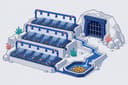 YanacochaYanacocha supplied $1.804 billion of mostly gold sales. Its proposed deeper Sulfides project remains deferred after Newmont wrote $779 million off its value, leaving today’s open-pit operation to carry the Peruvian site.
Yanacocha supplied $1.804 billion of mostly gold sales. Its proposed deeper Sulfides project remains deferred after Newmont wrote $779 million off its value, leaving today’s open-pit operation to carry the Peruvian site.
In plain English
Instead of sending every tonne through a mill, Yanacocha stacks crushed Peruvian ore on lined pads and washes it with a chemical solution that carries gold into a collection system. Some ore is milled, and the recovered metal leaves as rough gold bars for gold wholesalers.
This method can handle large volumes of lower-gold rock, but water access, the amount of gold captured and community agreements decide how well it works. A proposed deeper project would reach different ore and extend the site, yet it is deferred. That keeps the money story simple for now: sell gold from the existing pits while managing water, closure work and permission to operate.
Competes with Shahuindo (Pan American Silver) · Round Mountain (Kinross Gold)
 Ahafo South and Ahafo NorthThe two Ghanaian mines made $2.508 billion of sales together. North became a commercial operation in October 2025 and is ramping as South moves into rock containing less gold.
The two Ghanaian mines made $2.508 billion of sales together. North became a commercial operation in October 2025 and is ramping as South moves into rock containing less gold.
In plain English
Two Ghanaian mines now feed Newmont’s gold business at different stages of life. Ahafo South is the established operation; Ahafo North began full commercial work late in 2025. Both dig and process gold-bearing rock into rough bars that gold wholesalers can buy.
Think of them as two taps feeding the same reservoir of sales. South remains the larger tap, but the amount of gold in each tonne of its rock is expected to decline, so North’s ramp matters. Newmont gets paid for ounces sold, while reliable power, skilled workers, local contractors and steady processing determine how quickly North can take on more of the load.
Competes with Obuasi (AngloGold Ashanti) · Tarkwa (Gold Fields)
 LihirThis Papua New Guinea gold mine generated $1.983 billion of sales. A coastal barrier project is intended to open access to over five million additional ounces; construction and difficult site conditions are the watchpoints.
This Papua New Guinea gold mine generated $1.983 billion of sales. A coastal barrier project is intended to open access to over five million additional ounces; construction and difficult site conditions are the watchpoints.
In plain English
At this Papua New Guinea site, Newmont mines and processes gold-bearing rock into rough bars, then sells them through gold wholesalers. Because gold is easy to sell worldwide, Lihir wins or loses mainly through how much metal it captures, how often the plant runs and what it costs to operate in a remote location.
The next job resembles building a retaining wall beside a construction pit. A planned soil barrier near the shore is meant to let miners reach a large body of additional ore. Until that work is finished, shipping, heavy rainfall, ground conditions, permits and community relationships remain as important as the gold price.
Competes with New Porgera (Barrick-led venture) · Hidden Valley (Harmony Gold)
Named in filings, launches and programs
- MerianSegmentA 75%-owned Suriname gold mine that supplied $846 million, or 3.7%, of FY2025 sales.
- BrucejackSegmentA British Columbia underground gold mine that supplied $824 million, or 3.6%, of FY2025 sales.
- Cerro NegroSegmentAn Argentine underground gold complex with $691 million, or 3.0%, of FY2025 sales; its first expansion is being developed.
- Pueblo ViejoBrandA 40% interest in a Barrick-run Dominican mine; Newmont receives cash payments rather than counting its sales.
- Fruta del Norte / Lundin GoldBrandA 32% Lundin Gold holding whose mine output is reported one quarter later; Q2 2026 cash payments were $93 million.
- Wafi-GolpuProduct · Pre-revenueA half-owned Papua New Guinea copper-gold project with Harmony; permits and an agreement with the state still gate construction.
- Mined-to-Market Traceable Gold BarCustomer program · AnnouncedA planned traceable gold bar with refiner MKS PAMP; Newmont has not separated its sales from the rest of the portfolio.
MerianSegment
A 75%-owned Suriname gold mine that supplied $846 million, or 3.7%, of FY2025 sales.
BrucejackSegment
A British Columbia underground gold mine that supplied $824 million, or 3.6%, of FY2025 sales.
Cerro NegroSegment
An Argentine underground gold complex with $691 million, or 3.0%, of FY2025 sales; its first expansion is being developed.
Pueblo ViejoBrand
A 40% interest in a Barrick-run Dominican mine; Newmont receives cash payments rather than counting its sales.
Fruta del Norte / Lundin GoldBrand
A 32% Lundin Gold holding whose mine output is reported one quarter later; Q2 2026 cash payments were $93 million.
Wafi-GolpuProduct · Pre-revenue
A half-owned Papua New Guinea copper-gold project with Harmony; permits and an agreement with the state still gate construction.
Mined-to-Market Traceable Gold BarCustomer program · Announced
A planned traceable gold bar with refiner MKS PAMP; Newmont has not separated its sales from the rest of the portfolio.