
Prudential Financial (PRU)
Operates PGIM alongside retirement, life insurance, annuity, and workplace-benefit businesses.
Something off on this page? Send us feedback.
Prudential sells promises about money people will need later — an income after they stop working, a payout when someone dies, the benefits page in a job offer. Alongside that sits a large investment manager working for outside clients. Insurance is still the engine; a new chief executive is shrinking the overseas map, cutting costs, and pushing the money-management arm to carry far more of the profit.
Item facts: FY2025 · year ended Dec 31, 2025, from filings, earnings calls and company pages.
Judgment weights, not filed revenue
The band summarizes business focus and direction. ~ marks estimates.
8 in detail · 11 more below
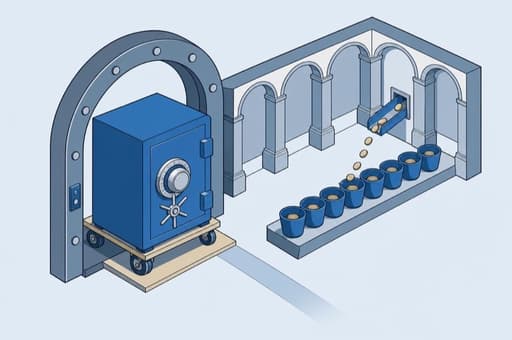
Institutional Retirement Strategies
Companies hand over their pension promises for one enormous payment, and Prudential pays the retirees for life — roughly 29% of revenue. Deal flow rolled over in early 2026; management sizes the U.S. corporate pension pool still out there at about $3 trillion.
Competes with Group annuities (Athene) · Pension buyouts (MetLife) · Pension buyouts (Corebridge)
In plain English
A company that promised pensions to thousands of retired workers can hand the whole obligation to Prudential and be finished with it. It writes one enormous cheque; Prudential takes on the job of paying those retirees every month for the rest of their lives, and keeps whatever the invested money earns above what it owes.
IBM did this twice — the second deal moved $6 billion of pension liabilities. Because a whole plan's payment lands the moment the deal signs, revenue arrives in lumps: two quiet quarters, then one that dwarfs them.
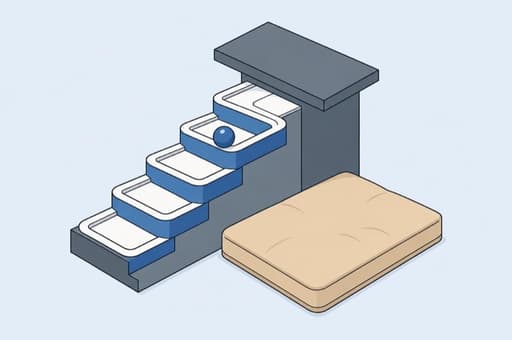
FlexGuard Annuities
Retail savings contracts sold through brokers, banks and planners. Customer balances passed $66 billion by mid-2026, up more than 30% in a year — the fastest-growing pool of customer money in the company.
Competes with Fixed and indexed annuities (Athene) · Structured Capital Strategies (Equitable) · Fixed and indexed annuities (Corebridge)
In plain English
Picture a savings plan tied to the stock market with two guardrails: the company absorbs the first slice of any fall, and in exchange your gains stop at an agreed ceiling.
Savers hand over a lump sum. Prudential invests it, keeps the difference between what that money earns and what it owes the saver, and takes fees along the way. Brokers, banks, wirehouses and independent planners do the selling, and signing up more of those selling partners is how management says the reachable market more than tripled over three years.
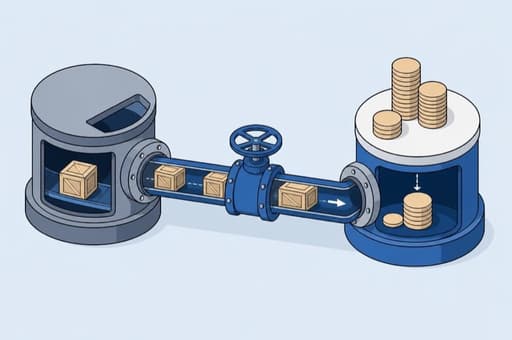
Prismic Life Reinsurance
A Bermuda company Prudential part-owns with investment firm Warburg Pincus. It takes over batches of older policies so the capital behind them is freed up, and closed an oversubscribed raise of about $1.9 billion in May 2026.
Competes with Block reinsurance (Athene) · Block reinsurance (Global Atlantic)
In plain English
Think of it as a pressure valve bolted onto the balance sheet. Prudential owns about a fifth of Prismic, a reinsurer started in Bermuda in 2023 with the investment firm Warburg Pincus; outside investors put up the rest.
When a batch of old policies ties up too much of Prudential's own money, that batch is passed across to Prismic. Prudential keeps a share of Prismic's profits, PGIM gets paid to manage the investments that travel with the policies, and the freed-up capital can go somewhere it earns more. Deals so far include about $7 billion of Japanese whole-life reserves.

International Businesses
Life insurance and retirement savings sold in Japan, Brazil, Mexico and a handful of other markets — the largest slice of revenue and the biggest earnings contributor, at $3.2 billion of operating profit in 2025. New sales in Japan have been suspended since February 2026.
Competes with Agent-sold whole life (Nippon Life) · Agent-sold whole life (Dai-ichi Life) · Bank-channel savings policies (Sumitomo Life)
In plain English
Most of this is Japan, where a dedicated sales force called Life Planners sells households life insurance and savings policies face to face — about 4,300 of them in Japan and roughly 2,000 in other countries, plus some 7,000 Life Consultants and partnerships with banks and agencies.
Customers pay premiums for decades; Prudential invests the money, pays claims as they come, and keeps the gap. This leg is currently wobbling: an internal investigation found employee misconduct at the Japanese arm, new sales stopped in February 2026 and remain paused to around November, and management's estimate of the 2026 earnings hit has grown.

Group Insurance
Life, disability and supplemental health cover bought by employers for their staff — growing, and spread so widely that no single employer reaches a tenth of its revenue. Claims took 80.4 cents of each premium dollar in mid-2026, better than the 83–87 cent plan.
Competes with Group benefits (MetLife) · Group disability (Unum) · Group life and disability (Lincoln Financial)
In plain English
Every job offer carries a page of benefits nobody reads: life cover, pay if illness keeps you off work for months, cash if you land in hospital. Employers buy it in bulk for a whole workforce, sometimes footing the bill, sometimes just putting it on the menu for staff to buy themselves.
Money arrives as monthly premiums and leaves as claims, and what stays behind is the profit — so the whole thing turns on claims running below plan. The customers used to be mostly very large employers; the push now is toward mid-sized companies and membership groups.

Individual Life
Life insurance sold one household at a time through brokers, banks and advisers. The mix is shifting from lifetime-guarantee policies toward ones whose value rides on markets, and the segment went from a loss in 2024 to $260 million of operating profit in 2025.
Competes with Permanent life policies (Northwestern Mutual) · Permanent life policies (New York Life) · Indexed and variable universal life (Equitable)
In plain English
Buy one of these and your family gets a payment when you die. Many versions also hold a savings pot inside the policy that grows with the markets — part safety net, part investment account.
Prudential earns three ways: premiums collected, fees charged on that inside pot, and the gap between what its investments earn and what it credits to policyholders. It has been steering buyers toward the market-linked versions, which tie up less of the company's own capital than the old lifetime-guarantee contracts, and sales of its flagship reached a record in mid-2026.
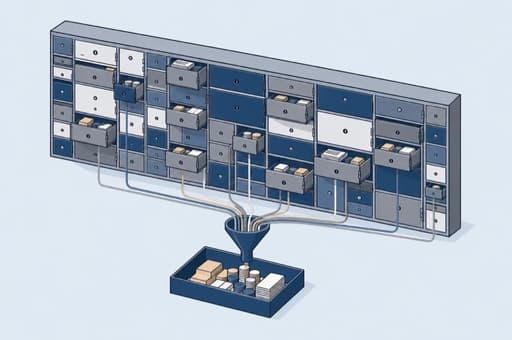
PGIM
Prudential's investment manager, running about $1.5 trillion at mid-2026 for pension funds, insurers and fund buyers, plus Prudential's own money. Small on revenue, roughly an eighth of operating profit — management wants that eighth to become a quarter.
Competes with Direct lending funds (Ares) · Direct lending funds (Blackstone Credit)
In plain English
Other people's money, managed for a fee. Pension funds, insurance companies and ordinary fund buyers hand PGIM their savings; PGIM puts them into bonds, shares, property and loans to companies, and charges roughly a quarter of a cent on each dollar every year. That is why the size of the pile matters far more than any single clever trade.
It also manages Prudential's own investments, so every pension deal or annuity the insurance side wins quietly adds to the pile. Fees rise and fall with markets, and the cost of running the place has been coming down.

PGIM Fixed Income
The lending arm and PGIM's largest piece — about $946 billion of the $1.5 trillion at mid-2026. Its fortunes follow interest rates and whether borrowers keep paying on time.
Competes with Core fixed income funds (PIMCO) · Core fixed income funds (Nuveen)
In plain English
When a government or a large company needs to borrow, it sells an IOU that pays interest on a fixed schedule and hands back the original sum at the end. This arm buys those IOUs by the trainload for clients — and for Prudential's own insurance books, where the interest has to cover what policyholders were promised.
The money comes from an annual fee on the balance rather than from trading, so the work is deliberately unglamorous: keep the portfolio big, and stay away from the borrowers who stop paying.


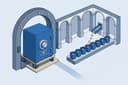 Institutional Retirement StrategiesCompanies hand over their pension promises for one enormous payment, and Prudential pays the retirees for life — roughly 29% of revenue. Deal flow rolled over in early 2026; management sizes the U.S. corporate pension pool still out there at about $3 trillion.
Companies hand over their pension promises for one enormous payment, and Prudential pays the retirees for life — roughly 29% of revenue. Deal flow rolled over in early 2026; management sizes the U.S. corporate pension pool still out there at about $3 trillion.
In plain English
A company that promised pensions to thousands of retired workers can hand the whole obligation to Prudential and be finished with it. It writes one enormous cheque; Prudential takes on the job of paying those retirees every month for the rest of their lives, and keeps whatever the invested money earns above what it owes.
IBM did this twice — the second deal moved $6 billion of pension liabilities. Because a whole plan's payment lands the moment the deal signs, revenue arrives in lumps: two quiet quarters, then one that dwarfs them.
Competes with Group annuities (Athene) · Pension buyouts (MetLife) · Pension buyouts (Corebridge)
 FlexGuard AnnuitiesRetail savings contracts sold through brokers, banks and planners. Customer balances passed $66 billion by mid-2026, up more than 30% in a year — the fastest-growing pool of customer money in the company.
Retail savings contracts sold through brokers, banks and planners. Customer balances passed $66 billion by mid-2026, up more than 30% in a year — the fastest-growing pool of customer money in the company.
In plain English
Picture a savings plan tied to the stock market with two guardrails: the company absorbs the first slice of any fall, and in exchange your gains stop at an agreed ceiling.
Savers hand over a lump sum. Prudential invests it, keeps the difference between what that money earns and what it owes the saver, and takes fees along the way. Brokers, banks, wirehouses and independent planners do the selling, and signing up more of those selling partners is how management says the reachable market more than tripled over three years.
Competes with Fixed and indexed annuities (Athene) · Structured Capital Strategies (Equitable) · Fixed and indexed annuities (Corebridge)
 Prismic Life ReinsuranceA Bermuda company Prudential part-owns with investment firm Warburg Pincus. It takes over batches of older policies so the capital behind them is freed up, and closed an oversubscribed raise of about $1.9 billion in May 2026.
A Bermuda company Prudential part-owns with investment firm Warburg Pincus. It takes over batches of older policies so the capital behind them is freed up, and closed an oversubscribed raise of about $1.9 billion in May 2026.
In plain English
Think of it as a pressure valve bolted onto the balance sheet. Prudential owns about a fifth of Prismic, a reinsurer started in Bermuda in 2023 with the investment firm Warburg Pincus; outside investors put up the rest.
When a batch of old policies ties up too much of Prudential's own money, that batch is passed across to Prismic. Prudential keeps a share of Prismic's profits, PGIM gets paid to manage the investments that travel with the policies, and the freed-up capital can go somewhere it earns more. Deals so far include about $7 billion of Japanese whole-life reserves.
Competes with Block reinsurance (Athene) · Block reinsurance (Global Atlantic)
 International BusinessesLife insurance and retirement savings sold in Japan, Brazil, Mexico and a handful of other markets — the largest slice of revenue and the biggest earnings contributor, at $3.2 billion of operating profit in 2025. New sales in Japan have been suspended since February 2026.
Life insurance and retirement savings sold in Japan, Brazil, Mexico and a handful of other markets — the largest slice of revenue and the biggest earnings contributor, at $3.2 billion of operating profit in 2025. New sales in Japan have been suspended since February 2026.
In plain English
Most of this is Japan, where a dedicated sales force called Life Planners sells households life insurance and savings policies face to face — about 4,300 of them in Japan and roughly 2,000 in other countries, plus some 7,000 Life Consultants and partnerships with banks and agencies.
Customers pay premiums for decades; Prudential invests the money, pays claims as they come, and keeps the gap. This leg is currently wobbling: an internal investigation found employee misconduct at the Japanese arm, new sales stopped in February 2026 and remain paused to around November, and management's estimate of the 2026 earnings hit has grown.
Competes with Agent-sold whole life (Nippon Life) · Agent-sold whole life (Dai-ichi Life) · Bank-channel savings policies (Sumitomo Life)
 Group InsuranceLife, disability and supplemental health cover bought by employers for their staff — growing, and spread so widely that no single employer reaches a tenth of its revenue. Claims took 80.4 cents of each premium dollar in mid-2026, better than the 83–87 cent plan.
Life, disability and supplemental health cover bought by employers for their staff — growing, and spread so widely that no single employer reaches a tenth of its revenue. Claims took 80.4 cents of each premium dollar in mid-2026, better than the 83–87 cent plan.
In plain English
Every job offer carries a page of benefits nobody reads: life cover, pay if illness keeps you off work for months, cash if you land in hospital. Employers buy it in bulk for a whole workforce, sometimes footing the bill, sometimes just putting it on the menu for staff to buy themselves.
Money arrives as monthly premiums and leaves as claims, and what stays behind is the profit — so the whole thing turns on claims running below plan. The customers used to be mostly very large employers; the push now is toward mid-sized companies and membership groups.
Competes with Group benefits (MetLife) · Group disability (Unum) · Group life and disability (Lincoln Financial)
 Individual LifeLife insurance sold one household at a time through brokers, banks and advisers. The mix is shifting from lifetime-guarantee policies toward ones whose value rides on markets, and the segment went from a loss in 2024 to $260 million of operating profit in 2025.
Life insurance sold one household at a time through brokers, banks and advisers. The mix is shifting from lifetime-guarantee policies toward ones whose value rides on markets, and the segment went from a loss in 2024 to $260 million of operating profit in 2025.
In plain English
Buy one of these and your family gets a payment when you die. Many versions also hold a savings pot inside the policy that grows with the markets — part safety net, part investment account.
Prudential earns three ways: premiums collected, fees charged on that inside pot, and the gap between what its investments earn and what it credits to policyholders. It has been steering buyers toward the market-linked versions, which tie up less of the company's own capital than the old lifetime-guarantee contracts, and sales of its flagship reached a record in mid-2026.
Competes with Permanent life policies (Northwestern Mutual) · Permanent life policies (New York Life) · Indexed and variable universal life (Equitable)
 PGIMPrudential's investment manager, running about $1.5 trillion at mid-2026 for pension funds, insurers and fund buyers, plus Prudential's own money. Small on revenue, roughly an eighth of operating profit — management wants that eighth to become a quarter.
Prudential's investment manager, running about $1.5 trillion at mid-2026 for pension funds, insurers and fund buyers, plus Prudential's own money. Small on revenue, roughly an eighth of operating profit — management wants that eighth to become a quarter.
In plain English
Other people's money, managed for a fee. Pension funds, insurance companies and ordinary fund buyers hand PGIM their savings; PGIM puts them into bonds, shares, property and loans to companies, and charges roughly a quarter of a cent on each dollar every year. That is why the size of the pile matters far more than any single clever trade.
It also manages Prudential's own investments, so every pension deal or annuity the insurance side wins quietly adds to the pile. Fees rise and fall with markets, and the cost of running the place has been coming down.
Competes with Direct lending funds (Ares) · Direct lending funds (Blackstone Credit)
 PGIM Fixed IncomeThe lending arm and PGIM's largest piece — about $946 billion of the $1.5 trillion at mid-2026. Its fortunes follow interest rates and whether borrowers keep paying on time.
The lending arm and PGIM's largest piece — about $946 billion of the $1.5 trillion at mid-2026. Its fortunes follow interest rates and whether borrowers keep paying on time.
In plain English
When a government or a large company needs to borrow, it sells an IOU that pays interest on a fixed schedule and hands back the original sum at the end. This arm buys those IOUs by the trainload for clients — and for Prudential's own insurance books, where the interest has to cover what policyholders were promised.
The money comes from an annual fee on the balance rather than from trading, so the work is deliberately unglamorous: keep the portfolio big, and stay away from the borrowers who stop paying.
Competes with Core fixed income funds (PIMCO) · Core fixed income funds (Nuveen)
Named in filings, launches and programs
- Corporate & OtherSegmentThe head-office pot: financing costs, hedges and central expenses. It ran an operating loss of about $1.6 billion in 2025, and 2026 guidance was trimmed slightly..
- Prudential AdvisorsServicePrudential's own nationwide force of financial advisers, sitting inside the head-office segment rather than any product business.
- PGIM Real EstatePlatformProperty lending and property ownership handled for clients — roughly $130 billion managed as of mid-2025.
- Jennison AssociatesBrandPGIM's stock-picking house, and the manager behind two new PGIM equity funds that began trading in September 2026.
- PGIM Private Alternatives / Deerpath CapitalPlatform · RampingLending directly to mid-sized companies; PGIM agreed in July 2026 to buy the part of Deerpath Capital it did not already own.
- PGIM Investments active ETFsProduct line · RampingFunds bought and sold like shares — roughly $35 billion of them, including a range that limits losses over set periods, now reset quarterly.
- FlexGuard 2.0ProductThe next version of the flagship annuity with a built-in loss cushion, launched December 2025.
- Prudential Protection IULProductLife insurance whose savings pot tracks a market index, added to the lineup in August 2026.
- Dai-ichi Life partnershipCustomer programA 2025 agreement with a Japanese insurer that also competes with Prudential: its cancer policy sold through Prudential's Japan force, plus investment mandates for PGIM.
- Wilton Re reinsuranceCustomer programAn $11 billion block of old lifetime-guarantee policies handed to reinsurer Wilton Re in late 2024, moving capital-heavy risk off the books.
- Partners Group partnershipEcosystemA PGIM tie-up with private-markets firm Partners Group, discussed on the October 2025 call; the scope was not disclosed.
Corporate & OtherSegment
The head-office pot: financing costs, hedges and central expenses. It ran an operating loss of about $1.6 billion in 2025, and 2026 guidance was trimmed slightly..
Prudential AdvisorsService
Prudential's own nationwide force of financial advisers, sitting inside the head-office segment rather than any product business.
PGIM Real EstatePlatform
Property lending and property ownership handled for clients — roughly $130 billion managed as of mid-2025.
Jennison AssociatesBrand
PGIM's stock-picking house, and the manager behind two new PGIM equity funds that began trading in September 2026.
PGIM Private Alternatives / Deerpath CapitalPlatform · Ramping
Lending directly to mid-sized companies; PGIM agreed in July 2026 to buy the part of Deerpath Capital it did not already own.
PGIM Investments active ETFsProduct line · Ramping
Funds bought and sold like shares — roughly $35 billion of them, including a range that limits losses over set periods, now reset quarterly.
FlexGuard 2.0Product
The next version of the flagship annuity with a built-in loss cushion, launched December 2025.
Prudential Protection IULProduct
Life insurance whose savings pot tracks a market index, added to the lineup in August 2026.
Dai-ichi Life partnershipCustomer program
A 2025 agreement with a Japanese insurer that also competes with Prudential: its cancer policy sold through Prudential's Japan force, plus investment mandates for PGIM.
Wilton Re reinsuranceCustomer program
An $11 billion block of old lifetime-guarantee policies handed to reinsurer Wilton Re in late 2024, moving capital-heavy risk off the books.
Partners Group partnershipEcosystem
A PGIM tie-up with private-markets firm Partners Group, discussed on the October 2025 call; the scope was not disclosed.