
Qnity Electronics (Q)
Supplies process and interconnect materials for semiconductor manufacturing and advanced electronics.
Something off on this page? Send us feedback.
Qnity makes the chemicals, films and pads that chip and circuit-board factories use up — every wafer polished, every layer printed, every board plated eats a little more of them. Cut loose from DuPont as its own listed company, it rises and falls with how many chips the world's factories are running. What pulls hardest now is hardware for artificial intelligence: packaging, plating and heat-moving materials.
Item facts: FY2025 · year ended Dec 31, 2025, from filings, earnings calls and company pages.
Judgment weights, not filed revenue
The band summarizes business focus and direction. ~ marks estimates.
8 in detail · 13 more below
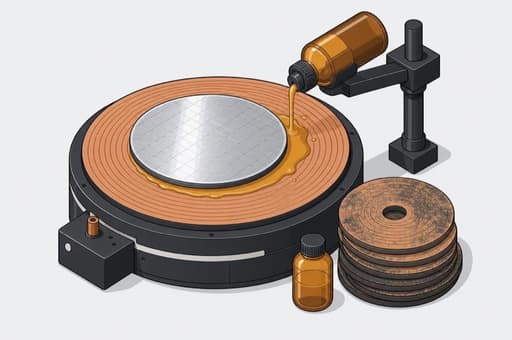
Chip-Polishing Pads, Slurries and Cleans
Pads and gritty liquid that grind each freshly built chip layer mirror-flat, plus the cleaners that follow. Qnity's biggest line, and the one that gains most as chips stack more layers. New pad and slurry platforms have been arriving roughly every quarter.
Competes with CMP slurries and NexPlanar pads (Entegris) · Copper polishing slurries (Fujifilm Electronic Materials) · Non-woven polishing pads (Fujibo)
In plain English
Building a chip means stacking dozens of layers, and each one comes out bumpy. Before the next layer goes down, the surface has to be made flat: a spinning pad presses the wafer against a milky liquid full of very fine grit, and a cleaning chemical rinses away what is left behind.
Qnity sells the pad, the grit liquid and the rinse. None of it survives the job, so a factory reorders forever. Once a material is approved for one recipe at one plant, that approval takes two to three years to reach full production and then ships against that factory's output for years. More layers per chip means more polishing steps — and more sold per wafer.
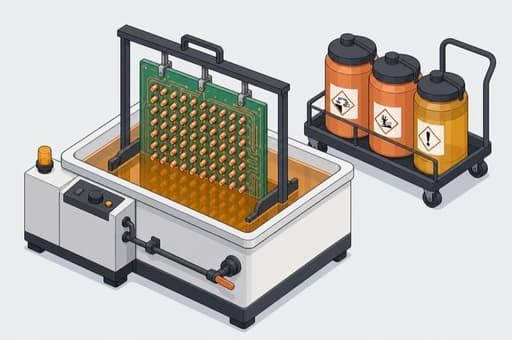
Advanced Circuit & Packaging
Copper-plating baths, light-sensitive dry films and insulating layers that build the wiring joining chip to package to board. The fastest-moving part of the company — the interconnect half it sits in grew 28% year over year in the June 2026 quarter.
Competes with Atotech plating chemistry (MKS Instruments) · MacDermid Alpha assembly chemistry (Element Solutions) · Plating chemistry for boards (JCU Corporation)
In plain English
Think of the wiring inside a phone or an AI server as plumbing that has to be grown rather than laid. Dip the board or the chip package into the right chemical bath and copper deposits itself exactly where a patterned film left an opening — pillars, pads and hair-thin tracks.
Qnity mixes those baths and makes the patterned films. Board factories and packaging houses buy them, use them up on every panel, and buy again. Each generation of AI hardware wants more layers and finer lines, which means more bath, more film and more money per board.
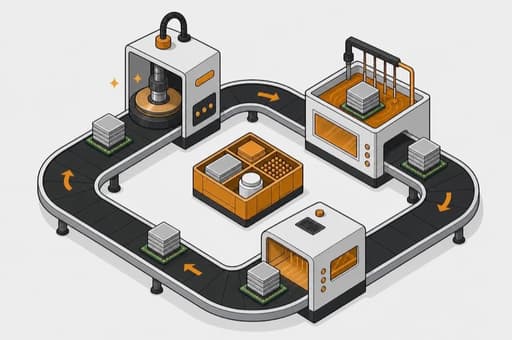
Advanced Packaging Solutions
Materials from both halves of the company, sold together for stacking and joining chips instead of shrinking them. About a tenth of 2025 sales, already counted inside the product lines around it. Watch whether customers buy the whole set.
Competes with MacDermid Alpha packaging materials (Element Solutions) · Atotech bumping chemistry (MKS Instruments) · Packaging equipment and process (Applied Materials)
In plain English
For decades, better chips meant squeezing smaller features onto one flat piece of silicon. That is getting harder, so the industry increasingly stacks chips on top of each other and wires them into a single package — management's phrase for the shift is "shrink to stack".
It touches nearly everything Qnity makes: the polish, the plating, the insulating layers, the films that carry heat away. During 2026 the company began selling these as one connected process rather than separate products, opened a hub for the work, and joined imec, a shared chip-research programme, for access to stacking roadmaps. The money still lands in the individual lines.
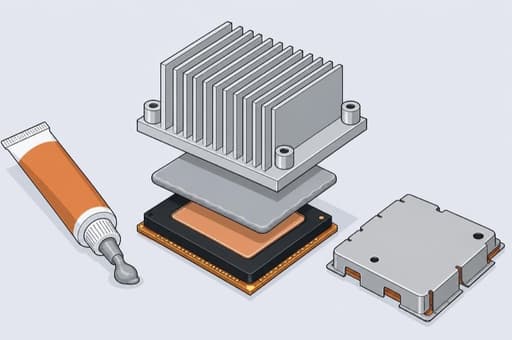
Laird Thermal and Shielding Materials
Putties, pads and greases that pull heat out of AI server chips, plus shields that stop parts from disturbing each other's signals. Bundled with packaging and AI boards, this cluster grew more than 50% across the first half of 2026.
Competes with High-power thermal interface materials (Henkel) · Thermal greases (Shin-Etsu Chemical) · Gap fillers and shielding (Parker Chomerics)
In plain English
An AI server rack runs hot enough to cook itself. A chip and its metal cooler never touch perfectly — under a microscope they meet only in patches — so a soft heat-carrying putty or pad is squeezed between them to bridge the gaps. Qnity makes those, plus grease versions and thin metal shields that keep one component's electrical noise away from its neighbour.
The material gets chosen while a machine is still being designed, then bought for every unit built. DuPont paid $2.4B for this business in 2021, when it was selling about $465M a year.
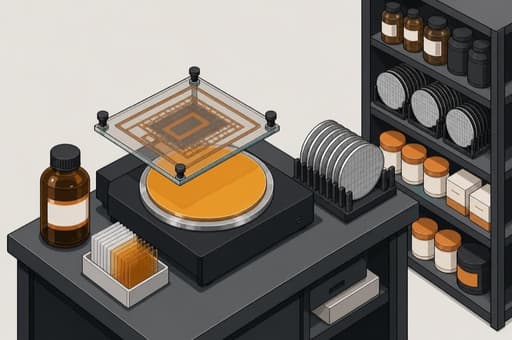
Photoresists and Patterning Materials
Light-sensitive coatings that let a circuit pattern be printed onto a wafer. Roughly an eighth of sales, and Qnity sits behind the Japanese leaders here; its family for the newest, shortest-wavelength printing machines, launched February 2026, is the test of whether that shifts.
Competes with Semiconductor photoresists (Tokyo Ohka Kogyo) · Leading-edge resists (JSR) · Resists and ancillaries (Merck KGaA)
In plain English
Chips are printed a little like photographs. A wafer is coated with a syrup that changes where light strikes it, a machine shines the circuit pattern through, and the exposed parts wash away, leaving a stencil for the next step. Qnity makes the syrup and the helper chemicals around it.
One recipe gets approved for one design at one factory and then ships for years, which is also why breaking in is slow. Japanese suppliers lead the newest, shortest-wavelength printing; Qnity is strongest in older and packaging-stage work, and said it won approvals at two leading-edge chip generations in early 2026.
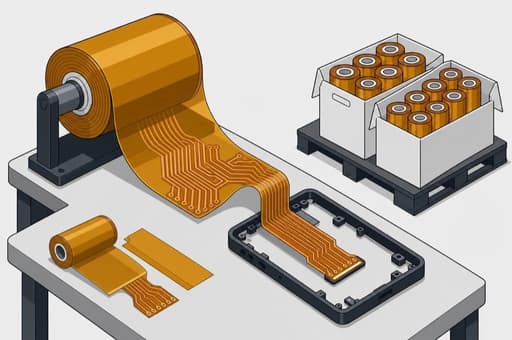
Advanced Flex Technologies (Kapton, Pyralux)
Kapton, the amber plastic film used wherever a circuit has to bend, plus the laminated layers built on it. Roughly a tenth of sales, growing more slowly than the AI-linked lines — management calls consumer electronics its slowest-growing end market.
Competes with Polyimide film (PI Advanced Materials) · Polyimide film (Kaneka) · High-frequency laminates (Merck KGaA)
In plain English
Open a phone and you will find ribbons of thin amber plastic with copper lines on them, folded around the battery and the camera. That film is Kapton — tough, heat-resistant, bendable — and it came to Qnity from DuPont in the spin-off, along with the laminated versions sold as Pyralux.
The customers are the factories that turn film into circuits: they buy it by the roll, bond copper onto it, etch the pattern, and sell the finished bendy circuit on to phone, server and aerospace makers. Steady and unglamorous, paced by premium phone and board volumes rather than by the AI-linked lines next door.
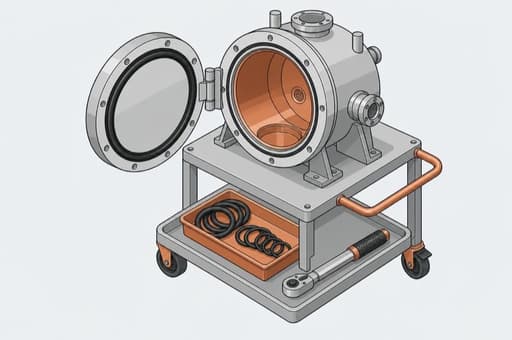
Kalrez Specialized Sealants
Black rubber rings that survive the hot, corrosive gas inside chipmaking machines. Small, and it runs on a different clock from everything else here: demand follows machine orders, and management credited that for strong growth in the first half of 2026.
Competes with Chemical-proof O-rings (Trelleborg) · Chemical-proof O-rings (NOK Corporation) · Sealing rings for chip equipment (Parker Hannifin)
In plain English
Inside a chipmaking machine, wafers sit in sealed chambers full of hot, corrosive gas that would eat ordinary rubber. Kalrez rings are made from a fluorine-based rubber that shrugs it off, so they seal the doors and joints — and get swapped on a schedule, like the gasket on a pressure cooker.
Every other line here sells more when factories run more wafers. This one sells when equipment makers build new machines and when factories strip chambers down for service. Qnity is putting automation and capacity work into it under a company-wide cost programme.
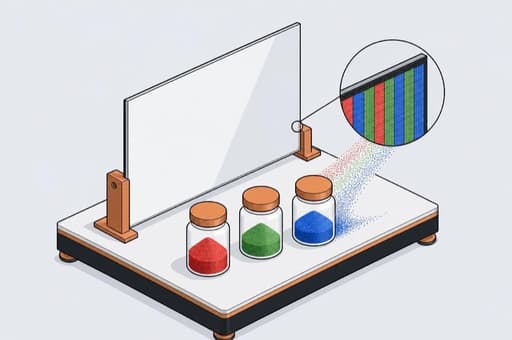
Advanced Display Materials
Red, green and blue light-giving materials for phone, TV and car screens. The one line pointed at neither chips nor AI: this market grew 7% in 2025 to about $2.3B and is expected flat to slightly down in 2026.
Competes with Phosphorescent emitter materials (Universal Display Corporation) · OLED stack materials (Merck KGaA) · In-house OLED materials (LG Chem)
In plain English
Every pixel in an OLED screen is a tiny sandwich of chemical layers that gives off its own light when current runs through it — no backlight needed, which is why such screens can be thin and show true black. Qnity supplies some of those layers, in red, green and blue.
Panel makers, mostly Korean, buy the material and put it into every pixel of every panel they build, so the money tracks how many screens ship. Phone panel volumes are expected flat at best this year, and Samsung SDI and LG Chem expanded their own in-house materials in 2025.


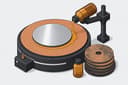 Chip-Polishing Pads, Slurries and CleansPads and gritty liquid that grind each freshly built chip layer mirror-flat, plus the cleaners that follow. Qnity's biggest line, and the one that gains most as chips stack more layers. New pad and slurry platforms have been arriving roughly every quarter.
Pads and gritty liquid that grind each freshly built chip layer mirror-flat, plus the cleaners that follow. Qnity's biggest line, and the one that gains most as chips stack more layers. New pad and slurry platforms have been arriving roughly every quarter.
In plain English
Building a chip means stacking dozens of layers, and each one comes out bumpy. Before the next layer goes down, the surface has to be made flat: a spinning pad presses the wafer against a milky liquid full of very fine grit, and a cleaning chemical rinses away what is left behind.
Qnity sells the pad, the grit liquid and the rinse. None of it survives the job, so a factory reorders forever. Once a material is approved for one recipe at one plant, that approval takes two to three years to reach full production and then ships against that factory's output for years. More layers per chip means more polishing steps — and more sold per wafer.
Competes with CMP slurries and NexPlanar pads (Entegris) · Copper polishing slurries (Fujifilm Electronic Materials) · Non-woven polishing pads (Fujibo)
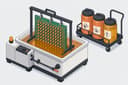 Advanced Circuit & PackagingCopper-plating baths, light-sensitive dry films and insulating layers that build the wiring joining chip to package to board. The fastest-moving part of the company — the interconnect half it sits in grew 28% year over year in the June 2026 quarter.
Copper-plating baths, light-sensitive dry films and insulating layers that build the wiring joining chip to package to board. The fastest-moving part of the company — the interconnect half it sits in grew 28% year over year in the June 2026 quarter.
In plain English
Think of the wiring inside a phone or an AI server as plumbing that has to be grown rather than laid. Dip the board or the chip package into the right chemical bath and copper deposits itself exactly where a patterned film left an opening — pillars, pads and hair-thin tracks.
Qnity mixes those baths and makes the patterned films. Board factories and packaging houses buy them, use them up on every panel, and buy again. Each generation of AI hardware wants more layers and finer lines, which means more bath, more film and more money per board.
Competes with Atotech plating chemistry (MKS Instruments) · MacDermid Alpha assembly chemistry (Element Solutions) · Plating chemistry for boards (JCU Corporation)
 Advanced Packaging SolutionsMaterials from both halves of the company, sold together for stacking and joining chips instead of shrinking them. About a tenth of 2025 sales, already counted inside the product lines around it. Watch whether customers buy the whole set.
Materials from both halves of the company, sold together for stacking and joining chips instead of shrinking them. About a tenth of 2025 sales, already counted inside the product lines around it. Watch whether customers buy the whole set.
In plain English
For decades, better chips meant squeezing smaller features onto one flat piece of silicon. That is getting harder, so the industry increasingly stacks chips on top of each other and wires them into a single package — management's phrase for the shift is "shrink to stack".
It touches nearly everything Qnity makes: the polish, the plating, the insulating layers, the films that carry heat away. During 2026 the company began selling these as one connected process rather than separate products, opened a hub for the work, and joined imec, a shared chip-research programme, for access to stacking roadmaps. The money still lands in the individual lines.
Competes with MacDermid Alpha packaging materials (Element Solutions) · Atotech bumping chemistry (MKS Instruments) · Packaging equipment and process (Applied Materials)
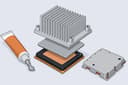 Laird Thermal and Shielding MaterialsPutties, pads and greases that pull heat out of AI server chips, plus shields that stop parts from disturbing each other's signals. Bundled with packaging and AI boards, this cluster grew more than 50% across the first half of 2026.
Putties, pads and greases that pull heat out of AI server chips, plus shields that stop parts from disturbing each other's signals. Bundled with packaging and AI boards, this cluster grew more than 50% across the first half of 2026.
In plain English
An AI server rack runs hot enough to cook itself. A chip and its metal cooler never touch perfectly — under a microscope they meet only in patches — so a soft heat-carrying putty or pad is squeezed between them to bridge the gaps. Qnity makes those, plus grease versions and thin metal shields that keep one component's electrical noise away from its neighbour.
The material gets chosen while a machine is still being designed, then bought for every unit built. DuPont paid $2.4B for this business in 2021, when it was selling about $465M a year.
Competes with High-power thermal interface materials (Henkel) · Thermal greases (Shin-Etsu Chemical) · Gap fillers and shielding (Parker Chomerics)
 Photoresists and Patterning MaterialsLight-sensitive coatings that let a circuit pattern be printed onto a wafer. Roughly an eighth of sales, and Qnity sits behind the Japanese leaders here; its family for the newest, shortest-wavelength printing machines, launched February 2026, is the test of whether that shifts.
Light-sensitive coatings that let a circuit pattern be printed onto a wafer. Roughly an eighth of sales, and Qnity sits behind the Japanese leaders here; its family for the newest, shortest-wavelength printing machines, launched February 2026, is the test of whether that shifts.
In plain English
Chips are printed a little like photographs. A wafer is coated with a syrup that changes where light strikes it, a machine shines the circuit pattern through, and the exposed parts wash away, leaving a stencil for the next step. Qnity makes the syrup and the helper chemicals around it.
One recipe gets approved for one design at one factory and then ships for years, which is also why breaking in is slow. Japanese suppliers lead the newest, shortest-wavelength printing; Qnity is strongest in older and packaging-stage work, and said it won approvals at two leading-edge chip generations in early 2026.
Competes with Semiconductor photoresists (Tokyo Ohka Kogyo) · Leading-edge resists (JSR) · Resists and ancillaries (Merck KGaA)
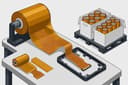 Advanced Flex Technologies (Kapton, Pyralux)Kapton, the amber plastic film used wherever a circuit has to bend, plus the laminated layers built on it. Roughly a tenth of sales, growing more slowly than the AI-linked lines — management calls consumer electronics its slowest-growing end market.
Kapton, the amber plastic film used wherever a circuit has to bend, plus the laminated layers built on it. Roughly a tenth of sales, growing more slowly than the AI-linked lines — management calls consumer electronics its slowest-growing end market.
In plain English
Open a phone and you will find ribbons of thin amber plastic with copper lines on them, folded around the battery and the camera. That film is Kapton — tough, heat-resistant, bendable — and it came to Qnity from DuPont in the spin-off, along with the laminated versions sold as Pyralux.
The customers are the factories that turn film into circuits: they buy it by the roll, bond copper onto it, etch the pattern, and sell the finished bendy circuit on to phone, server and aerospace makers. Steady and unglamorous, paced by premium phone and board volumes rather than by the AI-linked lines next door.
Competes with Polyimide film (PI Advanced Materials) · Polyimide film (Kaneka) · High-frequency laminates (Merck KGaA)
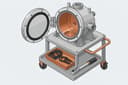 Kalrez Specialized SealantsBlack rubber rings that survive the hot, corrosive gas inside chipmaking machines. Small, and it runs on a different clock from everything else here: demand follows machine orders, and management credited that for strong growth in the first half of 2026.
Black rubber rings that survive the hot, corrosive gas inside chipmaking machines. Small, and it runs on a different clock from everything else here: demand follows machine orders, and management credited that for strong growth in the first half of 2026.
In plain English
Inside a chipmaking machine, wafers sit in sealed chambers full of hot, corrosive gas that would eat ordinary rubber. Kalrez rings are made from a fluorine-based rubber that shrugs it off, so they seal the doors and joints — and get swapped on a schedule, like the gasket on a pressure cooker.
Every other line here sells more when factories run more wafers. This one sells when equipment makers build new machines and when factories strip chambers down for service. Qnity is putting automation and capacity work into it under a company-wide cost programme.
Competes with Chemical-proof O-rings (Trelleborg) · Chemical-proof O-rings (NOK Corporation) · Sealing rings for chip equipment (Parker Hannifin)
 Advanced Display MaterialsRed, green and blue light-giving materials for phone, TV and car screens. The one line pointed at neither chips nor AI: this market grew 7% in 2025 to about $2.3B and is expected flat to slightly down in 2026.
Red, green and blue light-giving materials for phone, TV and car screens. The one line pointed at neither chips nor AI: this market grew 7% in 2025 to about $2.3B and is expected flat to slightly down in 2026.
In plain English
Every pixel in an OLED screen is a tiny sandwich of chemical layers that gives off its own light when current runs through it — no backlight needed, which is why such screens can be thin and show true black. Qnity supplies some of those layers, in red, green and blue.
Panel makers, mostly Korean, buy the material and put it into every pixel of every panel they build, so the money tracks how many screens ship. Phone panel volumes are expected flat at best this year, and Samsung SDI and LG Chem expanded their own in-house materials in 2025.
Competes with Phosphorescent emitter materials (Universal Display Corporation) · OLED stack materials (Merck KGaA) · In-house OLED materials (LG Chem)
Named in filings, launches and programs
- Samsung ElectronicsCustomer programThe largest single buyer at 11% of 2025 sales; TSMC follows at 8% — the only two customers Qnity names.
- Emblem CMP pad platformProductPolishing pad launched October 2025 for leading-edge logic chips and stacked memory.
- Optivision Max polishing padsProduct · RampingA softer pad introduced in spring 2026 for the most delicate polishing steps.
- Stackplane CMP slurry platformProduct · AnnouncedPolishing liquids for stacked-chip packaging, introduced at the end of August 2026.
- Eon EUV photoresist familyProduct · RampingCoatings for the newest printing machines, launched February 2026; non-fluorine versions followed in March.
- AI circuit-board pulse platingProduct · RampingCopper-growing chemistry aimed at the many-layered circuit boards used in AI servers.
- Tflex CR910 and Tgrease 3000ProductTwo heat-moving materials launched in July 2026 for high-power electronics.
- Advanced Packaging Innovation HubServiceOpened June 2026 as part of pulling the chip-stacking materials into a single end-to-end offering.
- NVIDIA materials collaborationProduct · AnnouncedSince March 2026 Qnity uses NVIDIA software to model new materials on computers before mixing them; no revenue attached.
- imec research membershipEcosystem · AnnouncedJoined a shared chip-research programme in July 2026 for early sight of stacking and memory roadmaps.
- Apple American manufacturing programCustomer program · AnnouncedQnity said in May 2026 it had been included in Apple's American manufacturing program; terms were not disclosed.
- Zhen Ding TechnologyCustomer programA circuit-board maker that handed Qnity its 2026 supplier award for materials, equipment and services.
- Transformation planEcosystemA cost programme begun in 2026 aiming for about $100M a year in extra profit by end-2028, costing roughly $140M to carry out.
Samsung ElectronicsCustomer program
The largest single buyer at 11% of 2025 sales; TSMC follows at 8% — the only two customers Qnity names.
Emblem CMP pad platformProduct
Polishing pad launched October 2025 for leading-edge logic chips and stacked memory.
Optivision Max polishing padsProduct · Ramping
A softer pad introduced in spring 2026 for the most delicate polishing steps.
Stackplane CMP slurry platformProduct · Announced
Polishing liquids for stacked-chip packaging, introduced at the end of August 2026.
Eon EUV photoresist familyProduct · Ramping
Coatings for the newest printing machines, launched February 2026; non-fluorine versions followed in March.
AI circuit-board pulse platingProduct · Ramping
Copper-growing chemistry aimed at the many-layered circuit boards used in AI servers.
Tflex CR910 and Tgrease 3000Product
Two heat-moving materials launched in July 2026 for high-power electronics.
Advanced Packaging Innovation HubService
Opened June 2026 as part of pulling the chip-stacking materials into a single end-to-end offering.
NVIDIA materials collaborationProduct · Announced
Since March 2026 Qnity uses NVIDIA software to model new materials on computers before mixing them; no revenue attached.
imec research membershipEcosystem · Announced
Joined a shared chip-research programme in July 2026 for early sight of stacking and memory roadmaps.
Apple American manufacturing programCustomer program · Announced
Qnity said in May 2026 it had been included in Apple's American manufacturing program; terms were not disclosed.
Zhen Ding TechnologyCustomer program
A circuit-board maker that handed Qnity its 2026 supplier award for materials, equipment and services.
Transformation planEcosystem
A cost programme begun in 2026 aiming for about $100M a year in extra profit by end-2028, costing roughly $140M to carry out.