
Regions Financial (RF)
Consumer, commercial and wealth banking anchored in the South, Midwest and Texas.
Something off on this page? Send us feedback.
Regions is a bank rooted in the South: branch after branch collecting everyday checking and savings money, much of it sitting in accounts that pay no interest, and lending it out to households and mid-sized companies. The gap between what it pays and what it charges is most of the income. What it is trying to grow is the fee work alongside — managing family money, running companies' payments, arranging deals for business borrowers.
Item facts: FY2025 · year ended Dec 31, 2025, from filings, earnings calls and company pages.
Judgment weights, not filed revenue
The band summarizes business focus and direction. ~ marks estimates.
9 in detail · 13 more below
Consumer Bank
Branches, the app and the call centre, plus home loans, cards and the checking accounts that fund the whole bank — roughly thirty cents in every deposit dollar pays no interest at all. Watch whether the 130-odd new branches planned keep that money coming.
Competes with Truist retail bank (Truist Financial) · Fifth Third consumer banking (Fifth Third Bancorp)
In plain English
Think of a shop that gets its stock for free. People keep their pay in a Regions checking account because that is where the card and the bill payments live, and about thirty cents of every deposit dollar across the bank earns the customer nothing. Regions lends that money out at far higher rates and keeps the difference.
Which is why the branches still matter: 1,247 of them across fifteen states in the South, Midwest and Texas, plus the app and the call centre, are the collection points for the cheapest money the bank can get.
Card and ATM
Debit and credit swipes plus ATM charges: $487M in 2025, up from $467M but still short of 2023. Card balances are small, about $1.5B. The threat is regulatory — a proposed cap on debit fees at large banks.
Competes with Fifth Third consumer banking and card (Fifth Third Bancorp) · Truist consumer card (Truist Financial)
In plain English
Tap a Regions debit card at a supermarket till and the shop's own bank hands over a few cents. Nobody notices; multiply it by millions of swipes and it becomes one of the bank's biggest fee lines.
Credit cards add interest on unpaid balances, though that book is small — about $1.5 billion. The awkward bit is that Regions does not set the price of a swipe. A cap on debit fees at large banks has been proposed and is still being fought over in court, and that, not consumer spending, is the live worry here.
Mortgage banking and servicing
Making home loans and then collecting the payments on them. $19.8B of first mortgages sit on the books; the $158M fee line rose on the rising value of the servicing rights, not on new lending, which high rates keep slow.
Competes with Truist mortgage (Truist Financial) · Fifth Third mortgage (Fifth Third Bancorp) · Rocket home loans and servicing (Rocket Companies)
In plain English
Two jobs sit under one name. The first is writing the home loan. The second is the unglamorous monthly work that follows — taking the payment, holding back the tax and insurance money, chasing whoever falls behind — which Regions does for a thin annual slice, often on loans it has already sold to someone else.
That collecting right is carried at about $970 million, and it gains value when rates stay high, because fewer borrowers refinance and the payments keep coming. Just as well: high rates are also what has kept new lending quiet for years.
Corporate Bank
Lending to mid-sized companies and property developers: $53.9B of commercial loans and $9.1B to real-estate investors. Loans shrank through 2025 on runoff and refinancing, then turned — the pipeline of deals in progress was up roughly 15% by mid-2026.
Competes with Truist Wholesale Banking (Truist Financial) · Fifth Third commercial banking and payments (Fifth Third Bancorp) · Huntington commercial bank (Huntington Bancshares)
In plain English
This is the half of the bank that lends to companies instead of people: working capital for mid-sized manufacturers and distributors, construction and purchase loans on apartment blocks and offices, leases on equipment, and the business accounts that go with all of it.
The money is mostly interest — borrow at one rate, lend at a higher one — so the work is finding good borrowers. Regions added over sixty bankers in eighteen months and says new commercial customers were up almost 40% in the first half of 2026. The nuisance is the bond market: when it turns cheap, the best borrowers repay the bank and raise money there instead, some $700 million in a single quarter.
Treasury Management
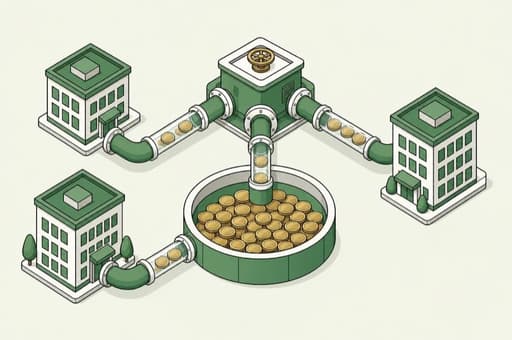
The payments plumbing businesses pay a monthly fee for. Corporate account charges grew about 10% in 2025 to roughly $250M, the fastest-growing fee line here, and it is what keeps business cash that pays no interest sitting in the bank.
Competes with Commercial payments and Newline (Fifth Third Bancorp) · Truist treasury management (Truist Financial) · PNC treasury management (PNC Financial Services)
In plain English
Every company has money in motion — wages going out, customer payments coming in, balances that need moving to where they are needed and reporting first thing in the morning. Regions sells the tools that do all that and charges for them.
The charge is the smaller prize. A business that runs its payments through Regions leaves its working cash in a Regions account, and those accounts pay little or nothing — which is how the bank keeps its cheapest funding in the building. Some of the software is borrowed: the bill-paying tool runs on BILL's system, the accounting-software connector on Koxa's, both sold under the Regions name.
Ascentium Capital and Regions Equipment Finance
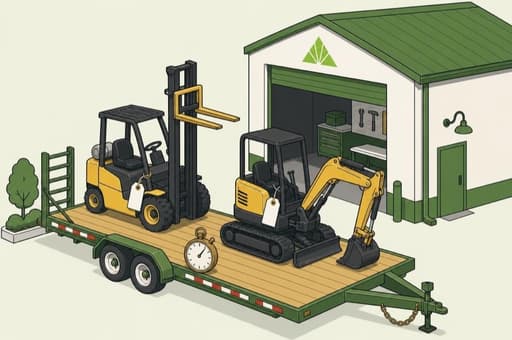
Vans, computers and machines financed for small and mid-sized firms, from ten-thousand-dollar tickets up to fifty-million-dollar ones, nationwide. Only $362M of leases show on the books, and management says balances have not grown as much as it expected.
Competes with Equipment and distribution finance (Huntington Bancshares) · Fifth Third equipment finance (Fifth Third Bancorp)
In plain English
A work van, a rack of computers, a machine for the shop floor: things a business needs and would rather not buy outright. Regions pays for them and is repaid over a few years, with the equipment itself standing as security.
Two doors lead to the same place. Ascentium Capital takes the small tickets, ten thousand to two million dollars, many decided on the application alone — management says it can say yes in about 75 minutes. Regions Equipment Finance handles the quarter-million to fifty-million jobs. Both reach firms well outside the branch map, which is the point.
Wealth Management
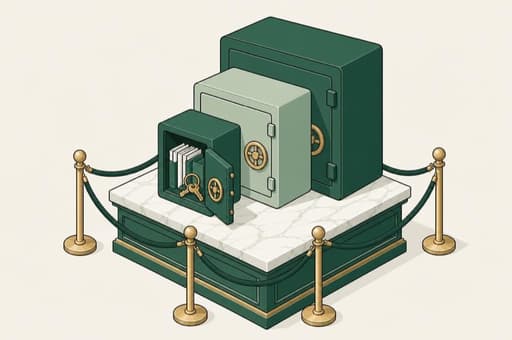
Investing and safeguarding money for well-off families, companies and non-profits: $729M of revenue out of a unit that uses almost none of the bank's assets. Record income in 2025 and again in spring 2026 — but the fee moves with markets.
Competes with Truist Wealth (Truist Financial) · Wealth and asset management (Fifth Third Bancorp) · Huntington wealth (Huntington Bancshares)
In plain English
A family sells the business; a charity has an endowment that has to last. They hand it to Regions to invest and pay a small percentage of the pot every year, and often ask Regions to act as trustee as well — holding assets, settling estates, running the company retirement plan.
Almost none of the bank's own money is tied up in this, which is why a tenth of revenue comes out of a unit that barely lends anything. The flip side is that when markets fall, the fee falls with them. Regions has been hiring advisers, and those taken on over the past three years have brought in almost $6 billion of client money.
Capital markets and advisory (Regions Securities)
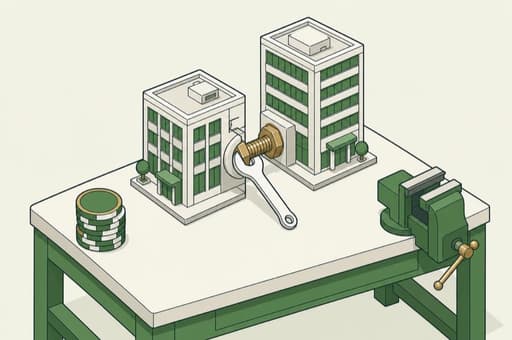
Sharing out big loans among lenders, selling bonds, hedging, and advising on company sales. Stuck at about $347M two years running; management targets $90–105M a quarter and calls it a $400M business over time, while rival Huntington bought its way bigger.
Competes with Capital markets and advisory (Huntington Bancshares) · Fifth Third capital markets (Fifth Third Bancorp) · Truist Securities (Truist Financial)
In plain English
Sometimes a business customer needs something a loan cannot do — a buyer for the company, a group of lenders to share a deal too big for one bank, protection against a currency or interest-rate move. These desks arrange it and charge a fee. Two bought-in advisory firms, BlackArch and Clearsight, handle the company sales.
This is the piece Regions keeps saying it wants bigger, and keeps waiting on: the quarterly target was raised, then the quarter for reaching the bottom of that range slipped three times. In July 2026 it agreed to buy Frazer Lanier, a small municipal bond house, to underwrite again for the public bodies it already banks.
Regions Real Estate Capital Markets
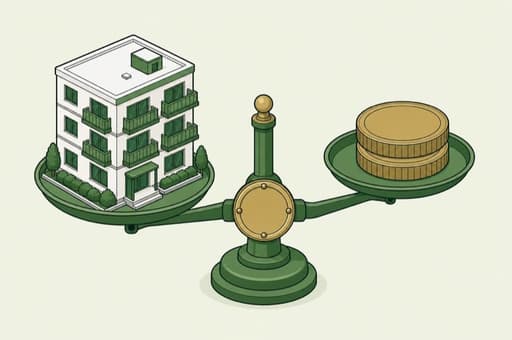
Apartment-building loans written under Fannie Mae and Freddie Mac licences, sold on and then serviced — roughly $8B of servicing, up from about $7B a year earlier. Regions carries a third of the credit risk on most of it.
Competes with Small-balance apartment lending (Walker & Dunlop) · Berkadia agency lending (Berkadia) · Greystone agency lending (Greystone)
In plain English
Fannie Mae and Freddie Mac, the government-backed companies that stand behind American home lending, do not lend themselves — they license other firms to lend for them. Regions holds those licences for apartment buildings, including student housing, manufactured-home communities and seniors' properties.
The loan is sold on, Regions keeps collecting the payments for a small annual cut, and the serviced pile has grown to roughly $8 billion. The catch is in the licence: on most of those loans Regions carries a third of any loss and Fannie Mae the other two-thirds. So it is not a clean fee business — a bad apartment market comes home. The platform was bought as Sabal Capital Partners in 2021.


 Consumer BankBranches, the app and the call centre, plus home loans, cards and the checking accounts that fund the whole bank — roughly thirty cents in every deposit dollar pays no interest at all. Watch whether the 130-odd new branches planned keep that money coming.
Branches, the app and the call centre, plus home loans, cards and the checking accounts that fund the whole bank — roughly thirty cents in every deposit dollar pays no interest at all. Watch whether the 130-odd new branches planned keep that money coming.
In plain English
Think of a shop that gets its stock for free. People keep their pay in a Regions checking account because that is where the card and the bill payments live, and about thirty cents of every deposit dollar across the bank earns the customer nothing. Regions lends that money out at far higher rates and keeps the difference.
Which is why the branches still matter: 1,247 of them across fifteen states in the South, Midwest and Texas, plus the app and the call centre, are the collection points for the cheapest money the bank can get.
Competes with Truist retail bank (Truist Financial) · Fifth Third consumer banking (Fifth Third Bancorp)
 Card and ATMDebit and credit swipes plus ATM charges: $487M in 2025, up from $467M but still short of 2023. Card balances are small, about $1.5B. The threat is regulatory — a proposed cap on debit fees at large banks.
Debit and credit swipes plus ATM charges: $487M in 2025, up from $467M but still short of 2023. Card balances are small, about $1.5B. The threat is regulatory — a proposed cap on debit fees at large banks.
In plain English
Tap a Regions debit card at a supermarket till and the shop's own bank hands over a few cents. Nobody notices; multiply it by millions of swipes and it becomes one of the bank's biggest fee lines.
Credit cards add interest on unpaid balances, though that book is small — about $1.5 billion. The awkward bit is that Regions does not set the price of a swipe. A cap on debit fees at large banks has been proposed and is still being fought over in court, and that, not consumer spending, is the live worry here.
Competes with Fifth Third consumer banking and card (Fifth Third Bancorp) · Truist consumer card (Truist Financial)
 Mortgage banking and servicingMaking home loans and then collecting the payments on them. $19.8B of first mortgages sit on the books; the $158M fee line rose on the rising value of the servicing rights, not on new lending, which high rates keep slow.
Making home loans and then collecting the payments on them. $19.8B of first mortgages sit on the books; the $158M fee line rose on the rising value of the servicing rights, not on new lending, which high rates keep slow.
In plain English
Two jobs sit under one name. The first is writing the home loan. The second is the unglamorous monthly work that follows — taking the payment, holding back the tax and insurance money, chasing whoever falls behind — which Regions does for a thin annual slice, often on loans it has already sold to someone else.
That collecting right is carried at about $970 million, and it gains value when rates stay high, because fewer borrowers refinance and the payments keep coming. Just as well: high rates are also what has kept new lending quiet for years.
Competes with Truist mortgage (Truist Financial) · Fifth Third mortgage (Fifth Third Bancorp) · Rocket home loans and servicing (Rocket Companies)
 Corporate BankLending to mid-sized companies and property developers: $53.9B of commercial loans and $9.1B to real-estate investors. Loans shrank through 2025 on runoff and refinancing, then turned — the pipeline of deals in progress was up roughly 15% by mid-2026.
Lending to mid-sized companies and property developers: $53.9B of commercial loans and $9.1B to real-estate investors. Loans shrank through 2025 on runoff and refinancing, then turned — the pipeline of deals in progress was up roughly 15% by mid-2026.
In plain English
This is the half of the bank that lends to companies instead of people: working capital for mid-sized manufacturers and distributors, construction and purchase loans on apartment blocks and offices, leases on equipment, and the business accounts that go with all of it.
The money is mostly interest — borrow at one rate, lend at a higher one — so the work is finding good borrowers. Regions added over sixty bankers in eighteen months and says new commercial customers were up almost 40% in the first half of 2026. The nuisance is the bond market: when it turns cheap, the best borrowers repay the bank and raise money there instead, some $700 million in a single quarter.
Competes with Truist Wholesale Banking (Truist Financial) · Fifth Third commercial banking and payments (Fifth Third Bancorp) · Huntington commercial bank (Huntington Bancshares)
 Treasury ManagementThe payments plumbing businesses pay a monthly fee for. Corporate account charges grew about 10% in 2025 to roughly $250M, the fastest-growing fee line here, and it is what keeps business cash that pays no interest sitting in the bank.
The payments plumbing businesses pay a monthly fee for. Corporate account charges grew about 10% in 2025 to roughly $250M, the fastest-growing fee line here, and it is what keeps business cash that pays no interest sitting in the bank.
In plain English
Every company has money in motion — wages going out, customer payments coming in, balances that need moving to where they are needed and reporting first thing in the morning. Regions sells the tools that do all that and charges for them.
The charge is the smaller prize. A business that runs its payments through Regions leaves its working cash in a Regions account, and those accounts pay little or nothing — which is how the bank keeps its cheapest funding in the building. Some of the software is borrowed: the bill-paying tool runs on BILL's system, the accounting-software connector on Koxa's, both sold under the Regions name.
Competes with Commercial payments and Newline (Fifth Third Bancorp) · Truist treasury management (Truist Financial) · PNC treasury management (PNC Financial Services)
 Ascentium Capital and Regions Equipment FinanceVans, computers and machines financed for small and mid-sized firms, from ten-thousand-dollar tickets up to fifty-million-dollar ones, nationwide. Only $362M of leases show on the books, and management says balances have not grown as much as it expected.
Vans, computers and machines financed for small and mid-sized firms, from ten-thousand-dollar tickets up to fifty-million-dollar ones, nationwide. Only $362M of leases show on the books, and management says balances have not grown as much as it expected.
In plain English
A work van, a rack of computers, a machine for the shop floor: things a business needs and would rather not buy outright. Regions pays for them and is repaid over a few years, with the equipment itself standing as security.
Two doors lead to the same place. Ascentium Capital takes the small tickets, ten thousand to two million dollars, many decided on the application alone — management says it can say yes in about 75 minutes. Regions Equipment Finance handles the quarter-million to fifty-million jobs. Both reach firms well outside the branch map, which is the point.
Competes with Equipment and distribution finance (Huntington Bancshares) · Fifth Third equipment finance (Fifth Third Bancorp)
 Wealth ManagementInvesting and safeguarding money for well-off families, companies and non-profits: $729M of revenue out of a unit that uses almost none of the bank's assets. Record income in 2025 and again in spring 2026 — but the fee moves with markets.
Investing and safeguarding money for well-off families, companies and non-profits: $729M of revenue out of a unit that uses almost none of the bank's assets. Record income in 2025 and again in spring 2026 — but the fee moves with markets.
In plain English
A family sells the business; a charity has an endowment that has to last. They hand it to Regions to invest and pay a small percentage of the pot every year, and often ask Regions to act as trustee as well — holding assets, settling estates, running the company retirement plan.
Almost none of the bank's own money is tied up in this, which is why a tenth of revenue comes out of a unit that barely lends anything. The flip side is that when markets fall, the fee falls with them. Regions has been hiring advisers, and those taken on over the past three years have brought in almost $6 billion of client money.
Competes with Truist Wealth (Truist Financial) · Wealth and asset management (Fifth Third Bancorp) · Huntington wealth (Huntington Bancshares)
 Capital markets and advisory (Regions Securities)Sharing out big loans among lenders, selling bonds, hedging, and advising on company sales. Stuck at about $347M two years running; management targets $90–105M a quarter and calls it a $400M business over time, while rival Huntington bought its way bigger.
Sharing out big loans among lenders, selling bonds, hedging, and advising on company sales. Stuck at about $347M two years running; management targets $90–105M a quarter and calls it a $400M business over time, while rival Huntington bought its way bigger.
In plain English
Sometimes a business customer needs something a loan cannot do — a buyer for the company, a group of lenders to share a deal too big for one bank, protection against a currency or interest-rate move. These desks arrange it and charge a fee. Two bought-in advisory firms, BlackArch and Clearsight, handle the company sales.
This is the piece Regions keeps saying it wants bigger, and keeps waiting on: the quarterly target was raised, then the quarter for reaching the bottom of that range slipped three times. In July 2026 it agreed to buy Frazer Lanier, a small municipal bond house, to underwrite again for the public bodies it already banks.
Competes with Capital markets and advisory (Huntington Bancshares) · Fifth Third capital markets (Fifth Third Bancorp) · Truist Securities (Truist Financial)
 Regions Real Estate Capital MarketsApartment-building loans written under Fannie Mae and Freddie Mac licences, sold on and then serviced — roughly $8B of servicing, up from about $7B a year earlier. Regions carries a third of the credit risk on most of it.
Apartment-building loans written under Fannie Mae and Freddie Mac licences, sold on and then serviced — roughly $8B of servicing, up from about $7B a year earlier. Regions carries a third of the credit risk on most of it.
In plain English
Fannie Mae and Freddie Mac, the government-backed companies that stand behind American home lending, do not lend themselves — they license other firms to lend for them. Regions holds those licences for apartment buildings, including student housing, manufactured-home communities and seniors' properties.
The loan is sold on, Regions keeps collecting the payments for a small annual cut, and the serviced pile has grown to roughly $8 billion. The catch is in the licence: on most of those loans Regions carries a third of any loss and Fannie Mae the other two-thirds. So it is not a clean fee business — a bad apartment market comes home. The platform was bought as Sabal Capital Partners in 2021.
Competes with Small-balance apartment lending (Walker & Dunlop) · Berkadia agency lending (Berkadia) · Greystone agency lending (Greystone)
Named in filings, launches and programs
- Regions Home Improvement FinancingProduct lineLending arranged through home-improvement contractors, bought as EnerBank in 2021; shrinking balances pulled consumer loans down $539M in 2025.
- Regions Affordable HousingBrandAssembles investor funds that finance affordable apartments in exchange for tax credits; $193M of related amortisation ran through 2025.
- Regions Institutional ServicesServiceCorporate trustee work inside the wealth arm — holding and administering assets for institutions; a new client-services executive was named in June 2026.
- Highland AssociatesBrandWholly owned investment adviser for institutions and non-profits, feeding the wealth business.
- Regions Investment ManagementBrandIn-house money manager, once called Morgan Asset Management; runs portfolios behind the trust and investment-management fees.
- Regions Investment ServicesBrandThe retail brokerage arm sitting behind $182M of investment services fees in 2025.
- Regions Whole Loan AdvisoryServiceLaunched August 2026 inside Regions Securities: advises banks and other lenders on buying and selling loan portfolios.
- The Frazer Lanier CompanyBrand · AnnouncedMunicipal and corporate bond underwriter agreed in July 2026; terms undisclosed, and management expects only a modest impact at first.
- Regions CashFlowIQProductBill-paying and invoicing tool for business customers, running on BILL's technology under the Regions name.
- Regions Embedded ERP FinanceProductConnects a company's accounting software straight to its Regions accounts; live since February 2025, built on Koxa's technology.
- Regions Mobile Banking and Personalized InsightsPlatformSpending and subscription alerts added to the app in July 2026; four in five customer transactions are now digital.
- Regions Business CapitalBrandLends to companies against what they own rather than what they earn, inside the Corporate Bank.
- Other segmentSegmentThe bank's own bond portfolio, wholesale borrowing and internal transfer-pricing leftovers: slightly negative revenue, $137M of net income in 2025.
Regions Home Improvement FinancingProduct line
Lending arranged through home-improvement contractors, bought as EnerBank in 2021; shrinking balances pulled consumer loans down $539M in 2025.
Regions Affordable HousingBrand
Assembles investor funds that finance affordable apartments in exchange for tax credits; $193M of related amortisation ran through 2025.
Regions Institutional ServicesService
Corporate trustee work inside the wealth arm — holding and administering assets for institutions; a new client-services executive was named in June 2026.
Highland AssociatesBrand
Wholly owned investment adviser for institutions and non-profits, feeding the wealth business.
Regions Investment ManagementBrand
In-house money manager, once called Morgan Asset Management; runs portfolios behind the trust and investment-management fees.
Regions Investment ServicesBrand
The retail brokerage arm sitting behind $182M of investment services fees in 2025.
Regions Whole Loan AdvisoryService
Launched August 2026 inside Regions Securities: advises banks and other lenders on buying and selling loan portfolios.
The Frazer Lanier CompanyBrand · Announced
Municipal and corporate bond underwriter agreed in July 2026; terms undisclosed, and management expects only a modest impact at first.
Regions CashFlowIQProduct
Bill-paying and invoicing tool for business customers, running on BILL's technology under the Regions name.
Regions Embedded ERP FinanceProduct
Connects a company's accounting software straight to its Regions accounts; live since February 2025, built on Koxa's technology.
Regions Mobile Banking and Personalized InsightsPlatform
Spending and subscription alerts added to the app in July 2026; four in five customer transactions are now digital.
Regions Business CapitalBrand
Lends to companies against what they own rather than what they earn, inside the Corporate Bank.
Other segmentSegment
The bank's own bond portfolio, wholesale borrowing and internal transfer-pricing leftovers: slightly negative revenue, $137M of net income in 2025.