
Southern Copper (SCCO)
Mines, smelts and refines copper across integrated Peruvian and Mexican operations.
Something off on this page? Send us feedback.
Southern Copper is a copper miner first. Four giant open pits in Mexico and Peru make almost all of today's money; a smaller underground business leans toward zinc and silver, while a long construction queue is meant to add future copper. Those side metals are more than extra sales: they help pay the cost of getting copper out of the ground.
Item facts: FY2025 · year ended Dec 31, 2025, from filings, earnings calls and company pages.
Judgment weights, not filed revenue
The band summarizes business focus and direction. ~ marks estimates.
6 in detail · 17 more below
Buenavista
Southern Copper's largest mine produced 913.8 million pounds of copper in fiscal 2025, while its newer zinc plant reached full pace. Ore quality, water, power and metal prices decide how hard this engine can run.
Competes with Morenci open-pit copper and molybdenum complex (Freeport-McMoRan) · Escondida copper-powder and pure-plate operation (BHP)
In plain English
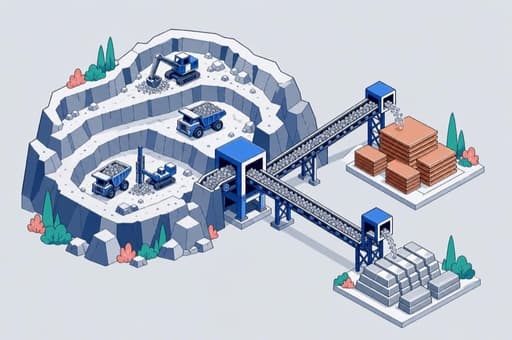
Picture a giant staircase dug into the earth. Trucks lift rock from each step, mills crush it, and the useful copper and zinc are separated from the waste. Buenavista is Southern Copper's biggest version of that machine and its largest source of sales.
Buyers pay for pure copper plates or copper-rich powder at market-linked prices, so a sales agreement does not lock in the final price. Some powder goes to La Caridad for finishing. Zinc separated along the way brings its own sales and helps cover the cost of producing copper.
La Caridad
La Caridad is both a mine and the Mexican finishing hub, turning its own output and material from sister mines into refined copper and rod. Plant uptime and a steady flow of feed matter as much as its pit.
Competes with Bagdad copper and molybdenum complex (Freeport-McMoRan) · Morenci open-pit copper processing system (Freeport-McMoRan)
In plain English
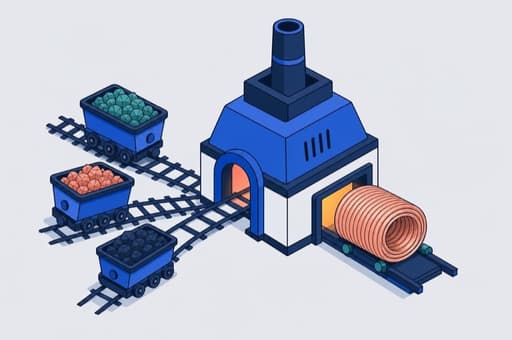
The useful twist at La Caridad is that the mine comes with a factory district. It digs and crushes its own rock, then uses furnaces and purification equipment to finish copper-rich material arriving from Buenavista and the underground mines too. The last step can turn copper into rod.
Money appears when that finished copper, rod or other material is sold outside the group. COFICAB México, a contracted buyer, is due to take 46,200 tonnes of rod each year in 2026 and 2027. A shutdown here can therefore slow more than La Caridad's own mine.
Toquepala
The larger Peruvian mine produced 547.6 million pounds of copper in fiscal 2025. Its rock travels through the shared Ilo finishing and export system, making ore quality, mill availability, water and power the daily watchpoints.
Competes with Cerro Verde copper-powder and pure-plate complex (Freeport-McMoRan) · Quellaveco copper-powder mine (Anglo American)
In plain English
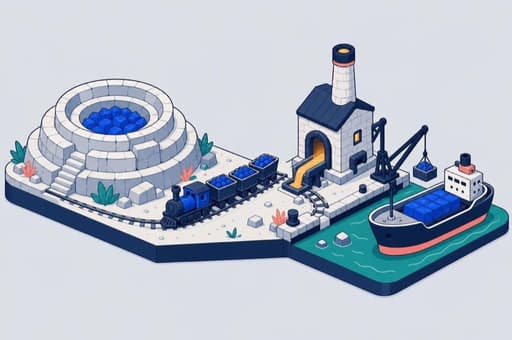
Toquepala starts with an enormous open hole and ends at the coast. Rock is blasted, crushed and stirred with water so copper-bearing particles can be skimmed away; another route uses an acidic liquid and electricity to make pure copper plates.
The mine does not need its own complete route to customers. Its copper-rich powder travels through Southern Copper's Ilo system, where it can be melted, purified and shipped. Buyers pay prices tied to metal markets, with adjustments for finishing and delivery. That makes the amount and quality of recovered copper just as important as how much rock moves.
Cuajone
Cuajone produced 358.8 million pounds of copper in fiscal 2025 and shares Peru's railway, furnaces, refinery and port. Access to the site joins ore quality and mill performance on the short list of things that can interrupt sales.
Competes with Quellaveco copper-powder operation (Anglo American) · Cerro Verde copper and molybdenum complex (Freeport-McMoRan)
In plain English
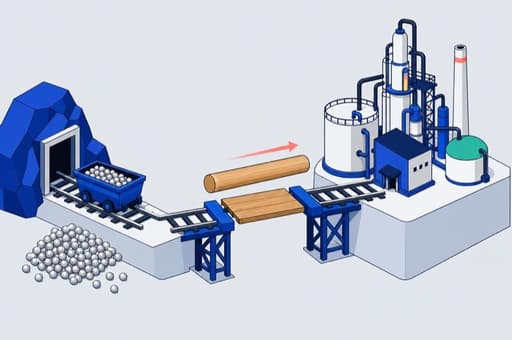
Here the business is a relay race. Cuajone digs the rock and separates a copper-rich powder, then hands it to the company railway. Ilo takes the baton, melts and purifies the material, and sends the finished metal through its port. Silver and molybdenum recovered along the way add smaller sales.
Customers pay when the copper and side metals are sold, mostly through longer agreements whose prices still move with metal markets. Because the mine and the coastal plants are links in one chain, blocked access, slower digging or a weak mill can leave expensive equipment farther down the route waiting.
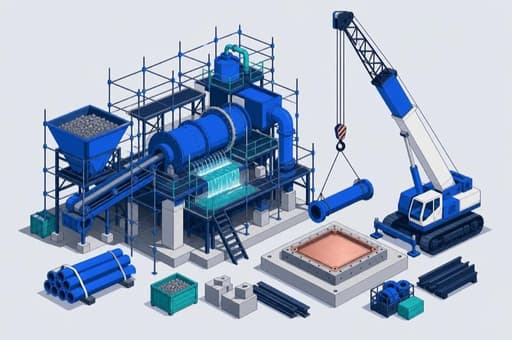
Tía María
This new Peruvian copper project was 42% complete at June 30, 2026. Construction, permits, community access, water and a clean start-up all have to arrive before its planned copper can become sales.
Competes with Zafranal new copper project (Teck) · La Granja copper development project (First Quantum and Rio Tinto)
In plain English
For now, Tía María is a construction site rather than a mine that pays its way. Crews are building the pits and equipment needed to wash copper from crushed rock with a liquid, then use electricity to collect it as pure plates.
Those plates can eventually enter Southern Copper's existing Peruvian sales and shipping network. The company expects first production in the second half of 2027 and a full annual pace of 120,000 tonnes from 2028. Until then, contractors and equipment consume cash while the project depends on permits, local access, water and a smooth opening.
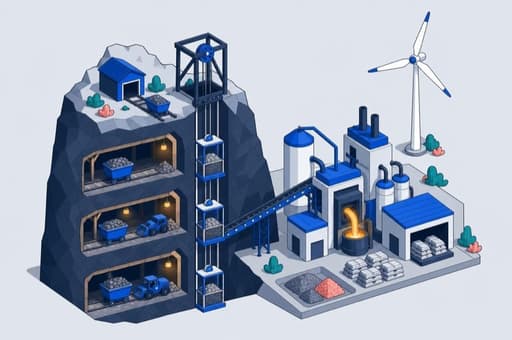
IMMSA Unit
This small underground arm brought in $598 million from outside customers in fiscal 2025. Its zinc, silver and copper mix is useful, but safe mine access, labor, reliable power and refinery use keep it earning.
Competes with Velardeña underground zinc, lead and copper mines (Industrias Peñoles) · Sabinas underground mixed-metals mine (Industrias Peñoles)
In plain English
Instead of removing a whole hillside, IMMSA follows metal-bearing rock through underground tunnels. Three active mines bring up a mixed load of zinc, silver and copper material; a plant in San Luis Potosí turns the zinc portion into saleable metal, while La Caridad can handle other material.
That mix gives Southern Copper a small income stream that behaves differently from the giant copper pits. Metal buyers pay for each recovered product, and a contracted wind farm supplies electricity to the unit. Its modest size does not make the basics optional: safe tunnels, workers, power and working processing plants must all line up.


 BuenavistaSouthern Copper's largest mine produced 913.8 million pounds of copper in fiscal 2025, while its newer zinc plant reached full pace. Ore quality, water, power and metal prices decide how hard this engine can run.
Southern Copper's largest mine produced 913.8 million pounds of copper in fiscal 2025, while its newer zinc plant reached full pace. Ore quality, water, power and metal prices decide how hard this engine can run.
In plain English
Picture a giant staircase dug into the earth. Trucks lift rock from each step, mills crush it, and the useful copper and zinc are separated from the waste. Buenavista is Southern Copper's biggest version of that machine and its largest source of sales.
Buyers pay for pure copper plates or copper-rich powder at market-linked prices, so a sales agreement does not lock in the final price. Some powder goes to La Caridad for finishing. Zinc separated along the way brings its own sales and helps cover the cost of producing copper.
Competes with Morenci open-pit copper and molybdenum complex (Freeport-McMoRan) · Escondida copper-powder and pure-plate operation (BHP)
 La CaridadLa Caridad is both a mine and the Mexican finishing hub, turning its own output and material from sister mines into refined copper and rod. Plant uptime and a steady flow of feed matter as much as its pit.
La Caridad is both a mine and the Mexican finishing hub, turning its own output and material from sister mines into refined copper and rod. Plant uptime and a steady flow of feed matter as much as its pit.
In plain English
The useful twist at La Caridad is that the mine comes with a factory district. It digs and crushes its own rock, then uses furnaces and purification equipment to finish copper-rich material arriving from Buenavista and the underground mines too. The last step can turn copper into rod.
Money appears when that finished copper, rod or other material is sold outside the group. COFICAB México, a contracted buyer, is due to take 46,200 tonnes of rod each year in 2026 and 2027. A shutdown here can therefore slow more than La Caridad's own mine.
Competes with Bagdad copper and molybdenum complex (Freeport-McMoRan) · Morenci open-pit copper processing system (Freeport-McMoRan)
 ToquepalaThe larger Peruvian mine produced 547.6 million pounds of copper in fiscal 2025. Its rock travels through the shared Ilo finishing and export system, making ore quality, mill availability, water and power the daily watchpoints.
The larger Peruvian mine produced 547.6 million pounds of copper in fiscal 2025. Its rock travels through the shared Ilo finishing and export system, making ore quality, mill availability, water and power the daily watchpoints.
In plain English
Toquepala starts with an enormous open hole and ends at the coast. Rock is blasted, crushed and stirred with water so copper-bearing particles can be skimmed away; another route uses an acidic liquid and electricity to make pure copper plates.
The mine does not need its own complete route to customers. Its copper-rich powder travels through Southern Copper's Ilo system, where it can be melted, purified and shipped. Buyers pay prices tied to metal markets, with adjustments for finishing and delivery. That makes the amount and quality of recovered copper just as important as how much rock moves.
Competes with Cerro Verde copper-powder and pure-plate complex (Freeport-McMoRan) · Quellaveco copper-powder mine (Anglo American)
 CuajoneCuajone produced 358.8 million pounds of copper in fiscal 2025 and shares Peru's railway, furnaces, refinery and port. Access to the site joins ore quality and mill performance on the short list of things that can interrupt sales.
Cuajone produced 358.8 million pounds of copper in fiscal 2025 and shares Peru's railway, furnaces, refinery and port. Access to the site joins ore quality and mill performance on the short list of things that can interrupt sales.
In plain English
Here the business is a relay race. Cuajone digs the rock and separates a copper-rich powder, then hands it to the company railway. Ilo takes the baton, melts and purifies the material, and sends the finished metal through its port. Silver and molybdenum recovered along the way add smaller sales.
Customers pay when the copper and side metals are sold, mostly through longer agreements whose prices still move with metal markets. Because the mine and the coastal plants are links in one chain, blocked access, slower digging or a weak mill can leave expensive equipment farther down the route waiting.
Competes with Quellaveco copper-powder operation (Anglo American) · Cerro Verde copper and molybdenum complex (Freeport-McMoRan)
 Tía MaríaThis new Peruvian copper project was 42% complete at June 30, 2026. Construction, permits, community access, water and a clean start-up all have to arrive before its planned copper can become sales.
This new Peruvian copper project was 42% complete at June 30, 2026. Construction, permits, community access, water and a clean start-up all have to arrive before its planned copper can become sales.
In plain English
For now, Tía María is a construction site rather than a mine that pays its way. Crews are building the pits and equipment needed to wash copper from crushed rock with a liquid, then use electricity to collect it as pure plates.
Those plates can eventually enter Southern Copper's existing Peruvian sales and shipping network. The company expects first production in the second half of 2027 and a full annual pace of 120,000 tonnes from 2028. Until then, contractors and equipment consume cash while the project depends on permits, local access, water and a smooth opening.
Competes with Zafranal new copper project (Teck) · La Granja copper development project (First Quantum and Rio Tinto)
 IMMSA UnitThis small underground arm brought in $598 million from outside customers in fiscal 2025. Its zinc, silver and copper mix is useful, but safe mine access, labor, reliable power and refinery use keep it earning.
This small underground arm brought in $598 million from outside customers in fiscal 2025. Its zinc, silver and copper mix is useful, but safe mine access, labor, reliable power and refinery use keep it earning.
In plain English
Instead of removing a whole hillside, IMMSA follows metal-bearing rock through underground tunnels. Three active mines bring up a mixed load of zinc, silver and copper material; a plant in San Luis Potosí turns the zinc portion into saleable metal, while La Caridad can handle other material.
That mix gives Southern Copper a small income stream that behaves differently from the giant copper pits. Metal buyers pay for each recovered product, and a contracted wind farm supplies electricity to the unit. Its modest size does not make the basics optional: safe tunnels, workers, power and working processing plants must all line up.
Competes with Velardeña underground zinc, lead and copper mines (Industrias Peñoles) · Sabinas underground mixed-metals mine (Industrias Peñoles)
Named in filings, launches and programs
- Copper productsProduct lineCopper leaves as pure plates, rod or mineral-rich powder; these were 46.8%, 16.8% and 36.4% of fiscal 2025 copper volume.
- Molybdenum concentrateProduct lineA copper-mine side product that supplied 10.5% of fiscal 2025 revenue and helped bring down copper's cost after side-product sales.
- SilverProduct lineRecovered alongside the main metals, silver supplied 7.3% of fiscal 2025 revenue, up from 5.1% a year earlier.
- ZincProduct lineZinc supplied 3.9% of fiscal 2025 revenue as Buenavista's newer plant helped lift output 81.6% from the prior year.
- Sulfuric acid and minor metalsProduct lineAcid, gold, lead, lime and selenium together filled the remaining 3.6% of fiscal 2025 revenue.
- Buenavista Zinc ConcentratorSegment · RampingThe zinc-separating plant began running in early 2024 and reached full operating pace during fiscal 2025.
- PilaresSegmentA smaller Mexican open pit that sends its ore to La Caridad instead of owning a separate processing chain.
- Ilo metallurgical complexSegmentPeru's shared railway, port, furnaces, refinery and precious-metals plant finish and export material from Toquepala and Cuajone.
- Los ChancasSegment · Pre-revenueA planned $2.6 billion Peruvian copper mine with a stated 2031 start; illegal mining is blocking access.
- MichiquillaySegment · Pre-revenueA planned $2.5 billion Peruvian project meant to add 225,000 tonnes of annual copper from 2032, plus smaller side metals.
- El PilarSegment · Pre-revenueA planned $551 million Mexican mine designed for 36,000 tonnes of pure copper plates a year, with production targeted for late 2029.
- El ArcoSegment · Pre-revenueA Baja California copper project whose progress depends on connecting the peninsula to Mexico's national electricity grid.
- Mexican growth pipelineSegment · AnnouncedAngangueo, Chalchihuites and the Empalme Smelter sit within an investment program put above $20.5 billion in July 2026 and split roughly across Mexico and Peru.
- Long-term copper sales programsCustomer programHartree buys Peruvian copper plates and COFICAB México buys Mexican rod under multi-year agreements; eleven unnamed buyers take copper-rich powder.
- Molybdenum sales programsCustomer programMolymet takes about 70% of Peruvian output through 2028; Molymex takes at least 80% of Mexican output through 2026.
- Sulfuric-acid sales programsCustomer programMarcobre and Cobre del Mayo buy acid left over from the Ilo and La Caridad processing systems.
- Coimolache / TantahuatayBrandSouthern Copper owns 44.2% of this Peruvian gold-mine business, which added $34 million to fiscal 2025 earnings.
Copper productsProduct line
Copper leaves as pure plates, rod or mineral-rich powder; these were 46.8%, 16.8% and 36.4% of fiscal 2025 copper volume.
Molybdenum concentrateProduct line
A copper-mine side product that supplied 10.5% of fiscal 2025 revenue and helped bring down copper's cost after side-product sales.
SilverProduct line
Recovered alongside the main metals, silver supplied 7.3% of fiscal 2025 revenue, up from 5.1% a year earlier.
ZincProduct line
Zinc supplied 3.9% of fiscal 2025 revenue as Buenavista's newer plant helped lift output 81.6% from the prior year.
Sulfuric acid and minor metalsProduct line
Acid, gold, lead, lime and selenium together filled the remaining 3.6% of fiscal 2025 revenue.
Buenavista Zinc ConcentratorSegment · Ramping
The zinc-separating plant began running in early 2024 and reached full operating pace during fiscal 2025.
PilaresSegment
A smaller Mexican open pit that sends its ore to La Caridad instead of owning a separate processing chain.
Ilo metallurgical complexSegment
Peru's shared railway, port, furnaces, refinery and precious-metals plant finish and export material from Toquepala and Cuajone.
Los ChancasSegment · Pre-revenue
A planned $2.6 billion Peruvian copper mine with a stated 2031 start; illegal mining is blocking access.
MichiquillaySegment · Pre-revenue
A planned $2.5 billion Peruvian project meant to add 225,000 tonnes of annual copper from 2032, plus smaller side metals.
El PilarSegment · Pre-revenue
A planned $551 million Mexican mine designed for 36,000 tonnes of pure copper plates a year, with production targeted for late 2029.
El ArcoSegment · Pre-revenue
A Baja California copper project whose progress depends on connecting the peninsula to Mexico's national electricity grid.
Mexican growth pipelineSegment · Announced
Angangueo, Chalchihuites and the Empalme Smelter sit within an investment program put above $20.5 billion in July 2026 and split roughly across Mexico and Peru.
Long-term copper sales programsCustomer program
Hartree buys Peruvian copper plates and COFICAB México buys Mexican rod under multi-year agreements; eleven unnamed buyers take copper-rich powder.
Molybdenum sales programsCustomer program
Molymet takes about 70% of Peruvian output through 2028; Molymex takes at least 80% of Mexican output through 2026.
Sulfuric-acid sales programsCustomer program
Marcobre and Cobre del Mayo buy acid left over from the Ilo and La Caridad processing systems.
Coimolache / TantahuatayBrand
Southern Copper owns 44.2% of this Peruvian gold-mine business, which added $34 million to fiscal 2025 earnings.