
Charles Schwab (SCHW)
Integrates retail brokerage, banking, wealth management, and custody for independent advisers.
Something off on this page? Send us feedback.
Schwab is a giant financial supermarket for individual investors and independent advisers, but nearly half its money still comes from what clients leave in cash. Funds, investing help, and trading add sturdy second engines. With its Ameritrade conversion finished, Schwab is pushing into more lending, private-company shares, and direct crypto trading without yet changing what pays the bills.
Item facts: FY2025 · year ended Dec 31, 2025, from filings, earnings calls and company pages.
Judgment weights, not filed revenue
The band summarizes business focus and direction. ~ marks estimates.
9 in detail · 9 more below
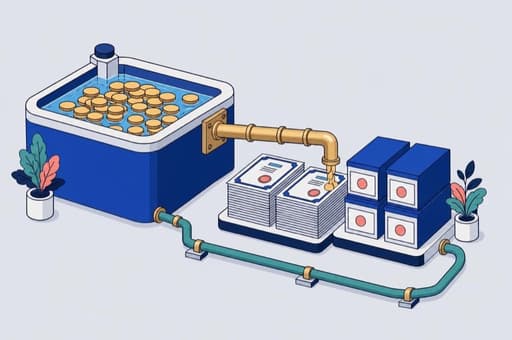
Net Interest Revenue
Money left in client accounts produced $11.750B in FY2025, nearly half of Schwab's revenue. Watch whether clients keep cash there and whether changing rates widen or squeeze what Schwab keeps.
Competes with Cash Management Account (Fidelity) · Cash interest and margin financing (Interactive Brokers)
In plain English
For Schwab, idle account cash is raw material. Clients leave money in bank and brokerage accounts; Schwab keeps some ready for withdrawals and puts much of the rest into bonds and loans that pay interest.
Borrowers and bond issuers pay Schwab interest, while Schwab pays clients for using their cash. The difference is Schwab's biggest source of money. It grows when clients leave more cash, loans expand, or Schwab's investments pay better, and shrinks when clients move money into higher-paying funds or Schwab's own funding becomes dearer.
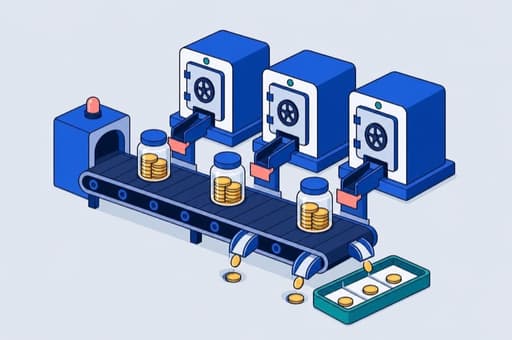
Bank Deposit Account Program
Outside banks paid Schwab $977M in FY2025 to hold client deposits, up 34%. Cash moving elsewhere or changes to the agreed rates can quickly alter this useful side stream.
Competes with FDIC-Insured Deposit Sweep Program (Fidelity) · Cash Plus bank sweep (Vanguard)
In plain English
Not every dollar of client cash stays inside Schwab's own banks. Through this program, Schwab places some of it with outside banks, which hold the deposits and pay clients interest.
Those banks pay Schwab a fee based on how much money arrives and the agreed rate—rather like a shop paying rent for a busy counter. Schwab earns without putting those deposits on its own books, while the outside banks take the lending risk. The income moves with client cash, interest rates, and the bank agreements.
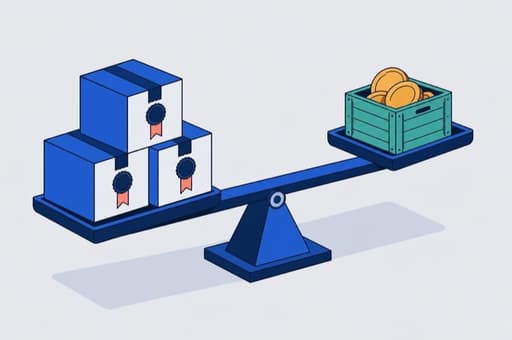
Pledged Asset Line and Margin Lending
Bank loans reached $67.0B by June 2026 after growing 33% in a year. They can earn more than bonds, but falling investment values can force borrowers to repay or add assets.
Competes with Margin loans (Interactive Brokers) · Liquidity Access Line (Morgan Stanley)
In plain English
These loans work like a pawn ticket for an investment account, except the client keeps the investments. A pledged-asset loan lets someone borrow for other needs without selling; a margin loan supplies money to buy more investments. In both cases, the account holdings stand behind the debt.
Schwab funds the loan with its cash pool and collects interest from the borrower. Because loans can pay more than bonds, growth here can lift the cash engine. The catch is simple: if the investments fall too far, Schwab may need more backing or repayment.
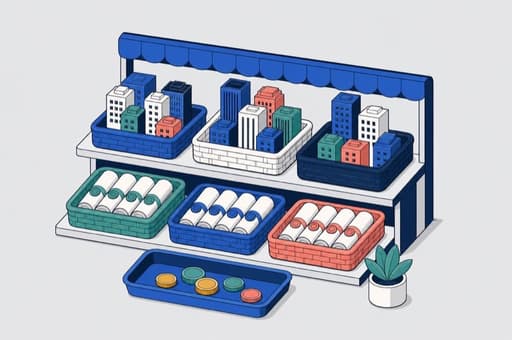
Mutual Funds, ETFs, and CTFs
Ready-made investment baskets generated $3.665B in FY2025; money-market funds supplied nearly half. Bigger account balances help, while fee cuts and cash leaving those funds pull the other way.
Competes with Mutual funds and ETFs (Vanguard) · iShares ETFs (BlackRock)
In plain English
Picture a grocery aisle of ready-made investment baskets. Some hold many stocks or bonds, some trade all day like a stock, and others are built for retirement plans. Schwab runs its own baskets and also gives outside fund managers shelf space.
Customers and retirement plans supply the money. Schwab earns a small slice of the assets in its own funds, plus service fees from outside managers whose funds sit on Schwab's platform. Because the slice is tiny, scale matters: rising markets and new deposits expand the base, while lower fees or withdrawals shrink it.

Managed Investing Solutions
Paid portfolio management produced $2.440B in FY2025. More clients are choosing it, but revenue still rises and falls with the value of the investments Schwab oversees.
Competes with Personal Advisor Services (Vanguard) · Wealth Management (Fidelity)
In plain English
Here, clients hand Schwab more of the driving. Depending on the service, a human adviser or software chooses investments, adjusts them over time, and follows an agreed plan.
The usual bill is a small percentage of the money Schwab manages, so a larger account pays more. This earns Schwab more per dollar than a simple low-cost fund, but it still rides the market: when portfolios rise, the same fee rate earns more; when markets fall or clients leave, it earns less.
Advisor Services
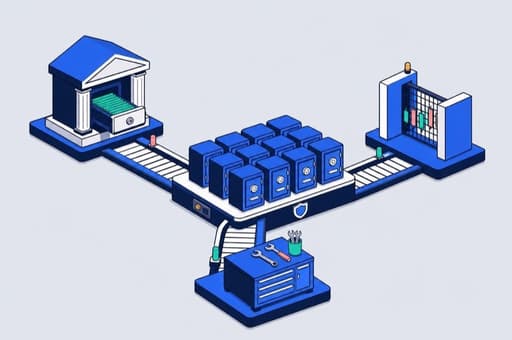
By June 2026, independent advisers kept $5.7T of client assets at Schwab. The prize is durable scale across cash, funds, and trading; service failures or adviser departures would hit several engines together.
Competes with Custodial platform (Altruist) · Pershing Wealth Services (BNY)
In plain English
The customer here is an independent financial adviser who wants to guide clients without building a bank and trading system from scratch. Schwab holds the clients' accounts, executes their trades, connects outside software, and helps the adviser's office run.
It is the plumbing behind another firm's relationship. Advisers bring the people and assets; Schwab makes money when those clients hold cash, use funds, trade, or borrow. That means Advisor Services is not a separate toll added on top—it is a route into the same money engines used by Schwab's individual customers.
Trading Services (thinkorswim)
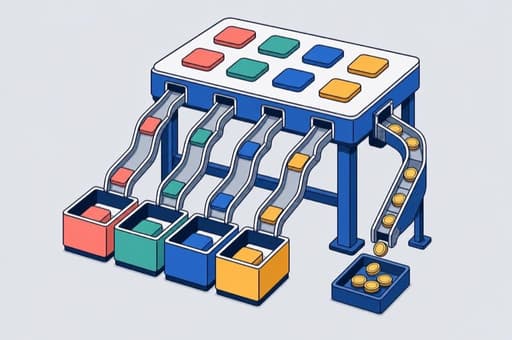
Trading brought in $3.921B in FY2025 from customer charges, routing eligible orders, and bond dealing. Activity has accelerated, but calmer markets or tighter routing rules can cool the engine.
Competes with Trader+ (Fidelity) · Trader Workstation (Interactive Brokers)
In plain English
Every tap of a buy or sell button needs a route, another party, and a final handoff. Schwab supplies that machinery through its website, apps, and thinkorswim tools for more active traders.
The money arrives three ways. Customers pay for certain contracts tied to investments. Some trading firms pay Schwab to send eligible stock orders and similar contracts their way. Schwab also earns by buying and selling bonds itself. More trades generally mean more revenue, so busy or jumpy markets help; service quality and routing rules determine how much of that activity becomes income.
Schwab Crypto
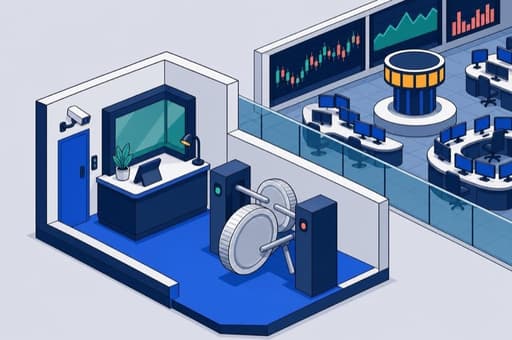
Direct Bitcoin and Ether trading began in May 2026 at a 0.75% fee. Revenue remains undisclosed; the watch is whether Schwab's large investing base actually uses the new counter.
Competes with Fidelity Crypto (Fidelity) · Robinhood Crypto (Robinhood)
In plain English
A small new counter now sits inside Schwab's familiar investing store. Customers can buy and sell Bitcoin and Ether beside stocks without opening a separate crypto account; more digital coins have been announced but were not yet available.
Schwab charges a fixed slice of each trade and says it adds no separate spread, meaning no hidden gap between the quoted buy and sell prices. Paxos, its delivery partner, helps complete the transaction. This is a straightforward volume business: Schwab earns only when clients trade, and activity can swing sharply with enthusiasm for crypto.
Forge Global
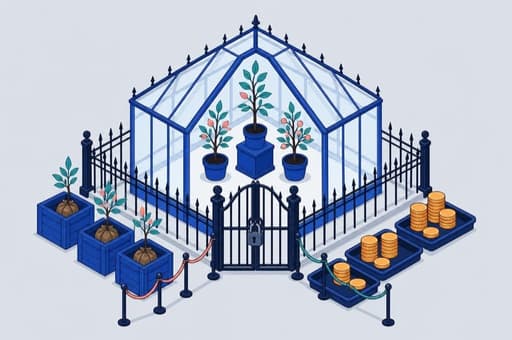
Schwab paid $636M for Forge in March 2026, opening a market for private-company shares before they reach public exchanges. Near-term revenue is immaterial; scarce sellers and hard-to-set prices limit activity.
Competes with Private-share venue (Nasdaq Private Market) · Pre-IPO marketplace (EquityZen)
In plain English
Most people cannot easily buy shares in a company before it reaches the stock market. Forge builds a meeting place for investors who meet legal wealth tests, employees, and other owners to trade those private shares, either directly or through a fund holding one or several companies.
Sellers supply scarce shares and buyers supply cash. Schwab has not disclosed Forge's fee formula or trading volume, so this is a future doorway rather than a current revenue engine. Schwab can bring wealthy clients and advisers, while private companies may later need employee stock-plan and public-market services. Matching both sides is hard when each company trades only occasionally and has no daily public price.


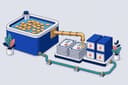 Net Interest RevenueMoney left in client accounts produced $11.750B in FY2025, nearly half of Schwab's revenue. Watch whether clients keep cash there and whether changing rates widen or squeeze what Schwab keeps.
Money left in client accounts produced $11.750B in FY2025, nearly half of Schwab's revenue. Watch whether clients keep cash there and whether changing rates widen or squeeze what Schwab keeps.
In plain English
For Schwab, idle account cash is raw material. Clients leave money in bank and brokerage accounts; Schwab keeps some ready for withdrawals and puts much of the rest into bonds and loans that pay interest.
Borrowers and bond issuers pay Schwab interest, while Schwab pays clients for using their cash. The difference is Schwab's biggest source of money. It grows when clients leave more cash, loans expand, or Schwab's investments pay better, and shrinks when clients move money into higher-paying funds or Schwab's own funding becomes dearer.
Competes with Cash Management Account (Fidelity) · Cash interest and margin financing (Interactive Brokers)
 Bank Deposit Account ProgramOutside banks paid Schwab $977M in FY2025 to hold client deposits, up 34%. Cash moving elsewhere or changes to the agreed rates can quickly alter this useful side stream.
Outside banks paid Schwab $977M in FY2025 to hold client deposits, up 34%. Cash moving elsewhere or changes to the agreed rates can quickly alter this useful side stream.
In plain English
Not every dollar of client cash stays inside Schwab's own banks. Through this program, Schwab places some of it with outside banks, which hold the deposits and pay clients interest.
Those banks pay Schwab a fee based on how much money arrives and the agreed rate—rather like a shop paying rent for a busy counter. Schwab earns without putting those deposits on its own books, while the outside banks take the lending risk. The income moves with client cash, interest rates, and the bank agreements.
Competes with FDIC-Insured Deposit Sweep Program (Fidelity) · Cash Plus bank sweep (Vanguard)
 Pledged Asset Line and Margin LendingBank loans reached $67.0B by June 2026 after growing 33% in a year. They can earn more than bonds, but falling investment values can force borrowers to repay or add assets.
Bank loans reached $67.0B by June 2026 after growing 33% in a year. They can earn more than bonds, but falling investment values can force borrowers to repay or add assets.
In plain English
These loans work like a pawn ticket for an investment account, except the client keeps the investments. A pledged-asset loan lets someone borrow for other needs without selling; a margin loan supplies money to buy more investments. In both cases, the account holdings stand behind the debt.
Schwab funds the loan with its cash pool and collects interest from the borrower. Because loans can pay more than bonds, growth here can lift the cash engine. The catch is simple: if the investments fall too far, Schwab may need more backing or repayment.
Competes with Margin loans (Interactive Brokers) · Liquidity Access Line (Morgan Stanley)
 Mutual Funds, ETFs, and CTFsReady-made investment baskets generated $3.665B in FY2025; money-market funds supplied nearly half. Bigger account balances help, while fee cuts and cash leaving those funds pull the other way.
Ready-made investment baskets generated $3.665B in FY2025; money-market funds supplied nearly half. Bigger account balances help, while fee cuts and cash leaving those funds pull the other way.
In plain English
Picture a grocery aisle of ready-made investment baskets. Some hold many stocks or bonds, some trade all day like a stock, and others are built for retirement plans. Schwab runs its own baskets and also gives outside fund managers shelf space.
Customers and retirement plans supply the money. Schwab earns a small slice of the assets in its own funds, plus service fees from outside managers whose funds sit on Schwab's platform. Because the slice is tiny, scale matters: rising markets and new deposits expand the base, while lower fees or withdrawals shrink it.
Competes with Mutual funds and ETFs (Vanguard) · iShares ETFs (BlackRock)
 Managed Investing SolutionsPaid portfolio management produced $2.440B in FY2025. More clients are choosing it, but revenue still rises and falls with the value of the investments Schwab oversees.
Paid portfolio management produced $2.440B in FY2025. More clients are choosing it, but revenue still rises and falls with the value of the investments Schwab oversees.
In plain English
Here, clients hand Schwab more of the driving. Depending on the service, a human adviser or software chooses investments, adjusts them over time, and follows an agreed plan.
The usual bill is a small percentage of the money Schwab manages, so a larger account pays more. This earns Schwab more per dollar than a simple low-cost fund, but it still rides the market: when portfolios rise, the same fee rate earns more; when markets fall or clients leave, it earns less.
Competes with Personal Advisor Services (Vanguard) · Wealth Management (Fidelity)
 Advisor ServicesBy June 2026, independent advisers kept $5.7T of client assets at Schwab. The prize is durable scale across cash, funds, and trading; service failures or adviser departures would hit several engines together.
By June 2026, independent advisers kept $5.7T of client assets at Schwab. The prize is durable scale across cash, funds, and trading; service failures or adviser departures would hit several engines together.
In plain English
The customer here is an independent financial adviser who wants to guide clients without building a bank and trading system from scratch. Schwab holds the clients' accounts, executes their trades, connects outside software, and helps the adviser's office run.
It is the plumbing behind another firm's relationship. Advisers bring the people and assets; Schwab makes money when those clients hold cash, use funds, trade, or borrow. That means Advisor Services is not a separate toll added on top—it is a route into the same money engines used by Schwab's individual customers.
Competes with Custodial platform (Altruist) · Pershing Wealth Services (BNY)
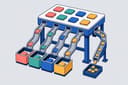 Trading Services (thinkorswim)Trading brought in $3.921B in FY2025 from customer charges, routing eligible orders, and bond dealing. Activity has accelerated, but calmer markets or tighter routing rules can cool the engine.
Trading brought in $3.921B in FY2025 from customer charges, routing eligible orders, and bond dealing. Activity has accelerated, but calmer markets or tighter routing rules can cool the engine.
In plain English
Every tap of a buy or sell button needs a route, another party, and a final handoff. Schwab supplies that machinery through its website, apps, and thinkorswim tools for more active traders.
The money arrives three ways. Customers pay for certain contracts tied to investments. Some trading firms pay Schwab to send eligible stock orders and similar contracts their way. Schwab also earns by buying and selling bonds itself. More trades generally mean more revenue, so busy or jumpy markets help; service quality and routing rules determine how much of that activity becomes income.
Competes with Trader+ (Fidelity) · Trader Workstation (Interactive Brokers)
 Schwab CryptoDirect Bitcoin and Ether trading began in May 2026 at a 0.75% fee. Revenue remains undisclosed; the watch is whether Schwab's large investing base actually uses the new counter.
Direct Bitcoin and Ether trading began in May 2026 at a 0.75% fee. Revenue remains undisclosed; the watch is whether Schwab's large investing base actually uses the new counter.
In plain English
A small new counter now sits inside Schwab's familiar investing store. Customers can buy and sell Bitcoin and Ether beside stocks without opening a separate crypto account; more digital coins have been announced but were not yet available.
Schwab charges a fixed slice of each trade and says it adds no separate spread, meaning no hidden gap between the quoted buy and sell prices. Paxos, its delivery partner, helps complete the transaction. This is a straightforward volume business: Schwab earns only when clients trade, and activity can swing sharply with enthusiasm for crypto.
Competes with Fidelity Crypto (Fidelity) · Robinhood Crypto (Robinhood)
 Forge GlobalSchwab paid $636M for Forge in March 2026, opening a market for private-company shares before they reach public exchanges. Near-term revenue is immaterial; scarce sellers and hard-to-set prices limit activity.
Schwab paid $636M for Forge in March 2026, opening a market for private-company shares before they reach public exchanges. Near-term revenue is immaterial; scarce sellers and hard-to-set prices limit activity.
In plain English
Most people cannot easily buy shares in a company before it reaches the stock market. Forge builds a meeting place for investors who meet legal wealth tests, employees, and other owners to trade those private shares, either directly or through a fund holding one or several companies.
Sellers supply scarce shares and buyers supply cash. Schwab has not disclosed Forge's fee formula or trading volume, so this is a future doorway rather than a current revenue engine. Schwab can bring wealthy clients and advisers, while private companies may later need employee stock-plan and public-market services. Matching both sides is hard when each company trades only occasionally and has no daily public price.
Competes with Private-share venue (Nasdaq Private Market) · Pre-IPO marketplace (EquityZen)
Named in filings, launches and programs
- Workplace ServicesServiceRuns retirement plans, employee stock plans, and brokerage programs chosen by employers for their workers.
- Mutual Fund Clearing ServicesServiceHandles fund trades and recordkeeping for institutional clients behind the scenes.
- Schwab Intelligent PortfoliosPlatformBuilds and adjusts automated portfolios without an advice fee; Schwab earns through the funds and cash inside them.
- Advisor ProDirectServiceMembership program offering independent advisers guidance, peer learning, and help running their firms.
- Private Issuer Equity ServicesService · RampingHelps private companies track ownership and manage employee shares using Schwab's workplace experience and Qapita technology.
- Portfolio Insights and Schwab AssistantPlatform · RampingSoftware helpers that interpret portfolios and answer service questions; possible paid uses remain a future idea.
- Single Stock FuturesProductContracts tied to individual U.S. stocks, launched through thinkorswim and CME in August 2026.
- Schwab Teen Investor AccountProductBrokerage account for teenagers, designed to begin a customer relationship early.
- Structured Asset LineProduct · RampingLets eligible clients borrow against private investments and private-company shares.
Workplace ServicesService
Runs retirement plans, employee stock plans, and brokerage programs chosen by employers for their workers.
Mutual Fund Clearing ServicesService
Handles fund trades and recordkeeping for institutional clients behind the scenes.
Schwab Intelligent PortfoliosPlatform
Builds and adjusts automated portfolios without an advice fee; Schwab earns through the funds and cash inside them.
Advisor ProDirectService
Membership program offering independent advisers guidance, peer learning, and help running their firms.
Private Issuer Equity ServicesService · Ramping
Helps private companies track ownership and manage employee shares using Schwab's workplace experience and Qapita technology.
Portfolio Insights and Schwab AssistantPlatform · Ramping
Software helpers that interpret portfolios and answer service questions; possible paid uses remain a future idea.
Single Stock FuturesProduct
Contracts tied to individual U.S. stocks, launched through thinkorswim and CME in August 2026.
Schwab Teen Investor AccountProduct
Brokerage account for teenagers, designed to begin a customer relationship early.
Structured Asset LineProduct · Ramping
Lets eligible clients borrow against private investments and private-company shares.