
Semtech (SMTC)
Designs data-center connectivity chips, LoRa radios, protection devices, and cellular IoT systems.
Something off on this page? Send us feedback.
Semtech makes small, specialised chips, and it is turning into a supplier to the AI build-out. Chips that carry data between AI computers, over light and over copper, are the fast-growing engine, with its own long-range radio for sensors and meters as the second bet. Steadier surge-guard chips for phones and rugged routers from its Sierra Wireless purchase fill out the rest, while the lowest-margin hardware from that deal is being sold off.
Item facts: FY2026 · year ended Jan 25, 2026, from filings, earnings calls and company pages.
Judgment weights, not filed revenue
The band summarizes business focus and direction. ~ marks estimates.
7 in detail · 12 more below
FiberEdge
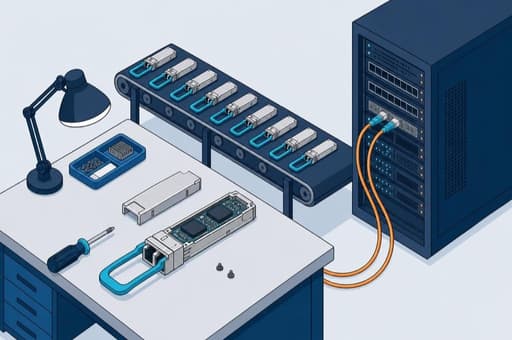
Chips inside the light-based links between AI computers. Management says it holds well over half of one key speed tier and aims for the same at the next. Watch capacity: it says the rest of this fiscal year is booked, and over 70% of next.
Competes with LPO drivers and TIAs (MACOM) · TIAs and linear drivers (Marvell)
In plain English
Inside an AI data center, computers talk through thin glass fibres, and each end of a fibre has a plug-in box that turns electrical data into flashes of laser light and back again. FiberEdge is two of the small chips inside that box: one tells the laser when to flash, the other catches the faint incoming light and turns it back into a clean electrical signal.
The companies that build those boxes buy Semtech's chips, then sell the boxes to the giant cloud firms. Management expects tens of millions of boxes of just one popular speed to ship this year, and several box makers buy these parts from Semtech alone.
CopperEdge
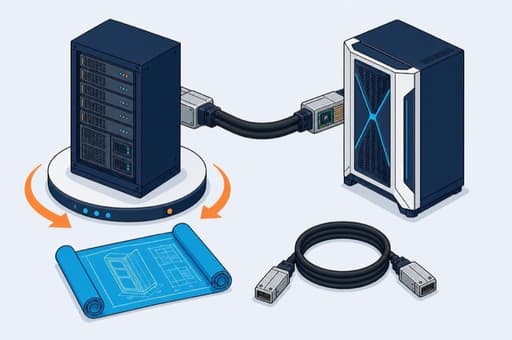
Signal-boosting chips for short copper cables inside AI server racks. A customer's design change sank its 2025 plan; shipments for a U.S. cloud giant began in the quarter to April 2026, with cables in volume due in the fiscal year's last quarter.
Competes with ZeroFlap active electrical cables (Credo) · ACC equalizer ICs (MACOM)
In plain English
Not every link in a server rack needs light. Over short hops, plain copper cable is cheaper, but the signal fades as it travels. CopperEdge chips sit in the cable's plug ends and boost the fading signal back up, using far less power than the rival approach of fully rebuilding it, by Semtech's own claim.
Cable makers such as Amphenol build the chips into their cables and sell them on to cloud giants. The catch is that it rides on new rack designs. In early 2025 one big customer changed its design, sales fell short of the company's own floor, the stock dropped by almost a third and a shareholder lawsuit followed.
HieFo InP photonics
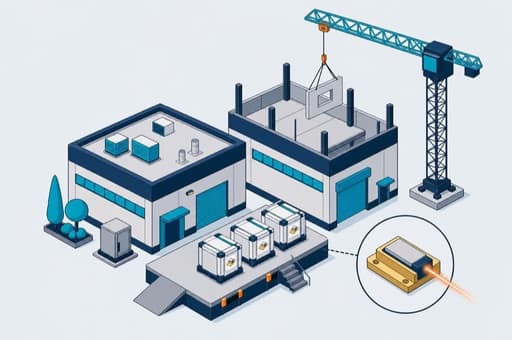
A laser-chip factory bought in March 2026. Capacity is meant to rise three- to fourfold by year-end and again next year, with lasers for AI links selling from the first half of fiscal 2028. Early production already dented margins.
Competes with CW and EML lasers (Lumentum) · CW external-source lasers (Coherent) · CW lasers (Sumitomo Electric)
In plain English
A small factory in Alhambra, California, that makes chips out of indium phosphide, a crystal material used to build chips that give off light. Today it mostly ships gain chips, the light-making heart of adjustable lasers.
The bigger plan is steady high-power lasers for the same AI plug-in boxes FiberEdge goes into, so Semtech can sell the laser, the chip that drives it and the chip that reads the light as one set. Management says that could lift Semtech's take per box from under ten dollars to roughly eighty or ninety at a future, faster generation. Rivals such as Lumentum say lasers will stay in short supply into 2028.
LoRa
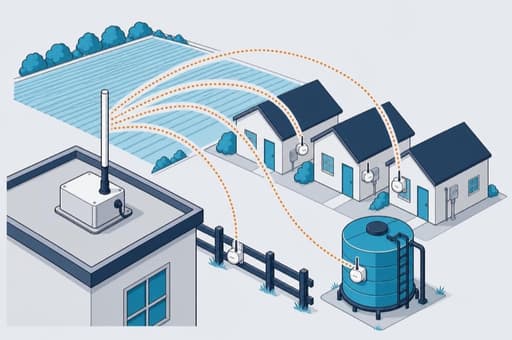
Semtech's own long-range, low-power radio: $156M in FY2026, up 34%, then $58M in the July 2026 quarter alone, up 58%. Watch whether growth holds above the 20% a year management now expects.
Competes with nRF9151 LTE-M/NB-IoT module (Nordic Semiconductor) · Wi-SUN FG25 chip (Silicon Labs)
In plain English
Picture a radio that whispers instead of shouts. It sends only tiny scraps of data, a meter reading or a door opening, but carries them a long way while barely sipping battery. Semtech owns this radio technology, called LoRa, and sells the chips that go inside sensors and inside the gateway boxes that listen for them.
Buyers range from utilities fitting smart meters in Europe and China to Amazon, whose Sidewalk network links Ring sensors. A newer family, LoRa Plus, also speaks the languages smart-home gadgets use. It is not the biggest option: a rival standard that runs over mobile phone networks held most such connections in 2024, mainly in China.
AirLink routers and Connected Services
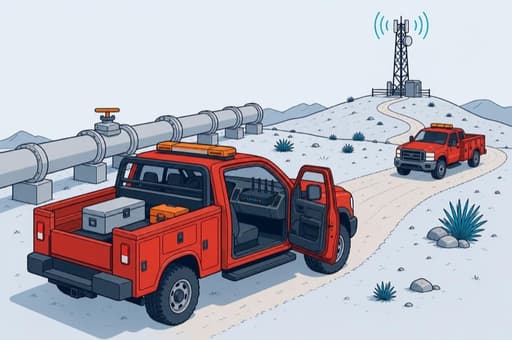
Rugged cellular routers for police, utility, oil-field and transit fleets, plus the software that runs them. Its segment's sales have been roughly flat since early 2025 even as management calls the market a double-digit grower; new 5G models are the test.
Competes with Cradlepoint R2400 5G router (Ericsson) · IX25 rugged 5G router (Digi International)
In plain English
Think of the tough box fixed inside a first-responder vehicle or a utility truck that keeps it online over the mobile phone network wherever it goes. That is AirLink, the part of the Sierra Wireless purchase Semtech is keeping.
Fleets buy the routers through carriers such as Verizon and T-Mobile or through resellers, then keep paying for software and services that manage them from afar. New low-power 5G models reached full production in mid-2026. It earns thinner margins than Semtech's chips, and a $41.9M write-down in 2025 admitted the services side was worth less than once thought.
TVS circuit protection
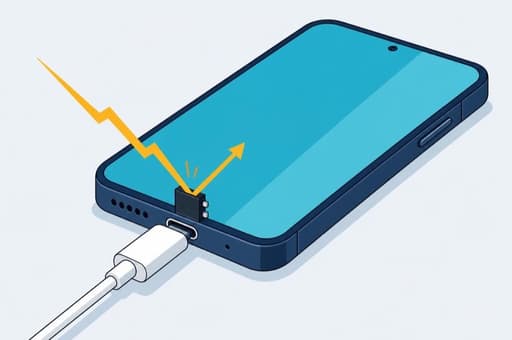
Tiny surge guards for phones, wearables, laptops and factory gear. Steady but slow: phone-and-gadget sales, counted together with sensors, dipped 5% in the July 2026 quarter amid an industry-wide memory-chip squeeze.
Competes with SP1255 protection diode (Littelfuse) · TVS/ESD protection diodes (Nexperia) · TVS/ESD protection diodes (Infineon)
In plain English
Every time you plug a cable into a phone, a sudden spike of electricity can ride in with it. These chips are the bouncers at the door: they soak up the spike before it reaches anything delicate inside, guarding the charging port, the screen and the antenna lines.
Phone, wearable and laptop makers buy them, including, in management's words, the world's largest consumer electronics company, and Semtech has been fitting more of them into each premium handset. A newer line, SurgeSwitch, guards the power lines of factory robots. It is one of several suppliers; Littelfuse holds a far bigger slice.
PerSe smart sensing
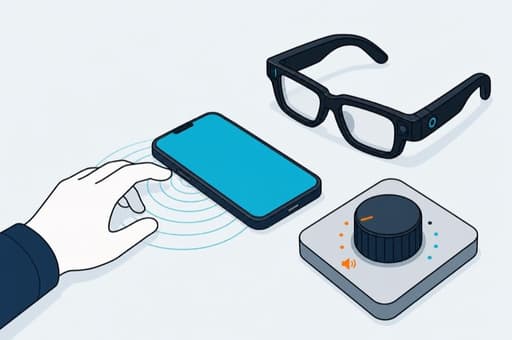
Sensors that notice a nearby body so phones and laptops can meet radio-exposure rules, plus gesture control for smart glasses. Small today, but management names it a core asset; much rides on smart-glasses volumes.
Competes with ProxFusion IQS269A sensor (Azoteq) · CAPSENSE PSOC 4000S/4000T (Infineon)
In plain English
Hold a phone to your ear and it quietly turns its radio down, because rules cap how much radio energy a gadget may send into your body. A PerSe sensor is what notices you are there: it feels a nearby body through tiny shifts in an electric field, the way a touchscreen feels a fingertip.
Most major handset makers use them, per management, and Semtech sells them alongside its surge guards to the same customers. The next hope is smart glasses and wearables, where the same sensing turns a wave or a tap into a command. A small 2025 purchase added pressure-sensing parts.


 FiberEdgeChips inside the light-based links between AI computers. Management says it holds well over half of one key speed tier and aims for the same at the next. Watch capacity: it says the rest of this fiscal year is booked, and over 70% of next.
Chips inside the light-based links between AI computers. Management says it holds well over half of one key speed tier and aims for the same at the next. Watch capacity: it says the rest of this fiscal year is booked, and over 70% of next.
In plain English
Inside an AI data center, computers talk through thin glass fibres, and each end of a fibre has a plug-in box that turns electrical data into flashes of laser light and back again. FiberEdge is two of the small chips inside that box: one tells the laser when to flash, the other catches the faint incoming light and turns it back into a clean electrical signal.
The companies that build those boxes buy Semtech's chips, then sell the boxes to the giant cloud firms. Management expects tens of millions of boxes of just one popular speed to ship this year, and several box makers buy these parts from Semtech alone.
Competes with LPO drivers and TIAs (MACOM) · TIAs and linear drivers (Marvell)
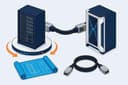 CopperEdgeSignal-boosting chips for short copper cables inside AI server racks. A customer's design change sank its 2025 plan; shipments for a U.S. cloud giant began in the quarter to April 2026, with cables in volume due in the fiscal year's last quarter.
Signal-boosting chips for short copper cables inside AI server racks. A customer's design change sank its 2025 plan; shipments for a U.S. cloud giant began in the quarter to April 2026, with cables in volume due in the fiscal year's last quarter.
In plain English
Not every link in a server rack needs light. Over short hops, plain copper cable is cheaper, but the signal fades as it travels. CopperEdge chips sit in the cable's plug ends and boost the fading signal back up, using far less power than the rival approach of fully rebuilding it, by Semtech's own claim.
Cable makers such as Amphenol build the chips into their cables and sell them on to cloud giants. The catch is that it rides on new rack designs. In early 2025 one big customer changed its design, sales fell short of the company's own floor, the stock dropped by almost a third and a shareholder lawsuit followed.
Competes with ZeroFlap active electrical cables (Credo) · ACC equalizer ICs (MACOM)
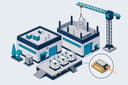 HieFo InP photonicsA laser-chip factory bought in March 2026. Capacity is meant to rise three- to fourfold by year-end and again next year, with lasers for AI links selling from the first half of fiscal 2028. Early production already dented margins.
A laser-chip factory bought in March 2026. Capacity is meant to rise three- to fourfold by year-end and again next year, with lasers for AI links selling from the first half of fiscal 2028. Early production already dented margins.
In plain English
A small factory in Alhambra, California, that makes chips out of indium phosphide, a crystal material used to build chips that give off light. Today it mostly ships gain chips, the light-making heart of adjustable lasers.
The bigger plan is steady high-power lasers for the same AI plug-in boxes FiberEdge goes into, so Semtech can sell the laser, the chip that drives it and the chip that reads the light as one set. Management says that could lift Semtech's take per box from under ten dollars to roughly eighty or ninety at a future, faster generation. Rivals such as Lumentum say lasers will stay in short supply into 2028.
Competes with CW and EML lasers (Lumentum) · CW external-source lasers (Coherent) · CW lasers (Sumitomo Electric)
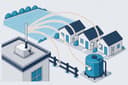 LoRaSemtech's own long-range, low-power radio: $156M in FY2026, up 34%, then $58M in the July 2026 quarter alone, up 58%. Watch whether growth holds above the 20% a year management now expects.
Semtech's own long-range, low-power radio: $156M in FY2026, up 34%, then $58M in the July 2026 quarter alone, up 58%. Watch whether growth holds above the 20% a year management now expects.
In plain English
Picture a radio that whispers instead of shouts. It sends only tiny scraps of data, a meter reading or a door opening, but carries them a long way while barely sipping battery. Semtech owns this radio technology, called LoRa, and sells the chips that go inside sensors and inside the gateway boxes that listen for them.
Buyers range from utilities fitting smart meters in Europe and China to Amazon, whose Sidewalk network links Ring sensors. A newer family, LoRa Plus, also speaks the languages smart-home gadgets use. It is not the biggest option: a rival standard that runs over mobile phone networks held most such connections in 2024, mainly in China.
Competes with nRF9151 LTE-M/NB-IoT module (Nordic Semiconductor) · Wi-SUN FG25 chip (Silicon Labs)
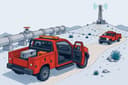 AirLink routers and Connected ServicesRugged cellular routers for police, utility, oil-field and transit fleets, plus the software that runs them. Its segment's sales have been roughly flat since early 2025 even as management calls the market a double-digit grower; new 5G models are the test.
Rugged cellular routers for police, utility, oil-field and transit fleets, plus the software that runs them. Its segment's sales have been roughly flat since early 2025 even as management calls the market a double-digit grower; new 5G models are the test.
In plain English
Think of the tough box fixed inside a first-responder vehicle or a utility truck that keeps it online over the mobile phone network wherever it goes. That is AirLink, the part of the Sierra Wireless purchase Semtech is keeping.
Fleets buy the routers through carriers such as Verizon and T-Mobile or through resellers, then keep paying for software and services that manage them from afar. New low-power 5G models reached full production in mid-2026. It earns thinner margins than Semtech's chips, and a $41.9M write-down in 2025 admitted the services side was worth less than once thought.
Competes with Cradlepoint R2400 5G router (Ericsson) · IX25 rugged 5G router (Digi International)
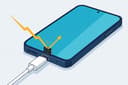 TVS circuit protectionTiny surge guards for phones, wearables, laptops and factory gear. Steady but slow: phone-and-gadget sales, counted together with sensors, dipped 5% in the July 2026 quarter amid an industry-wide memory-chip squeeze.
Tiny surge guards for phones, wearables, laptops and factory gear. Steady but slow: phone-and-gadget sales, counted together with sensors, dipped 5% in the July 2026 quarter amid an industry-wide memory-chip squeeze.
In plain English
Every time you plug a cable into a phone, a sudden spike of electricity can ride in with it. These chips are the bouncers at the door: they soak up the spike before it reaches anything delicate inside, guarding the charging port, the screen and the antenna lines.
Phone, wearable and laptop makers buy them, including, in management's words, the world's largest consumer electronics company, and Semtech has been fitting more of them into each premium handset. A newer line, SurgeSwitch, guards the power lines of factory robots. It is one of several suppliers; Littelfuse holds a far bigger slice.
Competes with SP1255 protection diode (Littelfuse) · TVS/ESD protection diodes (Nexperia) · TVS/ESD protection diodes (Infineon)
 PerSe smart sensingSensors that notice a nearby body so phones and laptops can meet radio-exposure rules, plus gesture control for smart glasses. Small today, but management names it a core asset; much rides on smart-glasses volumes.
Sensors that notice a nearby body so phones and laptops can meet radio-exposure rules, plus gesture control for smart glasses. Small today, but management names it a core asset; much rides on smart-glasses volumes.
In plain English
Hold a phone to your ear and it quietly turns its radio down, because rules cap how much radio energy a gadget may send into your body. A PerSe sensor is what notices you are there: it feels a nearby body through tiny shifts in an electric field, the way a touchscreen feels a fingertip.
Most major handset makers use them, per management, and Semtech sells them alongside its surge guards to the same customers. The next hope is smart glasses and wearables, where the same sensing turns a wave or a tap into a command. A small 2025 purchase added pressure-sensing parts.
Competes with ProxFusion IQS269A sensor (Azoteq) · CAPSENSE PSOC 4000S/4000T (Infineon)
Named in filings, launches and programs
- Tri-Edge CDRsProduct lineSignal-cleaning chips for cables that carry light, counted with FiberEdge; a faster version is in development.
- Next-generation optics programsProduct · AnnouncedEarly work on light links built closer to or onto the main chips, including new laser-driver and light-reader parts and lasers for such designs.
- Amazon Sidewalk / Ring programCustomer program · RampingRing sensors on Amazon's Sidewalk network use LoRa chips; a high-single-digit share of LoRa sales this year.
- LoRa Plus software stackPlatform · AnnouncedSoftware bundled with LoRa Plus chips, adding smart-home languages: Z-Wave first, then Zigbee, Thread and Matter.
- Connected servicesServiceThe largely recurring part of the router business, roughly $23M a quarter in early fiscal 2026, after a $41.9M write-down.
- RX400 / EX400 5G routersProduct · RampingLow-power 5G routers launched in early 2026 and in full production by the July 2026 quarter.
- SurgeSwitchProduct lineSurge guards for power lines, such as a September 2026 part for the power buses of collaborative factory robots.
- Force-sensing portfolioProduct linePressure-sensing parts bought in October 2025 for a negligible sum, folded into PerSe.
- PON and wireless fronthaul ICsProduct lineChips for fibre-to-the-home gear and links to mobile masts; telecom sales outside data centers were about 8% of FY2026 revenue.
- Broadcast video transportProduct lineChips that move video signals through broadcast studio equipment; a small slice of sales.
- Power management productsProduct linePower-control chips inside the analog segment; a small slice of sales.
- Two 10%-plus customersCustomer programTwo unnamed buyers took 14% and 11% of FY2026 sales; since most sales go through distributors, they are likely distributors.
Tri-Edge CDRsProduct line
Signal-cleaning chips for cables that carry light, counted with FiberEdge; a faster version is in development.
Next-generation optics programsProduct · Announced
Early work on light links built closer to or onto the main chips, including new laser-driver and light-reader parts and lasers for such designs.
Amazon Sidewalk / Ring programCustomer program · Ramping
Ring sensors on Amazon's Sidewalk network use LoRa chips; a high-single-digit share of LoRa sales this year.
LoRa Plus software stackPlatform · Announced
Software bundled with LoRa Plus chips, adding smart-home languages: Z-Wave first, then Zigbee, Thread and Matter.
Connected servicesService
The largely recurring part of the router business, roughly $23M a quarter in early fiscal 2026, after a $41.9M write-down.
RX400 / EX400 5G routersProduct · Ramping
Low-power 5G routers launched in early 2026 and in full production by the July 2026 quarter.
SurgeSwitchProduct line
Surge guards for power lines, such as a September 2026 part for the power buses of collaborative factory robots.
Force-sensing portfolioProduct line
Pressure-sensing parts bought in October 2025 for a negligible sum, folded into PerSe.
PON and wireless fronthaul ICsProduct line
Chips for fibre-to-the-home gear and links to mobile masts; telecom sales outside data centers were about 8% of FY2026 revenue.
Broadcast video transportProduct line
Chips that move video signals through broadcast studio equipment; a small slice of sales.
Power management productsProduct line
Power-control chips inside the analog segment; a small slice of sales.
Two 10%-plus customersCustomer program
Two unnamed buyers took 14% and 11% of FY2026 sales; since most sales go through distributors, they are likely distributors.