
SoFi (SOFI)
Combines consumer financial services, a national bank and infrastructure for other financial institutions.
Something off on this page? Send us feedback.
SoFi is a digital bank whose largest engine is still personal lending. Deposits make those loans cheaper to fund, while fees from placing loans with big investors, running other companies' banking systems and adding everyday money products are becoming more important.
Item facts: FY2025 · year ended Dec 31, 2025, from filings, earnings calls and company pages.
Judgment weights, not filed revenue
The band summarizes business focus and direction. ~ marks estimates.
9 in detail · 13 more below
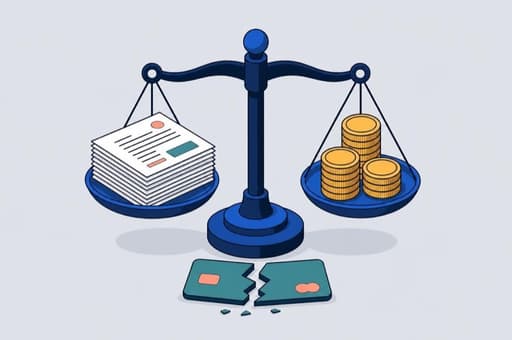
Personal Loans
Loans made without property pledged for refinancing card balances and other needs remain SoFi's biggest business. New lending reached $10.7 billion in the second quarter of 2026; careful borrower selection and cheap funding matter most.
Competes with Personal Loans (LendingClub) · Personal Loans (Upstart)
In plain English
This is SoFi's largest business: fixed-payment loans that people mainly use to replace revolving card debt or cover a large expense. The borrower gets one sum now and repays it on a set schedule.
SoFi either keeps the loan and collects interest or transfers it to a large investor and earns fees. Deposits supply much of the money for loans it keeps, so the payoff depends on borrowing cheaply, choosing borrowers well and collecting more than defaults and funding consume.

Student Loans
Private education loans and refinancing form the second lending leg. New lending was $2.7 billion in the second quarter of 2026; lower rates can revive refinancing, while federal graduate-funding gaps can create private-loan demand.
Competes with Student Loan Refinancing (Earnest) · Student Loan Refinance (College Ave)
In plain English
A college bill can leave a gap before school or an expensive balance after graduation. SoFi lends to students and to co-signers—people who promise to repay if the student cannot—for the first problem, then offers graduates one new loan to replace older education debt for the second.
Interest arrives while SoFi holds a loan; transferring it to another buyer can instead bring sale and ongoing collection fees. Demand rises when borrowers can meaningfully lower their rate or when government programs cover less, but employment, education rules and early repayment can change the result.
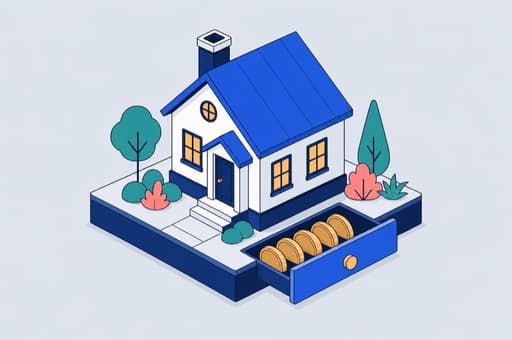
Home Loans and Home Equity
Mortgages and loans backed by a home's value are small but growing. New lending hit $1.4 billion in the second quarter of 2026, roughly one-third from owners borrowing against accumulated home value; rates and housing activity set the pace.
Competes with Home Equity Loan and HELOC (Rocket Mortgage) · HELOC (Upstart)
In plain English
A house can help finance both its purchase and later needs. SoFi offers mortgages to buyers, replacement mortgages to owners seeking new terms, and loans that let owners borrow against the part of the home they already own.
Payments produce interest when SoFi keeps the loan; a sale to another buyer and continued payment collection can produce fees instead. This line gets busier when homes change hands or rates make borrowing attractive. It also depends on property values, because the house supports repayment if a borrower cannot pay.
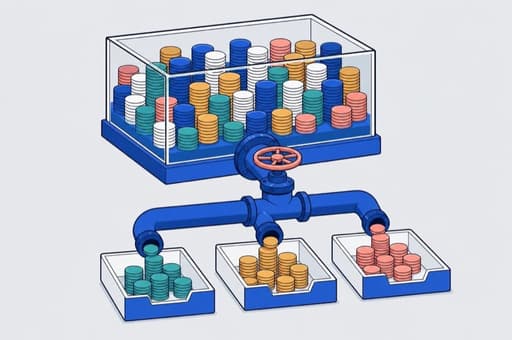
SoFi Money
Checking and savings bring in the deposits that fund SoFi's loans. Deposits reached roughly $46 billion by June 2026; their main job is to replace costlier borrowed money while keeping members inside the app.
Competes with Spending and Savings Accounts (Ally Bank) · 360 Checking and Performance Savings (Capital One)
In plain English
The quiet engine is the bank account. Members route paychecks into SoFi Money, save there and spend with a debit card; SoFi can then use much of those deposits to fund lending.
Think of it as a reservoir feeding the loan business. SoFi pays savers for their balances, lends that money at higher rates and earns merchant-paid fees when debit cards are used. The account becomes more valuable when it is a member's everyday home for money, but the profit gap shrinks if deposit rates rise faster than loan returns.
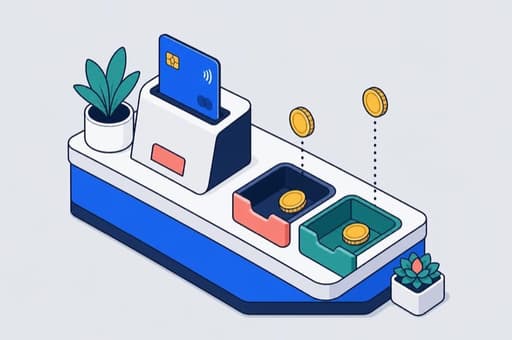
SoFi Credit Card and SoFi Smart Card
Credit cards add merchant-paid transaction fees and borrower interest to the member relationship. Revenue more than doubled year over year by June 2026, but from a small base; losses, rewards and fraud decide whether growth pays.
Competes with Gold Card (Robinhood) · Chime Card (Chime)
In plain English
At the checkout counter, a SoFi card creates two possible streams of money. The merchant's bank pays a small fee for the purchase, and a cardholder who carries the balance pays interest.
The newer Smart Card also lets members set aside deposits while building a payment record. That can tie spending more closely to the bank account, but card growth is only useful if interest and merchant fees exceed rewards, fraud and unpaid balances. The existing card book was profitable by management's account, while the newer products were still building scale.
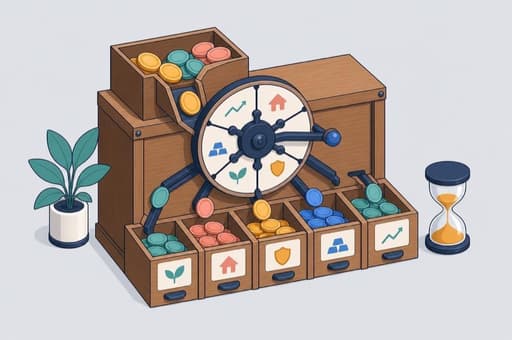
SoFi Invest
Trading, automated portfolios, retirement accounts and funds broaden the app but remain lightly monetized. Brokerage—accounts for buying and selling investments—brought in $39.7 million in 2025; turning opened products into funded, active accounts is the real task.
Competes with Robinhood Investing (Robinhood) · M1 Pies and Auto-Invest (M1)
In plain English
Stocks, funds and retirement accounts sit beside banking in the same app. A member can choose investments directly, let SoFi arrange a portfolio or use Composer to set instructions for when to buy and sell.
Small payments reach SoFi when trades are routed, shares are lent, portfolios are managed, funds charge fees or members subscribe. Opening an investing product alone brings little money, so the business needs people to deposit assets and keep using it. The large product count is reach; activity and assets are what turn that reach into revenue.

Loan Platform Business
SoFi originates loans for banks, insurers and funds rather than keeping all the risk itself. The platform produced $588 million in 2025; signed funding programs support growth, but buyers can retreat if credit weakens.
Competes with AI Lending Network (Pagaya) · LC Marketplace Platform (LendingClub)
In plain English
Imagine a bakery that makes loaves for grocery chains instead of filling only its own shelves. SoFi finds and checks borrowers, then large financial institutions supply the money and take most of the loan risk.
SoFi earns fees for creating and handling those loans without needing to hold every dollar on its own bank balance. That lets new lending grow beyond what deposits and bank capital alone could support. The model still relies on outside buyers honoring their programs and liking how borrowers perform; if their appetite fades, fee volume fades with it.
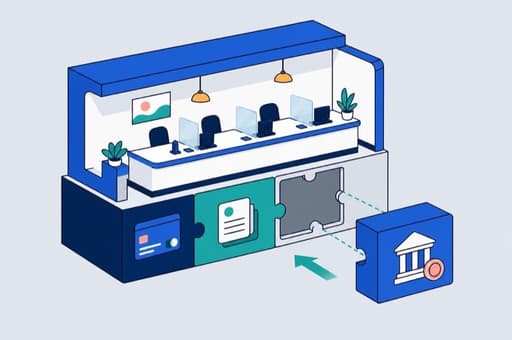
SoFi Technology Solutions
Galileo, Technisys and Peach provide the software behind cards, bank accounts and collecting loan payments. Revenue was $450.2 million in 2025, then dropped after a large client left; rebuilding activity and retaining customers are the watchpoints.
Competes with Modern Card Issuing (Marqeta) · Finxact Core as a Service (Fiserv)
In plain English
Most banking apps rely on software the customer never sees. SoFi Technology Solutions gives banks and other companies the tools to open accounts, move card payments, keep account records and collect loan payments.
Customers pay subscriptions, setup charges, minimum monthly amounts and fees that rise with activity. It resembles renting a fitted-out kitchen: the customer brings its own menu and diners, while SoFi supplies the working equipment underneath. Because changing this software takes time, clients can stay for years—but losing one large program can leave a visible hole, as happened in early 2026.
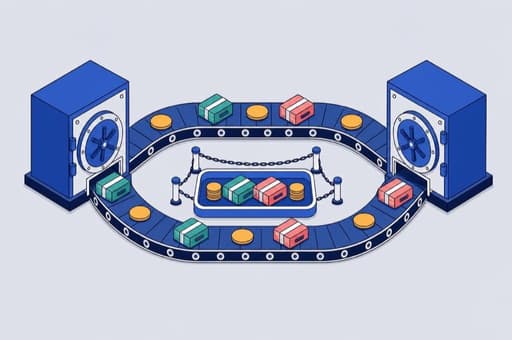
SoFi Big Business Banking, SoFiUSD and SoFi Exchange Network
A new set of business-banking and round-the-clock payment services links ordinary cash with SoFiUSD, a digital dollar backed one-for-one by cash. Initial clients began processing in 2026; adoption, regulation and backing-cash safety matter more than current revenue.
Competes with Circle Payments Network (Circle) · JPM Coin (JPMorgan Kinexys)
In plain English
The newest piece serves companies that need money to move outside normal banking hours. Big Business Banking holds and moves ordinary cash; SoFiUSD is a digital dollar backed one-for-one by cash; the Exchange Network completes transfers continuously, so each side receives what it is owed.
Companies are meant to pay service and transaction fees, while the cash backing SoFiUSD can earn interest. Payward, the company behind Kraken, agreed to use the services, and Mastercard agreed to help complete payments. The system has begun processing clients, but SoFi has not shown meaningful revenue from it alone.


 Personal LoansLoans made without property pledged for refinancing card balances and other needs remain SoFi's biggest business. New lending reached $10.7 billion in the second quarter of 2026; careful borrower selection and cheap funding matter most.
Loans made without property pledged for refinancing card balances and other needs remain SoFi's biggest business. New lending reached $10.7 billion in the second quarter of 2026; careful borrower selection and cheap funding matter most.
In plain English
This is SoFi's largest business: fixed-payment loans that people mainly use to replace revolving card debt or cover a large expense. The borrower gets one sum now and repays it on a set schedule.
SoFi either keeps the loan and collects interest or transfers it to a large investor and earns fees. Deposits supply much of the money for loans it keeps, so the payoff depends on borrowing cheaply, choosing borrowers well and collecting more than defaults and funding consume.
Competes with Personal Loans (LendingClub) · Personal Loans (Upstart)
 Student LoansPrivate education loans and refinancing form the second lending leg. New lending was $2.7 billion in the second quarter of 2026; lower rates can revive refinancing, while federal graduate-funding gaps can create private-loan demand.
Private education loans and refinancing form the second lending leg. New lending was $2.7 billion in the second quarter of 2026; lower rates can revive refinancing, while federal graduate-funding gaps can create private-loan demand.
In plain English
A college bill can leave a gap before school or an expensive balance after graduation. SoFi lends to students and to co-signers—people who promise to repay if the student cannot—for the first problem, then offers graduates one new loan to replace older education debt for the second.
Interest arrives while SoFi holds a loan; transferring it to another buyer can instead bring sale and ongoing collection fees. Demand rises when borrowers can meaningfully lower their rate or when government programs cover less, but employment, education rules and early repayment can change the result.
Competes with Student Loan Refinancing (Earnest) · Student Loan Refinance (College Ave)
 Home Loans and Home EquityMortgages and loans backed by a home's value are small but growing. New lending hit $1.4 billion in the second quarter of 2026, roughly one-third from owners borrowing against accumulated home value; rates and housing activity set the pace.
Mortgages and loans backed by a home's value are small but growing. New lending hit $1.4 billion in the second quarter of 2026, roughly one-third from owners borrowing against accumulated home value; rates and housing activity set the pace.
In plain English
A house can help finance both its purchase and later needs. SoFi offers mortgages to buyers, replacement mortgages to owners seeking new terms, and loans that let owners borrow against the part of the home they already own.
Payments produce interest when SoFi keeps the loan; a sale to another buyer and continued payment collection can produce fees instead. This line gets busier when homes change hands or rates make borrowing attractive. It also depends on property values, because the house supports repayment if a borrower cannot pay.
Competes with Home Equity Loan and HELOC (Rocket Mortgage) · HELOC (Upstart)
 SoFi MoneyChecking and savings bring in the deposits that fund SoFi's loans. Deposits reached roughly $46 billion by June 2026; their main job is to replace costlier borrowed money while keeping members inside the app.
Checking and savings bring in the deposits that fund SoFi's loans. Deposits reached roughly $46 billion by June 2026; their main job is to replace costlier borrowed money while keeping members inside the app.
In plain English
The quiet engine is the bank account. Members route paychecks into SoFi Money, save there and spend with a debit card; SoFi can then use much of those deposits to fund lending.
Think of it as a reservoir feeding the loan business. SoFi pays savers for their balances, lends that money at higher rates and earns merchant-paid fees when debit cards are used. The account becomes more valuable when it is a member's everyday home for money, but the profit gap shrinks if deposit rates rise faster than loan returns.
Competes with Spending and Savings Accounts (Ally Bank) · 360 Checking and Performance Savings (Capital One)
 SoFi Credit Card and SoFi Smart CardCredit cards add merchant-paid transaction fees and borrower interest to the member relationship. Revenue more than doubled year over year by June 2026, but from a small base; losses, rewards and fraud decide whether growth pays.
Credit cards add merchant-paid transaction fees and borrower interest to the member relationship. Revenue more than doubled year over year by June 2026, but from a small base; losses, rewards and fraud decide whether growth pays.
In plain English
At the checkout counter, a SoFi card creates two possible streams of money. The merchant's bank pays a small fee for the purchase, and a cardholder who carries the balance pays interest.
The newer Smart Card also lets members set aside deposits while building a payment record. That can tie spending more closely to the bank account, but card growth is only useful if interest and merchant fees exceed rewards, fraud and unpaid balances. The existing card book was profitable by management's account, while the newer products were still building scale.
Competes with Gold Card (Robinhood) · Chime Card (Chime)
 SoFi InvestTrading, automated portfolios, retirement accounts and funds broaden the app but remain lightly monetized. Brokerage—accounts for buying and selling investments—brought in $39.7 million in 2025; turning opened products into funded, active accounts is the real task.
Trading, automated portfolios, retirement accounts and funds broaden the app but remain lightly monetized. Brokerage—accounts for buying and selling investments—brought in $39.7 million in 2025; turning opened products into funded, active accounts is the real task.
In plain English
Stocks, funds and retirement accounts sit beside banking in the same app. A member can choose investments directly, let SoFi arrange a portfolio or use Composer to set instructions for when to buy and sell.
Small payments reach SoFi when trades are routed, shares are lent, portfolios are managed, funds charge fees or members subscribe. Opening an investing product alone brings little money, so the business needs people to deposit assets and keep using it. The large product count is reach; activity and assets are what turn that reach into revenue.
Competes with Robinhood Investing (Robinhood) · M1 Pies and Auto-Invest (M1)
 Loan Platform BusinessSoFi originates loans for banks, insurers and funds rather than keeping all the risk itself. The platform produced $588 million in 2025; signed funding programs support growth, but buyers can retreat if credit weakens.
SoFi originates loans for banks, insurers and funds rather than keeping all the risk itself. The platform produced $588 million in 2025; signed funding programs support growth, but buyers can retreat if credit weakens.
In plain English
Imagine a bakery that makes loaves for grocery chains instead of filling only its own shelves. SoFi finds and checks borrowers, then large financial institutions supply the money and take most of the loan risk.
SoFi earns fees for creating and handling those loans without needing to hold every dollar on its own bank balance. That lets new lending grow beyond what deposits and bank capital alone could support. The model still relies on outside buyers honoring their programs and liking how borrowers perform; if their appetite fades, fee volume fades with it.
Competes with AI Lending Network (Pagaya) · LC Marketplace Platform (LendingClub)
 SoFi Technology SolutionsGalileo, Technisys and Peach provide the software behind cards, bank accounts and collecting loan payments. Revenue was $450.2 million in 2025, then dropped after a large client left; rebuilding activity and retaining customers are the watchpoints.
Galileo, Technisys and Peach provide the software behind cards, bank accounts and collecting loan payments. Revenue was $450.2 million in 2025, then dropped after a large client left; rebuilding activity and retaining customers are the watchpoints.
In plain English
Most banking apps rely on software the customer never sees. SoFi Technology Solutions gives banks and other companies the tools to open accounts, move card payments, keep account records and collect loan payments.
Customers pay subscriptions, setup charges, minimum monthly amounts and fees that rise with activity. It resembles renting a fitted-out kitchen: the customer brings its own menu and diners, while SoFi supplies the working equipment underneath. Because changing this software takes time, clients can stay for years—but losing one large program can leave a visible hole, as happened in early 2026.
Competes with Modern Card Issuing (Marqeta) · Finxact Core as a Service (Fiserv)
 SoFi Big Business Banking, SoFiUSD and SoFi Exchange NetworkA new set of business-banking and round-the-clock payment services links ordinary cash with SoFiUSD, a digital dollar backed one-for-one by cash. Initial clients began processing in 2026; adoption, regulation and backing-cash safety matter more than current revenue.
A new set of business-banking and round-the-clock payment services links ordinary cash with SoFiUSD, a digital dollar backed one-for-one by cash. Initial clients began processing in 2026; adoption, regulation and backing-cash safety matter more than current revenue.
In plain English
The newest piece serves companies that need money to move outside normal banking hours. Big Business Banking holds and moves ordinary cash; SoFiUSD is a digital dollar backed one-for-one by cash; the Exchange Network completes transfers continuously, so each side receives what it is owed.
Companies are meant to pay service and transaction fees, while the cash backing SoFiUSD can earn interest. Payward, the company behind Kraken, agreed to use the services, and Mastercard agreed to help complete payments. The system has begun processing clients, but SoFi has not shown meaningful revenue from it alone.
Competes with Circle Payments Network (Circle) · JPM Coin (JPMorgan Kinexys)
Named in filings, launches and programs
- SoFi PlusService · RampingA paid membership adding subscription revenue alongside a separate free tier for members who route their paycheck to SoFi.
- SoFi Relay and SoFi CoachEcosystemBudget, credit-tracking and human or computer-guided money tools meant to keep members engaged and using more SoFi products.
- SoFi Protect and LanternServiceMarketplaces that refer members to insurance and other financial products, earning commissions when partners make a sale.
- SoFi At WorkServiceAn employer channel that distributes financial-wellness tools and benefits, bringing SoFi products into the workplace.
- SoFi Small Business LoansProduct line · RampingNew member-facing business credit launched in June 2026, initially funded through the Basepoint program.
- SoFi Crypto and SoFi PayProduct line · RampingRelaunched consumer digital-asset trading and a new service for moving money internationally through digital-currency networks.
- SoFi ETFsProduct lineSoFi's own investment funds add recurring fund fees inside SoFi Invest, including the newer THTA and SFYI income funds.
- Blue Owl loan-platform programCustomer programA two-year agreement for Blue Owl funds to finance up to $5 billion of personal loans originated by SoFi.
- Fortress / Edge Focus loan-platform programsCustomer programA $2 billion Fortress extension plus a $1.2 billion joint program expand outside funding for SoFi-originated loans.
- Three big-investor loan programsCustomer programMore than $3.6 billion of programs from an unnamed bank, insurer and large investment manager broaden outside demand for SoFi loans.
- Sixth Street personal-loan programCustomer programUp to $1 billion of additional outside funding for personal loans, disclosed in July 2026.
- Basepoint small-business programCustomer program · RampingA three-year, $3 billion funding arrangement supporting SoFi's new small-business lending line.
- Direct Express and co-brand debit programsCustomer programGalileo powers the Treasury's Direct Express card program and debit programs for Wyndham, Southwest and United.
SoFi PlusService · Ramping
A paid membership adding subscription revenue alongside a separate free tier for members who route their paycheck to SoFi.
SoFi Relay and SoFi CoachEcosystem
Budget, credit-tracking and human or computer-guided money tools meant to keep members engaged and using more SoFi products.
SoFi Protect and LanternService
Marketplaces that refer members to insurance and other financial products, earning commissions when partners make a sale.
SoFi At WorkService
An employer channel that distributes financial-wellness tools and benefits, bringing SoFi products into the workplace.
SoFi Small Business LoansProduct line · Ramping
New member-facing business credit launched in June 2026, initially funded through the Basepoint program.
SoFi Crypto and SoFi PayProduct line · Ramping
Relaunched consumer digital-asset trading and a new service for moving money internationally through digital-currency networks.
SoFi ETFsProduct line
SoFi's own investment funds add recurring fund fees inside SoFi Invest, including the newer THTA and SFYI income funds.
Blue Owl loan-platform programCustomer program
A two-year agreement for Blue Owl funds to finance up to $5 billion of personal loans originated by SoFi.
Fortress / Edge Focus loan-platform programsCustomer program
A $2 billion Fortress extension plus a $1.2 billion joint program expand outside funding for SoFi-originated loans.
Three big-investor loan programsCustomer program
More than $3.6 billion of programs from an unnamed bank, insurer and large investment manager broaden outside demand for SoFi loans.
Sixth Street personal-loan programCustomer program
Up to $1 billion of additional outside funding for personal loans, disclosed in July 2026.
Basepoint small-business programCustomer program · Ramping
A three-year, $3 billion funding arrangement supporting SoFi's new small-business lending line.
Direct Express and co-brand debit programsCustomer program
Galileo powers the Treasury's Direct Express card program and debit programs for Wyndham, Southwest and United.