
STERIS (STE)
Supplies sterilization equipment, procedural products, and services for healthcare and life-sciences workflows.
Something off on this page? Send us feedback.
STERIS makes hospitals and medical-device factories sterile. It sells the sterilizers, washers and operating-room fittings; it sells the detergents, pouches and indicator strips used up procedure after procedure, in its own machines and in rivals'; and it sends technicians to keep all of it running. It also runs plants that sterilize other companies' finished products. The equipment is lumpy; the refills and repair contracts are where most of the money lives.
Item facts: FY2026 · year ended March 31, 2026, from filings, earnings calls and company pages.
Judgment weights, not filed revenue
The band summarizes business focus and direction. ~ marks estimates.
8 in detail · 15 more below
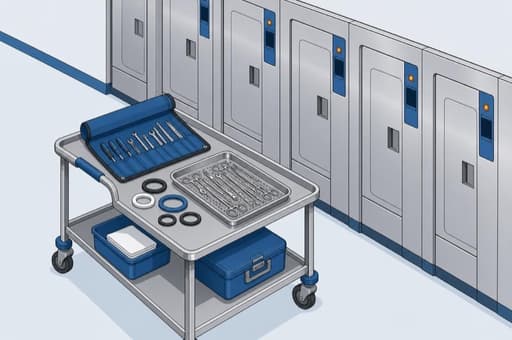
Healthcare Service & Repair
Technicians who install, maintain and repair hospital sterilizers, washers, tables and scopes — and who now run whole instrument-cleaning departments for hospitals that gave theirs up. Up 12% in FY2026, faster than the market, so it is winning work from someone.
Competes with Surgical instrument repair and sharpening (Agiliti) · Endoscope service (Olympus) · Outsourced sterile processing (Crothall Healthcare)
In plain English
A hospital's sterilizers are like the dishwashers in a restaurant that never closes: when one stops, surgery stops with it. STERIS sells the contract that prevents that — scheduled maintenance, parts, emergency call-outs, and the sharpening and rebuilding of the surgical instruments themselves.
Hospitals pay year after year under contract, pulled along by the rules they work under and by how hard it has become to keep their own technicians. Some go further and hand STERIS the entire instrument-cleaning room. That is why this is the company's fastest-growing line — it rises with surgery volumes and with every hospital that decides this is not its job.
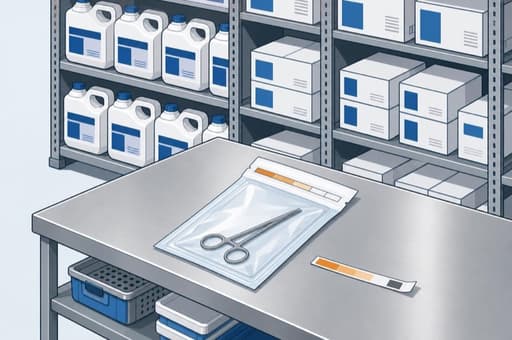
Healthcare Consumables
Detergents, sterilization pouches, colour-changing indicator strips and scope-room accessories, reordered constantly. Up 7% in FY2026 and 9% in the June quarter, with about two points of that from price rises. The most predictable money in the company.
Competes with Instrument cleaning chemistries (Ruhof) · Sterility indicators and monitoring (3M) · Endoscope reprocessing consumables (Olympus)
In plain English
Think of the razor-and-blades trade, with an important twist. STERIS sells the detergents that clean surgical instruments, the paper-and-plastic pouches the instruments are sealed into, the little chemical strips that change colour to show a load actually got sterile, and the accessories used in scope rooms.
All of it is used once and thrown away, so a hospital reorders for as long as it keeps operating. The twist: management says more than half of this repeat money — refills and service together — comes from hospitals running somebody else's machines. The blades sell on their own merits, not only to STERIS's own razors.
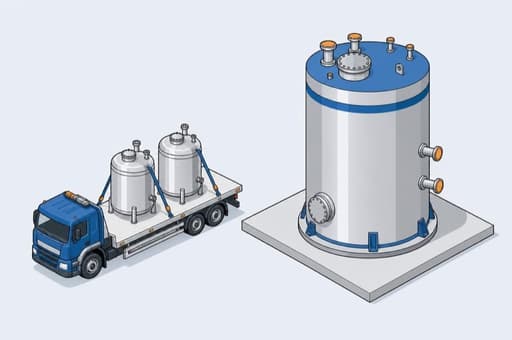
Sanford, North Carolina Chemistries Campus
A $600M plant and warehouse campus in North Carolina to make the cleaning chemistries sold by both the hospital and drug-factory sides. It sells nothing new; the payoff is cheaper chemistry. Announcing it cut this year's expected spare cash.
Competes with New US contamination-control chemistry capacity (Ecolab) · Hospital instrument chemistries (Ruhof)
In plain English
Right now the company's cleaning chemistries are made in Missouri and Minnesota. This is the replacement: a campus of roughly 600,000 square feet near North Carolina's Research Triangle that will make and ship them from one site, built in phases over two to three years, starting with the warehouse end and absorbing the older plants' production as it goes.
Nobody buys anything new because of it. A customer's detergent order looks identical; it simply costs STERIS less to fill. The company calls it the largest single-site manufacturing investment in its history, and it is why the spare cash STERIS expects this year went down on the day it was announced rather than up.
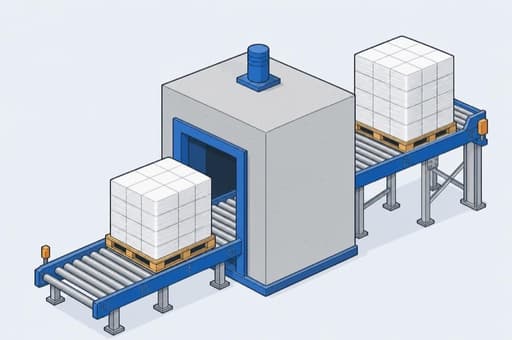
Applied Sterilization Technologies
Device and drug makers ship finished product to STERIS plants to be sterilized and sent back. $1,138.5M of sales at a 46.1% operating margin, the richest in the company. The sore spot is the ethylene-oxide gas plants and the lawsuits around them.
Competes with Sterigenics sterilization plants (Sotera Health) · Sterilizers sold so manufacturers can do it in-house (Getinge)
In plain English
A company that makes medical devices has to get its finished, packaged product sterile before a hospital will use it, and most would rather not run the plants to do that. So they ship pallets to STERIS, which puts each pallet through ethylene-oxide gas or a beam of radiation and sends it back.
It works like a laundry that charges by the load: no machines change hands, no order book, just capacity rented out by how much comes through the door. The buildings are already paid for, so extra volume falls straight to profit. The gas side is the sore point — a $48.2M Illinois settlement landed in the year to March 2025, and the Environmental Protection Agency proposed loosening its emissions rule in March 2026.
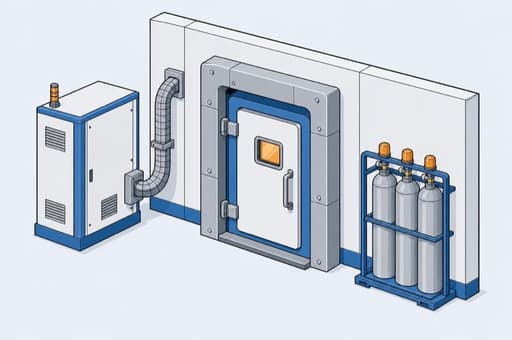
X-ray Sterilizing Capacity
New X-ray sterilizing lines added to plants STERIS already owns — Suzhou in China, Chester in New York — so a customer can change method without changing supplier. Management called the build-out nearly done in May 2026.
Competes with X-ray sterilization facilities (Sotera Health) · Cobalt-60 gamma sterilization lines (Sotera Health)
In plain English
Three ways to sterilize a pallet: bathe it in gas, blast it with radiation from a radioactive cobalt source, or blast it with X-rays from equipment, with no radioactive material to ship in. The third one also sidesteps the air permits the gas plants need.
STERIS has been bolting X-ray lines onto plants it already owns. No new customer is promised by that; the point is that a manufacturer nervous about gas rules or cobalt supply can switch method and stay with the same supplier. The chief executive plays down the drama — "dose is dose... it's just one tool in our bag" — and said in May 2026 the spending was nearly finished.
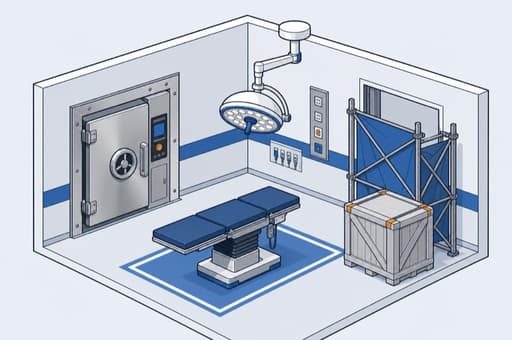
Healthcare Capital Equipment
The big machines: AMSCO steam sterilizers, V-PRO low-temperature units, washers, surgical tables, lights and booms. Up 6% in FY2026 after falling 5% the year before. Hospitals had $392.1M on order at year end, most of a $490.7M order book.
Competes with Steam sterilizers and washer-disinfectors (Belimed) · STERRAD low-temperature sterilizers (Fortive) · Surgical tables and lights (Stryker)
In plain English
Behind the operating theatres sits a room full of washing and sterilizing machines; inside the theatre sit the table, the overhead lights and the swinging arms that carry gas and power. STERIS builds that hardware. The chief executive describes it almost as a utility — bought for capacity, not for novelty.
Orders arrive in waves, because they ride on hospital building projects and budget years, and a delayed project pushes a delivery into the next one. So the line swings: down 5% one year, up 6% the next. One industry survey puts Getinge a little ahead of STERIS in steam sterilizers. The real job here is to put machines into rooms that then buy chemistry and service for a decade.
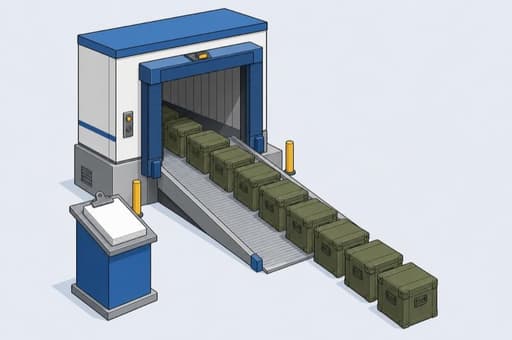
U.S. Defense Logistics Agency Contract
A standing five-year contract, renewed in June 2025, letting the military and federal agencies order patient monitoring and hospital equipment — about $450M of room out to 2030. Each order is competed separately, so that is an upper limit, not a promise.
Competes with Hospital equipment on federal bids (Getinge) · Operating-room equipment on federal bids (Skytron)
In plain English
The Defense Logistics Agency is the US military's central buying office. In 2020 it gave STERIS a contract it can place orders against whenever the Army, Navy, Air Force, Marines or federal civilian agencies need patient monitoring or hospital capital equipment, and in June 2025 it renewed that for another five years, to mid-2030.
Being on the contract is not the same as being paid. Each order is competed on its own, and the roughly $450M figure is the most that could be spent over the term. It still matters: it is the one large named customer relationship in the filings, and no customer at all — this one included — reached a tenth of any segment's sales last year.
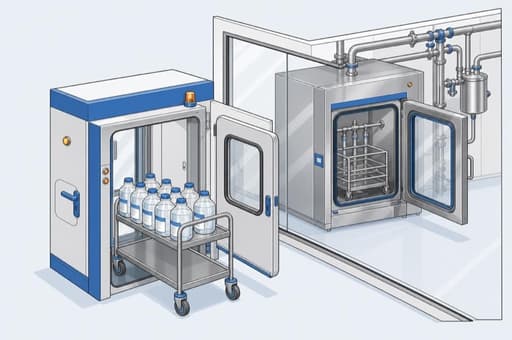
Life Sciences
The same trade aimed at drug factories: cleanroom disinfectants, pharmaceutical washers and sterilizers, ultra-clean water systems. $588.8M at a 42.6% margin, and in the June quarter the machines came back — capital sales up 17% after a weak year.
Competes with Cleanroom contamination-control chemistries (Ecolab) · Pharmaceutical sterilizers and washers (Fedegari) · Cleanroom wipes and disposables (Contec)
In plain English
Medicines are made inside rooms, tanks and pipework that have to be kept clean and sterile, batch after batch. STERIS sells the disinfectants and sterilants that do the wiping down, washers and sterilizers sized for a drug plant, hydrogen-peroxide vapour systems that decontaminate a whole room at once, and the kit that makes ultra-clean water and steam.
Who pays: drug companies and the contract manufacturers who make medicines for them. The chemistries sell continuously; the machines sell when somebody is building or refitting a plant. That is why the segment sagged through a downturn in drug-plant building and picked up again in FY2026.


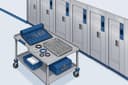 Healthcare Service & RepairTechnicians who install, maintain and repair hospital sterilizers, washers, tables and scopes — and who now run whole instrument-cleaning departments for hospitals that gave theirs up. Up 12% in FY2026, faster than the market, so it is winning work from someone.
Technicians who install, maintain and repair hospital sterilizers, washers, tables and scopes — and who now run whole instrument-cleaning departments for hospitals that gave theirs up. Up 12% in FY2026, faster than the market, so it is winning work from someone.
In plain English
A hospital's sterilizers are like the dishwashers in a restaurant that never closes: when one stops, surgery stops with it. STERIS sells the contract that prevents that — scheduled maintenance, parts, emergency call-outs, and the sharpening and rebuilding of the surgical instruments themselves.
Hospitals pay year after year under contract, pulled along by the rules they work under and by how hard it has become to keep their own technicians. Some go further and hand STERIS the entire instrument-cleaning room. That is why this is the company's fastest-growing line — it rises with surgery volumes and with every hospital that decides this is not its job.
Competes with Surgical instrument repair and sharpening (Agiliti) · Endoscope service (Olympus) · Outsourced sterile processing (Crothall Healthcare)
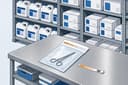 Healthcare ConsumablesDetergents, sterilization pouches, colour-changing indicator strips and scope-room accessories, reordered constantly. Up 7% in FY2026 and 9% in the June quarter, with about two points of that from price rises. The most predictable money in the company.
Detergents, sterilization pouches, colour-changing indicator strips and scope-room accessories, reordered constantly. Up 7% in FY2026 and 9% in the June quarter, with about two points of that from price rises. The most predictable money in the company.
In plain English
Think of the razor-and-blades trade, with an important twist. STERIS sells the detergents that clean surgical instruments, the paper-and-plastic pouches the instruments are sealed into, the little chemical strips that change colour to show a load actually got sterile, and the accessories used in scope rooms.
All of it is used once and thrown away, so a hospital reorders for as long as it keeps operating. The twist: management says more than half of this repeat money — refills and service together — comes from hospitals running somebody else's machines. The blades sell on their own merits, not only to STERIS's own razors.
Competes with Instrument cleaning chemistries (Ruhof) · Sterility indicators and monitoring (3M) · Endoscope reprocessing consumables (Olympus)
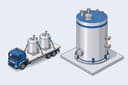 Sanford, North Carolina Chemistries CampusA $600M plant and warehouse campus in North Carolina to make the cleaning chemistries sold by both the hospital and drug-factory sides. It sells nothing new; the payoff is cheaper chemistry. Announcing it cut this year's expected spare cash.
A $600M plant and warehouse campus in North Carolina to make the cleaning chemistries sold by both the hospital and drug-factory sides. It sells nothing new; the payoff is cheaper chemistry. Announcing it cut this year's expected spare cash.
In plain English
Right now the company's cleaning chemistries are made in Missouri and Minnesota. This is the replacement: a campus of roughly 600,000 square feet near North Carolina's Research Triangle that will make and ship them from one site, built in phases over two to three years, starting with the warehouse end and absorbing the older plants' production as it goes.
Nobody buys anything new because of it. A customer's detergent order looks identical; it simply costs STERIS less to fill. The company calls it the largest single-site manufacturing investment in its history, and it is why the spare cash STERIS expects this year went down on the day it was announced rather than up.
Competes with New US contamination-control chemistry capacity (Ecolab) · Hospital instrument chemistries (Ruhof)
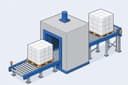 Applied Sterilization TechnologiesDevice and drug makers ship finished product to STERIS plants to be sterilized and sent back. $1,138.5M of sales at a 46.1% operating margin, the richest in the company. The sore spot is the ethylene-oxide gas plants and the lawsuits around them.
Device and drug makers ship finished product to STERIS plants to be sterilized and sent back. $1,138.5M of sales at a 46.1% operating margin, the richest in the company. The sore spot is the ethylene-oxide gas plants and the lawsuits around them.
In plain English
A company that makes medical devices has to get its finished, packaged product sterile before a hospital will use it, and most would rather not run the plants to do that. So they ship pallets to STERIS, which puts each pallet through ethylene-oxide gas or a beam of radiation and sends it back.
It works like a laundry that charges by the load: no machines change hands, no order book, just capacity rented out by how much comes through the door. The buildings are already paid for, so extra volume falls straight to profit. The gas side is the sore point — a $48.2M Illinois settlement landed in the year to March 2025, and the Environmental Protection Agency proposed loosening its emissions rule in March 2026.
Competes with Sterigenics sterilization plants (Sotera Health) · Sterilizers sold so manufacturers can do it in-house (Getinge)
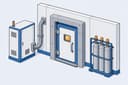 X-ray Sterilizing CapacityNew X-ray sterilizing lines added to plants STERIS already owns — Suzhou in China, Chester in New York — so a customer can change method without changing supplier. Management called the build-out nearly done in May 2026.
New X-ray sterilizing lines added to plants STERIS already owns — Suzhou in China, Chester in New York — so a customer can change method without changing supplier. Management called the build-out nearly done in May 2026.
In plain English
Three ways to sterilize a pallet: bathe it in gas, blast it with radiation from a radioactive cobalt source, or blast it with X-rays from equipment, with no radioactive material to ship in. The third one also sidesteps the air permits the gas plants need.
STERIS has been bolting X-ray lines onto plants it already owns. No new customer is promised by that; the point is that a manufacturer nervous about gas rules or cobalt supply can switch method and stay with the same supplier. The chief executive plays down the drama — "dose is dose... it's just one tool in our bag" — and said in May 2026 the spending was nearly finished.
Competes with X-ray sterilization facilities (Sotera Health) · Cobalt-60 gamma sterilization lines (Sotera Health)
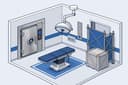 Healthcare Capital EquipmentThe big machines: AMSCO steam sterilizers, V-PRO low-temperature units, washers, surgical tables, lights and booms. Up 6% in FY2026 after falling 5% the year before. Hospitals had $392.1M on order at year end, most of a $490.7M order book.
The big machines: AMSCO steam sterilizers, V-PRO low-temperature units, washers, surgical tables, lights and booms. Up 6% in FY2026 after falling 5% the year before. Hospitals had $392.1M on order at year end, most of a $490.7M order book.
In plain English
Behind the operating theatres sits a room full of washing and sterilizing machines; inside the theatre sit the table, the overhead lights and the swinging arms that carry gas and power. STERIS builds that hardware. The chief executive describes it almost as a utility — bought for capacity, not for novelty.
Orders arrive in waves, because they ride on hospital building projects and budget years, and a delayed project pushes a delivery into the next one. So the line swings: down 5% one year, up 6% the next. One industry survey puts Getinge a little ahead of STERIS in steam sterilizers. The real job here is to put machines into rooms that then buy chemistry and service for a decade.
Competes with Steam sterilizers and washer-disinfectors (Belimed) · STERRAD low-temperature sterilizers (Fortive) · Surgical tables and lights (Stryker)
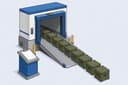 U.S. Defense Logistics Agency ContractA standing five-year contract, renewed in June 2025, letting the military and federal agencies order patient monitoring and hospital equipment — about $450M of room out to 2030. Each order is competed separately, so that is an upper limit, not a promise.
A standing five-year contract, renewed in June 2025, letting the military and federal agencies order patient monitoring and hospital equipment — about $450M of room out to 2030. Each order is competed separately, so that is an upper limit, not a promise.
In plain English
The Defense Logistics Agency is the US military's central buying office. In 2020 it gave STERIS a contract it can place orders against whenever the Army, Navy, Air Force, Marines or federal civilian agencies need patient monitoring or hospital capital equipment, and in June 2025 it renewed that for another five years, to mid-2030.
Being on the contract is not the same as being paid. Each order is competed on its own, and the roughly $450M figure is the most that could be spent over the term. It still matters: it is the one large named customer relationship in the filings, and no customer at all — this one included — reached a tenth of any segment's sales last year.
Competes with Hospital equipment on federal bids (Getinge) · Operating-room equipment on federal bids (Skytron)
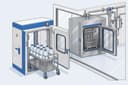 Life SciencesThe same trade aimed at drug factories: cleanroom disinfectants, pharmaceutical washers and sterilizers, ultra-clean water systems. $588.8M at a 42.6% margin, and in the June quarter the machines came back — capital sales up 17% after a weak year.
The same trade aimed at drug factories: cleanroom disinfectants, pharmaceutical washers and sterilizers, ultra-clean water systems. $588.8M at a 42.6% margin, and in the June quarter the machines came back — capital sales up 17% after a weak year.
In plain English
Medicines are made inside rooms, tanks and pipework that have to be kept clean and sterile, batch after batch. STERIS sells the disinfectants and sterilants that do the wiping down, washers and sterilizers sized for a drug plant, hydrogen-peroxide vapour systems that decontaminate a whole room at once, and the kit that makes ultra-clean water and steam.
Who pays: drug companies and the contract manufacturers who make medicines for them. The chemistries sell continuously; the machines sell when somebody is building or refitting a plant. That is why the segment sagged through a downturn in drug-plant building and picked up again in FY2026.
Competes with Cleanroom contamination-control chemistries (Ecolab) · Pharmaceutical sterilizers and washers (Fedegari) · Cleanroom wipes and disposables (Contec)
Named in filings, launches and programs
- AMSCO steam sterilizers and washer-disinfectorsProduct lineThe workhorse steam sterilizers and washing machines behind hospital operating rooms — a catalog name rather than a separately reported business.
- V-PRO low-temperature sterilizersProduct lineSterilizers that work at low temperature using hydrogen-peroxide vapour; they go head to head with Fortive's STERRAD units.
- Harmony surgical tables, lights and boomsProduct lineThe operating-room furniture line: tables, overhead lights and the swinging arms that carry gas and power to the surgical field.
- MEDglas operating-room wall systemsProduct lineGlass operating-room wall panels; STERIS bought the supplier in early 2026 to make them itself and sell them worldwide.
- STERIS Endoscopy GI productsProduct lineA gastrointestinal device family bought in mid-2026 for the products and the twenty-odd US sales reps that came with it.
- SecureCare service programsServiceThe branded maintenance and lifecycle plans hospitals sign for STERIS equipment — the contract wrapper around the service business.
- Outsourced sterile processingServiceSTERIS staff running a hospital's entire instrument-cleaning department, for hospitals that would rather not run one themselves.
- Instrument and endoscope repairServiceSharpening, rebuilding and repairing surgical instruments and flexible scopes — much of it on equipment STERIS never sold.
- Sterility assurance and monitoringProduct lineIndicators and biological tests that show a sterilizer load reached the conditions it was meant to reach.
- Sterilization pouches, packaging and traysProduct lineThe peel-open pouches, packaging and trays that surgical instruments are sealed into before they go through a sterilizer.
- High-purity water and pure-steam generatorsProduct lineEquipment that makes ultra-clean water and steam for drug plants, sold inside the Life Sciences segment.
- Cleanroom disinfectants and room decontaminationProduct lineSterilants and hydrogen-peroxide vapour systems that clean and decontaminate the cleanrooms inside drug plants.
- Isomedix ethylene oxide plantsBrandThe US ethylene-oxide arm inside the sterilizing network, and the defendant in the Illinois litigation that cost $48.2M in FY2025.
- Mentor, Ohio sterility assurance plantPlatform · AnnouncedA $60M plant in Ohio for sterility-assurance products, spread over two years and due to be running by the end of 2027.
- AI-enabled service workflow projectProduct · AnnouncedA multi-year project aimed at the field-service business — the only time artificial intelligence came up across eight earnings calls.
AMSCO steam sterilizers and washer-disinfectorsProduct line
The workhorse steam sterilizers and washing machines behind hospital operating rooms — a catalog name rather than a separately reported business.
V-PRO low-temperature sterilizersProduct line
Sterilizers that work at low temperature using hydrogen-peroxide vapour; they go head to head with Fortive's STERRAD units.
Harmony surgical tables, lights and boomsProduct line
The operating-room furniture line: tables, overhead lights and the swinging arms that carry gas and power to the surgical field.
MEDglas operating-room wall systemsProduct line
Glass operating-room wall panels; STERIS bought the supplier in early 2026 to make them itself and sell them worldwide.
STERIS Endoscopy GI productsProduct line
A gastrointestinal device family bought in mid-2026 for the products and the twenty-odd US sales reps that came with it.
SecureCare service programsService
The branded maintenance and lifecycle plans hospitals sign for STERIS equipment — the contract wrapper around the service business.
Outsourced sterile processingService
STERIS staff running a hospital's entire instrument-cleaning department, for hospitals that would rather not run one themselves.
Instrument and endoscope repairService
Sharpening, rebuilding and repairing surgical instruments and flexible scopes — much of it on equipment STERIS never sold.
Sterility assurance and monitoringProduct line
Indicators and biological tests that show a sterilizer load reached the conditions it was meant to reach.
Sterilization pouches, packaging and traysProduct line
The peel-open pouches, packaging and trays that surgical instruments are sealed into before they go through a sterilizer.
High-purity water and pure-steam generatorsProduct line
Equipment that makes ultra-clean water and steam for drug plants, sold inside the Life Sciences segment.
Cleanroom disinfectants and room decontaminationProduct line
Sterilants and hydrogen-peroxide vapour systems that clean and decontaminate the cleanrooms inside drug plants.
Isomedix ethylene oxide plantsBrand
The US ethylene-oxide arm inside the sterilizing network, and the defendant in the Illinois litigation that cost $48.2M in FY2025.
Mentor, Ohio sterility assurance plantPlatform · Announced
A $60M plant in Ohio for sterility-assurance products, spread over two years and due to be running by the end of 2027.
AI-enabled service workflow projectProduct · Announced
A multi-year project aimed at the field-service business — the only time artificial intelligence came up across eight earnings calls.