
Seagate Technology (STX)
Builds high-capacity hard drives and storage systems for cloud, enterprise and consumer data.
Something off on this page? Send us feedback.
Seagate makes hard drives — the spinning disks that store the world's cheap, bulky data — and sells most of that capacity to the companies running enormous data centers. The drives you can buy in a shop are the small remainder. The bet is on squeezing far more onto each spinning disk, and on selling years of that capacity before any of it is built.
Item facts: FY2026 · year ended July 3, 2026, from filings, earnings calls and company pages.
Judgment weights, not filed revenue
The band summarizes business focus and direction. ~ marks estimates.
7 in detail · 9 more below
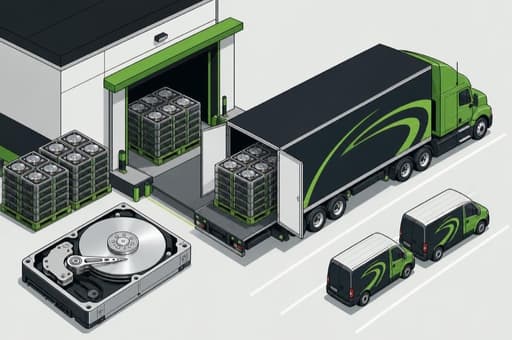
Exos nearline drives for cloud providers
Big 3.5-inch drives sold to cloud companies for data that has to be kept but is rarely opened — about 65% of sales. One customer Seagate does not name was roughly 14% of the year. Watch whether cloud spending holds.
Competes with Ultrastar DC HC nearline drives (Western Digital) · MG Series nearline drives (Toshiba) · QLC flash storage drives (Solidigm)
In plain English
Think of a company's data like a house. The things it touches every minute live somewhere fast and expensive; everything else goes in the basement. Seagate makes the basement — big, slow, cheap disks that spin all day holding video, records and the piles of material AI systems feed on.
Cloud companies buy them by the pallet and pay by the terabyte, so the money follows how much total capacity goes out the door, not how many drives do. Seagate keeps the number of drives roughly flat and fits more onto each one, which is why sales can climb while the factories build much the same number of things.
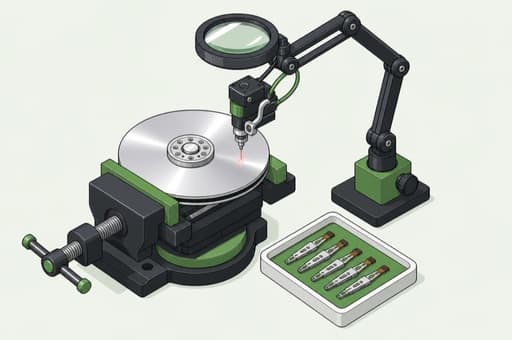
Mozaic heat-assisted recording platform
The heated-write method that lets one drive hold far more without costing much more to build. Roughly 40% of the capacity heading into data centers used it at year-end. Watch the next step up, Mozaic 5.
Competes with Heat-assisted drive program (Western Digital) · UltraSMR 40TB drives (Western Digital) · MAMR and HAMR density roadmap (Toshiba)
In plain English
Heat-assisted recording is roughly what it sounds like. A tiny laser, built into the head that does the writing, warms a pinprick of the disk surface at the moment data goes down, and that lets Seagate pack far more onto each disk. Seagate now makes those lasers itself, tens of millions in a single quarter.
The payoff is arithmetic. A Mozaic 4+ drive holds 44 terabytes using the same disks, heads and parts list as a smaller one — over 30% more capacity for almost no added cost. Buyers pay by the terabyte, so the gap shows up as profit. Thirteen straight quarters of widening margins are made of it.
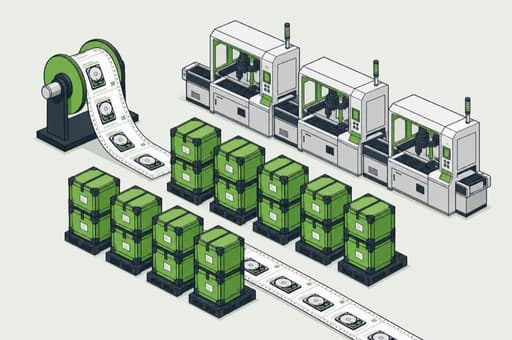
Build-to-order supply agreements
Seagate takes firm orders, at agreed prices, before it builds anything. The vast majority of its big-drive capacity is spoken for into 2028, with prices set through 2027. If cloud spending cools, this book shortens first.
Competes with Long-term supply agreements and firm orders (Western Digital) · Flash-memory allocation contracts (Micron) · Flash-memory allocation contracts (SK hynix)
In plain English
Most factories guess what the year will want and build it. Seagate does the reverse: it signs the buyer up first, with the exact drive and the price written into the agreement, and only then starts the line. It has deals like this with nearly all the big cloud buyers.
There is a plain reason for it. The parts that do the writing are started in the factory three to four quarters before a finished drive ships, so Seagate has to know what to make. The side effect is that a famously boom-and-bust product now comes with years of orders attached — and with a warning light, because trouble would show up first as those booked years getting shorter.
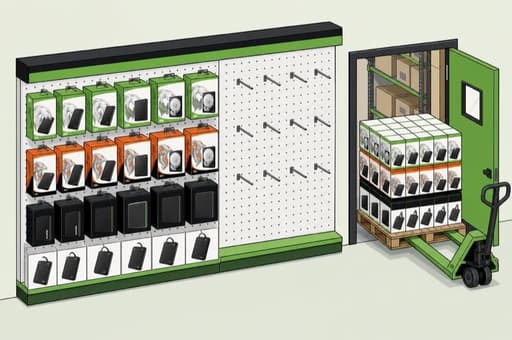
BarraCuda, FireCuda, One Touch, Expansion and LaCie
The drives ordinary people and computer makers buy — internal disks, gaming drives, plug-in external boxes and the pricier LaCie line. Around 15% of sales. It grew on price, not on more units.
Competes with WD Blue and WD_BLACK drives (Western Digital) · Extreme portable drives and G-DRIVE (SanDisk) · T-series portable drives (Samsung)
In plain English
The unglamorous half-shelf at the back of an electronics shop. BarraCuda disks go inside desktops and laptops, FireCuda is the gaming version, One Touch and Expansion are the palm-sized boxes you plug in to hold photos, and LaCie is the pricier line aimed at people who work with pictures and video for a living.
Shoppers and computer makers pay roughly twice as much per terabyte here as cloud buyers do, because the drives are small and sold at retail. But this is the flexible end of the business: when data-center prices look better, Seagate pulls capacity out of these products and sends it to cloud, which is exactly what it did in late 2025.
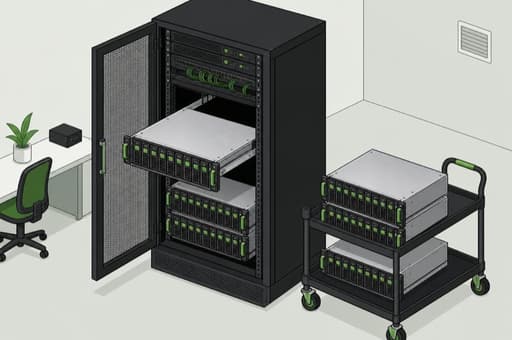
Exos nearline drives through server makers
The same big drives, reaching companies that run their own machine rooms by way of server and storage builders. Roughly 10% of sales, up for five quarters running. Its supply competes with cloud orders.
Competes with Ultrastar DC HC through server builders (Western Digital) · MG Series nearline drives (Toshiba) · All-flash storage arrays (Pure Storage)
In plain English
Plenty of organisations still keep their computers in their own rooms. They do not ring Seagate; they buy a server or a storage cabinet from a company that builds those, and Seagate's drives are already inside it.
What changed is that these buyers started copying the cloud giants — keeping the busy data on fast chips and parking everything else on cheap spinning disks. That has lifted this line for five quarters in a row, with double-digit growth in both money and capacity, and newer buyers include national and specialist cloud operators. The catch is supply: a drive sold here is a drive not sold to cloud, and the cloud contracts have first call on it.
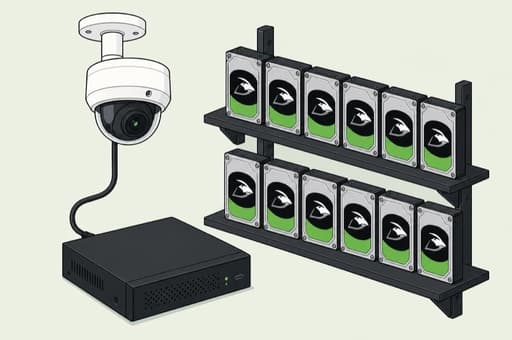
SkyHawk video and image drives
Drives built for security cameras — the recorders on site and the archives behind them. Roughly 5% of sales, and the hardest piece to see: Seagate stopped counting it separately in late 2025.
Competes with WD Purple and Purple Pro drives (Western Digital) · S300 surveillance drives (Toshiba)
In plain English
Security cameras never stop. Footage piles up all day and retention rules keep it around for years — Seagate points to five-to-ten-year horizons. Ordinary drives are not the right tool for that; SkyHawk is the version tuned for it.
The drives sell through the firms that build video recorders, the installers who wire up camera systems, and increasingly the cloud services holding the footage — which is why Seagate moved this line in with its data-center business. A 32-terabyte SkyHawk runs about seven hundred dollars at retail. Video, not AI, was what pulled the cloud recovery along in the first place.
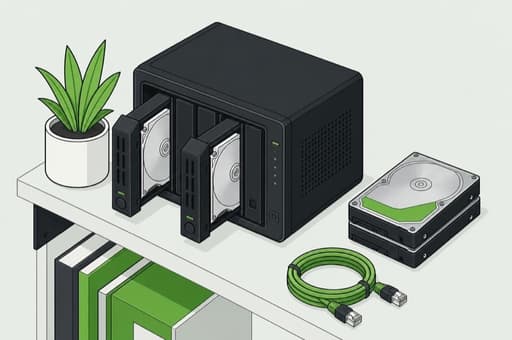
IronWolf and IronWolf Pro
Drives made for the multi-slot boxes that small businesses and hobbyists use as their own file store. Roughly 4% of sales — and management has not mentioned it on an earnings call in two years.
Competes with WD Red and WD Red Pro drives (Western Digital) · N300 drives for file servers (Toshiba) · Home-server drive line (SanDisk)
In plain English
One step up from a plug-in drive: a small box with several slots that sits on a shelf, stays on around the clock, and acts as the household's or the office's own storage. IronWolf drives are the ones meant to live in it, tuned to run quieter and draw less power than the drives Seagate sells for data centers, with a three-year warranty and five years on the Pro version.
The money arrives through the companies that make those boxes and through online shops. It is the smallest piece on this map, and it shares its supply with the shop-shelf drives, so it gets squeezed when cloud pays better.


 Exos nearline drives for cloud providersBig 3.5-inch drives sold to cloud companies for data that has to be kept but is rarely opened — about 65% of sales. One customer Seagate does not name was roughly 14% of the year. Watch whether cloud spending holds.
Big 3.5-inch drives sold to cloud companies for data that has to be kept but is rarely opened — about 65% of sales. One customer Seagate does not name was roughly 14% of the year. Watch whether cloud spending holds.
In plain English
Think of a company's data like a house. The things it touches every minute live somewhere fast and expensive; everything else goes in the basement. Seagate makes the basement — big, slow, cheap disks that spin all day holding video, records and the piles of material AI systems feed on.
Cloud companies buy them by the pallet and pay by the terabyte, so the money follows how much total capacity goes out the door, not how many drives do. Seagate keeps the number of drives roughly flat and fits more onto each one, which is why sales can climb while the factories build much the same number of things.
Competes with Ultrastar DC HC nearline drives (Western Digital) · MG Series nearline drives (Toshiba) · QLC flash storage drives (Solidigm)
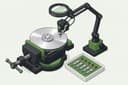 Mozaic heat-assisted recording platformThe heated-write method that lets one drive hold far more without costing much more to build. Roughly 40% of the capacity heading into data centers used it at year-end. Watch the next step up, Mozaic 5.
The heated-write method that lets one drive hold far more without costing much more to build. Roughly 40% of the capacity heading into data centers used it at year-end. Watch the next step up, Mozaic 5.
In plain English
Heat-assisted recording is roughly what it sounds like. A tiny laser, built into the head that does the writing, warms a pinprick of the disk surface at the moment data goes down, and that lets Seagate pack far more onto each disk. Seagate now makes those lasers itself, tens of millions in a single quarter.
The payoff is arithmetic. A Mozaic 4+ drive holds 44 terabytes using the same disks, heads and parts list as a smaller one — over 30% more capacity for almost no added cost. Buyers pay by the terabyte, so the gap shows up as profit. Thirteen straight quarters of widening margins are made of it.
Competes with Heat-assisted drive program (Western Digital) · UltraSMR 40TB drives (Western Digital) · MAMR and HAMR density roadmap (Toshiba)
 Build-to-order supply agreementsSeagate takes firm orders, at agreed prices, before it builds anything. The vast majority of its big-drive capacity is spoken for into 2028, with prices set through 2027. If cloud spending cools, this book shortens first.
Seagate takes firm orders, at agreed prices, before it builds anything. The vast majority of its big-drive capacity is spoken for into 2028, with prices set through 2027. If cloud spending cools, this book shortens first.
In plain English
Most factories guess what the year will want and build it. Seagate does the reverse: it signs the buyer up first, with the exact drive and the price written into the agreement, and only then starts the line. It has deals like this with nearly all the big cloud buyers.
There is a plain reason for it. The parts that do the writing are started in the factory three to four quarters before a finished drive ships, so Seagate has to know what to make. The side effect is that a famously boom-and-bust product now comes with years of orders attached — and with a warning light, because trouble would show up first as those booked years getting shorter.
Competes with Long-term supply agreements and firm orders (Western Digital) · Flash-memory allocation contracts (Micron) · Flash-memory allocation contracts (SK hynix)
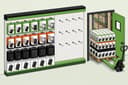 BarraCuda, FireCuda, One Touch, Expansion and LaCieThe drives ordinary people and computer makers buy — internal disks, gaming drives, plug-in external boxes and the pricier LaCie line. Around 15% of sales. It grew on price, not on more units.
The drives ordinary people and computer makers buy — internal disks, gaming drives, plug-in external boxes and the pricier LaCie line. Around 15% of sales. It grew on price, not on more units.
In plain English
The unglamorous half-shelf at the back of an electronics shop. BarraCuda disks go inside desktops and laptops, FireCuda is the gaming version, One Touch and Expansion are the palm-sized boxes you plug in to hold photos, and LaCie is the pricier line aimed at people who work with pictures and video for a living.
Shoppers and computer makers pay roughly twice as much per terabyte here as cloud buyers do, because the drives are small and sold at retail. But this is the flexible end of the business: when data-center prices look better, Seagate pulls capacity out of these products and sends it to cloud, which is exactly what it did in late 2025.
Competes with WD Blue and WD_BLACK drives (Western Digital) · Extreme portable drives and G-DRIVE (SanDisk) · T-series portable drives (Samsung)
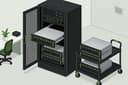 Exos nearline drives through server makersThe same big drives, reaching companies that run their own machine rooms by way of server and storage builders. Roughly 10% of sales, up for five quarters running. Its supply competes with cloud orders.
The same big drives, reaching companies that run their own machine rooms by way of server and storage builders. Roughly 10% of sales, up for five quarters running. Its supply competes with cloud orders.
In plain English
Plenty of organisations still keep their computers in their own rooms. They do not ring Seagate; they buy a server or a storage cabinet from a company that builds those, and Seagate's drives are already inside it.
What changed is that these buyers started copying the cloud giants — keeping the busy data on fast chips and parking everything else on cheap spinning disks. That has lifted this line for five quarters in a row, with double-digit growth in both money and capacity, and newer buyers include national and specialist cloud operators. The catch is supply: a drive sold here is a drive not sold to cloud, and the cloud contracts have first call on it.
Competes with Ultrastar DC HC through server builders (Western Digital) · MG Series nearline drives (Toshiba) · All-flash storage arrays (Pure Storage)
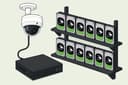 SkyHawk video and image drivesDrives built for security cameras — the recorders on site and the archives behind them. Roughly 5% of sales, and the hardest piece to see: Seagate stopped counting it separately in late 2025.
Drives built for security cameras — the recorders on site and the archives behind them. Roughly 5% of sales, and the hardest piece to see: Seagate stopped counting it separately in late 2025.
In plain English
Security cameras never stop. Footage piles up all day and retention rules keep it around for years — Seagate points to five-to-ten-year horizons. Ordinary drives are not the right tool for that; SkyHawk is the version tuned for it.
The drives sell through the firms that build video recorders, the installers who wire up camera systems, and increasingly the cloud services holding the footage — which is why Seagate moved this line in with its data-center business. A 32-terabyte SkyHawk runs about seven hundred dollars at retail. Video, not AI, was what pulled the cloud recovery along in the first place.
Competes with WD Purple and Purple Pro drives (Western Digital) · S300 surveillance drives (Toshiba)
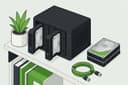 IronWolf and IronWolf ProDrives made for the multi-slot boxes that small businesses and hobbyists use as their own file store. Roughly 4% of sales — and management has not mentioned it on an earnings call in two years.
Drives made for the multi-slot boxes that small businesses and hobbyists use as their own file store. Roughly 4% of sales — and management has not mentioned it on an earnings call in two years.
In plain English
One step up from a plug-in drive: a small box with several slots that sits on a shelf, stays on around the clock, and acts as the household's or the office's own storage. IronWolf drives are the ones meant to live in it, tuned to run quieter and draw less power than the drives Seagate sells for data centers, with a three-year warranty and five years on the Pro version.
The money arrives through the companies that make those boxes and through online shops. It is the smallest piece on this map, and it shares its supply with the shop-shelf drives, so it gets squeezed when cloud pays better.
Competes with WD Red and WD Red Pro drives (Western Digital) · N300 drives for file servers (Toshiba) · Home-server drive line (SanDisk)
Named in filings, launches and programs
- CORVAULT and Exos SCALE storage systemsProduct lineWhole cabinets of drives sold as one unit — CORVAULT repairs its own failures, Exos SCALE is a dense shelf. Management calls it fairly small scale.
- Read/write head and disk media fabsProductSeagate makes its own recording heads and disk surfaces rather than buying them in; most of this year's and next year's factory spending lands here.
- Edge-emitting laser and photonics lineProductThe pinpoint lasers inside heated-write heads are now made in-house — tens of millions in the June-2026 quarter, replacing an outside supplier.
- Nytro enterprise SSDsProduct lineFlash-memory drives for servers, built on memory chips Seagate buys from others. Not discussed on any earnings call in the past two years.
- MACH.2 multi-actuator drivesProductHard drives with two moving arms instead of one — a trademarked design still carried in the FY2026 line-up.
- Exos 32TB channel drivesProductThe data-center drive sold at retail as well: 32 terabytes for about seven hundred and thirty dollars.
- Rescue Data Recovery ServicesServiceRecovery cover bundled with consumer external drives — if the drive dies, Seagate attempts to get the files back.
- Seagate SecureProductScrambling and secure wiping built into the drive itself, so a retired drive can leave without its data going along.
- Seagate Partner ProgramCustomer programThe reseller and partner scheme; a partner called Change Agents was admitted in August 2026.
CORVAULT and Exos SCALE storage systemsProduct line
Whole cabinets of drives sold as one unit — CORVAULT repairs its own failures, Exos SCALE is a dense shelf. Management calls it fairly small scale.
Read/write head and disk media fabsProduct
Seagate makes its own recording heads and disk surfaces rather than buying them in; most of this year's and next year's factory spending lands here.
Edge-emitting laser and photonics lineProduct
The pinpoint lasers inside heated-write heads are now made in-house — tens of millions in the June-2026 quarter, replacing an outside supplier.
Nytro enterprise SSDsProduct line
Flash-memory drives for servers, built on memory chips Seagate buys from others. Not discussed on any earnings call in the past two years.
MACH.2 multi-actuator drivesProduct
Hard drives with two moving arms instead of one — a trademarked design still carried in the FY2026 line-up.
Exos 32TB channel drivesProduct
The data-center drive sold at retail as well: 32 terabytes for about seven hundred and thirty dollars.
Rescue Data Recovery ServicesService
Recovery cover bundled with consumer external drives — if the drive dies, Seagate attempts to get the files back.
Seagate SecureProduct
Scrambling and secure wiping built into the drive itself, so a retired drive can leave without its data going along.
Seagate Partner ProgramCustomer program
The reseller and partner scheme; a partner called Change Agents was admitted in August 2026.