
Tyson Foods (TSN)
Processes beef, pork, and chicken while selling branded prepared foods worldwide.
Something off on this page? Send us feedback.
Tyson buys cattle, hogs and chickens, cuts them into meat, and turns part of that meat into packaged brands sold in the refrigerated aisle. Beef is the biggest business and the one losing money, squeezed by a historically small American cattle herd. Chicken and the branded packaged side now carry the profit. And one retailer, Walmart, takes a large slice of everything Tyson sells.
Item facts: FY2025 · 52 weeks ended Sept 27, 2025, from filings, earnings calls and company pages.
Judgment weights, not filed revenue
The band summarizes business focus and direction. ~ marks estimates.
9 in detail · 14 more below
Beef
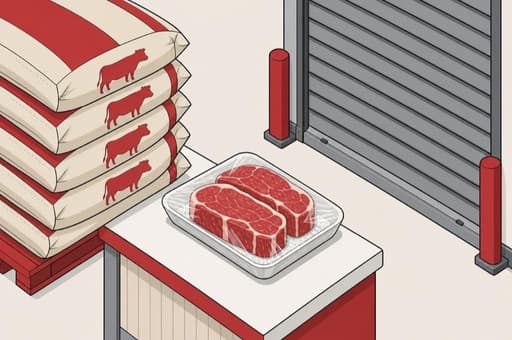
The largest business and the one bleeding: roughly $21.6B of sales last year against a $426M operating loss, with this year's loss now guided at $625–775M. Watch the cattle herd and the plant closures.
Competes with Beef processing (JBS USA) · Beef processing (Cargill Protein) · National Beef (Marfrig)
In plain English
Cattle get bought at whatever feedlots are charging that week, killed and cut into steaks, roasts and trim, then sold at whatever the beef market pays that week. Tyson sets neither price. What it keeps is the gap between the two, minus the cost of running the plant.
Right now the gap is upside down. There are unusually few cattle in the country — few breeding females have been kept back to rebuild the herd, and the closed Mexican border cut off several hundred thousand imported head — so feedlots can charge a lot and Tyson's cutting floors have less to work with. Hence the closures: fewer plants, fuller.
Pork
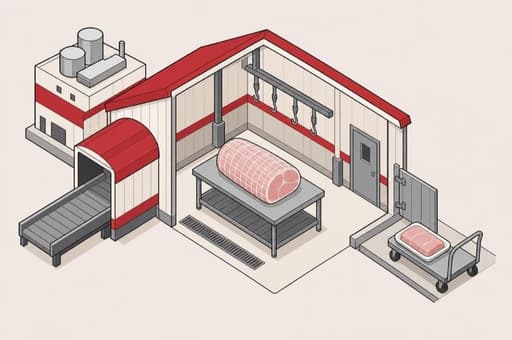
$5.8B of sales at a 2.9% margin last year — thin, but dependable. Its real job now is feeding the branded packaged business with pork it would otherwise sell by the pound. Hog supply is comfortable.
Competes with Fresh pork (Smithfield Foods) · Swift pork (JBS USA) · Hog production and pork processing (Seaboard Foods)
In plain English
Market hogs arrive, get broken down into chops, loins, bellies and trim, and leave through one of two doors: packs for the fresh meat case, or raw material for Tyson's own brands.
That second door is the point now. Pork that leaves as sausage or lunch meat lands in a part of Tyson earning about three times this segment's margin, so management keeps sending more of the hog inside the company. And hogs, unlike cattle, are in easy supply — which makes this the most predictable of the meat businesses, thin margin and all.
Chicken
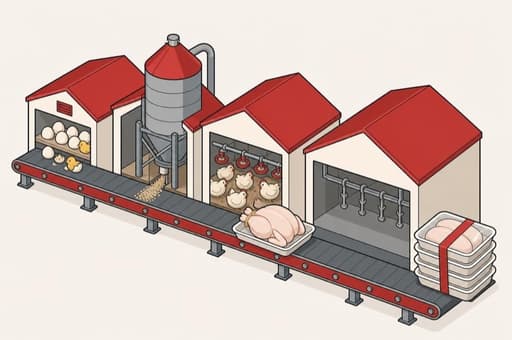
Under a third of sales but about two-thirds of the operating profit — $1,482M last year at an 8.8% margin, and seven straight quarters of rising volume. Feed grain cost and bird flu are the swing factors.
Competes with Fresh and prepared chicken (Pilgrim's Pride) · Chicken products (Wayne-Sanderson Farms) · Branded no-antibiotics chicken (Perdue Farms)
In plain English
Tyson owns the chicken business end to end — the breeding flocks, the hatcheries, the feed mills — and pays farmers to raise the birds in their own barns before taking them back for processing. Corn and soybean meal go in one side; fresh, frozen and breaded chicken comes out the other.
Because it holds the whole chain, it can promise a big grocer or restaurant chain set volumes several quarters ahead and then grow the flock to match. Management calls it a pull business: the order comes first, the birds follow. And shoppers are shifting toward chicken while beef prices set records.
Tyson® brand
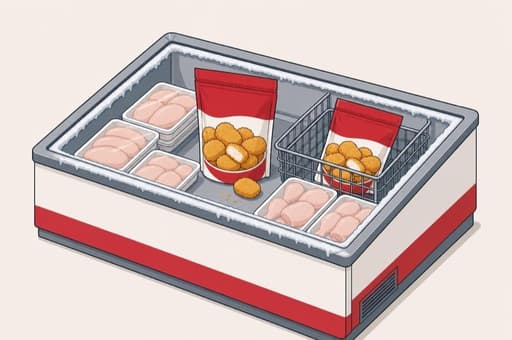
The consumer face of the chicken business: bags of breaded nuggets and strips, plus fresh chicken in the meat case. Retail value-added sales grew about 1% and fresh chicken about 3% in the June 2026 quarter.
Competes with Branded no-antibiotics chicken (Perdue Farms) · Fresh and prepared chicken (Pilgrim's Pride)
In plain English
The bag in the freezer with the nuggets in it, and the tray of fresh breasts in the meat case — same company, the name shoppers actually know.
Here is why the name earns its keep. A pound of plain chicken sells for whatever the market quotes that morning; a pound breaded, portioned and put in a printed bag sells at a price the shopper chooses to pay. The chicken business held better pricing this year even as industry chicken quotes fell. Management counts this as one of its three largest brands in American food.
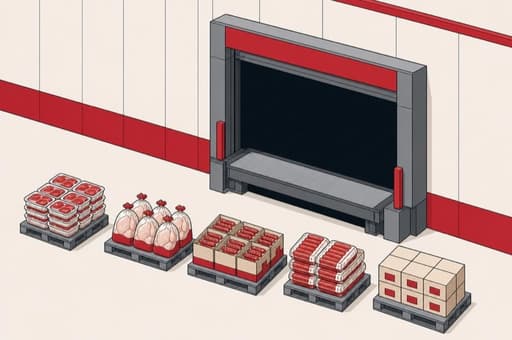
Walmart supplier program
One retailer, Walmart, accounted for 18.7% of last year's sales — roughly ten billion dollars of fresh meat, branded packs and store-brand product. Tyson's main road to shoppers and its largest single dependency.
Competes with Chicken supply programs (Pilgrim's Pride) · Branded meat programs (Hormel) · Great Value and Marketside meat (Walmart)
In plain English
Not a product — a relationship. Walmart's meat cases, its freezers and its store-brand orders, drawing on every part of Tyson at once.
The awkward part: Tyson competes with Walmart's own Great Value and Marketside labels and also makes product for them, so the same shelf carries Tyson's brands and the cheaper pack beside them. Shelves get re-planned in periodic reviews, and a line that loses its slot loses its volume. Tyson never says the name out loud on its earnings calls — it says strategic customers instead.
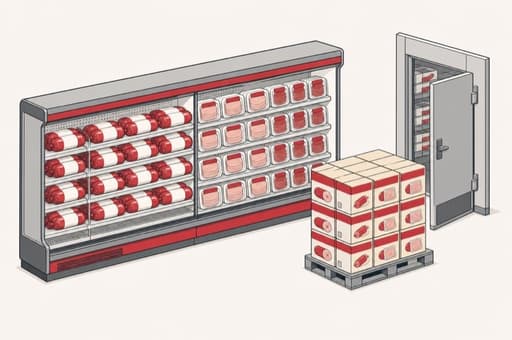
Prepared Foods
The steadiest earner: $9.9B of sales at a 9.2% margin last year, and its best-ever share of the shelves it competes on. It buys meat from Tyson's own plants; costly pork trim is the current drag.
Competes with Columbus and Applegate deli brands (Hormel) · Oscar Mayer hot dogs and lunch meat (Kraft Heinz) · Smoked dinner sausage (Johnsonville)
In plain English
Take meat the company already owns, cook it, season it, slice it, seal it in a printed pack, and sell it to grocers and restaurant suppliers. Breakfast sausage, hot dogs, lunch meat, corn dogs, snack trays.
This is the calm part of Tyson. Prices here are negotiated with retailers rather than quoted by a market every morning, so the margin is the highest and steadiest in the company. The catch is a delay: when pork trim gets expensive, the packaged price only follows months later, and last summer that gap cost about thirty million dollars of profit.
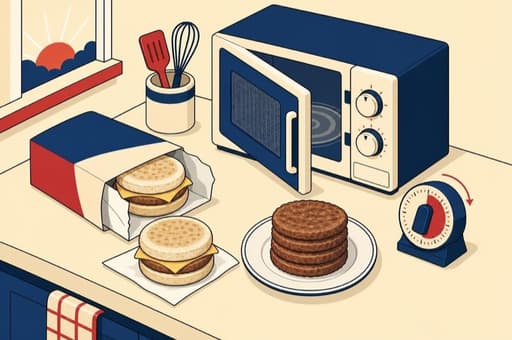
Jimmy Dean
Pre-cooked breakfast sausage, sandwiches and bowls — a top Tyson brand and the leader of the refrigerated breakfast shelf. Sales there grew 2.7% in the June 2026 quarter; a high-protein line arrived in early 2026.
Competes with Bob Evans Farms breakfast sausage (Post Holdings) · Oscar Mayer (Kraft Heinz)
In plain English
Breakfast meat that has already been cooked for you: sausage patties, links, sandwiches, bowls you heat for a couple of minutes. The whole pitch is a hot breakfast without a frying pan.
Grocers pay wholesale for the packs and shoppers pay up for the convenience — and, lately, for protein. Management credits the high-protein positioning and new American dietary guidelines for the pull, and built a line around protein content early this year. The core breakfast shelf is mature, so the brand grows by adding forms rather than by winning the aisle over again.
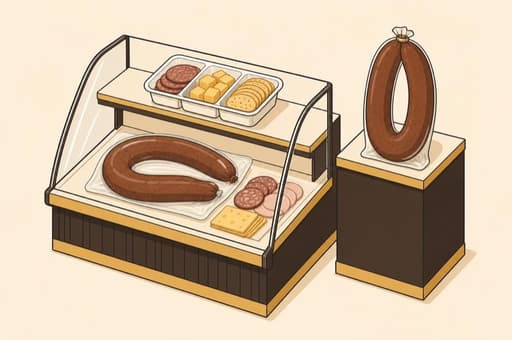
Hillshire Farm
Smoked sausage, lunch meat and ham, with snack trays as the growth edge — up 18.4% in the June 2026 quarter while smoked sausage added 3.4%. Johnsonville still outsells it in dinner sausage.
Competes with Dinner sausage (Johnsonville) · Eckrich smoked sausage (Smithfield Foods) · Columbus deli meats (Hormel)
In plain English
Smoked sausage in a curved rope, sliced lunch meat in a resealable tub, ham for sandwiches — the deli-case staples.
Two things are pulling on it at once. The core sets grow slowly and Johnsonville remains the bigger seller in dinner sausage, so the momentum is coming from the edges: trays of meat, cheese and crackers, which grew fast last quarter, and a premium deli line. Management has talked up this brand more with each recent quarter as those extensions pick up shelf space.
International/Other
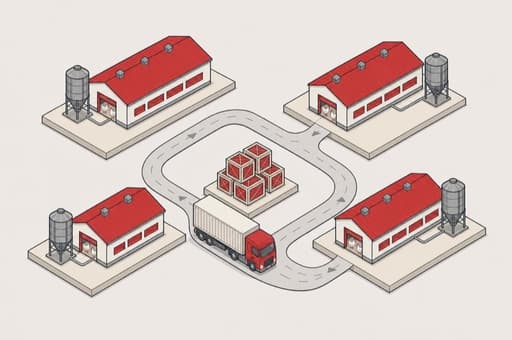
Chicken operations in six countries — $2.3B of sales and $137M of operating profit last year, nearly triple the year before. The smallest line, and the most improved of the five.
Competes with Integrated poultry (CP Foods) · Halal poultry exports (BRF (Marfrig)) · Local integrated poultry (Malaysian and Korean producers)
In plain English
Chicken operations abroad, run the way the American business is run: farms, feed, processing, then sales to local supermarkets and restaurant chains, with some product exported. Six countries — China, Malaysia, Mexico, South Korea, Thailand and Saudi Arabia — plus minority stakes in local producers.
Two years ago it barely made money. The company's stated reason for being there is simple: people in Asia and the Middle East are adding chicken to their diets faster than Americans are. It is also the least discussed part of Tyson on earnings calls, and the one with no country-by-country figures behind it.


 BeefThe largest business and the one bleeding: roughly $21.6B of sales last year against a $426M operating loss, with this year's loss now guided at $625–775M. Watch the cattle herd and the plant closures.
The largest business and the one bleeding: roughly $21.6B of sales last year against a $426M operating loss, with this year's loss now guided at $625–775M. Watch the cattle herd and the plant closures.
In plain English
Cattle get bought at whatever feedlots are charging that week, killed and cut into steaks, roasts and trim, then sold at whatever the beef market pays that week. Tyson sets neither price. What it keeps is the gap between the two, minus the cost of running the plant.
Right now the gap is upside down. There are unusually few cattle in the country — few breeding females have been kept back to rebuild the herd, and the closed Mexican border cut off several hundred thousand imported head — so feedlots can charge a lot and Tyson's cutting floors have less to work with. Hence the closures: fewer plants, fuller.
Competes with Beef processing (JBS USA) · Beef processing (Cargill Protein) · National Beef (Marfrig)
 Pork$5.8B of sales at a 2.9% margin last year — thin, but dependable. Its real job now is feeding the branded packaged business with pork it would otherwise sell by the pound. Hog supply is comfortable.
$5.8B of sales at a 2.9% margin last year — thin, but dependable. Its real job now is feeding the branded packaged business with pork it would otherwise sell by the pound. Hog supply is comfortable.
In plain English
Market hogs arrive, get broken down into chops, loins, bellies and trim, and leave through one of two doors: packs for the fresh meat case, or raw material for Tyson's own brands.
That second door is the point now. Pork that leaves as sausage or lunch meat lands in a part of Tyson earning about three times this segment's margin, so management keeps sending more of the hog inside the company. And hogs, unlike cattle, are in easy supply — which makes this the most predictable of the meat businesses, thin margin and all.
Competes with Fresh pork (Smithfield Foods) · Swift pork (JBS USA) · Hog production and pork processing (Seaboard Foods)
 ChickenUnder a third of sales but about two-thirds of the operating profit — $1,482M last year at an 8.8% margin, and seven straight quarters of rising volume. Feed grain cost and bird flu are the swing factors.
Under a third of sales but about two-thirds of the operating profit — $1,482M last year at an 8.8% margin, and seven straight quarters of rising volume. Feed grain cost and bird flu are the swing factors.
In plain English
Tyson owns the chicken business end to end — the breeding flocks, the hatcheries, the feed mills — and pays farmers to raise the birds in their own barns before taking them back for processing. Corn and soybean meal go in one side; fresh, frozen and breaded chicken comes out the other.
Because it holds the whole chain, it can promise a big grocer or restaurant chain set volumes several quarters ahead and then grow the flock to match. Management calls it a pull business: the order comes first, the birds follow. And shoppers are shifting toward chicken while beef prices set records.
Competes with Fresh and prepared chicken (Pilgrim's Pride) · Chicken products (Wayne-Sanderson Farms) · Branded no-antibiotics chicken (Perdue Farms)
 Tyson® brandThe consumer face of the chicken business: bags of breaded nuggets and strips, plus fresh chicken in the meat case. Retail value-added sales grew about 1% and fresh chicken about 3% in the June 2026 quarter.
The consumer face of the chicken business: bags of breaded nuggets and strips, plus fresh chicken in the meat case. Retail value-added sales grew about 1% and fresh chicken about 3% in the June 2026 quarter.
In plain English
The bag in the freezer with the nuggets in it, and the tray of fresh breasts in the meat case — same company, the name shoppers actually know.
Here is why the name earns its keep. A pound of plain chicken sells for whatever the market quotes that morning; a pound breaded, portioned and put in a printed bag sells at a price the shopper chooses to pay. The chicken business held better pricing this year even as industry chicken quotes fell. Management counts this as one of its three largest brands in American food.
Competes with Branded no-antibiotics chicken (Perdue Farms) · Fresh and prepared chicken (Pilgrim's Pride)
 Walmart supplier programOne retailer, Walmart, accounted for 18.7% of last year's sales — roughly ten billion dollars of fresh meat, branded packs and store-brand product. Tyson's main road to shoppers and its largest single dependency.
One retailer, Walmart, accounted for 18.7% of last year's sales — roughly ten billion dollars of fresh meat, branded packs and store-brand product. Tyson's main road to shoppers and its largest single dependency.
In plain English
Not a product — a relationship. Walmart's meat cases, its freezers and its store-brand orders, drawing on every part of Tyson at once.
The awkward part: Tyson competes with Walmart's own Great Value and Marketside labels and also makes product for them, so the same shelf carries Tyson's brands and the cheaper pack beside them. Shelves get re-planned in periodic reviews, and a line that loses its slot loses its volume. Tyson never says the name out loud on its earnings calls — it says strategic customers instead.
Competes with Chicken supply programs (Pilgrim's Pride) · Branded meat programs (Hormel) · Great Value and Marketside meat (Walmart)
 Prepared FoodsThe steadiest earner: $9.9B of sales at a 9.2% margin last year, and its best-ever share of the shelves it competes on. It buys meat from Tyson's own plants; costly pork trim is the current drag.
The steadiest earner: $9.9B of sales at a 9.2% margin last year, and its best-ever share of the shelves it competes on. It buys meat from Tyson's own plants; costly pork trim is the current drag.
In plain English
Take meat the company already owns, cook it, season it, slice it, seal it in a printed pack, and sell it to grocers and restaurant suppliers. Breakfast sausage, hot dogs, lunch meat, corn dogs, snack trays.
This is the calm part of Tyson. Prices here are negotiated with retailers rather than quoted by a market every morning, so the margin is the highest and steadiest in the company. The catch is a delay: when pork trim gets expensive, the packaged price only follows months later, and last summer that gap cost about thirty million dollars of profit.
Competes with Columbus and Applegate deli brands (Hormel) · Oscar Mayer hot dogs and lunch meat (Kraft Heinz) · Smoked dinner sausage (Johnsonville)
 Jimmy DeanPre-cooked breakfast sausage, sandwiches and bowls — a top Tyson brand and the leader of the refrigerated breakfast shelf. Sales there grew 2.7% in the June 2026 quarter; a high-protein line arrived in early 2026.
Pre-cooked breakfast sausage, sandwiches and bowls — a top Tyson brand and the leader of the refrigerated breakfast shelf. Sales there grew 2.7% in the June 2026 quarter; a high-protein line arrived in early 2026.
In plain English
Breakfast meat that has already been cooked for you: sausage patties, links, sandwiches, bowls you heat for a couple of minutes. The whole pitch is a hot breakfast without a frying pan.
Grocers pay wholesale for the packs and shoppers pay up for the convenience — and, lately, for protein. Management credits the high-protein positioning and new American dietary guidelines for the pull, and built a line around protein content early this year. The core breakfast shelf is mature, so the brand grows by adding forms rather than by winning the aisle over again.
Competes with Bob Evans Farms breakfast sausage (Post Holdings) · Oscar Mayer (Kraft Heinz)
 Hillshire FarmSmoked sausage, lunch meat and ham, with snack trays as the growth edge — up 18.4% in the June 2026 quarter while smoked sausage added 3.4%. Johnsonville still outsells it in dinner sausage.
Smoked sausage, lunch meat and ham, with snack trays as the growth edge — up 18.4% in the June 2026 quarter while smoked sausage added 3.4%. Johnsonville still outsells it in dinner sausage.
In plain English
Smoked sausage in a curved rope, sliced lunch meat in a resealable tub, ham for sandwiches — the deli-case staples.
Two things are pulling on it at once. The core sets grow slowly and Johnsonville remains the bigger seller in dinner sausage, so the momentum is coming from the edges: trays of meat, cheese and crackers, which grew fast last quarter, and a premium deli line. Management has talked up this brand more with each recent quarter as those extensions pick up shelf space.
Competes with Dinner sausage (Johnsonville) · Eckrich smoked sausage (Smithfield Foods) · Columbus deli meats (Hormel)
 International/OtherChicken operations in six countries — $2.3B of sales and $137M of operating profit last year, nearly triple the year before. The smallest line, and the most improved of the five.
Chicken operations in six countries — $2.3B of sales and $137M of operating profit last year, nearly triple the year before. The smallest line, and the most improved of the five.
In plain English
Chicken operations abroad, run the way the American business is run: farms, feed, processing, then sales to local supermarkets and restaurant chains, with some product exported. Six countries — China, Malaysia, Mexico, South Korea, Thailand and Saudi Arabia — plus minority stakes in local producers.
Two years ago it barely made money. The company's stated reason for being there is simple: people in Asia and the Middle East are adding chicken to their diets faster than Americans are. It is also the least discussed part of Tyson on earnings calls, and the one with no country-by-country figures behind it.
Competes with Integrated poultry (CP Foods) · Halal poultry exports (BRF (Marfrig)) · Local integrated poultry (Malaysian and Korean producers)
Named in filings, launches and programs
- Ball ParkBrandHot dogs and franks; one of the brands management says is winning shelf space with big retail accounts.
- Wright BrandBrandThick-cut bacon and smoked sausage; its smoked sausage grew about 3% alongside Hillshire Farm's last quarter.
- State FairBrandCorn dogs and frozen novelties — a small freezer-aisle line inside the packaged-foods business.
- AidellsBrandArtisan-style dinner sausage sold in the refrigerated case; sales grew 5.8% in the June 2026 quarter.
- Gallo SalameBrandArtisan deli salame, a small named line in the packaged-foods portfolio.
- Hillshire ReserveProduct line · RampingPremium lunch meat, launched alongside the Jimmy Dean high-protein platform as the brand stretches upmarket.
- IBP, Open Prairie and Star Ranch AngusBrandTrade names that put fresh beef and pork on retail labels, including natural and branded-Angus lines.
- Sara Lee Deli MeatsBrandA licensed deli meat line sold through the packaged-foods business.
- AdvancePierre sandwich brandsBrandPierre, Barber Foods, Big AZ, Fast Fixin', Landshire, Steak-EZE and Original Philly — sandwich lines sold to foodservice customers and convenience stores.
- Bruss Company and Lady AsterBrandCustom meat cutting and further processing done to a restaurant customer's own specification.
- Mexican Original and TortillaLandBrandTortilla and Mexican-food lines, plus regional meat and pizza names like BuenaMesa, Bryan and Russer, in the long tail.
- Tyson New VenturesBrandThe venture arm; its costs sit with the international business and it carries no revenue line of its own.
- Global McDonald's accountCustomer programA restaurant account big enough that Tyson named a group-president role after it; the size is not disclosed.
- Tanmiah poultry stakeBrandA minority stake in a Saudi producer's poultry subsidiaries, announced in 2022, sitting with the international business.
Ball ParkBrand
Hot dogs and franks; one of the brands management says is winning shelf space with big retail accounts.
Wright BrandBrand
Thick-cut bacon and smoked sausage; its smoked sausage grew about 3% alongside Hillshire Farm's last quarter.
State FairBrand
Corn dogs and frozen novelties — a small freezer-aisle line inside the packaged-foods business.
AidellsBrand
Artisan-style dinner sausage sold in the refrigerated case; sales grew 5.8% in the June 2026 quarter.
Gallo SalameBrand
Artisan deli salame, a small named line in the packaged-foods portfolio.
Hillshire ReserveProduct line · Ramping
Premium lunch meat, launched alongside the Jimmy Dean high-protein platform as the brand stretches upmarket.
IBP, Open Prairie and Star Ranch AngusBrand
Trade names that put fresh beef and pork on retail labels, including natural and branded-Angus lines.
Sara Lee Deli MeatsBrand
A licensed deli meat line sold through the packaged-foods business.
AdvancePierre sandwich brandsBrand
Pierre, Barber Foods, Big AZ, Fast Fixin', Landshire, Steak-EZE and Original Philly — sandwich lines sold to foodservice customers and convenience stores.
Bruss Company and Lady AsterBrand
Custom meat cutting and further processing done to a restaurant customer's own specification.
Mexican Original and TortillaLandBrand
Tortilla and Mexican-food lines, plus regional meat and pizza names like BuenaMesa, Bryan and Russer, in the long tail.
Tyson New VenturesBrand
The venture arm; its costs sit with the international business and it carries no revenue line of its own.
Global McDonald's accountCustomer program
A restaurant account big enough that Tyson named a group-president role after it; the size is not disclosed.
Tanmiah poultry stakeBrand
A minority stake in a Saudi producer's poultry subsidiaries, announced in 2022, sitting with the international business.