
Texas Instruments (TXN)
Makes broad-catalog analog and embedded chips for industrial and automotive systems.
Something off on this page? Send us feedback.
Texas Instruments is mostly a maker of small chips that manage electricity and translate real-world signals inside cars, factory equipment and electronics. Its smaller computing-chip business adds the brains and wireless links. Sales are recovering, while the payoff from years of factory building now depends on filling those factories with enough orders.
Item facts: FY2025 · year ended Dec 31, 2025, from filings, earnings calls and company pages.
Judgment weights, not filed revenue
The band summarizes business focus and direction. ~ marks estimates.
8 in detail · 8 more below
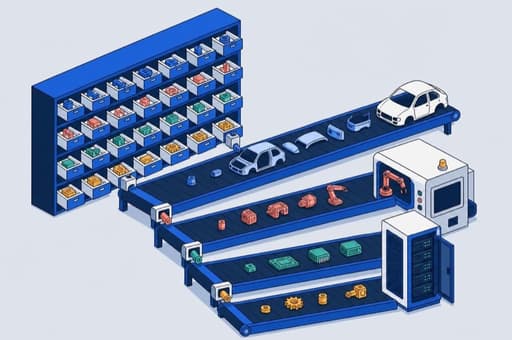
Analog
TI's main engine brought in $14.01 billion in FY2025. One unnamed customer supplied 12% of company sales, primarily here; the broader watch is whether recovering production brings enough volume to spread TI's heavy factory costs.
Competes with Power-management chips (Analog Devices) · Board and rack power converters (Monolithic Power Systems) · Signal amplifiers and data-acquisition chips (STMicroelectronics)
In plain English
Most of TI is this. Analog chips handle the continuous messiness of the physical world: changing voltages, temperatures, sound and motion. One group steers electricity safely; another turns sensor readings into information a machine can use.
Equipment makers pay for each chip that goes into a car, factory machine, server or device. Once engineers build a particular part into a product, it can keep selling for years. But that is repeat demand, not a subscription: revenue still rises and falls with customers' production and inventories.
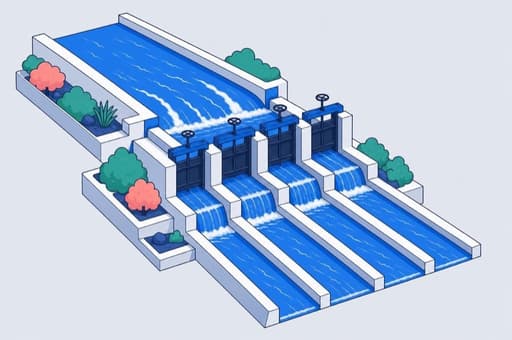
Power
The largest product line controls and converts electricity inside equipment. It benefits as more machines run on electricity and server racks demand more power; customer production and use of TI's new factories determine whether that demand becomes attractive sales.
Competes with Board and rack power converters (Monolithic Power Systems) · Power-management chips (Analog Devices)
In plain English
Electricity rarely arrives in exactly the form a machine needs. TI's power chips act like a set of valves: they raise or lower voltage, direct current, charge batteries and keep one electrical section safely apart from another.
Car, factory-equipment and server makers buy these parts one by one for every system they produce. A successful design can run for years, and a single system may need many power chips. TI makes most of its chips itself, so higher volumes also help cover the fixed cost of its factories.
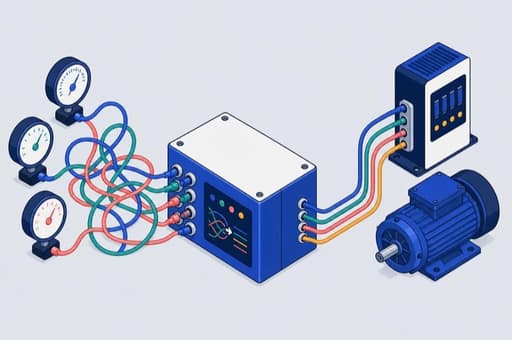
Signal Chain
These chips measure, clean up and pass along signals from the physical world. Demand follows factory and vehicle production, where a single design may place several TI parts beside the sensors and controls.
Competes with Data converters, amplifiers and interfaces (Analog Devices) · Signal amplifiers and data-acquisition chips (STMicroelectronics)
In plain English
A machine cannot use a faint temperature reading or a noisy motor signal as-is. Signal Chain chips strengthen, measure, translate and pass those readings so the rest of the machine knows what happened and what to do next.
TI earns money each time equipment makers build those parts into factory controls, vehicles, instruments or electronics. Reference designs and engineering help can place several chips in one system. The design may remain for a long production run, but sales arrive only when the customer's finished equipment ships.
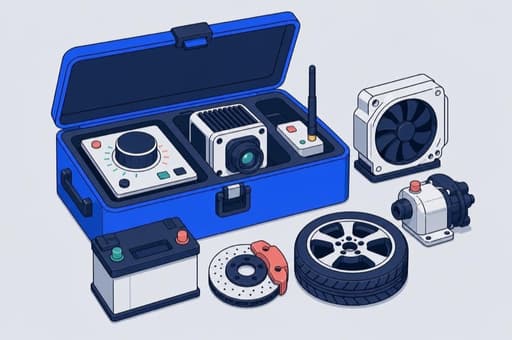
Embedded Processing
TI's smaller computing side produced $2.70 billion in FY2025. It is growing again, but its factories are less profitable while new production capacity is still being filled.
Competes with STM32 microcontrollers (STMicroelectronics) · S32 vehicle processors (NXP Semiconductors) · RZ/V2H vision processors (Renesas Electronics) · nRF54 wireless controllers (Nordic Semiconductor)
In plain English
This is the smaller computing side of TI. Its chips give machines a local brain: they read inputs, run stored instructions, control equipment, process richer streams from cameras or radar, and sometimes connect without wires.
Manufacturers pay for every chip installed in an appliance, vehicle or industrial system. The customer's software is written and tested around the chosen part, which makes changing suppliers costly and can keep orders coming through later versions of a product. Long testing cycles delay the payoff, and production volume still controls the final bill.
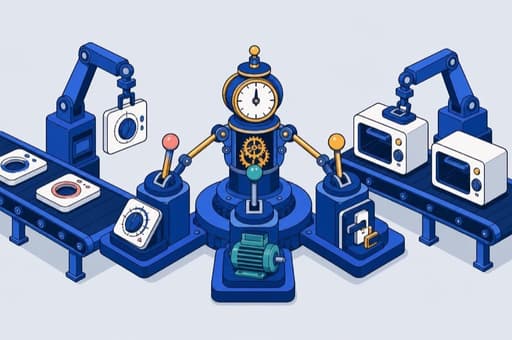
Microcontrollers
Small, simple computers run one focused control job in appliances, vehicles and industrial equipment. Reusable customer software helps designs stick; lengthy testing must finish before those designs turn into production orders.
Competes with STM32 microcontrollers (STMicroelectronics) · S32K vehicle microcontrollers (NXP Semiconductors)
In plain English
Think of a microcontroller as the tiny rule-following brain inside a machine. It can read a button or sensor, make a quick decision and tell a motor, light or safety system what to do, over and over.
TI sells one for every finished product a customer builds. Engineers write and test their own instructions around the chosen chip, so replacing it later means costly extra work. That helps a winning design last across related products, although qualification can take a long time before meaningful shipments begin.
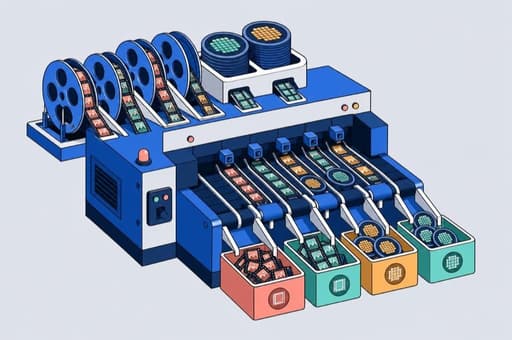
Processors
These are the heavier local brains for radar, driver assistance, machine vision, audio and vehicle networking. Richer software and safety checks deepen customer commitment, but they also stretch the wait before volume production.
Competes with S32R and S32G vehicle processors (NXP Semiconductors) · RZ/V2H industrial vision processor (Renesas Electronics)
In plain English
Some machines need to digest far more information than a simple controller can handle. TI's processors combine streams from cameras, radar and other sensors, then run the calculations for vehicle assistance, factory vision, audio or networking.
The sale is still a physical chip in every machine, but the path is longer. Customers must build software around it, connect memory and other parts, and often prove the whole system is safe. That work can make the selection durable; it also means a promising design may take years to become a large order.
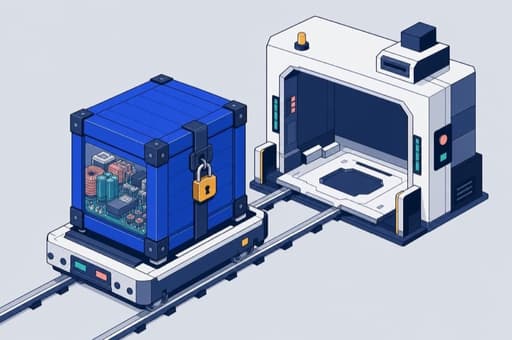
Silicon Labs
TI has agreed to buy this wireless-chip specialist for $7.5 billion in cash. The opportunity begins only after approval and closing; keeping customer designs and moving production into TI's factories are the real tests.
Competes with nRF54 chips supporting several wireless standards (Nordic Semiconductor) · IW612 chip supporting several wireless standards (NXP Semiconductors)
In plain English
This card is about a business TI has agreed to buy, not one it owns today. Silicon Labs supplies wireless chips that let appliances and industrial devices talk over common short-range connections. It brings more than a thousand products and thousands of customers, without one buyer dominating sales.
After the deal closes, TI expects to sell those chips alongside its controllers and gradually make them in its own factories instead of paying outside manufacturers. Money comes from each chip shipped; the hoped-for savings depend on approvals, customers staying, and a careful production transfer.
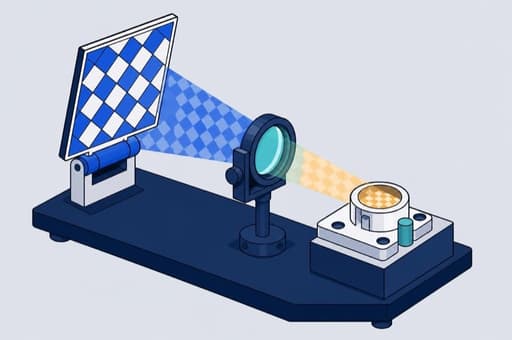
DLP products
Tiny movable mirrors form images or patterns for projectors, vehicle lighting, three-dimensional printing and machine vision. Projection demand has been weak, so growth depends on the newer automotive and industrial uses carrying more weight.
Competes with 3LCD projection engines (Seiko Epson) · D-ILA projection engines (JVC)
In plain English
Here, the chip is a field of microscopic mirrors. Each mirror tilts to direct light, and together they create a projected picture or a precise pattern for printing, inspection and vehicle lighting.
TI sells the mirror chip and its companion parts to companies that add a light source, lenses and packaging, then build the finished optical system. Every projector, printer or lighting unit shipped can pull through another set of chips. Traditional projection is soft, making the spread into automotive and industrial equipment important.


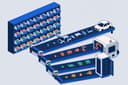 AnalogTI's main engine brought in $14.01 billion in FY2025. One unnamed customer supplied 12% of company sales, primarily here; the broader watch is whether recovering production brings enough volume to spread TI's heavy factory costs.
TI's main engine brought in $14.01 billion in FY2025. One unnamed customer supplied 12% of company sales, primarily here; the broader watch is whether recovering production brings enough volume to spread TI's heavy factory costs.
In plain English
Most of TI is this. Analog chips handle the continuous messiness of the physical world: changing voltages, temperatures, sound and motion. One group steers electricity safely; another turns sensor readings into information a machine can use.
Equipment makers pay for each chip that goes into a car, factory machine, server or device. Once engineers build a particular part into a product, it can keep selling for years. But that is repeat demand, not a subscription: revenue still rises and falls with customers' production and inventories.
Competes with Power-management chips (Analog Devices) · Board and rack power converters (Monolithic Power Systems) · Signal amplifiers and data-acquisition chips (STMicroelectronics)
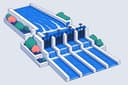 PowerThe largest product line controls and converts electricity inside equipment. It benefits as more machines run on electricity and server racks demand more power; customer production and use of TI's new factories determine whether that demand becomes attractive sales.
The largest product line controls and converts electricity inside equipment. It benefits as more machines run on electricity and server racks demand more power; customer production and use of TI's new factories determine whether that demand becomes attractive sales.
In plain English
Electricity rarely arrives in exactly the form a machine needs. TI's power chips act like a set of valves: they raise or lower voltage, direct current, charge batteries and keep one electrical section safely apart from another.
Car, factory-equipment and server makers buy these parts one by one for every system they produce. A successful design can run for years, and a single system may need many power chips. TI makes most of its chips itself, so higher volumes also help cover the fixed cost of its factories.
Competes with Board and rack power converters (Monolithic Power Systems) · Power-management chips (Analog Devices)
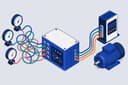 Signal ChainThese chips measure, clean up and pass along signals from the physical world. Demand follows factory and vehicle production, where a single design may place several TI parts beside the sensors and controls.
These chips measure, clean up and pass along signals from the physical world. Demand follows factory and vehicle production, where a single design may place several TI parts beside the sensors and controls.
In plain English
A machine cannot use a faint temperature reading or a noisy motor signal as-is. Signal Chain chips strengthen, measure, translate and pass those readings so the rest of the machine knows what happened and what to do next.
TI earns money each time equipment makers build those parts into factory controls, vehicles, instruments or electronics. Reference designs and engineering help can place several chips in one system. The design may remain for a long production run, but sales arrive only when the customer's finished equipment ships.
Competes with Data converters, amplifiers and interfaces (Analog Devices) · Signal amplifiers and data-acquisition chips (STMicroelectronics)
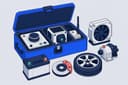 Embedded ProcessingTI's smaller computing side produced $2.70 billion in FY2025. It is growing again, but its factories are less profitable while new production capacity is still being filled.
TI's smaller computing side produced $2.70 billion in FY2025. It is growing again, but its factories are less profitable while new production capacity is still being filled.
In plain English
This is the smaller computing side of TI. Its chips give machines a local brain: they read inputs, run stored instructions, control equipment, process richer streams from cameras or radar, and sometimes connect without wires.
Manufacturers pay for every chip installed in an appliance, vehicle or industrial system. The customer's software is written and tested around the chosen part, which makes changing suppliers costly and can keep orders coming through later versions of a product. Long testing cycles delay the payoff, and production volume still controls the final bill.
Competes with STM32 microcontrollers (STMicroelectronics) · S32 vehicle processors (NXP Semiconductors) · RZ/V2H vision processors (Renesas Electronics) · nRF54 wireless controllers (Nordic Semiconductor)
 MicrocontrollersSmall, simple computers run one focused control job in appliances, vehicles and industrial equipment. Reusable customer software helps designs stick; lengthy testing must finish before those designs turn into production orders.
Small, simple computers run one focused control job in appliances, vehicles and industrial equipment. Reusable customer software helps designs stick; lengthy testing must finish before those designs turn into production orders.
In plain English
Think of a microcontroller as the tiny rule-following brain inside a machine. It can read a button or sensor, make a quick decision and tell a motor, light or safety system what to do, over and over.
TI sells one for every finished product a customer builds. Engineers write and test their own instructions around the chosen chip, so replacing it later means costly extra work. That helps a winning design last across related products, although qualification can take a long time before meaningful shipments begin.
Competes with STM32 microcontrollers (STMicroelectronics) · S32K vehicle microcontrollers (NXP Semiconductors)
 ProcessorsThese are the heavier local brains for radar, driver assistance, machine vision, audio and vehicle networking. Richer software and safety checks deepen customer commitment, but they also stretch the wait before volume production.
These are the heavier local brains for radar, driver assistance, machine vision, audio and vehicle networking. Richer software and safety checks deepen customer commitment, but they also stretch the wait before volume production.
In plain English
Some machines need to digest far more information than a simple controller can handle. TI's processors combine streams from cameras, radar and other sensors, then run the calculations for vehicle assistance, factory vision, audio or networking.
The sale is still a physical chip in every machine, but the path is longer. Customers must build software around it, connect memory and other parts, and often prove the whole system is safe. That work can make the selection durable; it also means a promising design may take years to become a large order.
Competes with S32R and S32G vehicle processors (NXP Semiconductors) · RZ/V2H industrial vision processor (Renesas Electronics)
 Silicon LabsTI has agreed to buy this wireless-chip specialist for $7.5 billion in cash. The opportunity begins only after approval and closing; keeping customer designs and moving production into TI's factories are the real tests.
TI has agreed to buy this wireless-chip specialist for $7.5 billion in cash. The opportunity begins only after approval and closing; keeping customer designs and moving production into TI's factories are the real tests.
In plain English
This card is about a business TI has agreed to buy, not one it owns today. Silicon Labs supplies wireless chips that let appliances and industrial devices talk over common short-range connections. It brings more than a thousand products and thousands of customers, without one buyer dominating sales.
After the deal closes, TI expects to sell those chips alongside its controllers and gradually make them in its own factories instead of paying outside manufacturers. Money comes from each chip shipped; the hoped-for savings depend on approvals, customers staying, and a careful production transfer.
Competes with nRF54 chips supporting several wireless standards (Nordic Semiconductor) · IW612 chip supporting several wireless standards (NXP Semiconductors)
 DLP productsTiny movable mirrors form images or patterns for projectors, vehicle lighting, three-dimensional printing and machine vision. Projection demand has been weak, so growth depends on the newer automotive and industrial uses carrying more weight.
Tiny movable mirrors form images or patterns for projectors, vehicle lighting, three-dimensional printing and machine vision. Projection demand has been weak, so growth depends on the newer automotive and industrial uses carrying more weight.
In plain English
Here, the chip is a field of microscopic mirrors. Each mirror tilts to direct light, and together they create a projected picture or a precise pattern for printing, inspection and vehicle lighting.
TI sells the mirror chip and its companion parts to companies that add a light source, lenses and packaging, then build the finished optical system. Every projector, printer or lighting unit shipped can pull through another set of chips. Traditional projection is soft, making the spread into automotive and industrial equipment important.
Competes with 3LCD projection engines (Seiko Epson) · D-ILA projection engines (JVC)
Named in filings, launches and programs
- Wireless connectivityProduct lineRoughly one-eighth of Embedded: chips linking appliances and industrial sensors over common short-range wireless standards.
- 800-VDC power architecture with NVIDIACustomer programA very-high-voltage power and sensing collaboration for huge AI server racks; it carries no disclosed purchase commitment.
- Apple American Manufacturing ProgramCustomer program · AnnouncedApple says its U.S. commitment supports TI factory equipment and foundational chips, but assigns TI no contract value.
- GE Appliances connected-appliance programCustomer program · AnnouncedGE Appliances named TI control, wireless and analog chips for expanded U.S. production expected in 2027; no revenue was disclosed.
- 300-mm manufacturing networkEcosystem · RampingA more than $60 billion long-term U.S. factory plan uses larger silicon discs to cut chip cost; payoff depends on filling the lines.
- TI.com and direct sales channelPlatformWebsite sales, fulfillment, inventory programs and field teams carried more than 80% of FY2025 revenue directly to customers.
- Education Technology calculatorsProduct lineGraphing and scientific calculators contribute about 1% of revenue inside the specialty-products lane.
- Custom ASICsProduct lineChips designed for individual customers remain active but de-emphasized after weaker expected cash generation.
Wireless connectivityProduct line
Roughly one-eighth of Embedded: chips linking appliances and industrial sensors over common short-range wireless standards.
800-VDC power architecture with NVIDIACustomer program
A very-high-voltage power and sensing collaboration for huge AI server racks; it carries no disclosed purchase commitment.
Apple American Manufacturing ProgramCustomer program · Announced
Apple says its U.S. commitment supports TI factory equipment and foundational chips, but assigns TI no contract value.
GE Appliances connected-appliance programCustomer program · Announced
GE Appliances named TI control, wireless and analog chips for expanded U.S. production expected in 2027; no revenue was disclosed.
300-mm manufacturing networkEcosystem · Ramping
A more than $60 billion long-term U.S. factory plan uses larger silicon discs to cut chip cost; payoff depends on filling the lines.
TI.com and direct sales channelPlatform
Website sales, fulfillment, inventory programs and field teams carried more than 80% of FY2025 revenue directly to customers.
Education Technology calculatorsProduct line
Graphing and scientific calculators contribute about 1% of revenue inside the specialty-products lane.
Custom ASICsProduct line
Chips designed for individual customers remain active but de-emphasized after weaker expected cash generation.