
Verizon (VZ)
Connects consumers and businesses through wireless, fiber, and fixed wireless broadband.
Something off on this page? Send us feedback.
Verizon is chiefly a monthly wireless-service business: phone connections pay the bills, while device sales help win and keep those customers. It is becoming more of a fiber company, using the cash from mobile plans to expand home internet and build private routes between buildings packed with computers. The old business-network arm is shrinking, so the transition depends on new fiber uses outrunning that decline.
Item facts: FY2025 · year ended Dec 31, 2025, from filings, earnings calls and company pages.
Judgment weights, not filed revenue
The band summarizes business focus and direction. ~ marks estimates.
8 in detail · 12 more below
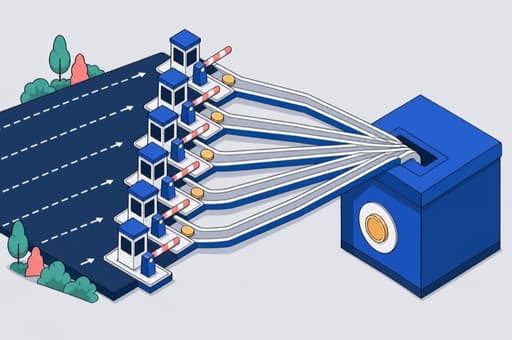
Postpaid Wireless Service
Monthly service for phones, watches and other connected equipment is the core cash engine, at roughly half of sales. With the U.S. market crowded, price, extras and keeping customers matter more than finding first-time users.
Competes with Value 2.0, Extra 2.0 and Premium 2.0 (AT&T) · Experience More 2.0 and Beyond 2.0 (T-Mobile US)
In plain English
This is the familiar Verizon bill that arrives every month for phones, watches and other connected devices. Think of the network as a toll road already built across the country: each additional paying connection uses the same road, so a large base of steady users makes the economics work.
Households pay for several lines at once, while businesses pay for employee phones, vehicle connections and other equipment. Verizon can charge more by adding useful extras, but the market is crowded. Keeping people from switching is crucial because every lost line stops a long stream of monthly payments.
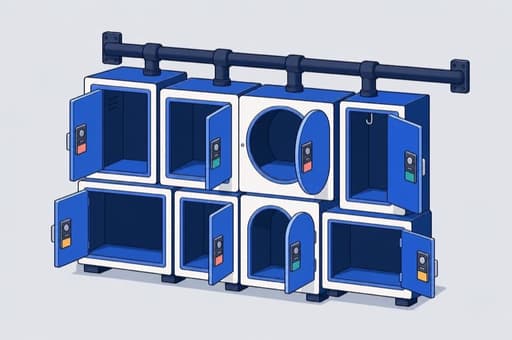
Verizon Value
A family of pay-before-you-use brands reaches customers who want predictable bills or fewer commitments. By Q2 2026, revenue was growing about 5% year over year across roughly nineteen million lines, though customers can switch easily.
Competes with $40 Unlimited 5G (Metro by T-Mobile) · Select Unlimited (Cricket Wireless)
In plain English
Not every customer wants a credit check or a large monthly contract. Verizon Value gathers several pay-in-advance brands, including Total Wireless, Straight Talk, Visible and Tracfone, under one roof while giving each a different storefront and price point.
Customers load money before service begins, much like topping up a transit card. That brings Verizon cash early and fills more of the same wireless network used by its main plans. Separate online, store and government-supported brands widen the audience, but the trade-off is weaker loyalty: a customer can leave when the paid month ends.
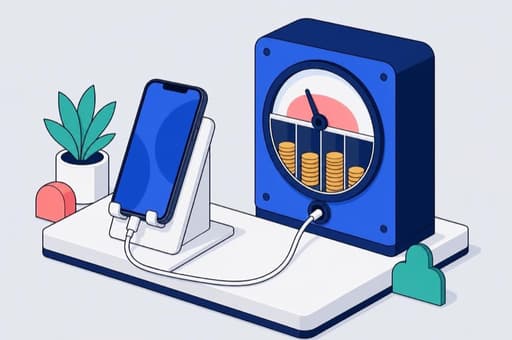
Wireless Equipment
Phones, tablets, watches and home-internet boxes brought in $25.47B in FY2025, yet the equipment cost Verizon more than it collected. Its real job is winning and keeping service customers.
Competes with Smartphone installment and bill-credit offers (AT&T) · Equipment Installment Plan (T-Mobile US)
In plain English
A phone sale looks like ordinary retail, but for Verizon it is closer to handing out the key that starts a long subscription. Customers buy devices outright or spread payments over time, often receiving monthly discounts only while they keep their service.
That is why a large sales line is not automatically a rich one. The devices themselves cost Verizon more than their selling price in FY2025. Promotions can bring in new lines or prevent departures, but they also consume cash; in the second quarter of 2026, Verizon deliberately accepted fewer upgrades to reduce those costs.
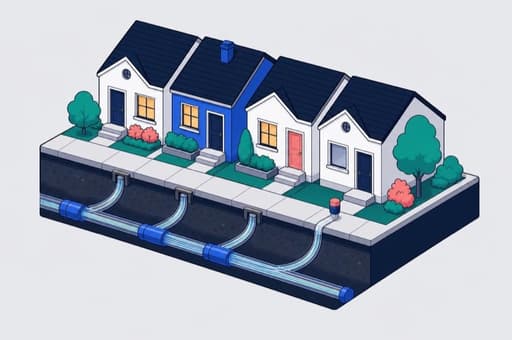
Fios and Frontier Fiber
Fios brought in $12.92B in FY2025. Frontier, bought after year-end, widens the build, but value depends on how many homes passed by new fiber actually become paying connections.
Competes with AT&T Fiber (AT&T) · Core 1 Gig (GFiber)
In plain English
Fiber is a glass thread buried or strung to a home so internet data can travel quickly and reliably. Fios was Verizon's existing service; buying Frontier in January 2026 added more territory and many older copper lines that can be replaced with fiber.
The economics resemble laying a water main down a street. Construction is expensive up front, but every household that signs up adds a recurring monthly fee to the same pipe. By June 2026 Verizon had roughly eleven million fiber connections, and new connections were arriving much faster than a year earlier. Permits, build costs and slow customer take-up can still spoil the return.
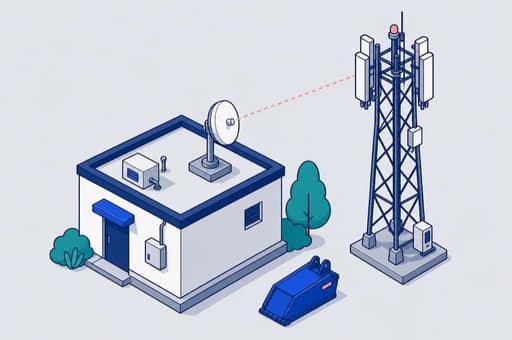
Fixed Wireless Access
By June 2026, home and business internet delivered from nearby cell towers had reached roughly six million connections without street-by-street fiber work. Quarterly additions fell 31% year over year, signaling a maturing climb.
Competes with Rely, Amplified and All-In (T-Mobile US) · Internet Air (AT&T)
In plain English
Here, the last stretch to a home travels through the air instead of through a new cable in the ground. A small box indoors receives internet service from Verizon's nearby mobile equipment, so the company can reach buildings without digging up each street.
Households and businesses pay a monthly broadband bill, and Verizon earns more from radio equipment it already operates. The catch is physical capacity: phones and home-internet boxes share the same local network. If a neighborhood gets crowded, adding broadband customers can hurt everyone's service. Growth therefore depends on finding places with both demand and enough spare room on nearby cells.
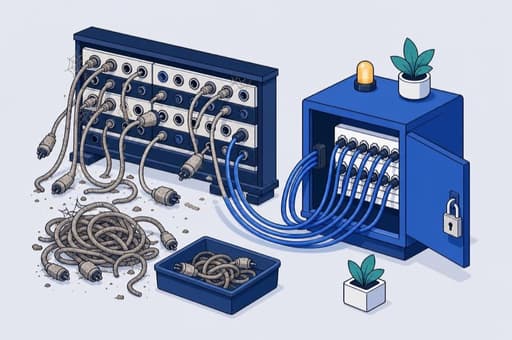
Business Connectivity and Managed Network Services
Internet links, security and help running company networks sit beside fading voice and older private network lines. The newer work must outrun those shrinking old bills while custom delivery keeps costs high.
Competes with Private Connectivity Fabric (Lumen) · Managed Network Services (NTT DATA)
In plain English
The unglamorous wiring behind a large organization is the point here. Verizon connects offices, government sites and other carriers, protects those links, and can run the network day to day for the customer. A project may combine a recurring connection fee with one-time setup work.
Customers keep paying because moving a web of critical sites is disruptive, but that stickiness cuts both ways. Older phone and private data lines are steadily disappearing. Verizon has to move customers onto modern internet links and security services fast enough to replace the shrinking old bills, while still delivering custom work without letting costs swallow the revenue.
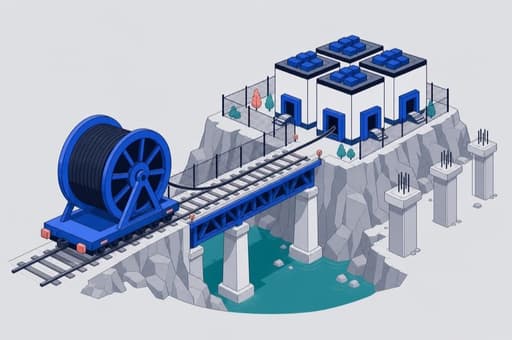
Verizon AI Connect
Private fiber routes for heavy artificial-intelligence traffic have signed Google as the first named customer. Sales are due to begin in FY2027; construction, permits and customers' spending on computer-filled buildings decide the pace.
Competes with Private Connectivity Fabric (Lumen) · Dark Fiber (Zayo)
In plain English
Artificial-intelligence computers in separate buildings need to swap enormous amounts of data. AI Connect sells the dedicated routes between them: glass threads not yet carrying data that a customer controls, reserved portions of cable capacity, links into computer-filled buildings, nearby sites and protection for the traffic.
It works like leasing a private freight track instead of sending every crate on public roads. Google has signed a multiyear agreement, and Verizon says other unnamed agreements should also be large. The money does not begin arriving until 2027, after routes are built and handed over, so delays in permits, construction, power or customer spending push the payoff out.
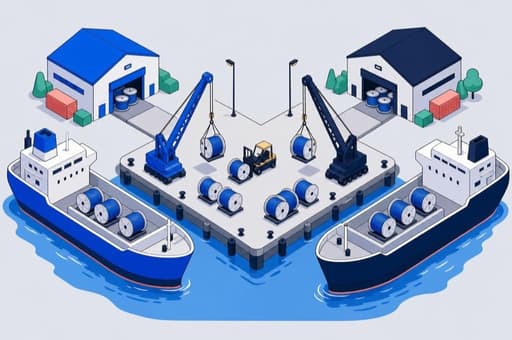
BT Group–Verizon International Joint Venture
Verizon and BT plan to combine their overseas business-network operations into a half-owned company serving multinational customers. Expected to close in late 2027, it separates existing work rather than creating fresh sales.
Competes with Evolution Platform (Orange Business) · Global Network Services (NTT DATA)
In plain English
Two existing international network businesses are being put into one jointly owned company. Verizon and BT, a British phone and network company, would each own half. Together the operations connect and watch over far-flung company sites for thousands of customers across scores of countries.
Picture two shipping lines pooling their overseas docks while keeping their home ports separate. Companies operating in many countries pay one provider to link their offices and keep those links working. Verizon will contribute operations and pay BT as part of the deal, but approvals and the difficult job of separating assets come first. Until the expected late-2027 closing, it is not a new Verizon revenue stream.


 Postpaid Wireless ServiceMonthly service for phones, watches and other connected equipment is the core cash engine, at roughly half of sales. With the U.S. market crowded, price, extras and keeping customers matter more than finding first-time users.
Monthly service for phones, watches and other connected equipment is the core cash engine, at roughly half of sales. With the U.S. market crowded, price, extras and keeping customers matter more than finding first-time users.
In plain English
This is the familiar Verizon bill that arrives every month for phones, watches and other connected devices. Think of the network as a toll road already built across the country: each additional paying connection uses the same road, so a large base of steady users makes the economics work.
Households pay for several lines at once, while businesses pay for employee phones, vehicle connections and other equipment. Verizon can charge more by adding useful extras, but the market is crowded. Keeping people from switching is crucial because every lost line stops a long stream of monthly payments.
Competes with Value 2.0, Extra 2.0 and Premium 2.0 (AT&T) · Experience More 2.0 and Beyond 2.0 (T-Mobile US)
 Verizon ValueA family of pay-before-you-use brands reaches customers who want predictable bills or fewer commitments. By Q2 2026, revenue was growing about 5% year over year across roughly nineteen million lines, though customers can switch easily.
A family of pay-before-you-use brands reaches customers who want predictable bills or fewer commitments. By Q2 2026, revenue was growing about 5% year over year across roughly nineteen million lines, though customers can switch easily.
In plain English
Not every customer wants a credit check or a large monthly contract. Verizon Value gathers several pay-in-advance brands, including Total Wireless, Straight Talk, Visible and Tracfone, under one roof while giving each a different storefront and price point.
Customers load money before service begins, much like topping up a transit card. That brings Verizon cash early and fills more of the same wireless network used by its main plans. Separate online, store and government-supported brands widen the audience, but the trade-off is weaker loyalty: a customer can leave when the paid month ends.
Competes with $40 Unlimited 5G (Metro by T-Mobile) · Select Unlimited (Cricket Wireless)
 Wireless EquipmentPhones, tablets, watches and home-internet boxes brought in $25.47B in FY2025, yet the equipment cost Verizon more than it collected. Its real job is winning and keeping service customers.
Phones, tablets, watches and home-internet boxes brought in $25.47B in FY2025, yet the equipment cost Verizon more than it collected. Its real job is winning and keeping service customers.
In plain English
A phone sale looks like ordinary retail, but for Verizon it is closer to handing out the key that starts a long subscription. Customers buy devices outright or spread payments over time, often receiving monthly discounts only while they keep their service.
That is why a large sales line is not automatically a rich one. The devices themselves cost Verizon more than their selling price in FY2025. Promotions can bring in new lines or prevent departures, but they also consume cash; in the second quarter of 2026, Verizon deliberately accepted fewer upgrades to reduce those costs.
Competes with Smartphone installment and bill-credit offers (AT&T) · Equipment Installment Plan (T-Mobile US)
 Fios and Frontier FiberFios brought in $12.92B in FY2025. Frontier, bought after year-end, widens the build, but value depends on how many homes passed by new fiber actually become paying connections.
Fios brought in $12.92B in FY2025. Frontier, bought after year-end, widens the build, but value depends on how many homes passed by new fiber actually become paying connections.
In plain English
Fiber is a glass thread buried or strung to a home so internet data can travel quickly and reliably. Fios was Verizon's existing service; buying Frontier in January 2026 added more territory and many older copper lines that can be replaced with fiber.
The economics resemble laying a water main down a street. Construction is expensive up front, but every household that signs up adds a recurring monthly fee to the same pipe. By June 2026 Verizon had roughly eleven million fiber connections, and new connections were arriving much faster than a year earlier. Permits, build costs and slow customer take-up can still spoil the return.
Competes with AT&T Fiber (AT&T) · Core 1 Gig (GFiber)
 Fixed Wireless AccessBy June 2026, home and business internet delivered from nearby cell towers had reached roughly six million connections without street-by-street fiber work. Quarterly additions fell 31% year over year, signaling a maturing climb.
By June 2026, home and business internet delivered from nearby cell towers had reached roughly six million connections without street-by-street fiber work. Quarterly additions fell 31% year over year, signaling a maturing climb.
In plain English
Here, the last stretch to a home travels through the air instead of through a new cable in the ground. A small box indoors receives internet service from Verizon's nearby mobile equipment, so the company can reach buildings without digging up each street.
Households and businesses pay a monthly broadband bill, and Verizon earns more from radio equipment it already operates. The catch is physical capacity: phones and home-internet boxes share the same local network. If a neighborhood gets crowded, adding broadband customers can hurt everyone's service. Growth therefore depends on finding places with both demand and enough spare room on nearby cells.
Competes with Rely, Amplified and All-In (T-Mobile US) · Internet Air (AT&T)
 Business Connectivity and Managed Network ServicesInternet links, security and help running company networks sit beside fading voice and older private network lines. The newer work must outrun those shrinking old bills while custom delivery keeps costs high.
Internet links, security and help running company networks sit beside fading voice and older private network lines. The newer work must outrun those shrinking old bills while custom delivery keeps costs high.
In plain English
The unglamorous wiring behind a large organization is the point here. Verizon connects offices, government sites and other carriers, protects those links, and can run the network day to day for the customer. A project may combine a recurring connection fee with one-time setup work.
Customers keep paying because moving a web of critical sites is disruptive, but that stickiness cuts both ways. Older phone and private data lines are steadily disappearing. Verizon has to move customers onto modern internet links and security services fast enough to replace the shrinking old bills, while still delivering custom work without letting costs swallow the revenue.
Competes with Private Connectivity Fabric (Lumen) · Managed Network Services (NTT DATA)
 Verizon AI ConnectPrivate fiber routes for heavy artificial-intelligence traffic have signed Google as the first named customer. Sales are due to begin in FY2027; construction, permits and customers' spending on computer-filled buildings decide the pace.
Private fiber routes for heavy artificial-intelligence traffic have signed Google as the first named customer. Sales are due to begin in FY2027; construction, permits and customers' spending on computer-filled buildings decide the pace.
In plain English
Artificial-intelligence computers in separate buildings need to swap enormous amounts of data. AI Connect sells the dedicated routes between them: glass threads not yet carrying data that a customer controls, reserved portions of cable capacity, links into computer-filled buildings, nearby sites and protection for the traffic.
It works like leasing a private freight track instead of sending every crate on public roads. Google has signed a multiyear agreement, and Verizon says other unnamed agreements should also be large. The money does not begin arriving until 2027, after routes are built and handed over, so delays in permits, construction, power or customer spending push the payoff out.
Competes with Private Connectivity Fabric (Lumen) · Dark Fiber (Zayo)
 BT Group–Verizon International Joint VentureVerizon and BT plan to combine their overseas business-network operations into a half-owned company serving multinational customers. Expected to close in late 2027, it separates existing work rather than creating fresh sales.
Verizon and BT plan to combine their overseas business-network operations into a half-owned company serving multinational customers. Expected to close in late 2027, it separates existing work rather than creating fresh sales.
In plain English
Two existing international network businesses are being put into one jointly owned company. Verizon and BT, a British phone and network company, would each own half. Together the operations connect and watch over far-flung company sites for thousands of customers across scores of countries.
Picture two shipping lines pooling their overseas docks while keeping their home ports separate. Companies operating in many countries pay one provider to link their offices and keep those links working. Verizon will contribute operations and pay BT as part of the deal, but approvals and the difficult job of separating assets come first. Until the expected late-2027 closing, it is not a new Verizon revenue stream.
Competes with Evolution Platform (Orange Business) · Global Network Services (NTT DATA)
Named in filings, launches and programs
- myPlanServiceA build-your-own mobile plan that lets customers add optional extras on top of the core monthly service.
- myHomeServiceA build-your-own package for home services layered over fiber and wireless internet.
- Verizon SimplicityServiceA $45 wireless offer launched in June 2026 that separates the service price from phone discounts.
- Verizon OneServiceA $70 mobile-and-home-internet package launched in June 2026 with both services on one bill.
- Verizon LoyaltyCustomer programA rewards program for all customers, offering Verizon Dollars, a merchandise catalog and waived setup or upgrade fees.
- ThingSpacePlatformA portal and software links that let businesses activate and monitor connected machines on Verizon's network.
- Private 5G NetworkProduct lineDedicated cellular networks for business sites, paired with nearby computing options.
- StarryBrandAn apartment-building wireless-internet operator bought in January 2026 to broaden home-internet delivery.
- Device protection and insuranceServiceRecurring coverage for customer devices, paid alongside wireless service.
- Comcast–Charter wholesale agreementCustomer programA renewed long-term deal letting Comcast and Charter sell mobile service that rides Verizon's network.
- Eaton Fiber build programCustomer program · RampingBain Capital's $1.5 billion commitment finances fiber construction for Verizon, adding another route to expand the network.
- Satellite messagingService · RampingMessaging sent directly between phones and satellites when ordinary ground coverage is unavailable, included in newer consumer offers.
myPlanService
A build-your-own mobile plan that lets customers add optional extras on top of the core monthly service.
myHomeService
A build-your-own package for home services layered over fiber and wireless internet.
Verizon SimplicityService
A $45 wireless offer launched in June 2026 that separates the service price from phone discounts.
Verizon OneService
A $70 mobile-and-home-internet package launched in June 2026 with both services on one bill.
Verizon LoyaltyCustomer program
A rewards program for all customers, offering Verizon Dollars, a merchandise catalog and waived setup or upgrade fees.
ThingSpacePlatform
A portal and software links that let businesses activate and monitor connected machines on Verizon's network.
Private 5G NetworkProduct line
Dedicated cellular networks for business sites, paired with nearby computing options.
StarryBrand
An apartment-building wireless-internet operator bought in January 2026 to broaden home-internet delivery.
Device protection and insuranceService
Recurring coverage for customer devices, paid alongside wireless service.
Comcast–Charter wholesale agreementCustomer program
A renewed long-term deal letting Comcast and Charter sell mobile service that rides Verizon's network.
Eaton Fiber build programCustomer program · Ramping
Bain Capital's $1.5 billion commitment finances fiber construction for Verizon, adding another route to expand the network.
Satellite messagingService · Ramping
Messaging sent directly between phones and satellites when ordinary ground coverage is unavailable, included in newer consumer offers.