
ExxonMobil (XOM)
Integrated producer of oil, gas, fuels, petrochemicals, lubricants and specialty materials.
Something off on this page? Send us feedback.
ExxonMobil is an enormous chain that pulls oil and gas from the ground, turns them into fuels and materials, and sells the results worldwide. Refining and fuel sales bring in most of the money, while oil and gas production earns most of the profit. New fields and gas projects are expanding now; carbon storage and battery materials are much smaller bets on what comes later.
Item facts: FY2025 · year ended Dec 31, 2025, from filings, earnings calls and company pages.
Judgment weights, not filed revenue
The band summarizes business focus and direction. ~ marks estimates.
9 in detail · 10 more below
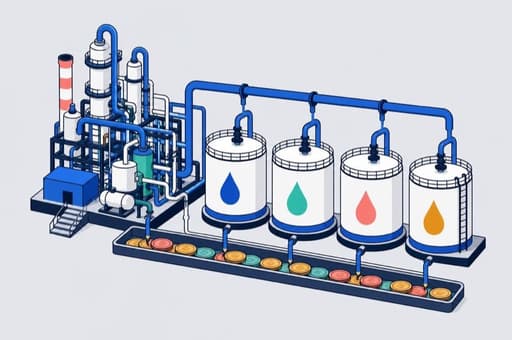
Energy Products
The giant sales engine: refineries, fuel trading and deliveries moved 5.6 million barrels a day in fiscal 2025. Its job is to generate cash; watch refinery reliability and the gap between crude costs and fuel prices.
Competes with Refining and wholesale fuels (Valero Energy) · Refining & Marketing (Marathon Petroleum)
In plain English
The unglamorous part that keeps the whole machine moving. ExxonMobil buys or supplies crude oil, turns it into gasoline, diesel, jet fuel and ship fuel, then moves those products through wholesale channels and branded stations.
Money comes from the difference between what crude and processing cost and what customers pay for the finished fuel. Wholesalers, airlines, fleets, ship operators and motorists all pay into that stream. Volumes are immense, but profit can swing when refineries stop running or when the price gap between crude and fuel narrows.
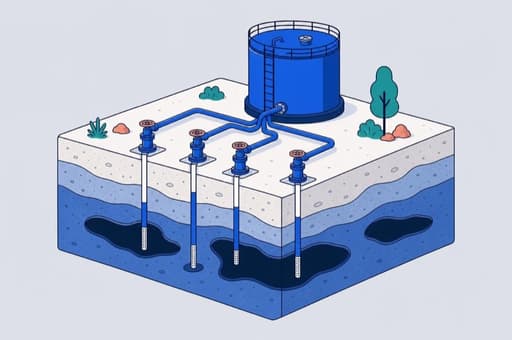
Upstream
Oil and gas production supplied roughly three-quarters of positive segment earnings in fiscal 2025 despite being a much smaller slice of sales. Watch commodity prices and whether new wells keep replacing what older fields lose.
Competes with Upstream and Permian operations (Chevron) · Lower 48 (ConocoPhillips)
In plain English
Before there is fuel, plastic or motor oil, someone has to find the raw oil and gas. Upstream is ExxonMobil's name for drilling wells, operating fields and selling what comes out, both to its own plants and to outside buyers.
Think of it as the spring feeding everything downstream. Buyers pay the going price for each barrel or unit of gas, while governments and project partners take agreed shares. The reservoirs naturally empty over time, so ExxonMobil must keep spending on wells and new fields even when prices are weak.
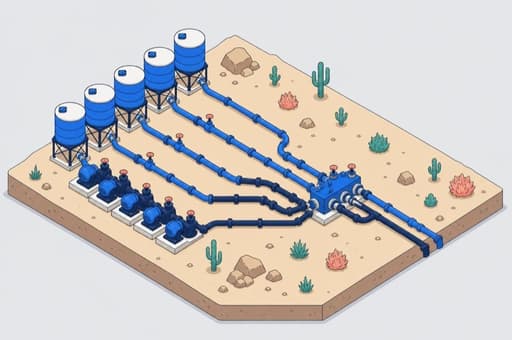
Permian Basin
The main onshore growth field averaged 1.6 million oil-and-gas-equivalent barrels a day in fiscal 2025 and topped 1.8 million in the second quarter of 2026. Watch wells, water handling and pipeline room as output climbs.
Competes with Permian operations (Chevron) · Permian operations (Diamondback Energy)
In plain English
Across a vast stretch of Texas and New Mexico, ExxonMobil drills many tightly spaced wells rather than relying on one giant discovery. Its older holdings, the Pioneer purchase and more acreage bought in 2025 now operate as one large production system.
Each well sells oil and gas into refineries, export plants and commodity markets. Scale helps crews repeat the same job, but the field also needs water systems and enough pipelines to carry growing output. ExxonMobil has secured long-term gathering and transport service through 2046, making that plumbing part of the growth plan.
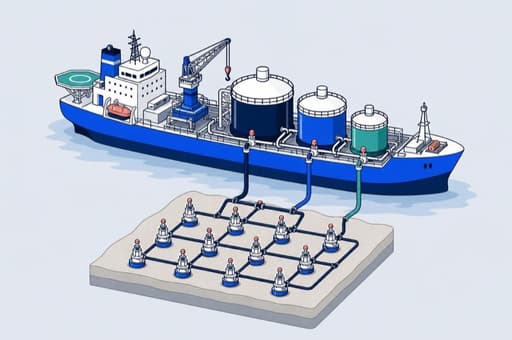
Stabroek Block, Guyana
Four offshore production ships were drawing about 900,000 barrels a day from the whole block, with a fifth expected by year-end 2026. ExxonMobil owns 45%; watch start-up timing, safe operations and Guyana's share of the oil.
Competes with Whale and Vito platforms (Shell) · Brazilian pre-salt systems (Petrobras)
In plain English
Far off Guyana's coast, wells on the seabed send crude up to ships that process and store it. Four such ships were already working, and a fifth was expected to add another 250,000 barrels a day for the whole project by the end of 2026.
Crude buyers provide the money, but ExxonMobil does not keep every barrel. Chevron and CNOOC fund the development alongside it, while Guyana receives royalty and profit oil under the project terms. That makes smooth ship operations, healthy wells and stable government terms as important as the headline output.
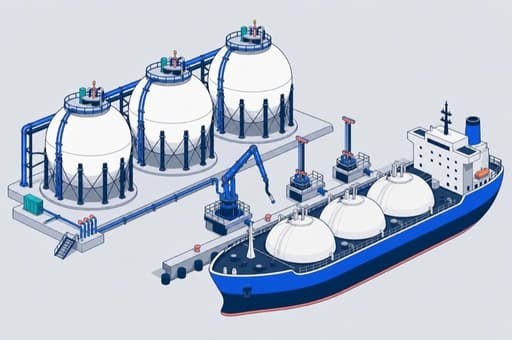
LNG Portfolio
ExxonMobil chills natural gas into a shippable liquid and aims to sell more than 40 million tonnes a year by 2030. Golden Pass has begun production; watch its next two processing lines and whether the planned Mozambique project gets approved.
Competes with Sabine Pass and Corpus Christi (Cheniere) · Integrated LNG portfolio (Shell)
In plain English
Natural gas normally travels by pipe. Chill it until it becomes liquid, however, and a ship can carry it across oceans to countries that need fuel for power and heating. ExxonMobil combines gas supplies, cooling plants, long-term sales and cargo trading across several countries.
Utilities and other large buyers pay for the delivered gas, often through long agreements that help support an expensive plant. Golden Pass in Texas produced its first liquid gas in March 2026, with two more processing lines still to come. Planned Mozambique work remains earlier and has not received a final go-ahead.
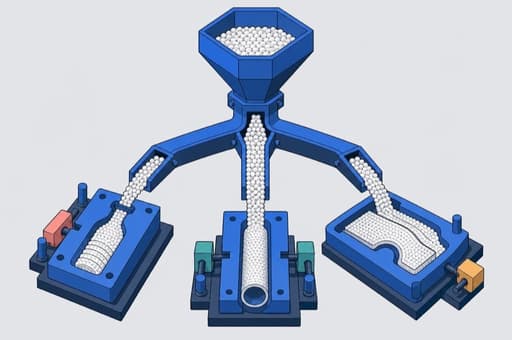
Chemical Products
This business turns oil-and-gas ingredients into basic chemicals and plastic-making materials for packaging, cars and buildings. Fiscal 2025 volume was 21.3 million tonnes; watch weak selling margins as new Asian supply enters the market.
Competes with Packaging & Specialty Plastics (Dow) · Olefins and Polyolefins (LyondellBasell)
In plain English
A refinery does not have to turn every molecule into fuel. Chemical Products redirects some streams into the building blocks used to make plastic film, containers, pipes, car parts and countless factory goods.
Manufacturers buy those basic materials by the tonne, then shape or combine them into finished products. ExxonMobil makes money when the selling price stays comfortably above the cost of its raw ingredients, energy and transport. The new China Chemical Complex adds substantial capacity, but it started while the industry already had too much supply, keeping that price cushion thin.
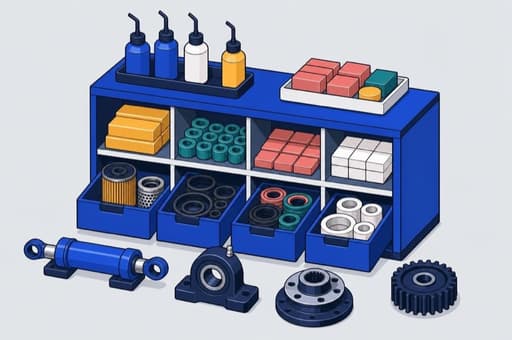
Specialty Products
Smaller-volume, higher-value materials include motor oils, waxes, synthetic rubber and specialty resins. The business earned $2.86 billion in fiscal 2025; watch product mix because worldwide lubricant demand is broadly flat.
Competes with Shell Lubricants (Shell) · Castrol lubricants (bp)
In plain English
Not every customer wants a shipload of basic fuel or plastic material. Some need a carefully blended oil that protects an engine, a wax with a precise melting point, or rubber and resin made for a demanding job.
Those buyers include motorists, fleets, equipment makers and factories. They pay more for consistency, approvals and performance, then return as machines need fresh oil or production lines need another batch. Overall lubricant use is barely growing, so the business depends on selling a richer mix rather than simply pushing much more volume.
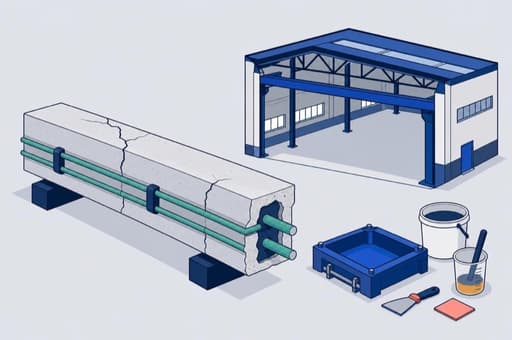
Proxxima Resin Systems
Proxxima makes tough resins for concrete reinforcement, coatings, car parts and industrial uses. Capacity remains small, but a 120,000-tonne annual expansion is approved; watch construction codes, customer testing and the Louisiana start-up.
Competes with V-ROD rebar (Pultrall) · MST-BAR (MST Rebar)
In plain English
Steel bars inside concrete can rust. Proxxima offers a resin system that can become light, corrosion-resistant reinforcement, while related formulas go into coatings, vehicle parts and other hard-wearing products.
Fabricators buy the resin, shape it for a specific job and sell the finished part to builders or manufacturers. Before orders become large, customers must test the material and building authorities must accept it. ExxonMobil had 35,000 tonnes of capacity running by mid-2026 and approved a much larger Louisiana addition, so winning those approvals now matters more than present sales.
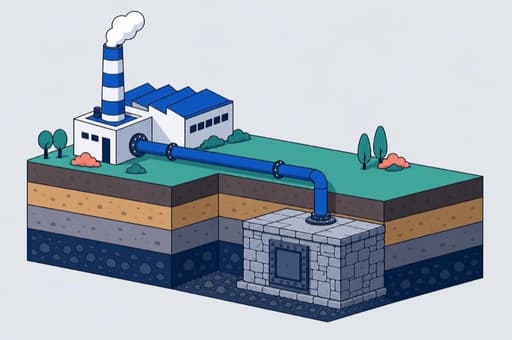
Carbon Capture and Storage Network
Pipelines would carry factories' carbon dioxide to permanent storage. All signed volume comes from six customers: CF Industries, Linde, Nucor, NG3, Lake Charles Methanol II and AtmosClear; watch permits and whether their plants finish on time.
Competes with 1PointFive hubs (Occidental) · Bayou Bend carbon storage (Chevron)
In plain English
Picture a waste-collection route for factory exhaust. Instead of letting carbon dioxide go into the air, a customer separates it, ExxonMobil carries it through pipelines, and wells place it deep underground for long-term storage.
Factories would pay for transport and storage by the tonne. ExxonMobil already has more than 1,300 miles of pipeline and a large offshore storage lease, but much of the signed work depends on customers finishing their own capture equipment. Permits, proof that the gas stays underground and policy support all stand between a contract and steady fee income.


 Energy ProductsThe giant sales engine: refineries, fuel trading and deliveries moved 5.6 million barrels a day in fiscal 2025. Its job is to generate cash; watch refinery reliability and the gap between crude costs and fuel prices.
The giant sales engine: refineries, fuel trading and deliveries moved 5.6 million barrels a day in fiscal 2025. Its job is to generate cash; watch refinery reliability and the gap between crude costs and fuel prices.
In plain English
The unglamorous part that keeps the whole machine moving. ExxonMobil buys or supplies crude oil, turns it into gasoline, diesel, jet fuel and ship fuel, then moves those products through wholesale channels and branded stations.
Money comes from the difference between what crude and processing cost and what customers pay for the finished fuel. Wholesalers, airlines, fleets, ship operators and motorists all pay into that stream. Volumes are immense, but profit can swing when refineries stop running or when the price gap between crude and fuel narrows.
Competes with Refining and wholesale fuels (Valero Energy) · Refining & Marketing (Marathon Petroleum)
 UpstreamOil and gas production supplied roughly three-quarters of positive segment earnings in fiscal 2025 despite being a much smaller slice of sales. Watch commodity prices and whether new wells keep replacing what older fields lose.
Oil and gas production supplied roughly three-quarters of positive segment earnings in fiscal 2025 despite being a much smaller slice of sales. Watch commodity prices and whether new wells keep replacing what older fields lose.
In plain English
Before there is fuel, plastic or motor oil, someone has to find the raw oil and gas. Upstream is ExxonMobil's name for drilling wells, operating fields and selling what comes out, both to its own plants and to outside buyers.
Think of it as the spring feeding everything downstream. Buyers pay the going price for each barrel or unit of gas, while governments and project partners take agreed shares. The reservoirs naturally empty over time, so ExxonMobil must keep spending on wells and new fields even when prices are weak.
Competes with Upstream and Permian operations (Chevron) · Lower 48 (ConocoPhillips)
 Permian BasinThe main onshore growth field averaged 1.6 million oil-and-gas-equivalent barrels a day in fiscal 2025 and topped 1.8 million in the second quarter of 2026. Watch wells, water handling and pipeline room as output climbs.
The main onshore growth field averaged 1.6 million oil-and-gas-equivalent barrels a day in fiscal 2025 and topped 1.8 million in the second quarter of 2026. Watch wells, water handling and pipeline room as output climbs.
In plain English
Across a vast stretch of Texas and New Mexico, ExxonMobil drills many tightly spaced wells rather than relying on one giant discovery. Its older holdings, the Pioneer purchase and more acreage bought in 2025 now operate as one large production system.
Each well sells oil and gas into refineries, export plants and commodity markets. Scale helps crews repeat the same job, but the field also needs water systems and enough pipelines to carry growing output. ExxonMobil has secured long-term gathering and transport service through 2046, making that plumbing part of the growth plan.
Competes with Permian operations (Chevron) · Permian operations (Diamondback Energy)
 Stabroek Block, GuyanaFour offshore production ships were drawing about 900,000 barrels a day from the whole block, with a fifth expected by year-end 2026. ExxonMobil owns 45%; watch start-up timing, safe operations and Guyana's share of the oil.
Four offshore production ships were drawing about 900,000 barrels a day from the whole block, with a fifth expected by year-end 2026. ExxonMobil owns 45%; watch start-up timing, safe operations and Guyana's share of the oil.
In plain English
Far off Guyana's coast, wells on the seabed send crude up to ships that process and store it. Four such ships were already working, and a fifth was expected to add another 250,000 barrels a day for the whole project by the end of 2026.
Crude buyers provide the money, but ExxonMobil does not keep every barrel. Chevron and CNOOC fund the development alongside it, while Guyana receives royalty and profit oil under the project terms. That makes smooth ship operations, healthy wells and stable government terms as important as the headline output.
Competes with Whale and Vito platforms (Shell) · Brazilian pre-salt systems (Petrobras)
 LNG PortfolioExxonMobil chills natural gas into a shippable liquid and aims to sell more than 40 million tonnes a year by 2030. Golden Pass has begun production; watch its next two processing lines and whether the planned Mozambique project gets approved.
ExxonMobil chills natural gas into a shippable liquid and aims to sell more than 40 million tonnes a year by 2030. Golden Pass has begun production; watch its next two processing lines and whether the planned Mozambique project gets approved.
In plain English
Natural gas normally travels by pipe. Chill it until it becomes liquid, however, and a ship can carry it across oceans to countries that need fuel for power and heating. ExxonMobil combines gas supplies, cooling plants, long-term sales and cargo trading across several countries.
Utilities and other large buyers pay for the delivered gas, often through long agreements that help support an expensive plant. Golden Pass in Texas produced its first liquid gas in March 2026, with two more processing lines still to come. Planned Mozambique work remains earlier and has not received a final go-ahead.
Competes with Sabine Pass and Corpus Christi (Cheniere) · Integrated LNG portfolio (Shell)
 Chemical ProductsThis business turns oil-and-gas ingredients into basic chemicals and plastic-making materials for packaging, cars and buildings. Fiscal 2025 volume was 21.3 million tonnes; watch weak selling margins as new Asian supply enters the market.
This business turns oil-and-gas ingredients into basic chemicals and plastic-making materials for packaging, cars and buildings. Fiscal 2025 volume was 21.3 million tonnes; watch weak selling margins as new Asian supply enters the market.
In plain English
A refinery does not have to turn every molecule into fuel. Chemical Products redirects some streams into the building blocks used to make plastic film, containers, pipes, car parts and countless factory goods.
Manufacturers buy those basic materials by the tonne, then shape or combine them into finished products. ExxonMobil makes money when the selling price stays comfortably above the cost of its raw ingredients, energy and transport. The new China Chemical Complex adds substantial capacity, but it started while the industry already had too much supply, keeping that price cushion thin.
Competes with Packaging & Specialty Plastics (Dow) · Olefins and Polyolefins (LyondellBasell)
 Specialty ProductsSmaller-volume, higher-value materials include motor oils, waxes, synthetic rubber and specialty resins. The business earned $2.86 billion in fiscal 2025; watch product mix because worldwide lubricant demand is broadly flat.
Smaller-volume, higher-value materials include motor oils, waxes, synthetic rubber and specialty resins. The business earned $2.86 billion in fiscal 2025; watch product mix because worldwide lubricant demand is broadly flat.
In plain English
Not every customer wants a shipload of basic fuel or plastic material. Some need a carefully blended oil that protects an engine, a wax with a precise melting point, or rubber and resin made for a demanding job.
Those buyers include motorists, fleets, equipment makers and factories. They pay more for consistency, approvals and performance, then return as machines need fresh oil or production lines need another batch. Overall lubricant use is barely growing, so the business depends on selling a richer mix rather than simply pushing much more volume.
Competes with Shell Lubricants (Shell) · Castrol lubricants (bp)
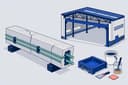 Proxxima Resin SystemsProxxima makes tough resins for concrete reinforcement, coatings, car parts and industrial uses. Capacity remains small, but a 120,000-tonne annual expansion is approved; watch construction codes, customer testing and the Louisiana start-up.
Proxxima makes tough resins for concrete reinforcement, coatings, car parts and industrial uses. Capacity remains small, but a 120,000-tonne annual expansion is approved; watch construction codes, customer testing and the Louisiana start-up.
In plain English
Steel bars inside concrete can rust. Proxxima offers a resin system that can become light, corrosion-resistant reinforcement, while related formulas go into coatings, vehicle parts and other hard-wearing products.
Fabricators buy the resin, shape it for a specific job and sell the finished part to builders or manufacturers. Before orders become large, customers must test the material and building authorities must accept it. ExxonMobil had 35,000 tonnes of capacity running by mid-2026 and approved a much larger Louisiana addition, so winning those approvals now matters more than present sales.
Competes with V-ROD rebar (Pultrall) · MST-BAR (MST Rebar)
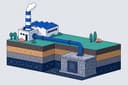 Carbon Capture and Storage NetworkPipelines would carry factories' carbon dioxide to permanent storage. All signed volume comes from six customers: CF Industries, Linde, Nucor, NG3, Lake Charles Methanol II and AtmosClear; watch permits and whether their plants finish on time.
Pipelines would carry factories' carbon dioxide to permanent storage. All signed volume comes from six customers: CF Industries, Linde, Nucor, NG3, Lake Charles Methanol II and AtmosClear; watch permits and whether their plants finish on time.
In plain English
Picture a waste-collection route for factory exhaust. Instead of letting carbon dioxide go into the air, a customer separates it, ExxonMobil carries it through pipelines, and wells place it deep underground for long-term storage.
Factories would pay for transport and storage by the tonne. ExxonMobil already has more than 1,300 miles of pipeline and a large offshore storage lease, but much of the signed work depends on customers finishing their own capture equipment. Permits, proof that the gas stays underground and policy support all stand between a contract and steady fee income.
Competes with 1PointFive hubs (Occidental) · Bayou Bend carbon storage (Chevron)
Named in filings, launches and programs
- Exxon, Esso and Mobil retail networkEcosystemA worldwide branded fuel channel of roughly eighteen thousand sites, almost all run by independent distributors rather than ExxonMobil itself.
- Synergy fuel formulationsBrandBranded gasoline and diesel recipes sold through Exxon, Esso and Mobil stations.
- Advanced recycling / ExxtendService · RampingTurns difficult plastic waste back into raw material, with Baytown capacity moving toward 250 million pounds a year.
- China Chemical ComplexPlatform · RampingA large Guangdong chemicals plant started in 2025, adding output while the industry was already struggling with excess supply.
- Mobil LithiumProduct line · Pre-revenueProposed Arkansas battery-lithium supply backed by nonbinding purchase plans with LG Chem and SK On; commercial sales have not begun.
- Advanced synthetic graphiteProduct line · RampingA planned material line for the battery's negative side, supported by the 2025 agreement for selected Superior Graphite assets and technology.
- Low Carbon Data Center programCustomer program · AnnouncedProposed gas-fired power for data centers in Louisiana and Mississippi, paired with carbon storage; no large computing customer has been named.
- Strathcona renewable dieselProduct lineRenewable diesel capacity at the Imperial Oil affiliate began operating in 2025.
- Income from equity affiliatesEcosystemExxonMobil's share of income from businesses it owns with partners contributed $5.33 billion in fiscal 2025.
- Other revenueServiceSmaller activities outside the four main businesses contributed $2.05 billion in fiscal 2025.
Exxon, Esso and Mobil retail networkEcosystem
A worldwide branded fuel channel of roughly eighteen thousand sites, almost all run by independent distributors rather than ExxonMobil itself.
Synergy fuel formulationsBrand
Branded gasoline and diesel recipes sold through Exxon, Esso and Mobil stations.
Advanced recycling / ExxtendService · Ramping
Turns difficult plastic waste back into raw material, with Baytown capacity moving toward 250 million pounds a year.
China Chemical ComplexPlatform · Ramping
A large Guangdong chemicals plant started in 2025, adding output while the industry was already struggling with excess supply.
Mobil LithiumProduct line · Pre-revenue
Proposed Arkansas battery-lithium supply backed by nonbinding purchase plans with LG Chem and SK On; commercial sales have not begun.
Advanced synthetic graphiteProduct line · Ramping
A planned material line for the battery's negative side, supported by the 2025 agreement for selected Superior Graphite assets and technology.
Low Carbon Data Center programCustomer program · Announced
Proposed gas-fired power for data centers in Louisiana and Mississippi, paired with carbon storage; no large computing customer has been named.
Strathcona renewable dieselProduct line
Renewable diesel capacity at the Imperial Oil affiliate began operating in 2025.
Income from equity affiliatesEcosystem
ExxonMobil's share of income from businesses it owns with partners contributed $5.33 billion in fiscal 2025.
Other revenueService
Smaller activities outside the four main businesses contributed $2.05 billion in fiscal 2025.