
Agilent Technologies (A)
Provides analytical instruments, diagnostics, consumables, software, and services for laboratory workflows.
Something off on this page? Send us feedback.
Agilent makes the machines that tell you what a sample is made of — what's in a pill, a river, a tumour. The instrument sale is the doorway; the real money arrives for years afterwards, in service contracts and the supplies labs keep reordering. It is also becoming a manufacturer, building capacity to produce the active ingredients in other companies' medicines.
Item facts: FY2025 · year ended Oct 31, 2025, from filings, earnings calls and company pages.
Judgment weights, not filed revenue
The band summarizes business focus and direction. ~ marks estimates.
8 in detail · 11 more below
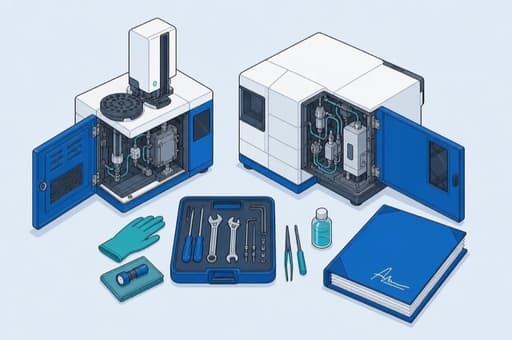
Agilent CrossLab Services and Contracts
Maintenance, repair and compliance checks on lab instruments — including machines Agilent never sold. About a quarter of revenue, growing around 5%, and the steadiest line in the company. Watch the replacement cycle: today's placements are tomorrow's contracts.
Competes with Unity Lab Services (Thermo Fisher Scientific) · OneSource Laboratory Services (Revvity) · Waters service plans (Waters Corporation)
In plain English
Picture the extended warranty and the mechanic rolled into one, for machines that cost as much as a car — sometimes as much as a house. A drug company cannot let its analysis equipment sit broken, and regulators want proof each machine still measures correctly, so labs sign multi-year contracts and Agilent's engineers keep showing up.
The clever part: those same engineers fix rivals' instruments too, so Agilent earns money in labs where it lost the hardware sale. Together with supplies, this is the profit engine of the company — about 34 cents of every dollar it takes in came out as operating profit last quarter.
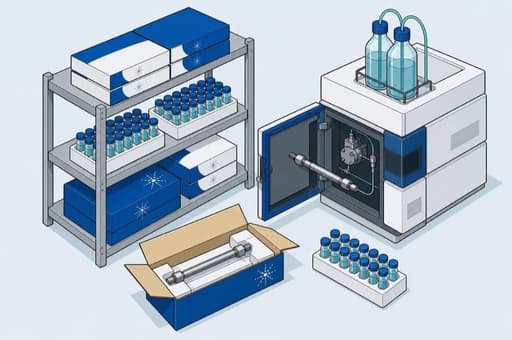
CrossLab Columns, Supplies and Lab Software
The parts every measurement burns through — columns, vials, sample-prep kits — plus the software that runs the instruments. Roughly a sixth of revenue. The new Altura columns pushed growth in Agilent's biology columns above 30%.
Competes with XBridge / CORTECS columns (Waters Corporation) · Phenomenex columns (Danaher) · Thermo Scientific chromatography columns (Thermo Fisher Scientific)
In plain English
Every measurement uses something up. A chromatography column — a slim tube packed with fine powder that splits a sample into its separate ingredients — wears out, and so do the little glass vials, filters and cartridges around it. Labs reorder them the way a coffee shop reorders cups and beans, whether business is booming or not.
That makes this the least moody money in the house: it follows how much testing labs actually do, not whether they are buying new machines. Agilent's newest column family, Altura, arrived in October 2025, and within months half of the twenty largest biotech drugmakers had ordered it.
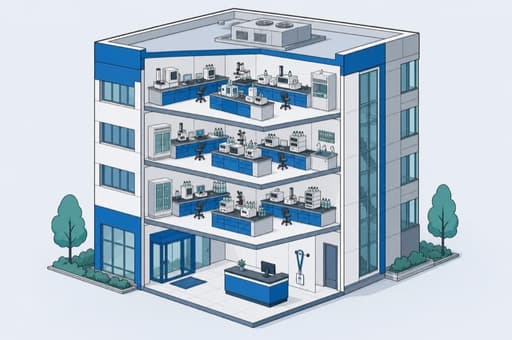
Enterprise Services and the Strategic Customer Program
Agilent's biggest-account setup: its own technicians stationed inside major drugmakers' labs, running every machine there, Agilent-built or not. Growing at low double digits, and it has won 18 contracts away from rivals in three years.
Competes with Unity Lab Services enterprise agreements (Thermo Fisher Scientific) · OneSource enterprise programmes (Revvity)
In plain English
Some customers do not want a repair visit; they want somebody else to run the lab's equipment for them. Agilent technicians work on site full time, one agreement covers every machine in the building whoever made it, and monitoring software keeps an eye on the instruments remotely.
Why it matters more than its size suggests: Agilent holds agreements with nearly all of the twenty largest biotech drugmakers, and three-quarters of the drug companies that have committed to building in the United States are already in the programme. Management sizes that building wave near a billion dollars by 2030 and expects about a third of it, starting in 2027.
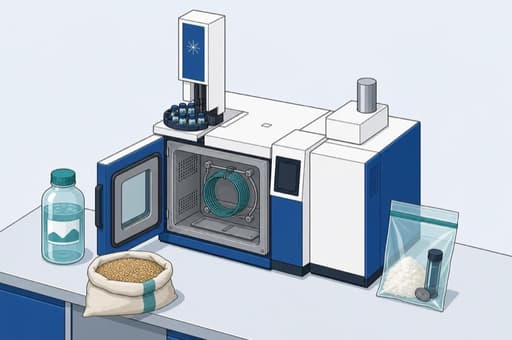
Gas Chromatography and GC/MS
Instruments that check food, water, soil and evidence samples for what is in them. About 9% of revenue, driven by rules rather than budgets. Testing for 'forever chemicals' grew roughly 40% in FY2025, past a $100M pace.
Competes with Nexis GC (Shimadzu) · TRACE GC / ISQ (Thermo Fisher Scientific) · PerkinElmer GC systems (PerkinElmer)
In plain English
The question here is always the same — what is actually in this? — for samples that can be turned into vapour: pesticide traces in a shipment of grain, solvents in river water, residue on a forensic swab. The sample is heated, carried through a long thin tube by a gas, and its ingredients emerge one at a time to be identified and counted.
Buyers are testing labs, chemical makers and government agencies, and the order usually starts with a rule: if a regulator sets a limit, somebody has to measure it. Agilent tracks over 350 rules worldwide on 'forever chemicals' alone. When public budgets wobble, so do orders — disruption at the US environmental agency dented this line in 2025.
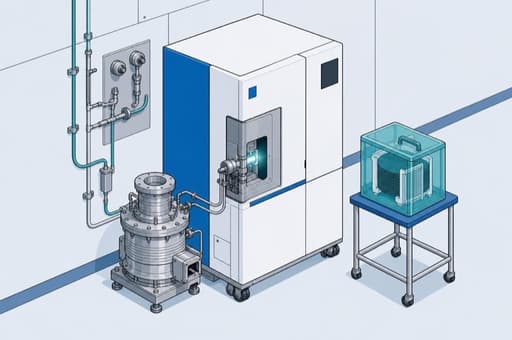
Spectroscopy and Vacuum Technologies
Instruments that identify metals and molecules down to trace amounts, plus vacuum pumps. About 9% of revenue. Chip plants are the newer customer — management sizes that demand near 3–4% of company revenue, arriving well after a fab is built.
Competes with iCAP ICP-MS (Thermo Fisher Scientific) · NexION ICP-MS (PerkinElmer) · Turbomolecular pumps (Pfeiffer Vacuum)
In plain English
Burn a speck of a sample in a very hot flame of charged gas and every element inside it gives off its own signature of light. Read that light and you know which metals are present, and how much of each. That is what these instruments do, alongside pumps that create the near-empty space some measuring — and some chipmaking — needs.
Materials makers buy them, and increasingly so do semiconductor plants: a new chip factory needs ultra-pure inputs and constant contamination checks, and Agilent says those orders land roughly eighteen to twenty-four months after the factory goes up. Spectroscopy grew high single digits last quarter and the vacuum line double digits.
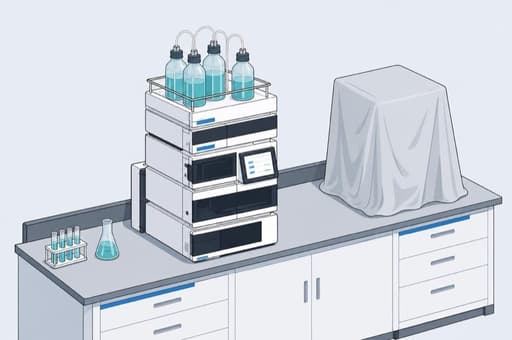
InfinityLab LC and LC/MS Platforms
The workhorse of drug labs: machines that split a liquid sample into its parts and weigh them. Roughly 17% of revenue, mid-way through a replacement wave that began with the Infinity III in October 2024. Watch pharma spending.
Competes with Alliance iS / ACQUITY (Waters Corporation) · Vanquish Horizon (Thermo Fisher Scientific) · Nexera (Shimadzu)
In plain English
Pour a liquid sample in and this machine pushes it at high pressure through a packed tube; each ingredient comes out at its own moment, and a detector — often one that weighs molecules — reports what it is and how much there is. Every batch of medicine gets checked something like this before anyone takes it.
Labs pay tens to hundreds of thousands of dollars for one, then keep paying: a machine placed today pulls service and column orders for the next decade. The installed fleet is ageing, with plenty of older 1100-series units losing support, which is why the new Infinity III was built to work with the old parts. Pharma sales grew 12% last quarter.
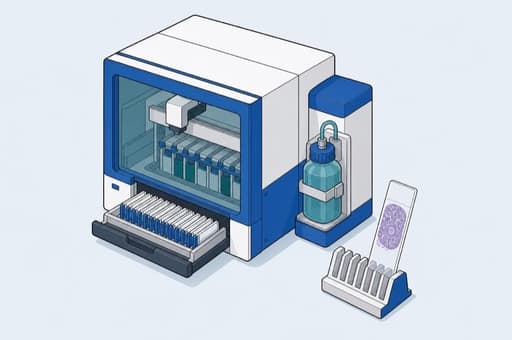
Cancer Diagnostics — Dako Omnis and pharmDx
Machines and stains that let pathologists see cancer on a slide, plus tests that tell doctors whether a particular drug will work. About 11% of revenue. Two such tests won approvals in July 2026, tied to Merck's KEYTRUDA and Bristol Myers Squibb's OPDIVO.
Competes with BenchMark ULTRA (Roche) · BOND-III / BOND-MAX (Leica Biosystems) · SP263 / SP142 PD-L1 assays (Roche)
In plain English
When a surgeon removes a piece of tumour, somebody has to look at it. Agilent makes the machine that stains those slides — colour binds to particular proteins so the cancer stands out under the microscope — plus the chemicals it drinks, and since June 2026 the extra stains that came with buying Biocare Medical.
The unusual business sits on top. Some tests exist to answer one question: will this patient respond to this drug? Agilent develops them with the drugmaker, and when the drug is cleared for a new cancer the test is cleared alongside it — which ties Agilent's sales to somebody else's approval calendar. Roche leads this field; Agilent is a clear number three.
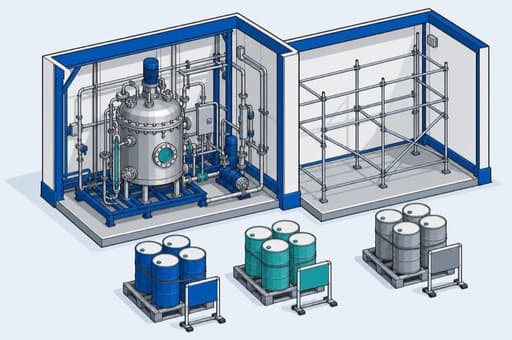
Advanced Therapeutics Division
Agilent's factory arm: it manufactures the active ingredients of other companies' medicines. About 8% of revenue, growing near 30% last quarter. A new production block starts earning in spring 2027 with three-quarters of its first-year capacity already ordered.
Competes with Peptide and gene-strand manufacturing (Bachem) · Oligonucleotide manufacturing services (Thermo Fisher Scientific) · Oligonucleotide manufacturing (WuXi AppTec)
In plain English
Drug companies invent molecules; they do not always want to build the plant that makes them. Agilent runs that plant — a contract kitchen for medicine ingredients, where the recipe belongs to the customer and Agilent owns the stainless steel.
What comes out is worth knowing: short strands that switch off a faulty gene, and the peptide chains behind the new weight-loss drugs. Orders run ahead of what Agilent can physically produce, so this is a building project as much as a manufacturing one — the newest block finished construction in 2026 and ships from spring 2027, reaching full output over the following year and a half or two. Growth is lumpy: customers' filing dates move, and Agilent's year moves with them.


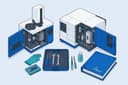 Agilent CrossLab Services and ContractsMaintenance, repair and compliance checks on lab instruments — including machines Agilent never sold. About a quarter of revenue, growing around 5%, and the steadiest line in the company. Watch the replacement cycle: today's placements are tomorrow's contracts.
Maintenance, repair and compliance checks on lab instruments — including machines Agilent never sold. About a quarter of revenue, growing around 5%, and the steadiest line in the company. Watch the replacement cycle: today's placements are tomorrow's contracts.
In plain English
Picture the extended warranty and the mechanic rolled into one, for machines that cost as much as a car — sometimes as much as a house. A drug company cannot let its analysis equipment sit broken, and regulators want proof each machine still measures correctly, so labs sign multi-year contracts and Agilent's engineers keep showing up.
The clever part: those same engineers fix rivals' instruments too, so Agilent earns money in labs where it lost the hardware sale. Together with supplies, this is the profit engine of the company — about 34 cents of every dollar it takes in came out as operating profit last quarter.
Competes with Unity Lab Services (Thermo Fisher Scientific) · OneSource Laboratory Services (Revvity) · Waters service plans (Waters Corporation)
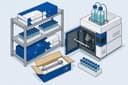 CrossLab Columns, Supplies and Lab SoftwareThe parts every measurement burns through — columns, vials, sample-prep kits — plus the software that runs the instruments. Roughly a sixth of revenue. The new Altura columns pushed growth in Agilent's biology columns above 30%.
The parts every measurement burns through — columns, vials, sample-prep kits — plus the software that runs the instruments. Roughly a sixth of revenue. The new Altura columns pushed growth in Agilent's biology columns above 30%.
In plain English
Every measurement uses something up. A chromatography column — a slim tube packed with fine powder that splits a sample into its separate ingredients — wears out, and so do the little glass vials, filters and cartridges around it. Labs reorder them the way a coffee shop reorders cups and beans, whether business is booming or not.
That makes this the least moody money in the house: it follows how much testing labs actually do, not whether they are buying new machines. Agilent's newest column family, Altura, arrived in October 2025, and within months half of the twenty largest biotech drugmakers had ordered it.
Competes with XBridge / CORTECS columns (Waters Corporation) · Phenomenex columns (Danaher) · Thermo Scientific chromatography columns (Thermo Fisher Scientific)
 Enterprise Services and the Strategic Customer ProgramAgilent's biggest-account setup: its own technicians stationed inside major drugmakers' labs, running every machine there, Agilent-built or not. Growing at low double digits, and it has won 18 contracts away from rivals in three years.
Agilent's biggest-account setup: its own technicians stationed inside major drugmakers' labs, running every machine there, Agilent-built or not. Growing at low double digits, and it has won 18 contracts away from rivals in three years.
In plain English
Some customers do not want a repair visit; they want somebody else to run the lab's equipment for them. Agilent technicians work on site full time, one agreement covers every machine in the building whoever made it, and monitoring software keeps an eye on the instruments remotely.
Why it matters more than its size suggests: Agilent holds agreements with nearly all of the twenty largest biotech drugmakers, and three-quarters of the drug companies that have committed to building in the United States are already in the programme. Management sizes that building wave near a billion dollars by 2030 and expects about a third of it, starting in 2027.
Competes with Unity Lab Services enterprise agreements (Thermo Fisher Scientific) · OneSource enterprise programmes (Revvity)
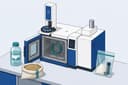 Gas Chromatography and GC/MSInstruments that check food, water, soil and evidence samples for what is in them. About 9% of revenue, driven by rules rather than budgets. Testing for 'forever chemicals' grew roughly 40% in FY2025, past a $100M pace.
Instruments that check food, water, soil and evidence samples for what is in them. About 9% of revenue, driven by rules rather than budgets. Testing for 'forever chemicals' grew roughly 40% in FY2025, past a $100M pace.
In plain English
The question here is always the same — what is actually in this? — for samples that can be turned into vapour: pesticide traces in a shipment of grain, solvents in river water, residue on a forensic swab. The sample is heated, carried through a long thin tube by a gas, and its ingredients emerge one at a time to be identified and counted.
Buyers are testing labs, chemical makers and government agencies, and the order usually starts with a rule: if a regulator sets a limit, somebody has to measure it. Agilent tracks over 350 rules worldwide on 'forever chemicals' alone. When public budgets wobble, so do orders — disruption at the US environmental agency dented this line in 2025.
Competes with Nexis GC (Shimadzu) · TRACE GC / ISQ (Thermo Fisher Scientific) · PerkinElmer GC systems (PerkinElmer)
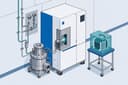 Spectroscopy and Vacuum TechnologiesInstruments that identify metals and molecules down to trace amounts, plus vacuum pumps. About 9% of revenue. Chip plants are the newer customer — management sizes that demand near 3–4% of company revenue, arriving well after a fab is built.
Instruments that identify metals and molecules down to trace amounts, plus vacuum pumps. About 9% of revenue. Chip plants are the newer customer — management sizes that demand near 3–4% of company revenue, arriving well after a fab is built.
In plain English
Burn a speck of a sample in a very hot flame of charged gas and every element inside it gives off its own signature of light. Read that light and you know which metals are present, and how much of each. That is what these instruments do, alongside pumps that create the near-empty space some measuring — and some chipmaking — needs.
Materials makers buy them, and increasingly so do semiconductor plants: a new chip factory needs ultra-pure inputs and constant contamination checks, and Agilent says those orders land roughly eighteen to twenty-four months after the factory goes up. Spectroscopy grew high single digits last quarter and the vacuum line double digits.
Competes with iCAP ICP-MS (Thermo Fisher Scientific) · NexION ICP-MS (PerkinElmer) · Turbomolecular pumps (Pfeiffer Vacuum)
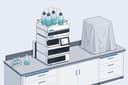 InfinityLab LC and LC/MS PlatformsThe workhorse of drug labs: machines that split a liquid sample into its parts and weigh them. Roughly 17% of revenue, mid-way through a replacement wave that began with the Infinity III in October 2024. Watch pharma spending.
The workhorse of drug labs: machines that split a liquid sample into its parts and weigh them. Roughly 17% of revenue, mid-way through a replacement wave that began with the Infinity III in October 2024. Watch pharma spending.
In plain English
Pour a liquid sample in and this machine pushes it at high pressure through a packed tube; each ingredient comes out at its own moment, and a detector — often one that weighs molecules — reports what it is and how much there is. Every batch of medicine gets checked something like this before anyone takes it.
Labs pay tens to hundreds of thousands of dollars for one, then keep paying: a machine placed today pulls service and column orders for the next decade. The installed fleet is ageing, with plenty of older 1100-series units losing support, which is why the new Infinity III was built to work with the old parts. Pharma sales grew 12% last quarter.
Competes with Alliance iS / ACQUITY (Waters Corporation) · Vanquish Horizon (Thermo Fisher Scientific) · Nexera (Shimadzu)
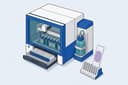 Cancer Diagnostics — Dako Omnis and pharmDxMachines and stains that let pathologists see cancer on a slide, plus tests that tell doctors whether a particular drug will work. About 11% of revenue. Two such tests won approvals in July 2026, tied to Merck's KEYTRUDA and Bristol Myers Squibb's OPDIVO.
Machines and stains that let pathologists see cancer on a slide, plus tests that tell doctors whether a particular drug will work. About 11% of revenue. Two such tests won approvals in July 2026, tied to Merck's KEYTRUDA and Bristol Myers Squibb's OPDIVO.
In plain English
When a surgeon removes a piece of tumour, somebody has to look at it. Agilent makes the machine that stains those slides — colour binds to particular proteins so the cancer stands out under the microscope — plus the chemicals it drinks, and since June 2026 the extra stains that came with buying Biocare Medical.
The unusual business sits on top. Some tests exist to answer one question: will this patient respond to this drug? Agilent develops them with the drugmaker, and when the drug is cleared for a new cancer the test is cleared alongside it — which ties Agilent's sales to somebody else's approval calendar. Roche leads this field; Agilent is a clear number three.
Competes with BenchMark ULTRA (Roche) · BOND-III / BOND-MAX (Leica Biosystems) · SP263 / SP142 PD-L1 assays (Roche)
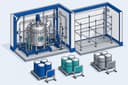 Advanced Therapeutics DivisionAgilent's factory arm: it manufactures the active ingredients of other companies' medicines. About 8% of revenue, growing near 30% last quarter. A new production block starts earning in spring 2027 with three-quarters of its first-year capacity already ordered.
Agilent's factory arm: it manufactures the active ingredients of other companies' medicines. About 8% of revenue, growing near 30% last quarter. A new production block starts earning in spring 2027 with three-quarters of its first-year capacity already ordered.
In plain English
Drug companies invent molecules; they do not always want to build the plant that makes them. Agilent runs that plant — a contract kitchen for medicine ingredients, where the recipe belongs to the customer and Agilent owns the stainless steel.
What comes out is worth knowing: short strands that switch off a faulty gene, and the peptide chains behind the new weight-loss drugs. Orders run ahead of what Agilent can physically produce, so this is a building project as much as a manufacturing one — the newest block finished construction in 2026 and ships from spring 2027, reaching full output over the following year and a half or two. Growth is lumpy: customers' filing dates move, and Agilent's year moves with them.
Competes with Peptide and gene-strand manufacturing (Bachem) · Oligonucleotide manufacturing services (Thermo Fisher Scientific) · Oligonucleotide manufacturing (WuXi AppTec)
Named in filings, launches and programs
- Cell Analysis portfolioProduct lineSeahorse XF, xCELLigence, NovoCyte and BioTek instruments for studying living cells; an estimated 3–4% of revenue, and a drag in early FY2026 on soft academic demand.
- Biocare MedicalBrandClinical staining and antibody business bought for $950M in June 2026; over $90M of 2025 sales, deepening the menu behind Agilent's pathology line.
- Train CProduct · Pre-revenueThe new medicine-ingredient production block: construction finished in 2026, first shipments due spring 2027, full output roughly a year and a half later.
- Raman Insight BRT seriesProduct · RampingLight-scattering readers that resolve airport security alarms; a $9M US transport-security contract landed in early FY2026, with larger tenders expected in coming years.
- Agilent S540MD Slide Scanner SystemProductScanner that turns stained pathology slides into digital images; cleared by the FDA and launched in the United States in September 2026.
- Cary 635 FTIR SpectrometerProductCompact infrared instrument for identifying molecules, launched September 2026 — part of the steady hardware refresh across the applied-testing lines.
- HALO X-ray TechnologiesBrandA Nottingham security-screening developer Agilent owns a minority stake in; it added money in July 2026 to push the technology toward regulatory approval.
- OpenLab CDS and CrossLab ConnectPlatformSoftware that runs chromatography instruments and watches connected ones remotely; sold alongside the supplies line rather than counted on its own.
- PFAS testing workflowsEcosystem'Forever chemical' testing spanning gas and liquid instruments plus dedicated columns; grew roughly 40% in FY2025, past a $100M pace, counted inside those lines.
- SureSelect target enrichmentProduct lineKits that pull the genes of interest out of a DNA sample before sequencing; high single-digit growth last quarter, counted inside cancer diagnostics.
- Biomolecular analysisProduct lineWork on large biological molecules that Agilent names as its own activity area but has never sized separately.
Cell Analysis portfolioProduct line
Seahorse XF, xCELLigence, NovoCyte and BioTek instruments for studying living cells; an estimated 3–4% of revenue, and a drag in early FY2026 on soft academic demand.
Biocare MedicalBrand
Clinical staining and antibody business bought for $950M in June 2026; over $90M of 2025 sales, deepening the menu behind Agilent's pathology line.
Train CProduct · Pre-revenue
The new medicine-ingredient production block: construction finished in 2026, first shipments due spring 2027, full output roughly a year and a half later.
Raman Insight BRT seriesProduct · Ramping
Light-scattering readers that resolve airport security alarms; a $9M US transport-security contract landed in early FY2026, with larger tenders expected in coming years.
Agilent S540MD Slide Scanner SystemProduct
Scanner that turns stained pathology slides into digital images; cleared by the FDA and launched in the United States in September 2026.
Cary 635 FTIR SpectrometerProduct
Compact infrared instrument for identifying molecules, launched September 2026 — part of the steady hardware refresh across the applied-testing lines.
HALO X-ray TechnologiesBrand
A Nottingham security-screening developer Agilent owns a minority stake in; it added money in July 2026 to push the technology toward regulatory approval.
OpenLab CDS and CrossLab ConnectPlatform
Software that runs chromatography instruments and watches connected ones remotely; sold alongside the supplies line rather than counted on its own.
PFAS testing workflowsEcosystem
'Forever chemical' testing spanning gas and liquid instruments plus dedicated columns; grew roughly 40% in FY2025, past a $100M pace, counted inside those lines.
SureSelect target enrichmentProduct line
Kits that pull the genes of interest out of a DNA sample before sequencing; high single-digit growth last quarter, counted inside cancer diagnostics.
Biomolecular analysisProduct line
Work on large biological molecules that Agilent names as its own activity area but has never sized separately.