
T-Mobile (TMUS)
Runs nationwide wireless networks alongside 5G home internet and fiber broadband.
Something off on this page? Send us feedback.
T-Mobile is built around monthly wireless bills, and that core is becoming a larger share of the company. Home internet, fiber, business connections and satellite coverage stretch the same customer relationship beyond the phone. Device sales help win and keep subscribers, but cost more than they bring in directly; prepaid and wholesale are smaller, with wholesale fading.
Item facts: FY2025 · year ended Dec 31, 2025, from filings, earnings calls and company pages.
Judgment weights, not filed revenue
The band summarizes business focus and direction. ~ marks estimates.
8 in detail · 11 more below
Postpaid services
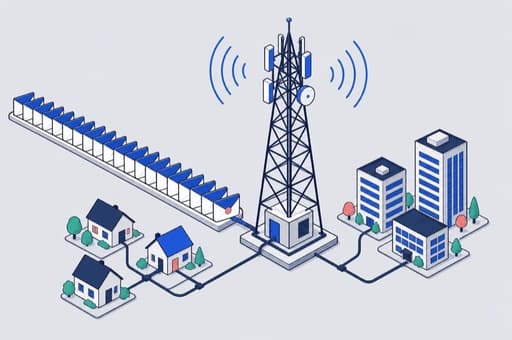
Customers with continuing monthly accounts supplied 65.6% of fiscal 2025 revenue; another $2.7 billion was already promised, generally over the next two years. The main watchpoint is reliable service that keeps people paying.
Competes with Unlimited Your Way plans (AT&T) · myPlan and Simplicity Plan (Verizon)
In plain English
Postpaid here means keeping a continuing account and receiving a regular monthly bill; prepaid customers instead load money before using service. T-Mobile sells phone plans to households and businesses, plus home connections counted in the same sales line. One account can cover several phones.
Those repeating payments are the company's main engine. Customers keep paying because their numbers, devices and daily internet access live on the network; T-Mobile must keep the connection reliable and give them reasons not to switch. No single customer provides more than a tenth of company sales.
5G Home Internet
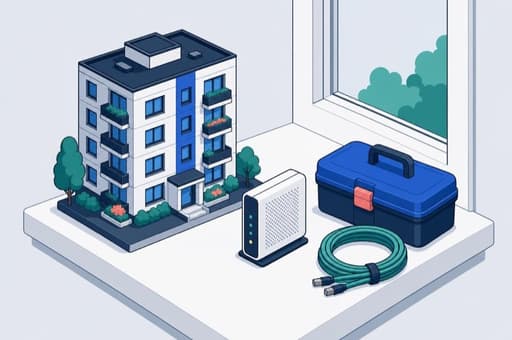
A self-installed box turns T-Mobile's mobile signal into home Wi-Fi for roughly 8.5 million customers. Growth depends on how much room the local network has after serving phones.
Competes with Internet Air (AT&T) · 5G Home, Home Plus and Home Ultimate (Verizon)
In plain English
Picture empty seats on a bus that is already running. Where T-Mobile's phone network has spare room, it can fill that room with home internet customers instead of building a separate network.
A customer receives a small box, plugs it in and pays every month for Wi-Fi around the home. T-Mobile earns another subscription from equipment it already operates, but it cannot sell freely at every address: local signal quality and available room set the limit.
T-Mobile for Business
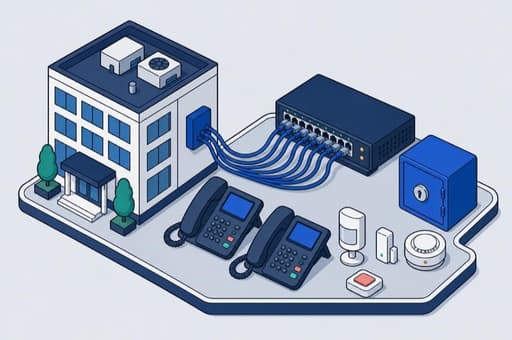
Companies and public agencies buy mobile, internet, security and connected-device service. Management aims for double-digit annual sales growth through 2027, though T-Mobile does not separate these sales.
Competes with AT&T Business wireless plans (AT&T) · Business Unlimited plans (Verizon Business)
In plain English
Big employers need more than a pile of phone plans. T-Mobile for Business connects staff, offices and small machines that send data, then adds security and a control panel for the customer to manage it all.
Organizations pay for each connection and for bundled services; direct sales teams handle the more complicated setups. They stay when coverage, safety and administration work together. The opportunity is important enough for a growth goal, but outsiders cannot see its sales on their own.
T-Mobile Fiber
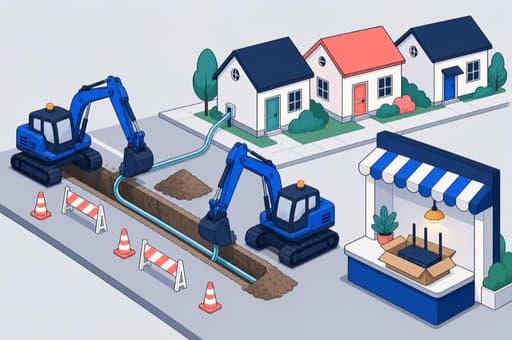
T-Mobile sells fast wired home internet to roughly one million customers while shared ventures build and run the lines. Growth depends on those builders reaching more neighborhoods and pending deals closing.
Competes with AT&T Fiber (AT&T) · Fios (Verizon)
In plain English
Instead of digging every trench itself, T-Mobile shares ownership of fiber builders such as Lumos and Metronet. Those businesses install and operate the thin glass lines that carry internet into homes, while T-Mobile keeps the storefront and customer relationship.
Households pay T-Mobile each month for a wired connection. The arrangement spreads construction cost across partners, but service can grow only as streets are built out, permits arrive and the shared businesses maintain quality.
T-Satellite
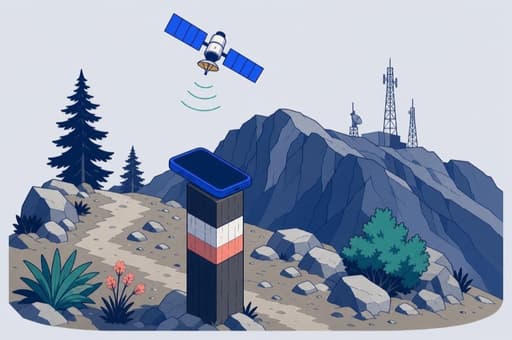
Satellite links fill outdoor dead zones on compatible phones, yet July 2026 use was only 0.0002–0.0003% of network activity. The question is whether occasional coverage becomes something many customers pay for.
Competes with Direct-to-cell service for AT&T (AST SpaceMobile) · Direct-to-cell service for Verizon (AST SpaceMobile)
In plain English
When a cell tower is out of reach, a compatible phone outdoors can connect to Starlink, SpaceX's satellite network, for messages and data from selected apps. It is backup coverage for places the ground network misses.
Access comes with the Experience Beyond plan or as a monthly add-on. Travelers, rural users and emergency workers may value a connection in a dead zone, but current use is tiny and the service still depends on open sky, compatible phones, satellites and government permission.
Equipment and devices
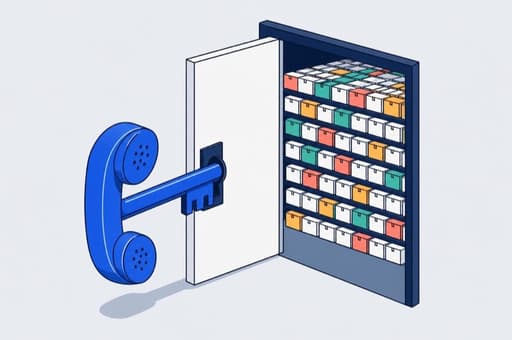
Phones, watches, tablets, home-internet boxes and accessories produced $15.972 billion of fiscal 2025 sales. Their direct costs were higher: the real job is helping win and keep monthly customers.
Competes with Device sales and installment offers (AT&T) · Device sales and financing offers (Verizon)
In plain English
The shelves and checkout counters are only half the story. T-Mobile sells devices for cash or lets customers pay over about two years, making an expensive phone easier to take home.
Manufacturers are paid, and T-Mobile records the device sale, but devices cost the company more than they bring in directly once promotions are included. This business works as a doorway: a new phone or upgrade can start a service plan or persuade an existing customer to stay.
Prepaid services
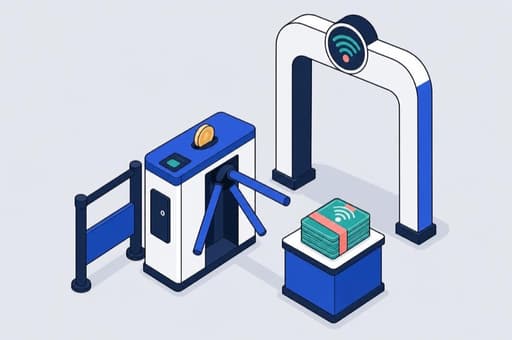
Metro, Mint, Ultra and T-Mobile serve roughly 26 million customers who pay before using service. This is a substantial cash-paying base, but sales have slipped as some users move to postpaid plans.
Competes with Supreme, Smart and Select Unlimited plans (Cricket Wireless / AT&T) · Visible, Visible+ and Visible+ Pro (Visible / Verizon)
In plain English
No bill arrives later: prepaid customers put money down before their phone service begins. Metro sells month by month, Mint sells several months together, and Ultra focuses on people with international calling needs.
The brands share T-Mobile's network but reach customers through different stores and websites. Upfront payment limits unpaid bills, and lower-cost choices attract price-sensitive users. The tradeoff is that moving someone to a regular monthly plan helps the larger postpaid engine while shrinking prepaid sales.
Wholesale and other services
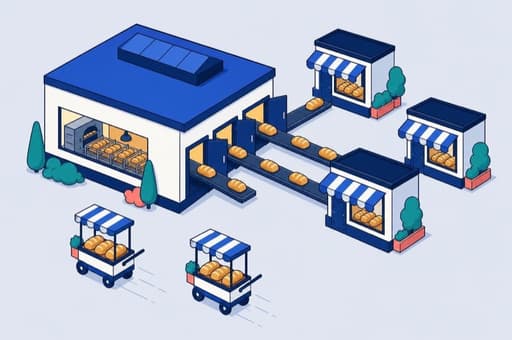
T-Mobile supplies network access and operating help to more than 200 outside brands. Sales fell 16% in fiscal 2025 as EchoStar and TracFone traffic rolled off and Mint's owner became part of T-Mobile.
Competes with Wholesale network access for resellers (Verizon) · Wholesale network access for resellers (AT&T)
In plain English
This is the behind-the-scenes business. Another company can put its own name on a mobile plan while T-Mobile supplies the connection, ships the small phone cards and, in some arrangements, handles customer service.
Those brands pay under network-use and service agreements, letting T-Mobile earn from infrastructure already in place. It resembles a store-brand factory whose name stays off the package. The difficulty is replacement: some customer streams are shrinking, and an acquired customer stopped counting as outside business.


 Postpaid servicesCustomers with continuing monthly accounts supplied 65.6% of fiscal 2025 revenue; another $2.7 billion was already promised, generally over the next two years. The main watchpoint is reliable service that keeps people paying.
Customers with continuing monthly accounts supplied 65.6% of fiscal 2025 revenue; another $2.7 billion was already promised, generally over the next two years. The main watchpoint is reliable service that keeps people paying.
In plain English
Postpaid here means keeping a continuing account and receiving a regular monthly bill; prepaid customers instead load money before using service. T-Mobile sells phone plans to households and businesses, plus home connections counted in the same sales line. One account can cover several phones.
Those repeating payments are the company's main engine. Customers keep paying because their numbers, devices and daily internet access live on the network; T-Mobile must keep the connection reliable and give them reasons not to switch. No single customer provides more than a tenth of company sales.
Competes with Unlimited Your Way plans (AT&T) · myPlan and Simplicity Plan (Verizon)
 5G Home InternetA self-installed box turns T-Mobile's mobile signal into home Wi-Fi for roughly 8.5 million customers. Growth depends on how much room the local network has after serving phones.
A self-installed box turns T-Mobile's mobile signal into home Wi-Fi for roughly 8.5 million customers. Growth depends on how much room the local network has after serving phones.
In plain English
Picture empty seats on a bus that is already running. Where T-Mobile's phone network has spare room, it can fill that room with home internet customers instead of building a separate network.
A customer receives a small box, plugs it in and pays every month for Wi-Fi around the home. T-Mobile earns another subscription from equipment it already operates, but it cannot sell freely at every address: local signal quality and available room set the limit.
Competes with Internet Air (AT&T) · 5G Home, Home Plus and Home Ultimate (Verizon)
 T-Mobile for BusinessCompanies and public agencies buy mobile, internet, security and connected-device service. Management aims for double-digit annual sales growth through 2027, though T-Mobile does not separate these sales.
Companies and public agencies buy mobile, internet, security and connected-device service. Management aims for double-digit annual sales growth through 2027, though T-Mobile does not separate these sales.
In plain English
Big employers need more than a pile of phone plans. T-Mobile for Business connects staff, offices and small machines that send data, then adds security and a control panel for the customer to manage it all.
Organizations pay for each connection and for bundled services; direct sales teams handle the more complicated setups. They stay when coverage, safety and administration work together. The opportunity is important enough for a growth goal, but outsiders cannot see its sales on their own.
Competes with AT&T Business wireless plans (AT&T) · Business Unlimited plans (Verizon Business)
 T-Mobile FiberT-Mobile sells fast wired home internet to roughly one million customers while shared ventures build and run the lines. Growth depends on those builders reaching more neighborhoods and pending deals closing.
T-Mobile sells fast wired home internet to roughly one million customers while shared ventures build and run the lines. Growth depends on those builders reaching more neighborhoods and pending deals closing.
In plain English
Instead of digging every trench itself, T-Mobile shares ownership of fiber builders such as Lumos and Metronet. Those businesses install and operate the thin glass lines that carry internet into homes, while T-Mobile keeps the storefront and customer relationship.
Households pay T-Mobile each month for a wired connection. The arrangement spreads construction cost across partners, but service can grow only as streets are built out, permits arrive and the shared businesses maintain quality.
Competes with AT&T Fiber (AT&T) · Fios (Verizon)
 T-SatelliteSatellite links fill outdoor dead zones on compatible phones, yet July 2026 use was only 0.0002–0.0003% of network activity. The question is whether occasional coverage becomes something many customers pay for.
Satellite links fill outdoor dead zones on compatible phones, yet July 2026 use was only 0.0002–0.0003% of network activity. The question is whether occasional coverage becomes something many customers pay for.
In plain English
When a cell tower is out of reach, a compatible phone outdoors can connect to Starlink, SpaceX's satellite network, for messages and data from selected apps. It is backup coverage for places the ground network misses.
Access comes with the Experience Beyond plan or as a monthly add-on. Travelers, rural users and emergency workers may value a connection in a dead zone, but current use is tiny and the service still depends on open sky, compatible phones, satellites and government permission.
Competes with Direct-to-cell service for AT&T (AST SpaceMobile) · Direct-to-cell service for Verizon (AST SpaceMobile)
 Equipment and devicesPhones, watches, tablets, home-internet boxes and accessories produced $15.972 billion of fiscal 2025 sales. Their direct costs were higher: the real job is helping win and keep monthly customers.
Phones, watches, tablets, home-internet boxes and accessories produced $15.972 billion of fiscal 2025 sales. Their direct costs were higher: the real job is helping win and keep monthly customers.
In plain English
The shelves and checkout counters are only half the story. T-Mobile sells devices for cash or lets customers pay over about two years, making an expensive phone easier to take home.
Manufacturers are paid, and T-Mobile records the device sale, but devices cost the company more than they bring in directly once promotions are included. This business works as a doorway: a new phone or upgrade can start a service plan or persuade an existing customer to stay.
Competes with Device sales and installment offers (AT&T) · Device sales and financing offers (Verizon)
 Prepaid servicesMetro, Mint, Ultra and T-Mobile serve roughly 26 million customers who pay before using service. This is a substantial cash-paying base, but sales have slipped as some users move to postpaid plans.
Metro, Mint, Ultra and T-Mobile serve roughly 26 million customers who pay before using service. This is a substantial cash-paying base, but sales have slipped as some users move to postpaid plans.
In plain English
No bill arrives later: prepaid customers put money down before their phone service begins. Metro sells month by month, Mint sells several months together, and Ultra focuses on people with international calling needs.
The brands share T-Mobile's network but reach customers through different stores and websites. Upfront payment limits unpaid bills, and lower-cost choices attract price-sensitive users. The tradeoff is that moving someone to a regular monthly plan helps the larger postpaid engine while shrinking prepaid sales.
Competes with Supreme, Smart and Select Unlimited plans (Cricket Wireless / AT&T) · Visible, Visible+ and Visible+ Pro (Visible / Verizon)
 Wholesale and other servicesT-Mobile supplies network access and operating help to more than 200 outside brands. Sales fell 16% in fiscal 2025 as EchoStar and TracFone traffic rolled off and Mint's owner became part of T-Mobile.
T-Mobile supplies network access and operating help to more than 200 outside brands. Sales fell 16% in fiscal 2025 as EchoStar and TracFone traffic rolled off and Mint's owner became part of T-Mobile.
In plain English
This is the behind-the-scenes business. Another company can put its own name on a mobile plan while T-Mobile supplies the connection, ships the small phone cards and, in some arrangements, handles customer service.
Those brands pay under network-use and service agreements, letting T-Mobile earn from infrastructure already in place. It resembles a store-brand factory whose name stays off the package. The difficulty is replacement: some customer streams are shrinking, and an acquired customer stopped counting as outside business.
Competes with Wholesale network access for resellers (Verizon) · Wholesale network access for resellers (AT&T)
Named in filings, launches and programs
- T-LifePlatformThe account, shopping and service app had more than 30 million monthly users by July 2026.
- T-Ads / Magenta Advertising PlatformPlatformHelps advertisers find and measure audiences across phones, outdoor screens and stores.
- Vistar MediaBrandOutdoor-screen advertising platform bought for $621 million in February 2025.
- BlisBrandLocation-data advertising business bought for $180 million in March 2025.
- T-PriorityServiceReserves a portion of the mobile network for first responders; New York City is a named customer.
- T-PlatformPlatformGives business customers one place to manage services, devices, use, cost and performance.
- T-Mobile VisaCustomer programCapital One credit card tied to wireless-bill payments and customer benefits.
- Assurance WirelessBrandSubsidized phone-service brand for eligible lower-income customers.
- DIGITSServiceLets one phone number work on several devices and adds extra virtual lines.
- SyncUPEcosystemFamily of connected trackers and other small devices using T-Mobile's network.
- Sponsored In-Flight Wi-FiCustomer programA plan benefit delivered through airline partners; contract values are not public.
T-LifePlatform
The account, shopping and service app had more than 30 million monthly users by July 2026.
T-Ads / Magenta Advertising PlatformPlatform
Helps advertisers find and measure audiences across phones, outdoor screens and stores.
Vistar MediaBrand
Outdoor-screen advertising platform bought for $621 million in February 2025.
BlisBrand
Location-data advertising business bought for $180 million in March 2025.
T-PriorityService
Reserves a portion of the mobile network for first responders; New York City is a named customer.
T-PlatformPlatform
Gives business customers one place to manage services, devices, use, cost and performance.
T-Mobile VisaCustomer program
Capital One credit card tied to wireless-bill payments and customer benefits.
Assurance WirelessBrand
Subsidized phone-service brand for eligible lower-income customers.
DIGITSService
Lets one phone number work on several devices and adds extra virtual lines.
SyncUPEcosystem
Family of connected trackers and other small devices using T-Mobile's network.
Sponsored In-Flight Wi-FiCustomer program
A plan benefit delivered through airline partners; contract values are not public.