
TSMC (ADR) (TSM)
Manufactures customer-designed chips through a dedicated foundry and advanced-packaging platform.
Something off on this page? Send us feedback.
TSMC is the factory-for-hire behind many other companies’ chips: customers draw the designs, and TSMC turns them into silicon at enormous scale. Most sales still come from making the chips themselves, while newer production methods and advanced ways of joining chip pieces are taking a larger role. Sales also lean heavily on a few giant buyers; the two largest are identified only as Customer A and Customer B.
Item facts: FY2025 · year ended Dec 31, 2025, from filings, earnings calls and company pages.
Judgment weights, not filed revenue
The band summarizes business focus and direction. ~ marks estimates.
8 in detail · 15 more below
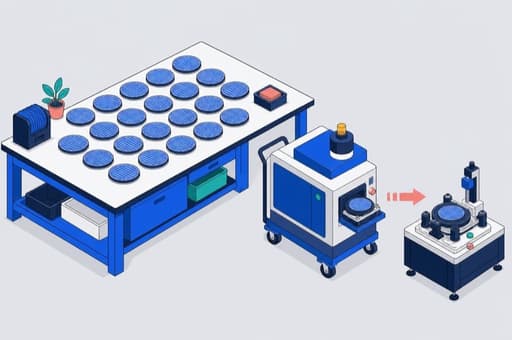
5nm Technology (N5/N4 family)
TSMC’s largest current production family brought in TWD1.180 trillion in FY2025. Its job is steady high-volume work, though moving some machinery to N3 could tighten available output.
Competes with SF4/SF4U (Samsung Foundry) · Intel 3 (Intel Foundry)
In plain English
Think of N5 as TSMC’s busiest proven recipe. Customers bring a finished chip drawing; TSMC transfers it onto large silicon discs, then repeats the pattern through many tightly controlled steps. N5 is new enough for demanding phones and big computers, but mature enough to run at huge volume.
Customers pay for each batch produced. The attraction is reliability at scale, so repeat orders keep the factories full. Some machines are now being reassigned to the newer N3 family, which helps use expensive equipment efficiently but can squeeze how much N5 TSMC can make.
3nm Technology (N3 family)
The clearest current growth engine produced TWD794.3 billion in FY2025. It rose to 30% of chipmaking sales by 2026 Q2 as more machinery and factories came online.
Competes with SF3 (Samsung Foundry) · Intel 3 (Intel Foundry)
In plain English
A newer recipe is taking a bigger place on TSMC’s factory floor. N3 is used for top-end phones, artificial-intelligence computers, cars and connected devices where buyers want more computing from a small piece of silicon.
A customer settles its chip design years before launch, then pays TSMC to make each production batch. More factories in Taiwan, Arizona and Japan, plus converted N5 machinery, create room for more orders. Early production is expensive because fewer chips come out perfectly; the economics improve as workers refine the process and the lines fill up.
7nm Technology (N7/N6 family)
A proven family still serving computers, networks and consumer products generated TWD459.3 billion in FY2025. Its sales mix is shrinking as customers move to newer methods, not because production is ending.
Competes with 7nm EUV process (Samsung Foundry) · 14nm FinFET (UMC)
In plain English
The dependable middle generation. N7 no longer gets the newest designs first, but many existing chips still do their jobs well and would cost customers time and money to redraw. TSMC keeps making them for computers, networking gear and everyday electronics.
Revenue arrives whenever those customers reorder production batches. Because N7 shares some factory flexibility with N5 and N3, TSMC can shift capacity as demand changes. The watchpoint is gradual migration: N7 fell from 17% of chipmaking sales in 2024 Q3 to 11% in 2026 Q2, even while it remained active.
28nm Technology
This cost-conscious production family delivered TWD225.1 billion in FY2025. Demand holds up in selected power-control and image-sensing uses, while more interchangeable work faces a softer market.
Competes with 28nm process family (UMC) · 22FDX/22FDX+ (GlobalFoundries)
In plain English
Not every chip needs the newest factory method. A car controller, factory sensor or connection chip may value a lower bill, a long production life and a process that has already proved itself. That is where 28nm earns its keep.
Customers pay TSMC to make these practical chips in repeat batches, often for products that stay on sale for years. Extra versions tuned for low power, cars or industrial equipment make the service less interchangeable. Keeping factories busy is crucial, because rival capacity can push prices down when customers see little difference between suppliers.
16nm Technology (N16/N12 family)
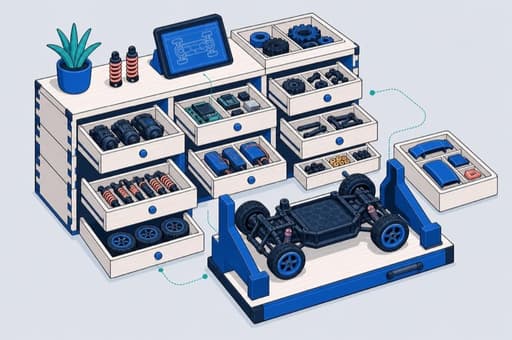
A mature but adaptable family produced TWD215.7 billion in FY2025. Its staying power comes from networking, displays, cars and built-in memory, where redesign costs slow migration.
Competes with 14nm FinFET and 12nm (UMC) · Intel 16 and Intel-UMC 12nm (Intel Foundry)
In plain English
Old does not mean obsolete here. N16 is a set of factory instructions with useful variations for network boxes, display controls, car electronics and chips that carry some memory inside, so customers can choose a familiar method shaped to a specific job.
Money comes from repeat manufacturing after a design has passed lengthy checks. A customer changes methods only when the performance gain is worth redoing the chip and proving it again. That makes qualified, long-lived designs sticky, although the family’s share is easing as the fastest-growing products choose newer production.
2nm Technology (N2 family)
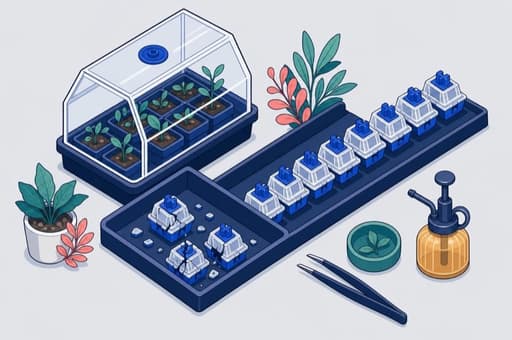
N2 began large-scale production late in 2025 and reached 3% of chipmaking sales in 2026 Q2. Strong early demand comes with costly learning and a temporary hit to profit margins.
Competes with SF2/SF2Z (Samsung Foundry) · Intel 18A (Intel Foundry)
In plain English
N2 rebuilds the transistor—the tiny switch inside a chip—so electricity can be controlled from more sides. That helps future phones and artificial-intelligence computers do more work, but the factory recipe is new and difficult.
Designers commit years of engineering before their products launch, then pay TSMC for the batches that make it through production. The first factories began running in late 2025. At this stage, more imperfect chips and partly empty lines raise the cost of each good one; demand only becomes valuable if output and consistency improve together.
A14 Technology
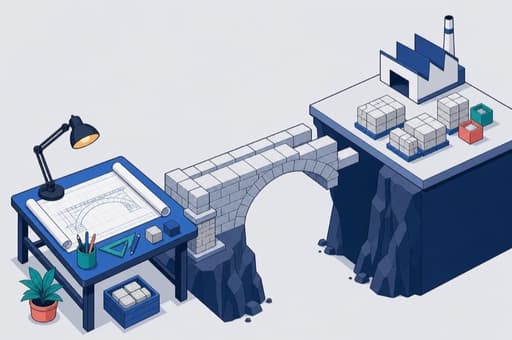
TSMC’s next production generation is still being developed, with pre-production planned for 2027 and volume work for 2028. It matters as a future handoff, but has no current sales or measured orders.
Competes with Intel 14A (Intel Foundry) · SF1.4 (Samsung Foundry)
In plain English
This one exists mostly on drawing boards. A14 is the recipe after N2, still years from the main factory floor. TSMC is working with phone and high-powered computing customers now because a new chip and the method that makes it must be designed together long before either reaches full production.
There is no product revenue yet. The economic bet is that early cooperation turns into large manufacturing runs when customers launch their next devices. Pre-production is planned for 2027 and full-volume work for 2028, so development, customer designs and factory readiness all have to arrive on schedule.
TSMC 3DFabric
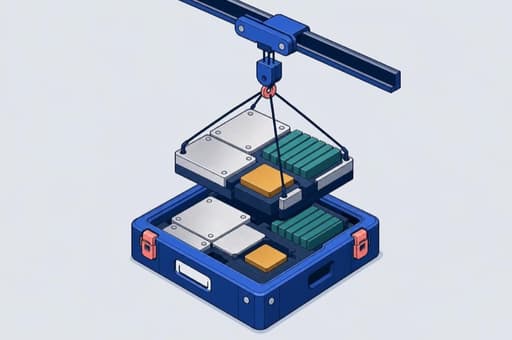
This family joins logic and memory pieces into one package and was about 8% of FY2025 revenue. Management expects slightly more than 10% in FY2026, but available capacity is still holding customers back.
Competes with EMIB and Foveros (Intel Foundry) · 2.xD Cube and 3D Cube (Samsung Foundry)
In plain English
Instead of forcing an entire computing system onto one piece of silicon, 3DFabric lets TSMC place several pieces side by side or stack them. The result is like packing a small workshop into one compact case: the processor and its nearby memory can exchange information quickly.
Customers pay TSMC to assemble and test these complex packages after the individual pieces are made. Artificial-intelligence computers are driving the fastest demand, while phones and networking equipment use other versions. The constraint is physical capacity: TSMC said in July 2026 that it could not package enough units to match customer growth.


 5nm Technology (N5/N4 family)TSMC’s largest current production family brought in TWD1.180 trillion in FY2025. Its job is steady high-volume work, though moving some machinery to N3 could tighten available output.
TSMC’s largest current production family brought in TWD1.180 trillion in FY2025. Its job is steady high-volume work, though moving some machinery to N3 could tighten available output.
In plain English
Think of N5 as TSMC’s busiest proven recipe. Customers bring a finished chip drawing; TSMC transfers it onto large silicon discs, then repeats the pattern through many tightly controlled steps. N5 is new enough for demanding phones and big computers, but mature enough to run at huge volume.
Customers pay for each batch produced. The attraction is reliability at scale, so repeat orders keep the factories full. Some machines are now being reassigned to the newer N3 family, which helps use expensive equipment efficiently but can squeeze how much N5 TSMC can make.
Competes with SF4/SF4U (Samsung Foundry) · Intel 3 (Intel Foundry)
 3nm Technology (N3 family)The clearest current growth engine produced TWD794.3 billion in FY2025. It rose to 30% of chipmaking sales by 2026 Q2 as more machinery and factories came online.
The clearest current growth engine produced TWD794.3 billion in FY2025. It rose to 30% of chipmaking sales by 2026 Q2 as more machinery and factories came online.
In plain English
A newer recipe is taking a bigger place on TSMC’s factory floor. N3 is used for top-end phones, artificial-intelligence computers, cars and connected devices where buyers want more computing from a small piece of silicon.
A customer settles its chip design years before launch, then pays TSMC to make each production batch. More factories in Taiwan, Arizona and Japan, plus converted N5 machinery, create room for more orders. Early production is expensive because fewer chips come out perfectly; the economics improve as workers refine the process and the lines fill up.
Competes with SF3 (Samsung Foundry) · Intel 3 (Intel Foundry)
 7nm Technology (N7/N6 family)A proven family still serving computers, networks and consumer products generated TWD459.3 billion in FY2025. Its sales mix is shrinking as customers move to newer methods, not because production is ending.
A proven family still serving computers, networks and consumer products generated TWD459.3 billion in FY2025. Its sales mix is shrinking as customers move to newer methods, not because production is ending.
In plain English
The dependable middle generation. N7 no longer gets the newest designs first, but many existing chips still do their jobs well and would cost customers time and money to redraw. TSMC keeps making them for computers, networking gear and everyday electronics.
Revenue arrives whenever those customers reorder production batches. Because N7 shares some factory flexibility with N5 and N3, TSMC can shift capacity as demand changes. The watchpoint is gradual migration: N7 fell from 17% of chipmaking sales in 2024 Q3 to 11% in 2026 Q2, even while it remained active.
Competes with 7nm EUV process (Samsung Foundry) · 14nm FinFET (UMC)
 28nm TechnologyThis cost-conscious production family delivered TWD225.1 billion in FY2025. Demand holds up in selected power-control and image-sensing uses, while more interchangeable work faces a softer market.
This cost-conscious production family delivered TWD225.1 billion in FY2025. Demand holds up in selected power-control and image-sensing uses, while more interchangeable work faces a softer market.
In plain English
Not every chip needs the newest factory method. A car controller, factory sensor or connection chip may value a lower bill, a long production life and a process that has already proved itself. That is where 28nm earns its keep.
Customers pay TSMC to make these practical chips in repeat batches, often for products that stay on sale for years. Extra versions tuned for low power, cars or industrial equipment make the service less interchangeable. Keeping factories busy is crucial, because rival capacity can push prices down when customers see little difference between suppliers.
Competes with 28nm process family (UMC) · 22FDX/22FDX+ (GlobalFoundries)
 16nm Technology (N16/N12 family)A mature but adaptable family produced TWD215.7 billion in FY2025. Its staying power comes from networking, displays, cars and built-in memory, where redesign costs slow migration.
A mature but adaptable family produced TWD215.7 billion in FY2025. Its staying power comes from networking, displays, cars and built-in memory, where redesign costs slow migration.
In plain English
Old does not mean obsolete here. N16 is a set of factory instructions with useful variations for network boxes, display controls, car electronics and chips that carry some memory inside, so customers can choose a familiar method shaped to a specific job.
Money comes from repeat manufacturing after a design has passed lengthy checks. A customer changes methods only when the performance gain is worth redoing the chip and proving it again. That makes qualified, long-lived designs sticky, although the family’s share is easing as the fastest-growing products choose newer production.
Competes with 14nm FinFET and 12nm (UMC) · Intel 16 and Intel-UMC 12nm (Intel Foundry)
 2nm Technology (N2 family)N2 began large-scale production late in 2025 and reached 3% of chipmaking sales in 2026 Q2. Strong early demand comes with costly learning and a temporary hit to profit margins.
N2 began large-scale production late in 2025 and reached 3% of chipmaking sales in 2026 Q2. Strong early demand comes with costly learning and a temporary hit to profit margins.
In plain English
N2 rebuilds the transistor—the tiny switch inside a chip—so electricity can be controlled from more sides. That helps future phones and artificial-intelligence computers do more work, but the factory recipe is new and difficult.
Designers commit years of engineering before their products launch, then pay TSMC for the batches that make it through production. The first factories began running in late 2025. At this stage, more imperfect chips and partly empty lines raise the cost of each good one; demand only becomes valuable if output and consistency improve together.
Competes with SF2/SF2Z (Samsung Foundry) · Intel 18A (Intel Foundry)
 A14 TechnologyTSMC’s next production generation is still being developed, with pre-production planned for 2027 and volume work for 2028. It matters as a future handoff, but has no current sales or measured orders.
TSMC’s next production generation is still being developed, with pre-production planned for 2027 and volume work for 2028. It matters as a future handoff, but has no current sales or measured orders.
In plain English
This one exists mostly on drawing boards. A14 is the recipe after N2, still years from the main factory floor. TSMC is working with phone and high-powered computing customers now because a new chip and the method that makes it must be designed together long before either reaches full production.
There is no product revenue yet. The economic bet is that early cooperation turns into large manufacturing runs when customers launch their next devices. Pre-production is planned for 2027 and full-volume work for 2028, so development, customer designs and factory readiness all have to arrive on schedule.
Competes with Intel 14A (Intel Foundry) · SF1.4 (Samsung Foundry)
 TSMC 3DFabricThis family joins logic and memory pieces into one package and was about 8% of FY2025 revenue. Management expects slightly more than 10% in FY2026, but available capacity is still holding customers back.
This family joins logic and memory pieces into one package and was about 8% of FY2025 revenue. Management expects slightly more than 10% in FY2026, but available capacity is still holding customers back.
In plain English
Instead of forcing an entire computing system onto one piece of silicon, 3DFabric lets TSMC place several pieces side by side or stack them. The result is like packing a small workshop into one compact case: the processor and its nearby memory can exchange information quickly.
Customers pay TSMC to assemble and test these complex packages after the individual pieces are made. Artificial-intelligence computers are driving the fastest demand, while phones and networking equipment use other versions. The constraint is physical capacity: TSMC said in July 2026 that it could not package enough units to match customer growth.
Competes with EMIB and Foveros (Intel Foundry) · 2.xD Cube and 3D Cube (Samsung Foundry)
Named in filings, launches and programs
- A16 TechnologyProduct line · Pre-revenueAn N2-family extension that delivers power from beneath the chip; volume production was still scheduled for late 2026.
- Specialty TechnologiesProduct lineFactory methods tuned for sensors, memory, radio signals, power control and low-energy chips across cars, devices and industrial equipment.
- 40/45nm TechnologyProduct lineAn older production family that still supplied about 2.5% of FY2025 revenue.
- 65nm TechnologyProduct lineLong-lived chip production that contributed about 3.2% of FY2025 revenue.
- 90nm and micron-generation TechnologiesProduct lineThe oldest named production families together brought in about 4.7% of FY2025 revenue.
- CoWoSService · RampingInside 3DFabric, it places processor pieces beside stacks of nearby memory for artificial-intelligence and high-powered computing systems.
- InFOServiceA 3DFabric method that spreads chip connections through a thin package for phones and networking equipment.
- TSMC-SoICService · RampingStacks chip pieces directly on top of one another; it entered volume production during FY2025.
- TSMC-COUPEProduct · RampingJoins light-based data links with electrical controls on silicon; management said production had begun and was ramping in July 2026.
- Open Innovation PlatformEcosystemConnects chip-design tools, reusable building blocks, cloud services and manufacturing partners so customers can prepare designs for TSMC factories.
- Mask Services and other foundry supportServiceMakes the stencils used to print chip patterns and sells testing, design help and technology-use rights alongside manufacturing.
- TSMC Arizona CorporationBrand · RampingTSMC’s United States manufacturing arm; its first factory began volume production in late 2024, with more chipmaking and packaging capacity planned.
- Japan Advanced Semiconductor ManufacturingBrand · RampingThe Kumamoto operation began volume production in late 2024; a second factory is planned to add newer production methods.
- European Semiconductor Manufacturing CompanyBrand · AnnouncedA TSMC-controlled Dresden venture planned to make specialty chips for cars and industrial equipment.
- Advanced Vision Semiconductor Manufacturing CorporationBrand · AnnouncedA Sony-controlled Kumamoto image-sensor venture aiming for 2029 production, subject to approvals.
A16 TechnologyProduct line · Pre-revenue
An N2-family extension that delivers power from beneath the chip; volume production was still scheduled for late 2026.
Specialty TechnologiesProduct line
Factory methods tuned for sensors, memory, radio signals, power control and low-energy chips across cars, devices and industrial equipment.
40/45nm TechnologyProduct line
An older production family that still supplied about 2.5% of FY2025 revenue.
65nm TechnologyProduct line
Long-lived chip production that contributed about 3.2% of FY2025 revenue.
90nm and micron-generation TechnologiesProduct line
The oldest named production families together brought in about 4.7% of FY2025 revenue.
CoWoSService · Ramping
Inside 3DFabric, it places processor pieces beside stacks of nearby memory for artificial-intelligence and high-powered computing systems.
InFOService
A 3DFabric method that spreads chip connections through a thin package for phones and networking equipment.
TSMC-SoICService · Ramping
Stacks chip pieces directly on top of one another; it entered volume production during FY2025.
TSMC-COUPEProduct · Ramping
Joins light-based data links with electrical controls on silicon; management said production had begun and was ramping in July 2026.
Open Innovation PlatformEcosystem
Connects chip-design tools, reusable building blocks, cloud services and manufacturing partners so customers can prepare designs for TSMC factories.
Mask Services and other foundry supportService
Makes the stencils used to print chip patterns and sells testing, design help and technology-use rights alongside manufacturing.
TSMC Arizona CorporationBrand · Ramping
TSMC’s United States manufacturing arm; its first factory began volume production in late 2024, with more chipmaking and packaging capacity planned.
Japan Advanced Semiconductor ManufacturingBrand · Ramping
The Kumamoto operation began volume production in late 2024; a second factory is planned to add newer production methods.
European Semiconductor Manufacturing CompanyBrand · Announced
A TSMC-controlled Dresden venture planned to make specialty chips for cars and industrial equipment.
Advanced Vision Semiconductor Manufacturing CorporationBrand · Announced
A Sony-controlled Kumamoto image-sensor venture aiming for 2029 production, subject to approvals.